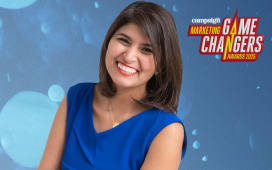
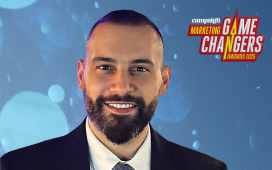
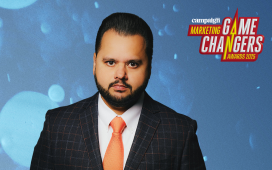
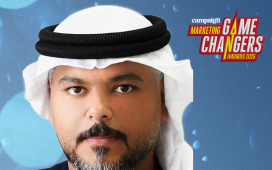
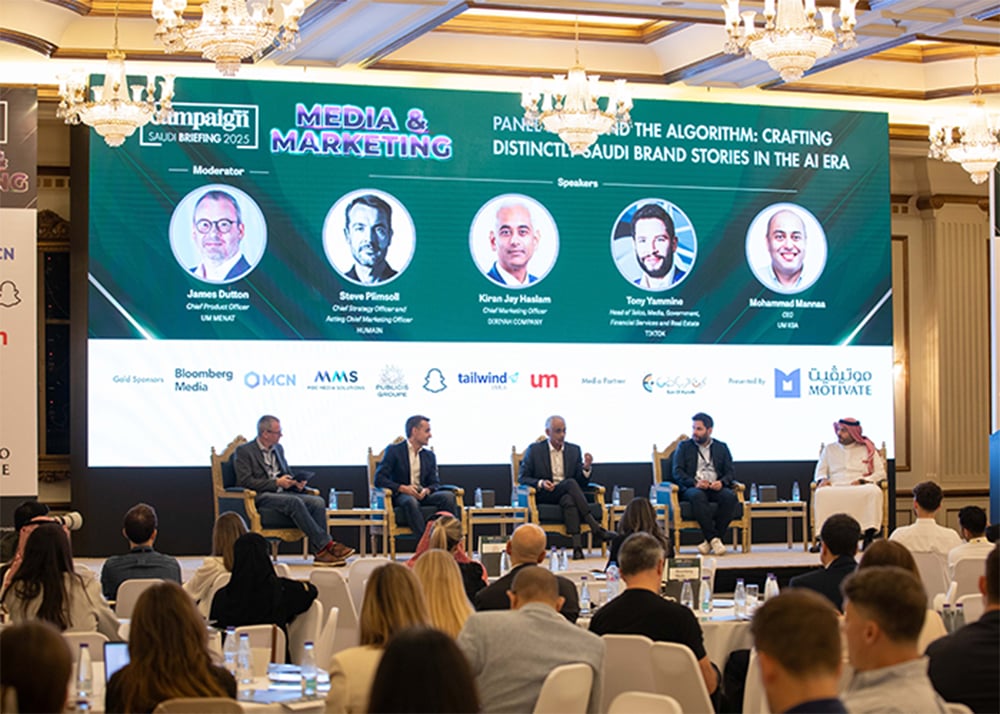
 From left, James Dutton, Chief Product Officer, UM MENAT; Steve Plimsoll, Chief Strategy Officer and Acting Chief Marketing Officer, HUMAIN; Kiran Jay Haslam, Chief Marketing Officer, Diriyah Company; Tony Yammine, Head of Telco, Media, Government, Financial Services and Real Estate, TikTok; and Mohammad Mannaa, CEO, UM KSA.
Campaign Middle East has successfully concluded its Campaign Saudi Briefing: Media and Marketing 2025 event in Riyadh, Saudi Arabia. The event welcomed close to 200 of the biggest names in the Kingdom’s brand and marketing landscape, including advertisers, agency leaders and adtech founders at the Sheraton Riyadh Hotel and Towers on 16 October for a morning of meaningful panel discussions, brainstorming and networking.
Top industry leaders from Diriyah Company, King Salman Park, Expo 2030 Riyadh, HUMAIN, HungerStation, ESL FACEIT Group, MBC Media Solutions (MMS), FP7 McCann, UM KSA, Snap Inc., Zenith KSA, TikTok, Bloomberg Media, APCO, EssenceMediacom, Tailwind, as well as Saudi influencers such as Rateel Alshehri and Fahad Mugharbel took to the stage at the event.
The breakfast briefing event – brought to life through one keynote, three fireside chats, and three in-depth panel discussions – kept people at the edge of their seats because it not only addressed real challenges through raw, unfiltered and unscripted conversations, but also educated and informed the audience about key trends to watch out for in the months ahead.
Leaders delved into several key areas of focus, including:
- the move from transactional relationships to transparent communication in the marketing landscape;
- the importance of shared data, shared measurement frameworks and shared success metrics;
- the transformative potential of using artificial intelligence (AI) and augmented reality (AR) to garner active attention and spur action;
- the potential limitations and dangers of AI and the human guardrails needed in its implementation;
- the call-back to authenticity, brand safety, intentionality and vigilance in an evolving media landscape;
- the move towards outcome-based measurement models and outcome-based pricing models;
- the role of local narratives, as well as Gen Z and Gen Alpa voices, in the co-creation of authentic, relatable as well as locally and culturally resonant branded content; and
- the strategic allocation of media budgets in a world where traditional media, digital media, and new media such as short-form videos, audio platforms, connected TV, and streaming services co-exist.
… and so much more.
The event was organised by Motivate Media Group’s Campaign Middle East in partnership with Bloomberg Media, MCN, UM MENAT, Publicis Groupe Middle East, MBC Media Solutions (MMS), Snapchat, Tailwind, and Eye of Riyadh. Here’s an in-depth look into how the event panned out:
Welcome speech
The event began with a welcome speech by Nadeem Quraishi, Publishing Director, Campaign Middle East, who briefed the attendees about the brand’s latest developments and upcoming plans for the fourth quarter of 2025.
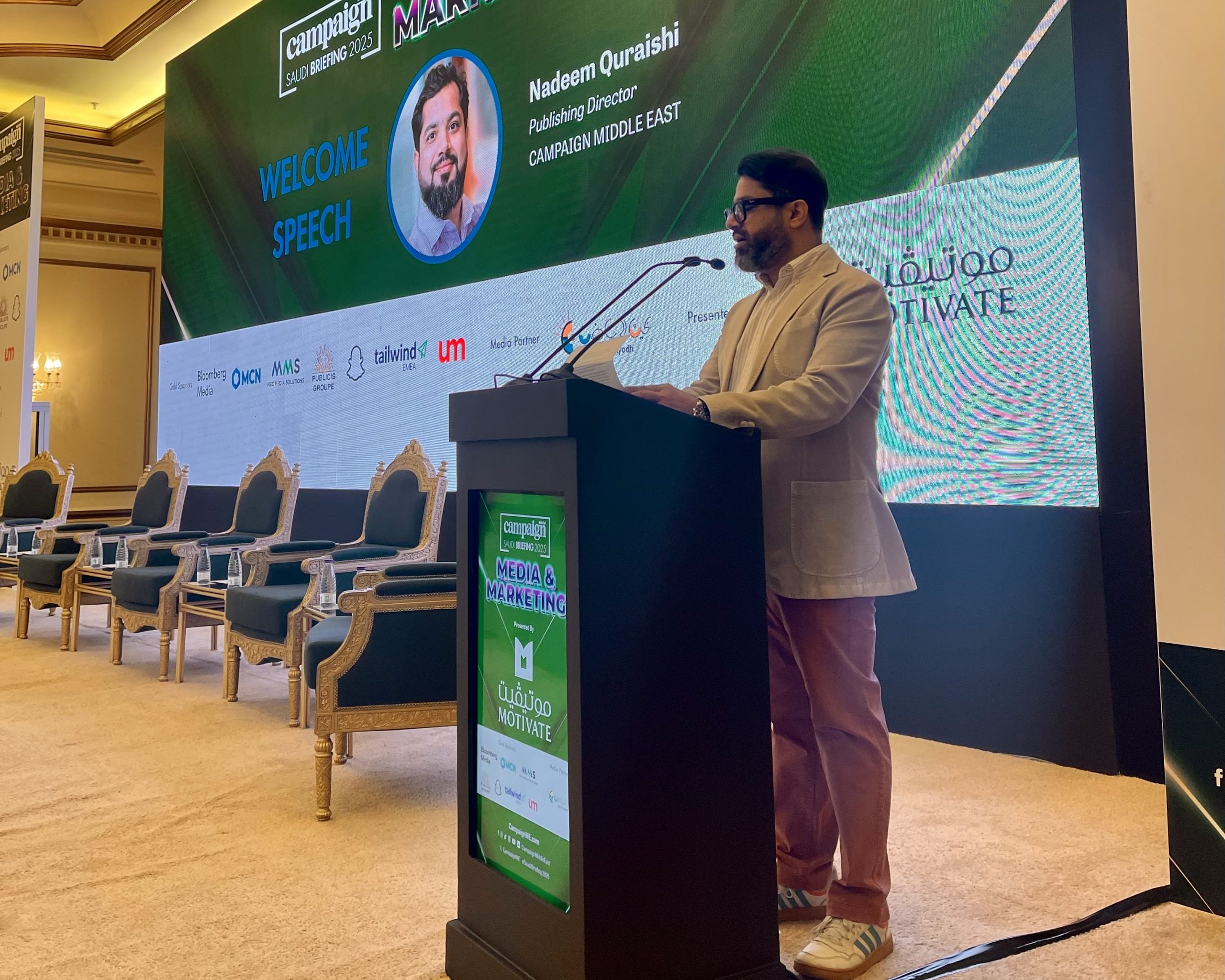
Quraishi introduced Campaign Middle East’s bilingual Saudi Arabia Report 2025 and The MENA Power List – two of the brand’s supplements that have flown of the shelves within days of it hitting the stands.
He also introduced Campaign Middle East’s first-ever Marketing Game Changers Awards, a dedicated platform to celebrate client-side marketers shaping the future of our industry, and shared details about the upcoming Athar Festival in Riyadh, which will gather more than 3,000 attendees across two days, featuring more than 150 speakers across five content stages, as well as more than 80 activations on 21 and 22 October 2025 at the JAX District in Riyadh.
Quraishi revealed a record number of entries for all categories, including the Best Agency in Saudi Arabia, for Campaign Middle East’s Agency of the Year Awards, which is scheduled to take place on 11 December in Dubai.
Chair’s opening remarks
Campaign Middle East Editor Anup Oommen then took the stage to deliver the chair’s opening remarks. He dared marketers to be brave, proudly local, and to be held accountable for creative originality, collaborative mindsets, craft, culture, and the tangible brand and business outcome.
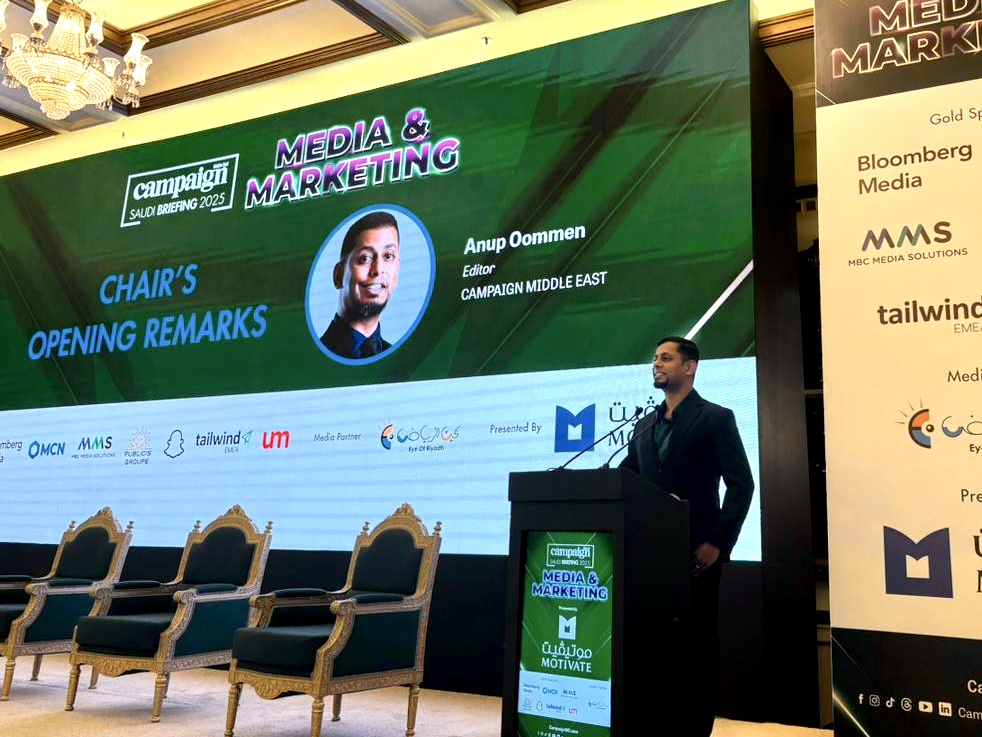
He challenged marketers to truly listen to consumers, build memorable customer experiences, and break existing silos within the industry. He called for a move from attention to outcomes, and for industry leaders to lean wholeheartedly into wholesome, culturally led and locally rooted storytelling.
Oommen said, “Brands also need to double down on trust and empathy. We need to create better relationships with both consumers as well as clients within the industry. Stronger partnerships mean shared data, shared insights on shared dashboards, shared frameworks of measurement, shared definitions of success and, most importantly, shared culture and language.”
He added, “From Riyadh to the rest of the world, a new creative movement is unfolding: one where content is currency, influencers and local icons shape culture, and community is everything. Saudi Arabia is welcoming a new generation of storytellers, marketers and media leaders who want to cut through the noise and create real value for brand, business, people and the planet.”
Taking examples from his personal life, Oommen revealed the power of storytelling informed by data-driven insights but driven by human empathy and creativity. Calling for an end to mediocrity, he challenged the industry to experiment, fail fast and learn quickly, and to live by timeless values rather than chase fleeting trends.
Keynote: Why attention is the new currency in Saudi Arabia
Getting the event started, Samer Lahoud, Head of Creative Strategy for MENA, Snap Inc. delivered a keynote address explaining the need to pay attention to attention. He drew a direct connect between attention and client outcomes, highlighting attention as the ‘real currency’ that can me measured.
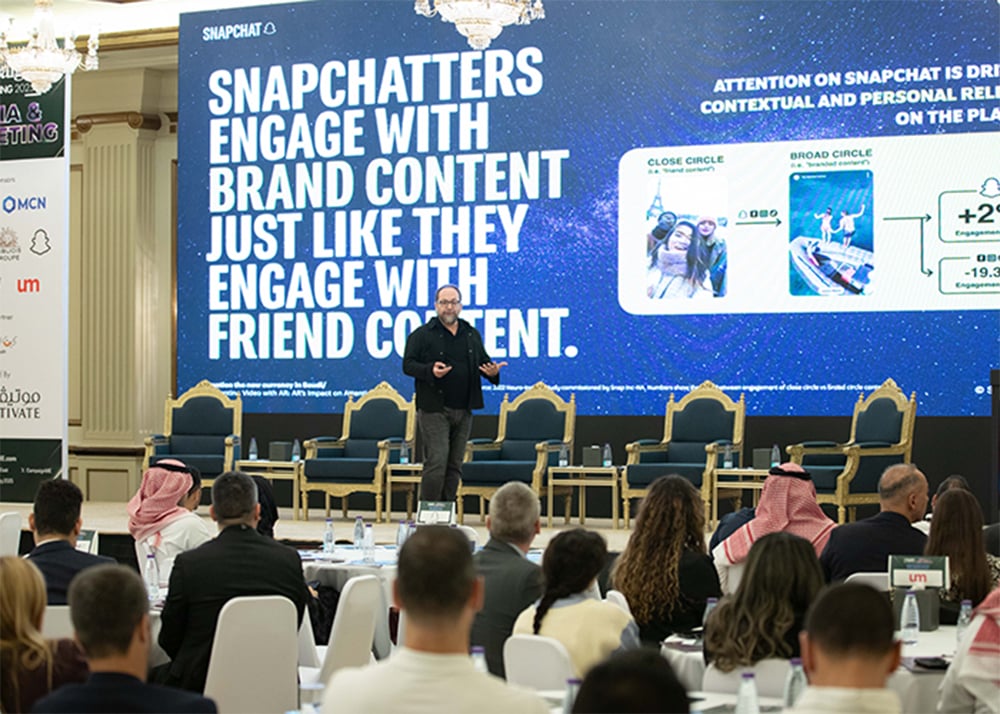
He explained how attention on the platform is driven by contextual and personal relevance, as well as relatable, enjoyable and immersive experiences.
Lahoud said that augmented reality (AR) captures and sustains active attention better than any other format, especially when it is added as an element to an existing campaign to increase results and drive better outcomes. He revealed how using AR filters on brand-led videos drives 1.4 times higher awareness, 1.5 times higher brand preferability, and six times higher action intent.
He also shared several case studies around the gamification of AR and its benefits for brands. For instance, he explained how during Ramadan, consumers spend far more time on their phones and, as such, don’t only engage with a brand’s products through AR, but also enjoy the entertainment feature of playing with the said product through AR. This has resulted in 26-seconds of active engagement with a specific branded product on average, which is much higher than an in-person stand or booth at an event.
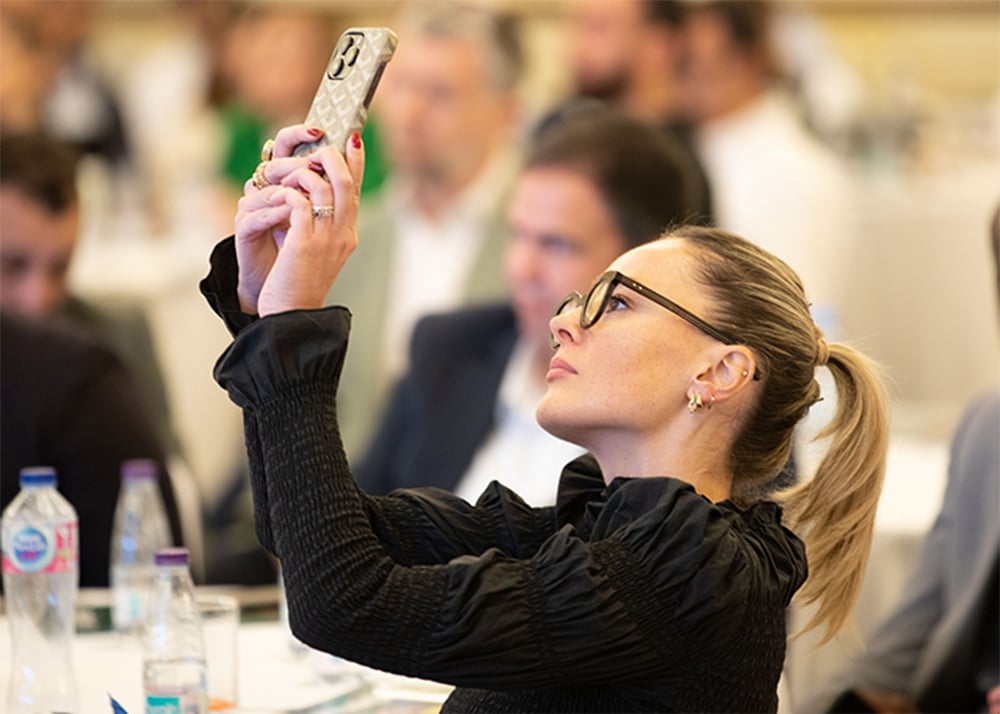
Taking this a step further he also shared examples of combining generative AI with AR. He highlighted how brands can – within a click – transport consumers into a generative AI environment, which when combined with AR makes the experiences all the more immersive.
Commenting on the shareability of such a feature, he shared a case study where a brand received 97,000 shares on a custom-AI generated AR feature, which means that it did not only influence the consumers interacting with it, but also influenced all the people who the consumers shared it with.
“Brands need to question which platform they are on, and why. They need to keep AI and AR in the mix, adding them to brand videos and campaigns. Brands need to focus on capturing active attention and create shareable work that can generate real results,” Lahoud concluded.
Fireside chat 1: Bridging media and marketing: Building collaborative pathways
This first fireside chat of the day explored how media owners, agencies and advertisers in Saudi can strengthen partnerships to create more effective and impactful campaigns. Moderated by Ali Cuma, Business Director, Bloomberg Media, the panel comprised a conversation with Youmna Naufal, Director at APCO and Founder & Host of #YChats and Alice Tatton-Brown, Client Leadership Director – MENA, EssenceMediacom, a WPP Media Brand.
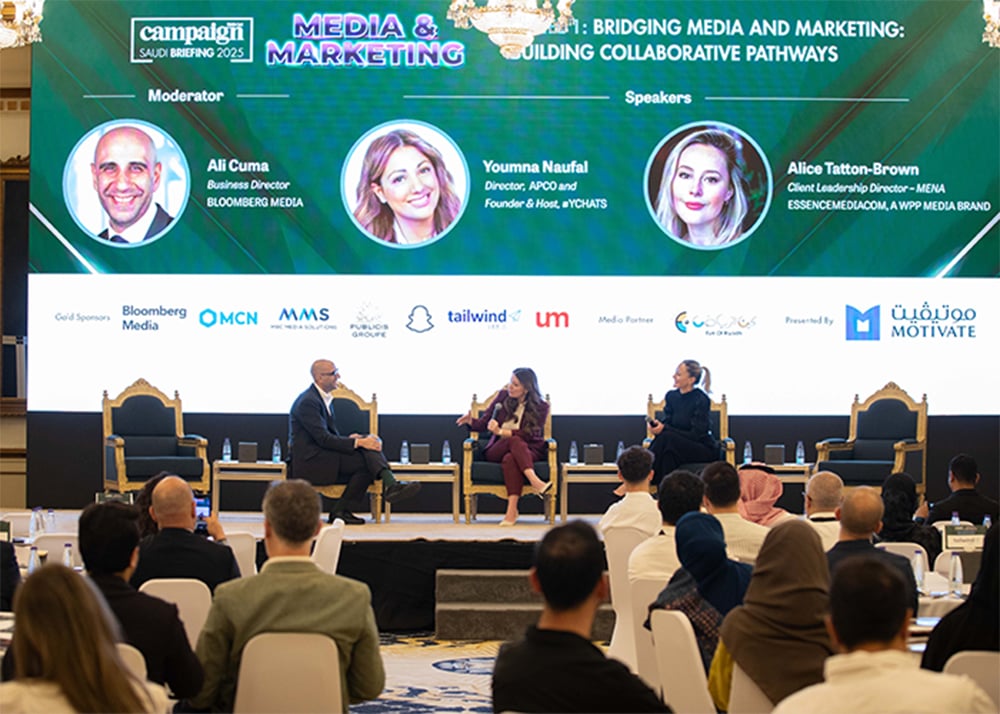
Naufal, Cuma and Tatton-Brown explored collaborative marketing approaches, emphasising the importance of authentic, transparent partnerships across different marketing disciplines. They highlighted the need to break down traditional silos between public relations (PR), paid media, creative teams and publishers.
Through the panel, a couple of key themes emerged, including the need for agencies and media partners to work as an extension of the brand, focusing on storytelling and shared objectives rather than transactional relationships.
The through-line was the critical importance of open communication, with regular meetings to align strategies across different teams. Flexibility and adaptability were highlighted sa essential skills, particularly in dynamic markets such as Saudi Arabia.
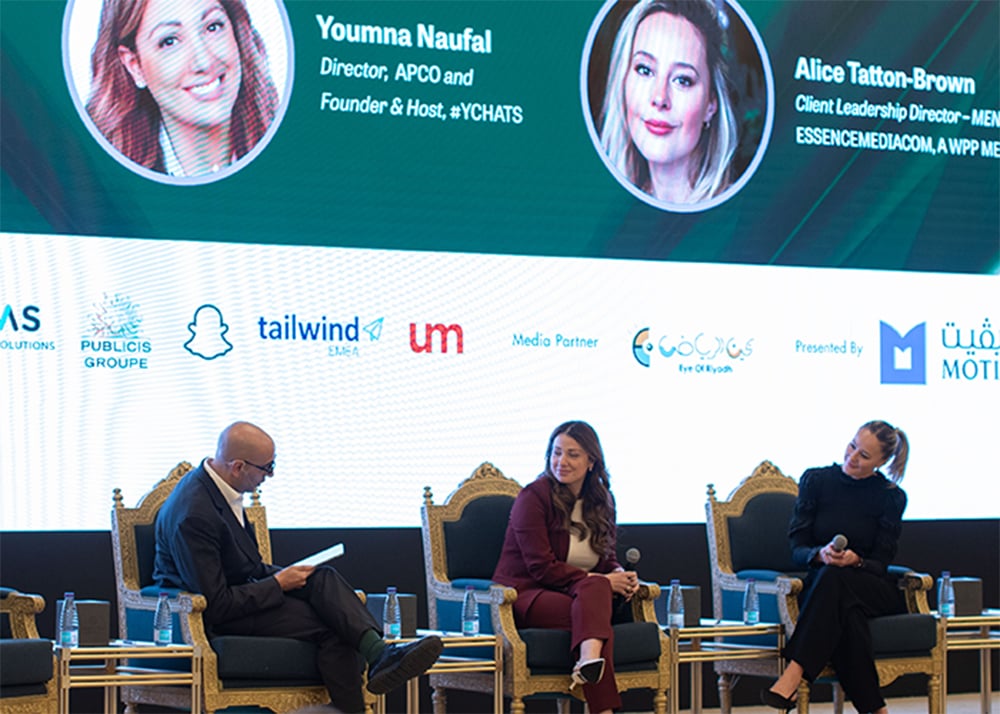
The panellists challenged the industry to build trust through honest communication, especially by being willing to provide genuine feedback and entering into strategic conversations earlier in the process to ensure alignment and authenticity.
Panelists stressed that successful marketing collaboration requires trust and transparent communication, the willingness to adapt, a clear understanding of broader business objectives, and a focus on collective goals rather than individual achievements.
The parting message was that modern marketing requires a holistic, collaborative approach where different teams and partners work seamlessly together, sharing insights and supporting each other’s efforts.
Panel 1: Beyond the algorithm: Crafting distinctly Saudi brand stories in the AI era
The second panel discussion of the day, moderated by James Dutton, Chief Product Officer, UM MENAT, included perspectives from highly respected client-side CMOs, agency heads and platform leaders, including,
- Kiran Jay Haslam, Chief Marketing Officer, Diriyah Company,
- Steve Plimsoll, Chief Strategy Officer and Acting Chief Marketing Officer, HUMAIN,
- Mohammad Mannaa, CEO, UM KSA, and
- Tony Yammine, Head of Telco, Media, Government, Financial Services and Real Estate, TikTok.
The panel discussion explored the transformative potential and challenges of artificial intelligence across various industries. Speakers unanimously emphasised that AI should be viewed as an enabling tool rather than a replacement for human creativity.
They highlighted the importance of redefining organisational processes, demonstrating how companies can launch successful brands with minimal paid media spend by leveraging AI strategically.
Leaders also shared words of caution about the potential dangers of AI, urging the room of 200 attendees to research and understand the difference between artificial intelligence and superintelligence.
They stressed the need to avoid falling into temptation of mediocrity, drawing parallels with how social media has already homogenised societal interactions. They collectively argued that AI should amplify human capabilities, not diminish them, with a particular focus on maintaining authentic storytelling and cultural nuance.
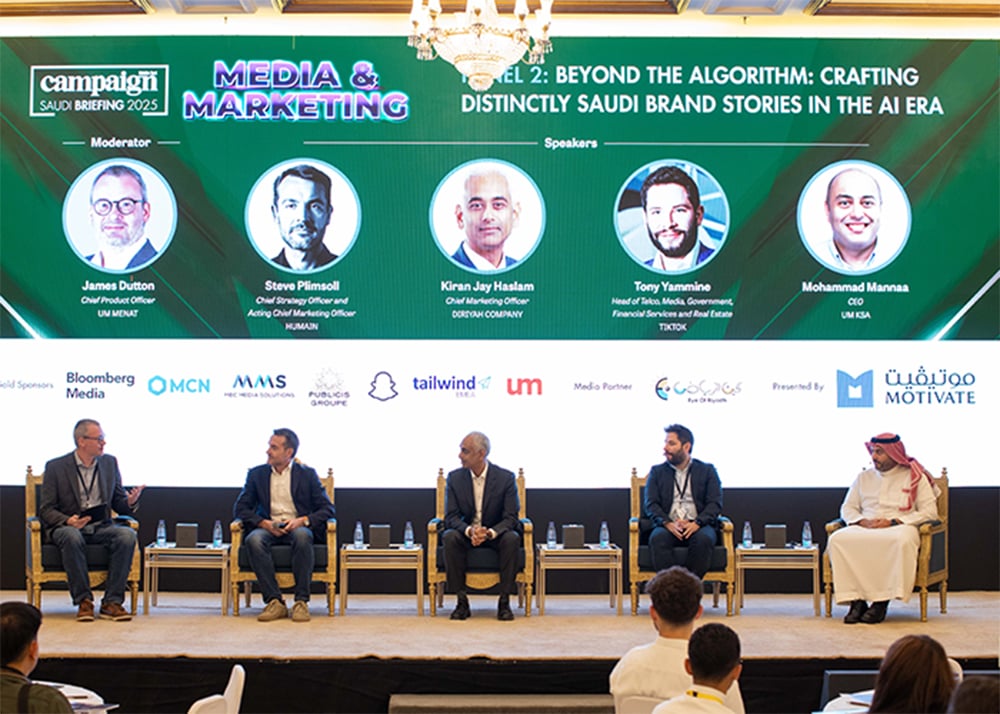
The panellists also discussed AI’s role in creating more personalised and culturally sensitive campaigns. They reiterated that while AI can generate content quickly, the core of marketing remains human creativity and emotional connection.
The discussion underscored the importance of selecting the right AI tools and integrating them thoughtfully into organisational strategies, with a focus on bridging organisational gaps and improving productivity.
The panel also explored broader implications, including AI’s potential to transform urban development, marketing measurement and organisational culture.
Leaders highlighted the need for continuous learning, embracing failure as a teacher, and maintaining a human-centric approach to technological innovation.
Ultimately, the discussion converged on a vision of AI as a collaborative partner – a powerful tool that can enhance productivity, creativity and strategic thinking when used with careful consideration and human oversight.
Fireside chat 2: Safeguarding brand trust in an unstable new world
The second fireside chat of the day largely delved into the quality, safety and consistency of AI-generated content, and the key aspects to take into consideration while exploring, planning, implementing and measuring the effectiveness of AI-driven campaigns.
Moderated by Wajahat Osmani, Regional Head, Tailwind EMEA, the fireside chat welcomed to the stage,
- Joe Bell, VP – Business Development, Integral Ad Science,
- Khaled Abou Sleiman, CEO, Zamakan Agency, and
- Fahad AlAhmed, CEO, The Fullstop Creative Agency.
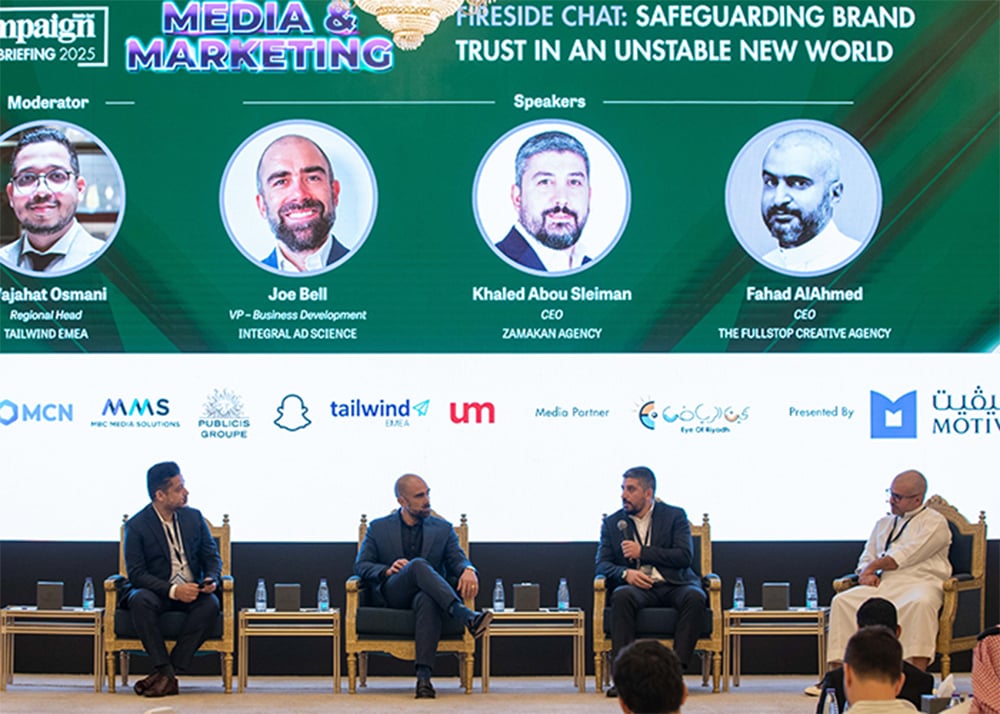
The panel discussion explored the evolving landscape of digital content creation, measurement, and brand strategy. The conversation centred around defining quality output in an AI-driven media environment, with participants offering nuanced perspectives from different industry viewpoints.
Speakers emphasised the critical importance of authenticity, intentionality, and consistency in brand communication. They highlighted that while AI has dramatically accelerated content creation, the fundamental goal remains creating meaningful, contextually relevant communication.
Media quality was discussed not just in terms of reach, but as relevant reach – ensuring content appears in the right context and resonates with the intended audience.
The technical perspective, discussed by measurement experts, stressed the importance of viewability, geography, context and brand safety. They stated that with the rise of AI-generated content, there’s an increasing need for proactive tools that can verify and maintain content quality at unprecedented speeds.
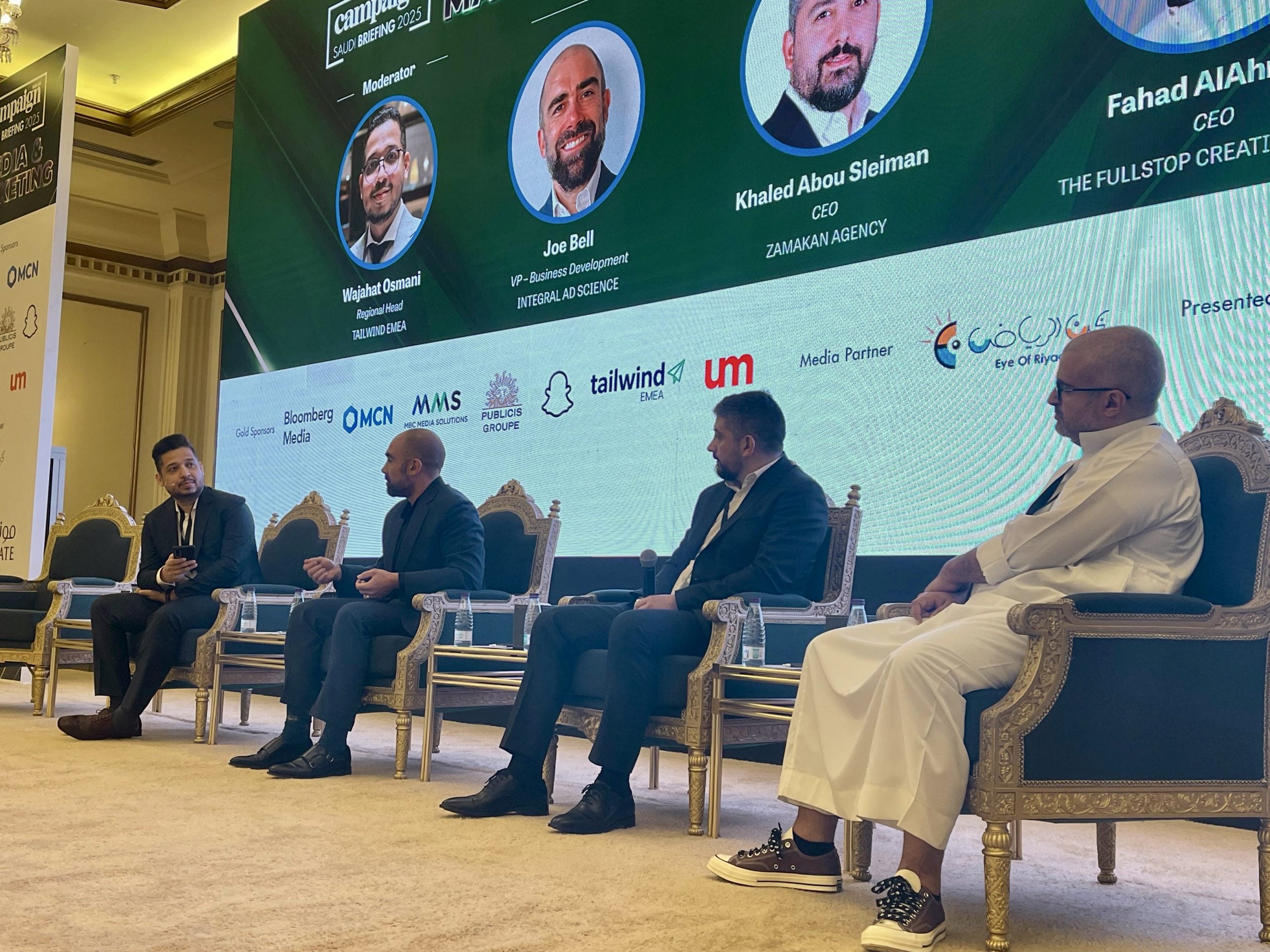
Panelists also noted how bad actors can now generate unsuitable content much faster, requiring more sophisticated verification mechanisms.
From a creative standpoint, the discussion revealed a shift from complete content ownership to a more collaborative ‘orchestra conductor’ role, where agencies must strategically navigate multiple platforms and creators. Algorithms were viewed not as challenges, but as tools to be understood and leveraged effectively.
Investment strategies were also explored, with a clear message that brands should move beyond simply seeking the cheapest inventory. Instead, the focus should be on where and how content connects with audiences, measuring true return on investment through quality of engagement rather than just volume of impressions.
In conclusion, leaders emphasised that the future of media lies in owning data, understanding audience connections, and prioritising brand trust over cost-efficiency.
The overarching theme was that AI is a tool to be collaborated with, not feared, and success depends on how intelligently and intentionally it is deployed.
Panel 2: From exposure to impact: The future of media measurement
This session featured an expert panel that uncovered how industry stakeholders need to build transparency, share data, and agree on shared measurement frameworks and shared goals.
Moderated by Anup Oommen, Editor, Campaign Middle East, the panel comprised of highly respected brand-side marketers and media partners, including,
- Simon Shaw, Chief Marketing and Communications Officer, King Salman Park,
- Ahmad Chatila, Director of Brand and Communications, HungerStation,
- Yasmine AlTurk, Advanced DOOH & Digital Supply Lead MENA, WPP Media, and
- Mathieu Yarak, Head of Data, MBC Media Solutions (MMS).
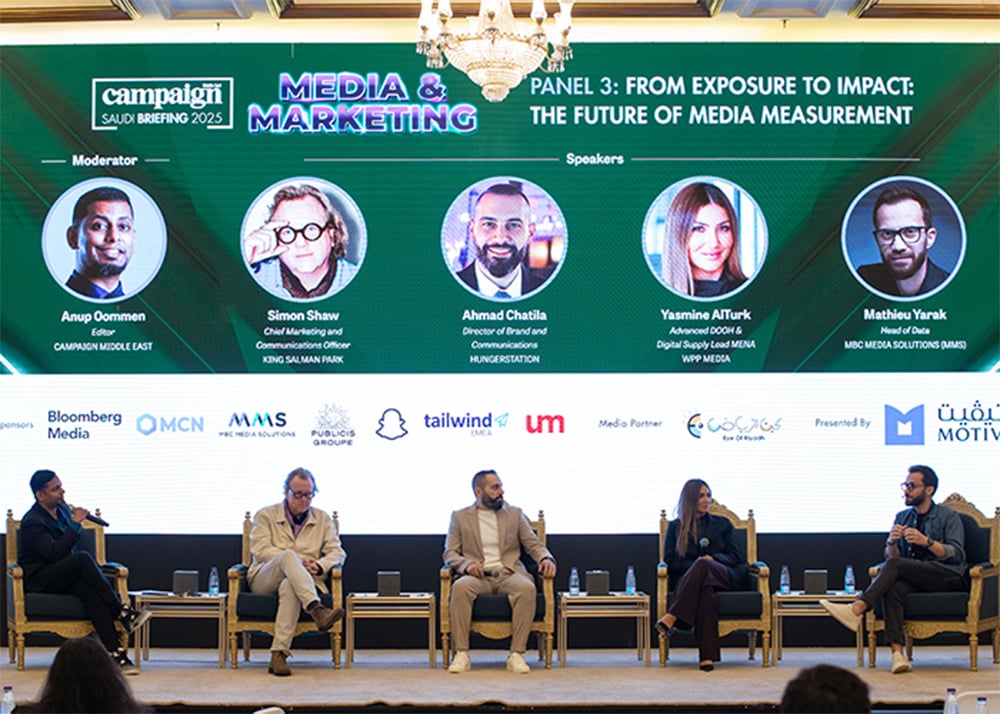
Through this panel, leaders explored critical challenges in modern media measurement, focusing on data sharing, transparency, and the evolving landscape of brand and performance metrics.
Panellists discussed the importance of breaking down data silos and creating collaborative frameworks for more meaningful insights. A key theme was moving beyond traditional measurement approaches to more nuanced, outcome-based strategies. Leaders also called for the industry to find a way to move beyond flat CPMs toward attention‑ and quality‑adjusted CPMs, incremental reach‑based pricing and data‑tiered PMPs.
The conversation delved into the complex relationship between brand equity and performance metrics, with speakers highlighting how measurement priorities shift based on business models and market conditions. They shared how some companies strategically alternate between brand and performance depending on business cycles, demonstrating the dynamic nature of the marketing measurement.
Transparency continued to emerge as a crucial topic of discussion, with participants reiterating that data sharing is no longer optional but essential. They discussed innovative approaches such as clean rooms and AI-driven attribution methods to enable secure data collaboration while protecting privacy. The panel explored how different platforms and stakeholders can work together to create more comprehensive measurement frameworks.
Cross-platform measurement and omnichannel marketing were also significant discussion points. Panellists highlighted the non-linear customer journey and the need for more sophisticated measurement techniques that go beyond flat CPM metrics. They advocated for outcome-based pricing and measurement that considers engagement, attention and long-term brand impact.
The discussion culminated in a call for greater collaboration, with panelists stressing the importance of bringing stakeholders together, sharing data responsibly, and maintaining creativity alongside data-driven approaches.
They emphasised that the future of marketing measurement lies in creating ecosystems that allow for transparent, meaningful data sharing while preserving the core creative essence of brand storytelling.
Panel 3: Yalla Content: Building brands the Saudi way
Saudi isn’t following global trends, it’s setting them. From Riyadh to the rest of the world, a new creative movement is unfolding: one where content is currency, influencers shape culture, and community is everything.
This panel moderated by Tarek Miknas, CEO of FP7 McCann MENAT brought new life to the event, by welcoming the first-ever Gen Alpha speaker to the stage in Campaign Middle East‘s history – Rateel Alshehri, Saudi Influencer and Celebrity Host, Rateel Alpha Talk. Joining Tarek and Rateel on stage were:
- Ibrahim Hasan, Regional Head, McCann Content Studios,
- Abdulrahman Suwailam, Head of Marketing, ESL FACEIT Group, and
- Fahad Mugharbel, Social Media Director and Influencer, McCann Content Studios, KSA.
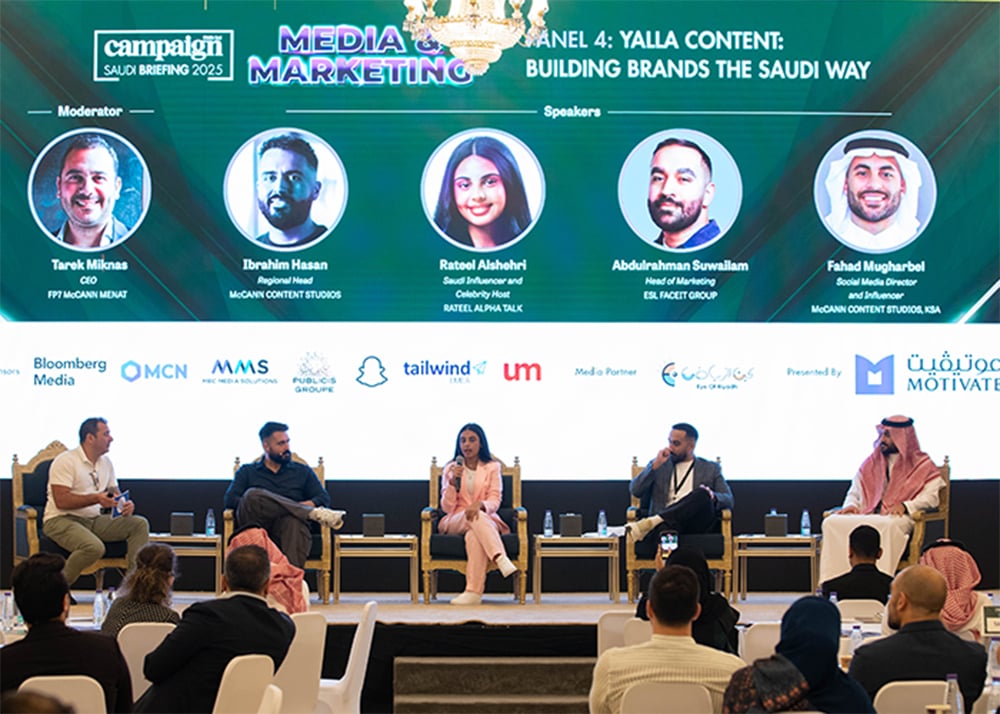
In a lively discussion, panellists explored the evolving narrative of Saudi content creation, brand engagement, and cultural authenticity. The conversation focused on how Saudi Arabia is presenting itself globally while maintaining its unique flavour and cultural identity.
Experts on the panel shared the importance of creating content with a “Saudi-first” mindset, rejecting simple adaptations of international strategies. They highlighted the rapid transformation of Saudi media, describing it as “Glocal” – deeply local yet globally relevant.
Rateel shared deeply personal stories of family support and the importance of authentic representation, demonstrating how the younger generation is driving cultural change.
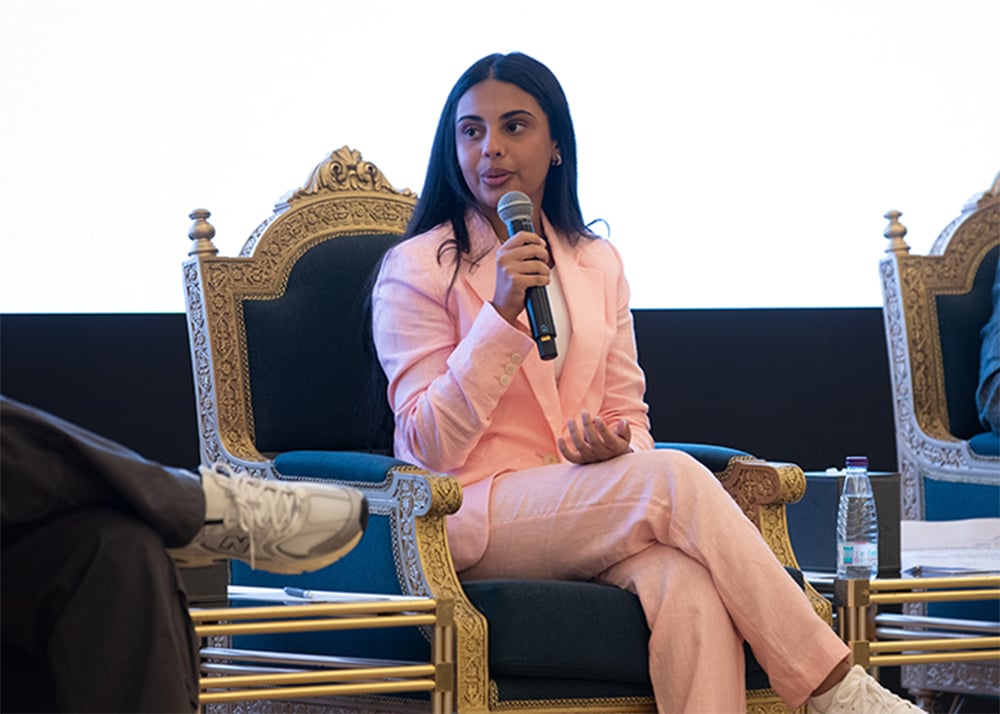
Brand collaboration emerged as a critical theme, with panelists discussing how modern brands must move beyond traditional advertising. They stressed that successful brand engagement requires genuine connection, giving value to communities, and allowing creators the opportunity to exercise their creative freedom.
The discussion uncovered an ‘authenticity detector’, which Gen Alpha and Gen Z audiences use to quickly identify inauthentic or repurposed content. Panellists also explored the dynamics of social media trends, arguing that brands should not chase every fleeting trend but instead focus on meaningful cultural conversations.
Looking ahead, experts on stage shared optimistic viewpoints about Saudi Arabia’s content creation landscape. They explained why the region is gaining importance and global relevance, with Vision 2030 and global events such as the World Cup placing Saudi content on the international stage.
The overarching message was clear: authenticity, cultural pride, and a willingness to be bold are driving Saudi Arabia’s emerging global media presence. The discussion painted a picture of a dynamic, confident generation reshaping narratives and challenging traditional communication strategies, with a strong emphasis on representing their culture genuinely and powerfully.
Fireside chat 3: The rise of new media: Capturing the attention of Saudi consumers
As media consumption habits evolve, Saudi audiences are increasingly engaging with short-form video, audio platforms, gaming, connected TV, augmented reality and streaming services. This panel explored how brands can adapt to these shifts, diversify their media strategies, and leverage innovation to build stronger connections with consumers.
Rawan Yaqub, Head of Zenith KSA led a highly engaging conversation with
Mohammad Basheer Aljuhani, Senior Manager – Marketing & Communications, Expo 2030 Riyadh.
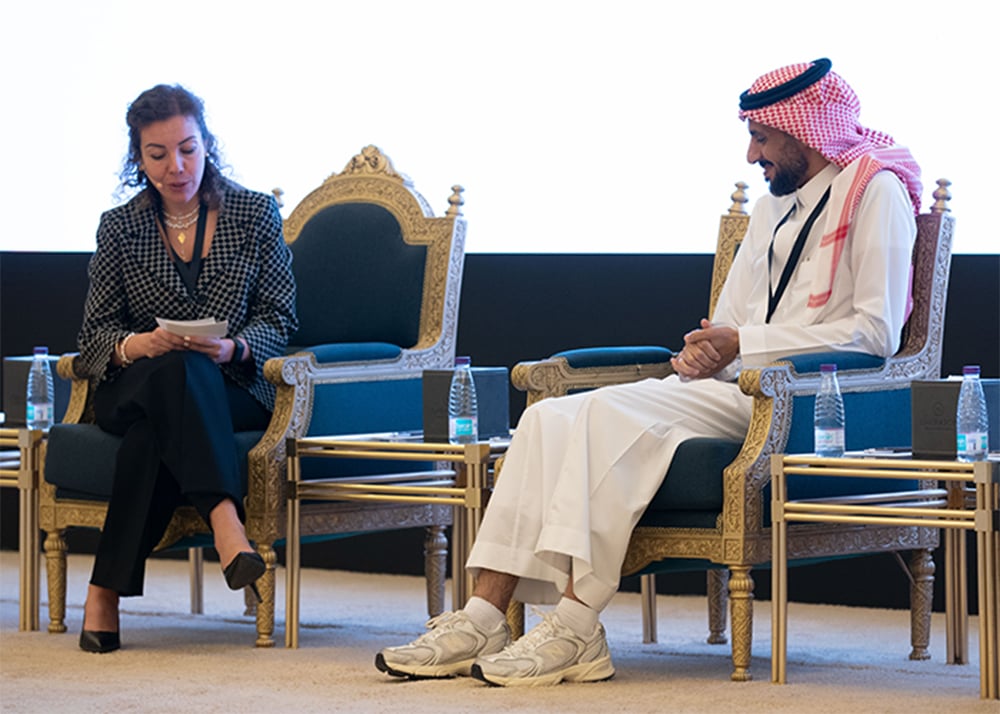
The final panel of the event provided a comprehensive exploration of the evolving media landscape, focusing on digital transformation and strategic communication in the Saudi market.
Yaqub and Aljuhani discussed the multifaceted definition of new media, expanding beyond traditional boundaries to include emerging technologies such as audio, gaming, and augmented reality.
A critical challenge highlighted was content creation, with both speakers emphasising the importance of tailoring content specifically for different media platforms. Simply copying and pasting content across formats is ineffective, they said, instead, calling for practitioners to invest significant effort in understanding and adapting to each medium’s unique characteristics and audience expectations.
Budget allocation was also discussed with Aljuhani suggesting approximately one-third of media budgets to be directed towards digital platforms, while reiterating that there’s no one-size-fits-all answer to media spend. However, he shared insights from successful campaigns that demonstrated how focused digital strategies could yield cost-effective and impactful results.
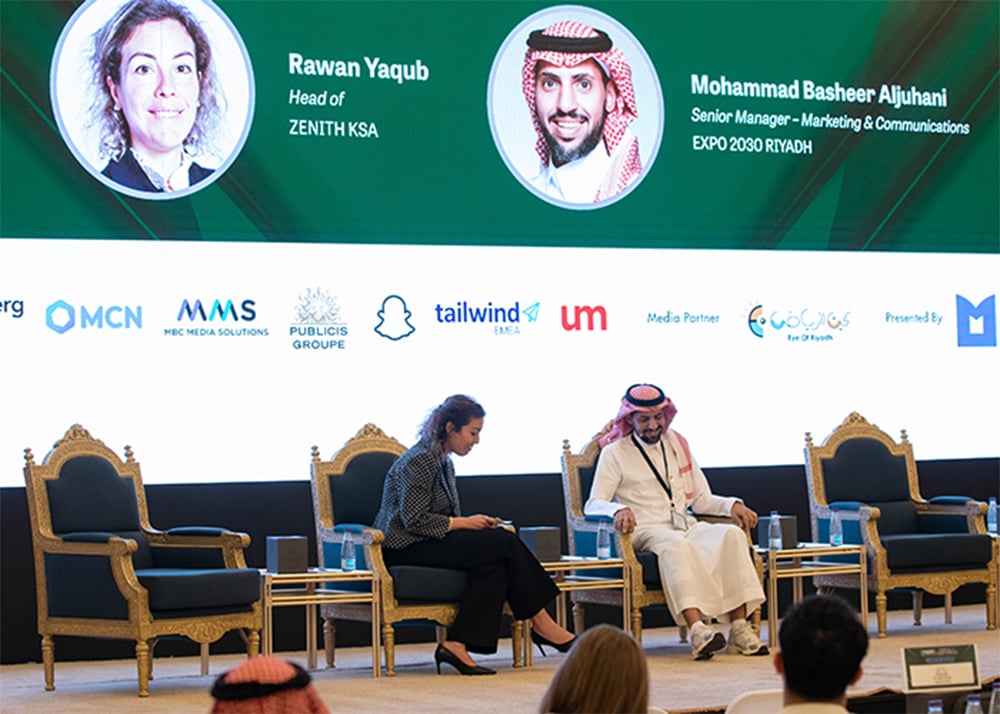
Artificial intelligence was also addressed as a transformative force. Aljuhani advocated for a strategic and mindful approach to its adoption. He stressed the importance of not chasing every technological trend, but instead carefully selecting AI solutions that genuinely enhance consumer experience and deliver meaningful business impact.
Yaqub and Aljuhani also acknowledged the complexity of creating content that resonates across different audience segments, praising emerging government initiatives that provide resources and documentation to support cultural understanding.
All in all, the final panel concluded with practical advice for market entry, emphasising the need for thorough research, clear objective setting, and a consumer-centric approach. Creativity was redefined not just as content creation, but as a holistic strategy encompassing media selection, approach, and strategic thinking.
Throughout the discussion, one message was highlighted repeatedly: success in the modern media landscape requires adaptability, deep consumer insights, and a willingness to innovate while maintaining strategic focus.
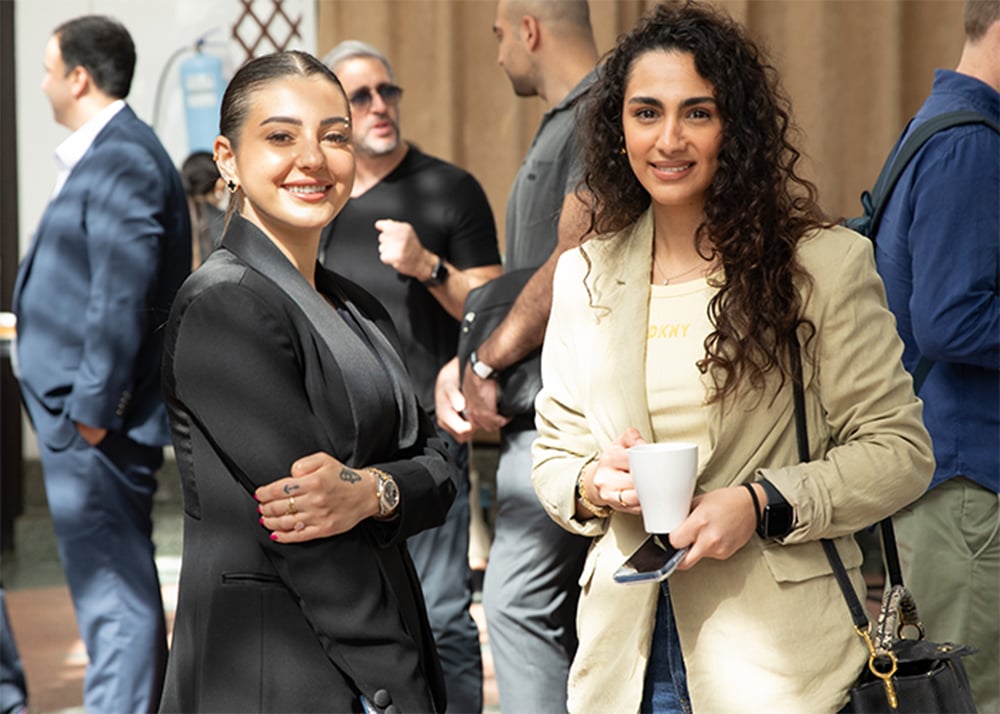
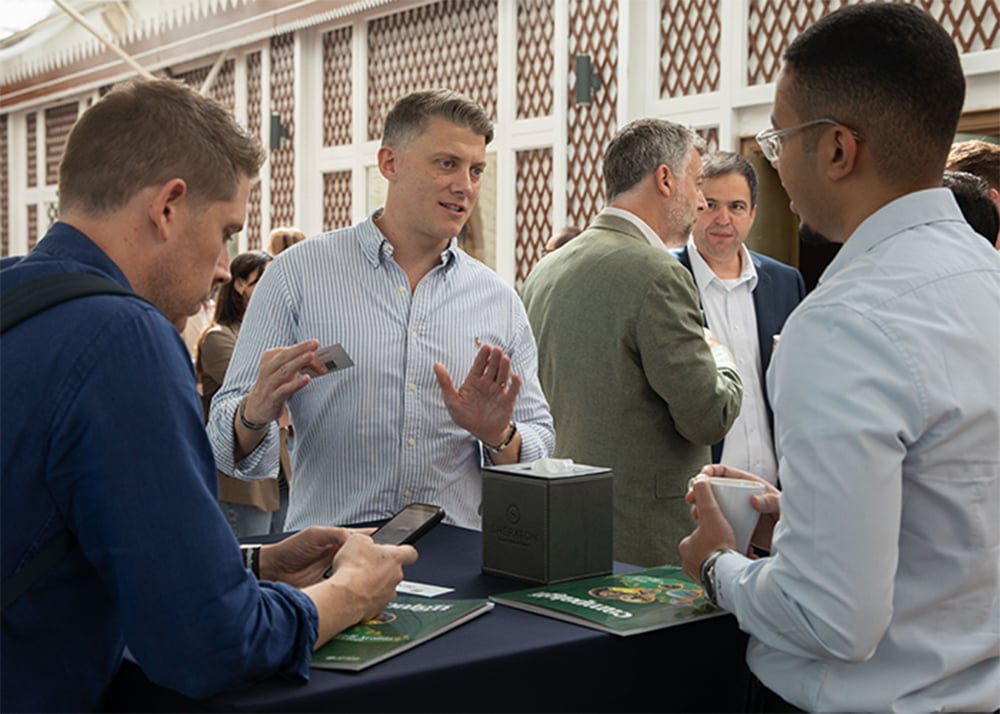
After the keynotes and panels at the Campaign Saudi Briefing: Media and Marketing 2025 event, attendees stayed back for lunch and networking.
For those of you who were unable to attend this stellar gathering of like-minded leaders shaping the top trends and addressing the top challenges in the industry, keep an eye out for the YouTube video of the entire event.
Mark you calendars. Campaign Middle East‘s next event, Campaign Breaking Briefing: Out of Home 2026, which will be held on 21 November 2025 in Dubai.