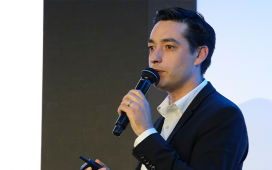
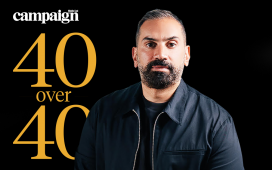
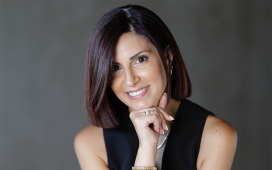
On the latest episode of Campaign Middle East’s On The Record podcast, Ben Sadek, Lead for Sports and Entertainment Partnerships — Middle East, The Coca-Cola Company, makes the case for brand experiences that move people and make a difference, both globally and locally.
Sadek reveals how sports and entertainment is deeply ingrained into Coca-Cola’s DNA, with a history of leaning into these facets of marketing for more than 100 years. He also reveals how the brand’s marketing strategies have evolved over time through partnerships with musical festivals; with sporting events such as the Olympics, the FIFA World Cup, the English Premier league; and with franchises such as Marvel and Star Wars.
Sadek opens up about how Coca-Cola is leveraging live events, immersive brand experiences, influencer collaborations and talent endorsements to maintain deep emotional connections with diverse audiences. He also shares how Coca-Cola shows up for the region through its own packaging and products – such as for Saudi National Day and Kuwait National Day recently; or through meaningful partnerships and experiences; or through venues and merchandise.
At the heart of the brand’s marketing strategy sits an insistence on people over promotion and fandom over fixtures. The brand’s partnerships are designed to meet communities where they truly gather: in creator ecosystems, backstage stories and city-level stages. Measuring what matters has also matured. The brand has leaned into channels that spark participation, not just reach.
Sadek says, “For The Coca-Cola Company, sports and entertainment is really in our DNA. We’re a 130-year-old company, and we’ve been using sports and entertainment in our marketing for more than 100 years. What started out primarily as sort of a brand awareness exercise has evolved. The big shift has been away from only awareness building to experience building. The partnerships that we have help us to unlock new experiences and new worlds for our consumers, and sometimes that even means using our packaging as a gateway to get there.”
From the pitch to the people, the FIFA World Cup – Coca-Cola tie-up illustrates how the brand has constantly remained tuned in to fan behaviours and has redrawn the marketing playbook accordingly. With attention migrating to phones and creators, activations now centre on the audience’s ecosystem, not only the on-field spectacle.
Sadek explains, “If you look at our FIFA activations today versus 50 years ago, they’re very, very different. What started out primarily as sort of a brand building exercise and associating ourselves with the action on the pitch has shifted much more into the stands, into the fans watching at home. We see that most fans, especially in Saudi Arabia for example, are spending more time on the second screen and on social media than they are actually watching a live match. So we need to make sure that we’re keeping on top of those trends.”
He also opens up about Coca-Cola’s involvement in the FIFA World Cup Trophy Tour – a global tour of the World Cup trophy – which, in 2026, began in Saudi Arabia.
Sadek says, “This year is actually our sixth edition of the FIFA World Cup Trophy tour by Coca-Cola. We kicked off the global tour weeks ago in Saudi and it’s just an amazing way in which we can engage with football fans, communities, and people of all walks of life, and it has nothing to do with the pitch. For six months, we take charge of this hugely valuable asset. We fly it around the world on a customised Coca-Cola plane with FIFA World Cup winners and legends.”
He also goes on to explain music as the connective tissue and soundtracks that knit nostalgic memories together. By weaving music into football activations, the brand builds continuity before and after the match and opens avenues for content at scale.
Beyond football, the brand’s regional strategy is also to be ever-present across diverse interests. The arena, new leagues and long-time tournaments provide continuity and community across demographics.
He explains “The Coca-Cola Arena, which is one of region’s leading indoor multi-purpose, year-round venues for sports and entertainment, gives us almost 52 weeks of events and entertainment across a hugely diverse interest appeal, whether it’s Bollywood concerts, Western music concerts, sports, or family shows. We’re also really proud to be supporting Dubai Basketball, which is the first professional basketball team from the region.”
He adds, “There’s also a big South Asian demographic here in the UAE. We know that cricket and music are their biggest action points, so we use our partnership with the ICC quite well. We’ve even brought Coke Studio here from Pakistan and have a lot of live concerts at the Coca-Cola Arena, all of which have been really powerful brand experiences for us.”
Sadek also delves into the power of connecting with audiences emotionally during moments that matter to each of them through personal keepsakes, merchandise and tactile reminders of fleeting moments – all of which act as a multiplier, connecting people to the brand long after the moment or the event has passed.
Before the conversation concludes, Sadek posits a positive message for the region: shape, don’t follow. The closing message is one of intent. The Middle East is not merely catching up; it’s in a position to set the pace and calibrate culture, provided marketers are brave enough to choose substance over noise.
Sadek says, “We’re blessed with opportunity in this region. And I think we have a responsibility as marketers to continue to to innovate, to push the boundaries, and to try and do things differently. We’re no longer a region that sort of follows what the rest of the world is doing. We have an opportunity to shape trends and shape culture. We ask ourselves: How are we creating branded experiences or branded campaigns that really move people? What’s the local intimacy we’re creating with with people and consumers in this region? Our brand purpose is to refresh the world and make a difference.”
All in all, Coca-Cola’s model in the Middle East suggests that partnerships are no longer a seat on the sideline or a nice ‘add-on’; it’s the stage in the spotlight itself. When the venue becomes a weekly meeting point, and the brand is part of the crowd and moving with it, the brand moves from rented attention to earned belonging. That shift relies on stitching together fandoms — football, music, cricket, basketball, rugby and more — into a fabric that people want to wear home, quite literally.
CREDITS:
Guest: Ben Sadek, Lead for Sports and Entertainment Partnerships — Middle East, Coca-Cola
Host: Anup Oommen, Editor, Campaign Middle East
Production: Surajit Dutta, Content Production Manager, Motivate Media Group
Videography: Mark Mathew, Creative Content Producer, Motivate Media Group
Studio: Ekaterina Shirshova, Creative Content Producer, Motivate Media Group
Editing: John Melencion, Content Producer, Motivate Media Group