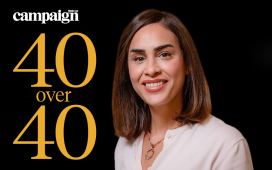
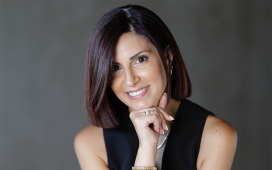
 Sarah Alaoui, Managing Director, DGA – Albright Stonebridge Group
Marketing communications has captured the world’s attention and made people more curious about Saudi Arabia than perhaps ever before, but what story remains when the campaign is over? When I speak to Saudi clients today – whether their priority is attracting investment, increasing tourism, promoting culture or drawing talent – a concern they all share is not about visibility, but about differentiation and buy-in.
Despite the investment that has gone into marketing, even the most sophisticated global stakeholders, they tell me, still struggle to articulate what Riyadh offers that is distinct from Dubai, Doha or other regional hubs. When they do show awareness of Saudi, their knowledge is largely limited to a familiar handful of adjectives and images: oil, megaprojects, capital and ambition. This is barely scratching the surface.
What Saudi Arabia needs now is a slow, deliberate communications approach that focuses less on whether people have heard of Saudi Arabia and more on whether they understand it. How can Saudi Arabia demonstrate its value in the perception marketplace? How can it translate impressive proof points and progress into a narrative that sticks, inspires trust and converts attention into investment, tourism, partnerships, talent attraction and long-term credibility?
Understanding produces reputational gains and soft power capital that can be drawn upon when the Kingdom needs it most. But this process doesn’t happen overnight – it requires patience, repetition and the grit of sustained engagement.
The mood in Saudi today is clear: buckle down, focus on impact and delivery and get rid of the fluff. That same discipline now needs to shape the communications front. While the first phase of Vision 2030 was necessarily a big-bang moment – announcing a strategic shift, pulling out all the marketing and creative stops, building domestic excitement, sparking international curiosity and putting the country on the map – we are now in a different phase.
With global commitments such as Expo 2030 and the FIFA World Cup 2034 coming up, these moments should be treated not only as events to host, but as deadlines for narrative discipline and coherence.
In practice, this calls for a whole-of-government strategic communications and public diplomacy effort in which each ministry, city, gigaproject, cultural body, tourism platform and private-sector champion comes together to tell a piece of one coherent story, in its own words.
While a marketing campaign can generate excitement and awareness, public diplomacy builds understanding. It works through repeated contact with the audiences who later become third-party validators – investors, journalists, entrepreneurs, cultural figures and city leaders. During this process, the goal is to listen and get a sense of the baseline of where audiences stand – what they believe, where they remain sceptical and what evidence they need before they can trust.
Communications messages need to be tailored. Investors want to understand regulatory reform, market access and predictability; tourists care about safety, hospitality and distinctive, memorable experiences; and expats and global talent care about daily life: schools, healthcare, culture and a sense of place and belonging. And, of course, the message will need to be tailored by market.
The good news is that Saudi Arabia has no shortage of stories to tell. Diriyah, for example, plays a fascinating role as a steward of heritage, cultural preservation and national memory and is often one of the first windows into Saudi for foreigners visiting Riyadh.
The Royal Commission for Riyadh City tells another story through the several formidable tasks expected from it, including attracting leading international institutions to the city to enhance the quality of learning; encouraging residents to adopt healthy lifestyles and wellbeing through initiatives such as the Sports Boulevard project; and delivering the Green Riyadh urban afforestation programme, which aims to enhance air quality, reduce temperatures and increase green spaces across the city.
As soon as you step into the King Abdullah Financial District (KAFD), the story shifts again and you feel the bustling energy, speed and ambition of the transformation that the country is undergoing and the professional culture that is required to shepherd it. Each of these pieces reflects a different dimension of the transformation underway.
But they should not be rattled off as items in a brochure. They need to be threaded into a unified narrative, continuously amplified through the right channels, credible spokespeople and carefully chosen platforms.
Other countries offer useful lessons in how patient investment in strategic communication and public diplomacy can become a lever of statecraft. Singapore’s rise as a global commercial hub was not built through a single campaign, but through a disciplined and consistent value proposition to businesses, investors and talent. India and Ireland have shown how diaspora communities – an underutilised resource in Saudi Arabia’s arsenal – can become informal ambassadors, amplifying stories in boardrooms, universities and cultural institutions abroad.
This approach may be particularly compelling at a time when budgets are being scrutinised. Sometimes, meeting a young Saudi start-up founder or a female Saudi chief executive officer does more to shift perception than state efforts alone. Turkey and South Korea offer another lesson about the power of cultural exports – whether Turkish soap operas, Korean film or Saudi fashion – to forge emotional familiarity and empathy. In many ways, the current recalibration underway in Saudi Arabia is a blessing.
It’s a chance to pause, lower the volume and decide where attention should be invested. The next phase of telling the Kingdom’s story will not be won by a better advertisement or a louder campaign, but by the old school approach: the slow accumulation of trust, one conversation, one visit and one encounter at a time.
By Sarah Alaoui, Managing Director, DGA – Albright Stonebridge Group