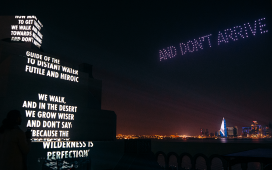
Campaign Middle East concluded its first Campaign Breakfast Briefing event of 2026 on Ramadan Advertising and the Year Ahead, which brought together close to 200 attendees, including client-side marketers, agency leaders, measurement experts as well as AdTech and MarTech players, at The Westin Dubai Mina Seyahi on Friday, 13 February 2026.
Delegates listened with rapt attention as several informative case studies were presented, and highly informative insights were shared by leaders who discussed what works best to earn lasting attention and drive purchase intent; how technologies – notably AI tools and agentic AI deployments – can accelerate planning, rapid research, creative analytics and programmatic orchestration without sacrificing strategy or craft; and how Ramadan acts as a cultural crucible that tests shared convictions, brand values and connections with the community.
Taking the stage at the event were:
- Anne Tulloch, Divisional Marketing Director – Wellness, Alshaya Group,
- Mai Cheblak, Head of Corporate Marketing, Emirates NBD,
- Alka Winter, Vice President – Destination Marketing and Communications, Ras Al Khaimah Tourism Development Authority (RAKTDA),
- Carla Klumpenaar, GM of Marketing and Communications, Al-Futtaim IKEA,
- Jonathan Bannister, Head of Marketing – GCC, PUMA Group Middle East,
- Ramya Menon, Director of Marketing and Communications, Bayut.com,
- Ali Rez, Regional Chief Creative Officer, IMPACT BBDO,
- Joe Al Lahham, Managing Director, TBWA\RAAD ,
- Hugues Raingeard, Head of Performance Media, HAVAS Middle East,
- Alain Mayni, Head of Tech, Media, Disruptors & Professional Services, Meta MEA,
- Jack Sivzattian, Manager – Partner Sales & Anghami Studios, Anghami & OSN+,
- Mathieu Yarak, Head of Data, MBC Media Solutions (MMS),
- Neel Pandya, Founder and Global CEO, Climaty AI, and
- Julia Nikolaeva, General Manager, Animotion Media Group.
These were some of the key takeaways from the event:
- Test, learn, iterate: There’s no time like the present to run experiments, adapt attribution and creative approaches, and be willing to pivot when data shows you that your strategies won’t resonate with consumers.
- KPIs and incentives: Align key performance indicators around both short-term and long-term objectives; ensure buy-ins and incentivise a collaborative move towards shared outcomes.
- Attribution and measurement: Lean into FFMs, MMMs, BLSs, and custom attribution to quantify the value of each touchpoint’s contribution. Focus on measurement that matters, including incremental demand and growth in share of voice, even across longer conversion windows in certain categories.
- From talking to practicing agentic AI: Understand why automated agent-based workflows are no longer optional during peak periods. Address real challenges faced, such as disproportionate time and effort spent on unstructured briefs, campaign setups, uploads, naming conventions etc., and then harness the benefits of agentic AI beyond real-time optimisation and decision-making to rapid research, adaptive creatives, cross-platform orchestration, and proactive decisioning.
- Product, participation and platform: For several brands, products remain the North Star. For others, it’s people and participation, calling for a shift from attention-grabbing to experiential initiatives. Panellists also highlighted the power of purposeful presence on the right platforms, priming audiences before Ramadan, providing for their needs during Ramadan, and paying attention to their emotions during and after Eid.
- Creators and culture: Prioritise people who genuinely love the brand and want to associate with it. Creator-first and co-created campaigns far outperform token influencer inclusions or high-spend celebrity endorsements. Local resonance remains key to unlocking success in the Middle East markets. Choose regional talent and local creators that resonate and reflect local culture rather than focusing on raw reach.
- Animated character-driven brand equity: Building on the notion that young children, including Gen Z and Gen Alpha are key decision-makers in the family who drive conversions, offline mascots and online animated characters in brand-safe environments – especially during Ramadan – are becoming ‘influencers’ that are sustaining emotional bonds in the long-term. Combined with cultural resonance and merchandising, even legacy IPs are driving lifetime loyalty and product purchases.
- Nostalgia, creativity and emotional storytelling: Ramadan remains a powerful reminder that what resonates most with people is emotional, cultural, deeply human and built on thought-provoking creativity. This not only results in strong brand recall, but also builds intent and drives conversion downstream, resulting in a compounding effect. The through-line is to remain human to connect with humans.
Welcome speech
The event began with a welcome speech by Nadeem Quraishi, Publisher, Campaign Middle East, who briefed the attendees about the brand’s latest developments.
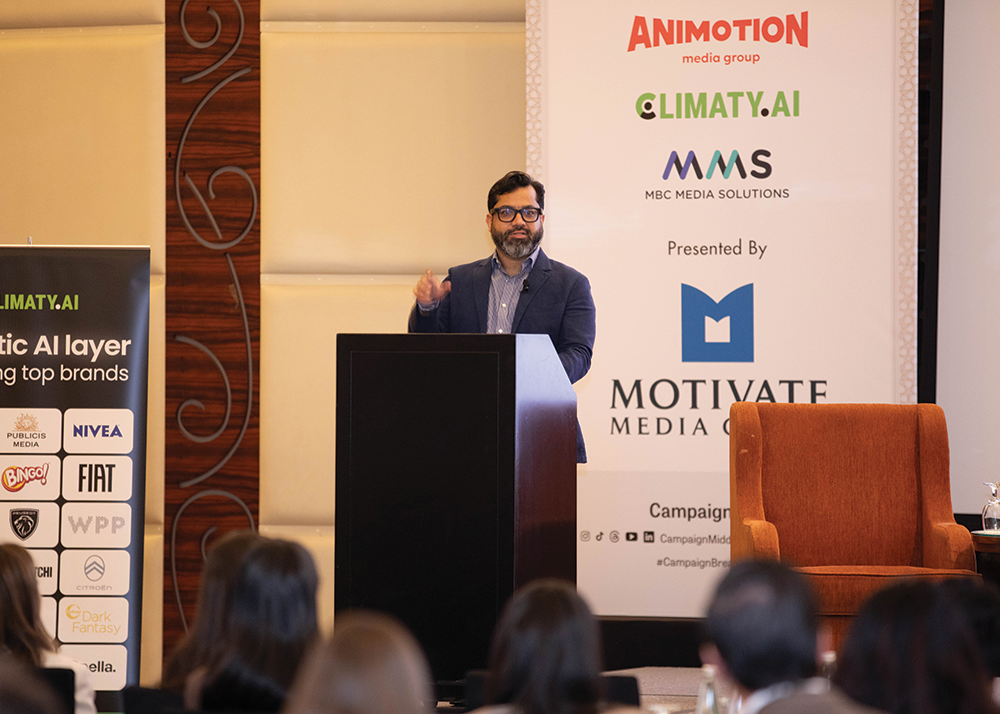
Quraishi highlighted important themes across Campaign Middle East’s upcoming monthly print editions, including Generational Marketing, The Creator Economy, Experiential Marketing, Nation Branding, and Destination Marketing. He also shed light on the brand’s annual directories, country reports, talent recognition editions and the launch of Campaign’s 40 over 40 in the region.
He revealed the events calendar for the year ahead, which includes four similar breakfast briefings in Dubai and two in Riyadh, as well as industry roundtables, video podcasts and the brand’s annual Agency Of The Year Middle East awards in December.
“We are committed to sustained partnerships, growing together and to delivering meaningful impact through the year. Over the past years, we have seen remarkable progress in this region driven by collaboration, creativity and determination. That momentum brings us all together here – ready to build on our past successes and reach even higher,” Quraishi said.
Chair’s opening remarks
Campaign Middle East Editor Anup Oommen then took the stage to deliver the chair’s opening remarks, setting the scene for what turned into an incredible event filled with actionable insights.
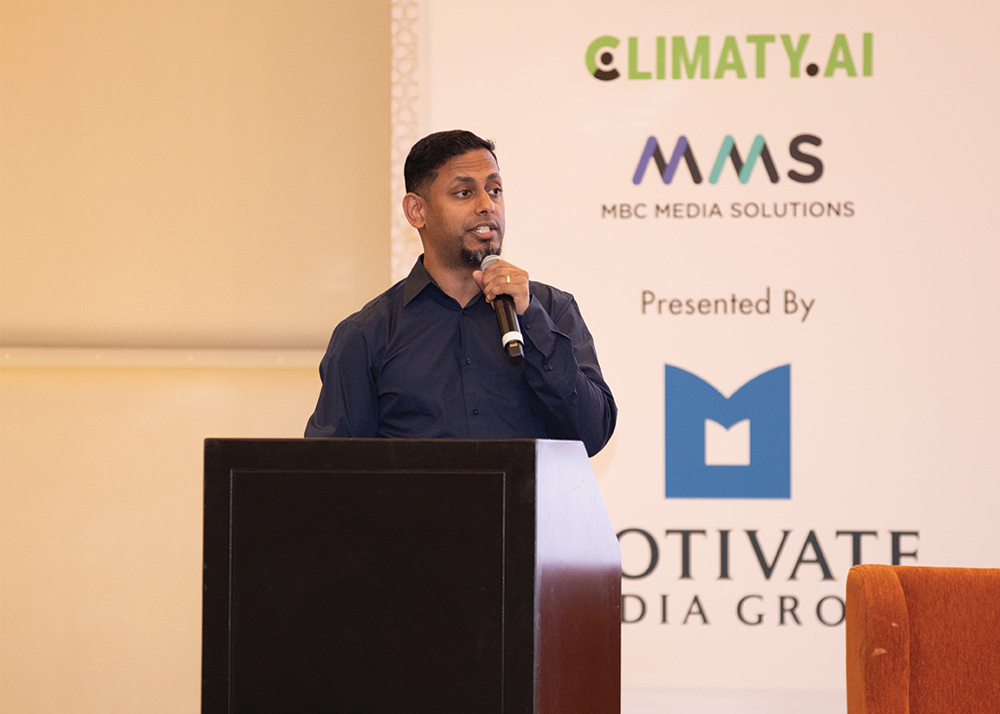
Oommen called out industry practices around tight RFP deadlines, low margins and price based competition, while also resonating with exhausted leaders, who 44 days into the year have spent long days at work getting Ramadan campaigns over the line, completing back-to-back shoots, fixing content calendars, finalising award submissions, aligning with global and regional leadership, attending events, and getting through client and vendor meetings.
Sharing insights gathered from several in-person meetings with leaders, Oommen said, “Brands that win are those who will create safe-to-fail environments. Brands that win are those that get their cross-channel content integration strategies, targeting, messaging and timing right. Brands that win are those that will evoke emotions, co-create with communities, spark nostalgia, create memorable experiences and build augmented humanity — complementing expertise with AI rather than executing AI as a KPI.”
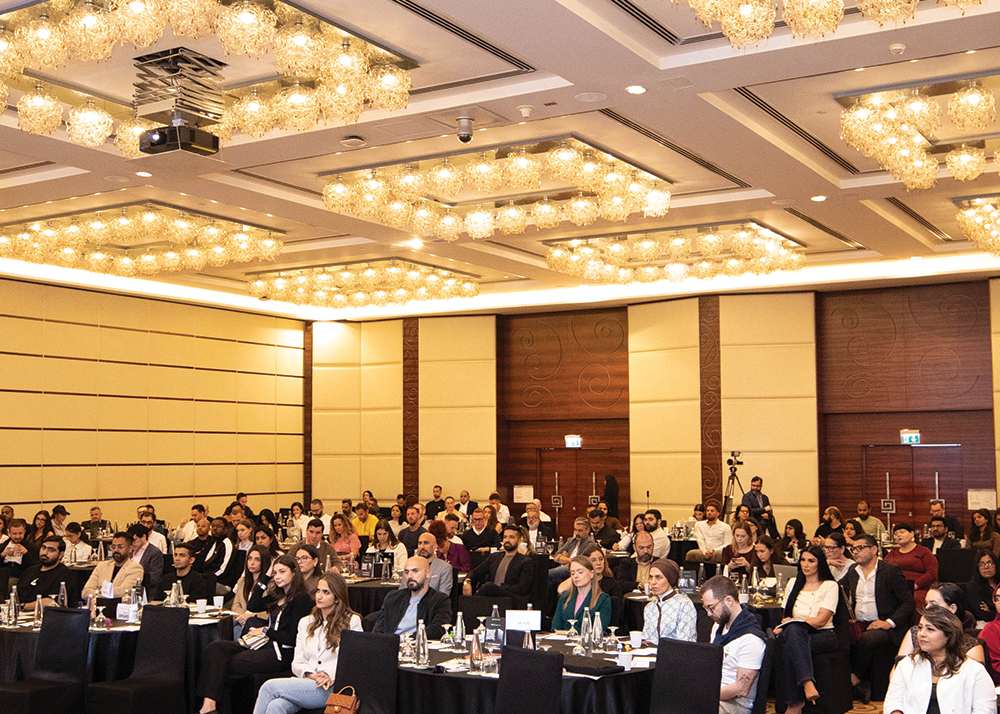
He highlighted how the marketers and agency leaders who will differentiate themselves and be distinctive in 2026 are those that are humble enough to admit that they don’t have all the answers – and are willing to learn, experiment and attempt new strategies.
Challenging the industry, Oommen concluded, “Will we, as an industry, dare to reward outcomes over promises? Will we dare to incentivise consistency over claims? Will we dare to reward partners that complement each other and collaborate over those that only compete? Will we dare to reward education and empathy over mediocre execution and vanity metrics? Will we dare to reward transparency and trust over shiny tools that no one knows how to use yet? Will we dare to reward proven performance over paltry pricing, POCs and unending pilots? Will we dare to reward healthy client-agency-vendor relationships instead of an ecosystem where its ‘every man and woman for themselves’? Will we dare to build mutual respect over time, or will we give up on the hope of a better world?”
Keynote 1: Rethinking brand presence in kids and family content
The event officially kicked off with a keynote presentation by Julia Nikolaeva, General Manager, Animotion Media Group on brand-safe, family-focused and educational content for children of different ages during Ramadan, framing children as opinion leaders in families, driving conversions.
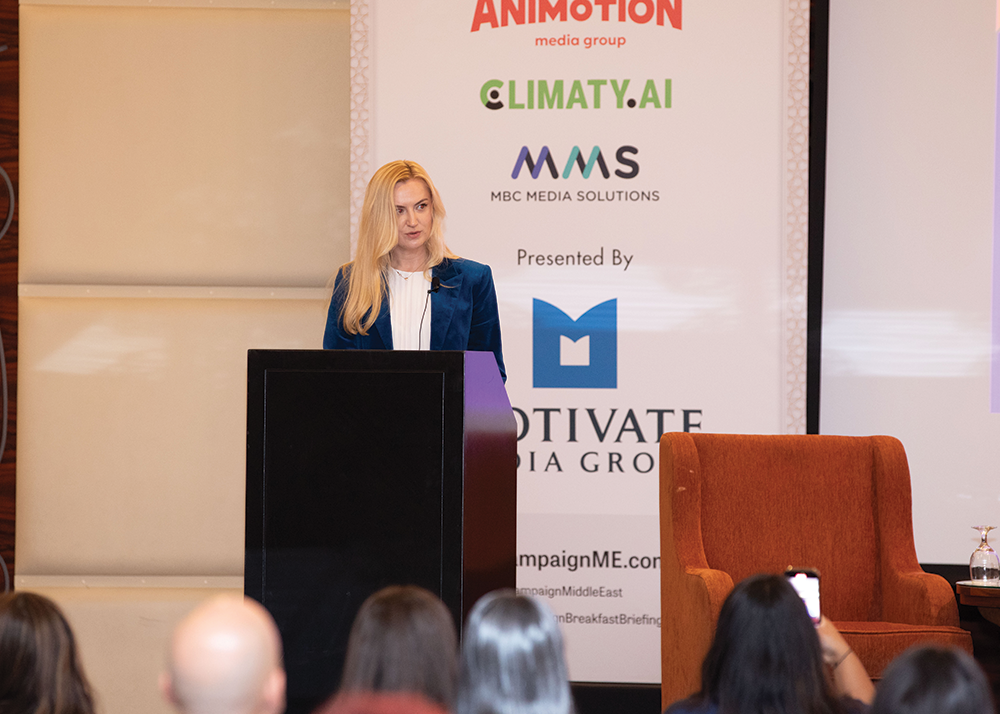
Nikolaeva said, “Around a quarter of the population in the region is children, and parents of these kids are more than half of the population. What does this mean for brands? Kids are driving consumption trends, what families watch, where they go and what families buy.”
She went on to make the case for animated characters and explained why brands are increasingly leaning into mascots. adding that “animated characters are the new influencers – the emotional connection that is formed during childhood goes on to last for a lifetime.”
The keynote highlighted how earning audience loyalty is now a key driver of success, and how animated characters have their own established media platforms that drive stronger engagement and higher conversion by offering direct access to large and loyal audiences.
Delving into the effectiveness of animated characters, Nikolaeva also pointed to the power of emotional storytelling and trusted intellectual property (IP), drawing a direct line between storytelling logic and performance metrics by referencing campaigns that not only resulted in brand uplifts but also drove 50 per cent higher sales.
Additionally, she showcased how production can be optimised within these brand-safe and trusted environments, given that animated characters don’t often need costly live shoots thanks to AI tools that now permit for rapid creation across diverse formats at scale.
Nikolaeva concluded by revealing a 360-degree approach to brand-building, including licensed promotions and merchandising, brand ambassador programmes, custom-mascot creation, as well as live shows and tailored meet-and-greet family experiences during Ramadan.
Panel 1: Brand vs. Performance: Finding balance in Ramadan campaigns
This first panel discussion of the day, offered perspectives on how marketers and agency leaders ought to place both pillars of brand-building and performance marketing at the foundations of their strategies – rather than over-indexing one over the other. Leaders shared notes on KPIs to track, attribution approaches to follow, meaningful metrics to prioritise and outcomes to incentivise – emphasising how a focus on brand values, creativity, emotional storytelling and cultural relevance drives performance downstream.
The panel moderated by Campaign Middle East editor Anup Oommen, welcomed to the stage:
- Anne Tulloch, Divisional Marketing Director – Wellness, Alshaya Group,
- Mai Cheblak, Head of Corporate Marketing, Emirates NBD,
- Hugues Raingeard, Head of Performance Media, HAVAS Middle East, and
- Mathieu Yarak, Head of Data, MBC Media Solutions (MMS).
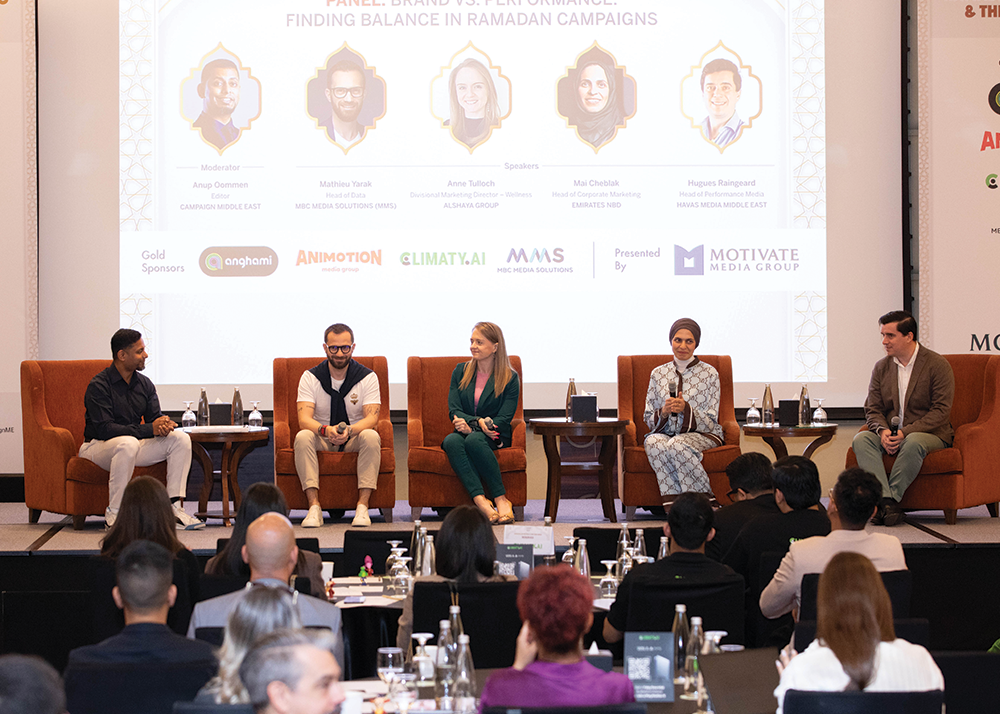
These leaders highlighted a pragmatic, investable philosophy: brand-building and performance activation are best served by a single, coherent engine. This marketing engine must respect cultural nuance, embrace evolving data capabilities, and build on cross-touchpoint measurement frameworks that quantify impact across brand, business and social outcomes.
Tulloch said, “You cannot have brand awareness without consideration, and then conversion. So brand awareness is all about pulling those heartstrings and connecting with them emotionally in a way that gets them asking why they should care about the brand in the first place. This, obviously, leads them into consideration and product, which is also a little bit more about the mindset, where they get to a point where they say, ‘Okay, I love this one. But actually, have they got the right product? Have they got the categories that are right for me?’, which then drives footfall into the store. And when they’re in the store, questions come up: What’s the value to me? Is it loyalty points? Is it a great price point? Is it the urgency that it’s a limited edition? So, the ROI lies across the entire funnel, whether that’s brand-led or performance-led and they all interlink.”
She added, “When we draw on MMM or FFM, we actually see consideration which is mid-funnel, having the most effectiveness in terms of conversion. Also, when we are looking at consideration, we lean heavily into what our customers are telling us – whether that’s in the form of UGC or influencers or content creators – because their voices speak on behalf of the brand in a much more authentic way that perhaps our creative content might. This is why it’s important to listen to our customers. We, as marketers, may be very invested emotionally in our campaign, but if the consumers say something different and the data and evidence points in that direction, we need to pivot accordingly.”
Furthermore, Cheblak made the case for why brand and performance are mutually reinforcing and must run in parallel rather than being viewed as antagonists.
Taking the example of an auto loan, Cheblak explained, “Imagine that we have great auto loan offers during Ramadan. It’s no surprise that people are highly connected if I’m just advertising and promoting a really good offer. That will definitely get me leads. But then, these are people only currently interested because of the discount or promotion, and I need to keep that coming in. So I need to build a brand; I need to act. And people, especially during Ramadan, are highly emotionally connected. So, I need to actually create content integrated into the scripts of the shows that they watch to ensure that they are not only educated about the product but feel emotionally connected to the brand and its offerings. This is what will keep the leads coming through during Ramadan and after. With financial products, it can take 30 to 60 days for consumers to convert, which is why optimising only on last-click conversion may not work; we also want to look at the incremental impact that the focus on brand messaging is having on conversions later on.”
Talking about the need for brands to pay close attention to consumers and iterate based on changing behavioural patterns and preferences, Raingeard approached the brand-plus-performance conversation from another angle.
Raingeard said, “During Ramadan, people behave differently even when it comes to media, brand and performance. They may choose to buy something because they feel emotional about a video that’s coming out, even though that video doesn’t have a call to action such as ‘buy this today’ or ‘sign up right now’. We have clients that have noticed not only how behaviour changes in the first week of Ramadan compared with the last week of Ramadan, but also how the timing of Ramadan changes behaviour differently each year. What we also need to get right is the mix between creative and performance. We can work on performance as much as we like, but we don’t have the right creative that drives the right emotion with the right message to the right audience, it’s not going to work.”
Yarak concluded showcasing how MMS continues to drive value for partners across agencies and advertisers, by bringing human attention data and brand metrics to inform media planning from Day Zero in a way that drives both brand and performance.
Yarak said, “So, from our perspective, we’re building a whole foundation. We have invested heavily in collecting human data, exploring how advertisers can integrate attention insights into media planning, creative strategy, and campaign optimisation to unlock measurable business growth. But we also invested heavily into collecting brand data and have conducted brand lift studies that measure brand impact across Shahid and TV. So when we bring all of these together, it offers a mechanism that will support advertisers and agencies to optimise from Day Zero and ensure that this drives high-quality outcomes on all fronts.”
Keynote 2: When agentic AI runs the marketing funnel
For the second keynote of the day, Neel Pandya, Founder and Global CEO, Climaty AI, broke down what agentic AI means for modern marketing teams: moving beyond “AI that helps” to systems that can run the work – connecting research, planning, creative iteration, measurement and optimisation into one continuous loop.
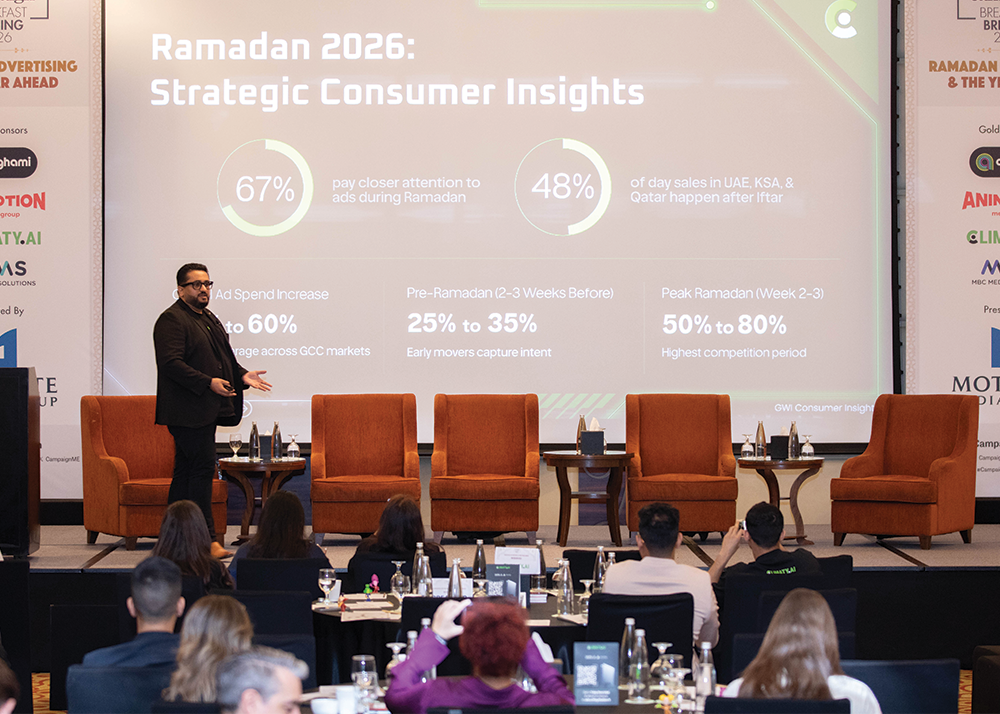
The keynote reframed agentic AI as a very real, transformative, end-to-end operating system for marketing, orchestrating everything from brief ingestion and audience research to creative adaptation, cross-platform execution and real-time optimisation.
The premise was urgent: Ramadan delivers a spike in attention, and speed matters, drawing a direct line between cultural timing and the necessity for accelerated workflows. The call to arms was clear: “speed up everything” because human-driven processes cannot keep pace with demand spikes.
Pandya said, “Ramadan is a season of reflection, intention and renewal — and that’s exactly how brands should be thinking about AI. At Climaty AI, we’re building an agentic ecosystem that doesn’t just automate marketing, but reimagines how ideas are born, built and scaled. The future isn’t AI tools — it’s intelligent agents working alongside human creativity. The year ahead belongs to brands bold enough to rethink their operating model.”
He highlighted how a prompt-based agentic AI ecosystem can turn a three-four page unstructured PDF brief into concrete, structured and actionable data. It shifts the narrative of AI usage from passive generation such as ChatGPT to autonomous, multi-step workflows that can analyse context, make decisions and execute tasks with speed and clarity.
Cross-platform orchestration and real-time decisioning were highlighted as practical, tangible benefits with human-in-the-loop governance. The final emphasis was on augmentation rather than replacement: agents take on heavy lifting, while humans provide guardrails, brand guidelines and higher-order judgement.
Panel 2: Ramadan storytelling through attention, intent and trust
This panel unpacked Ramadan storytelling with a practical, content-first lens: attention must yield participation, creators should lead, and product storytelling must sit at the core of the full-funnel approach. The panel moderated by Campaign Middle East reporter Shantelle Nagarajan, elicited insights from:
- Carla Klumpenaar – GM of Marketing, Communications & Interior Design, Al-Futtaim IKEA,
- Alain Mayni, Head of Tech, Media, Disruptors & Professional Services, Meta MEA, and
- Jonathan Bannister, Head of Marketing – GCC, PUMA Middle East,
- Jack Sivzattian, Manager – Partner Sales & Anghami Studios, Anghami & OSN+
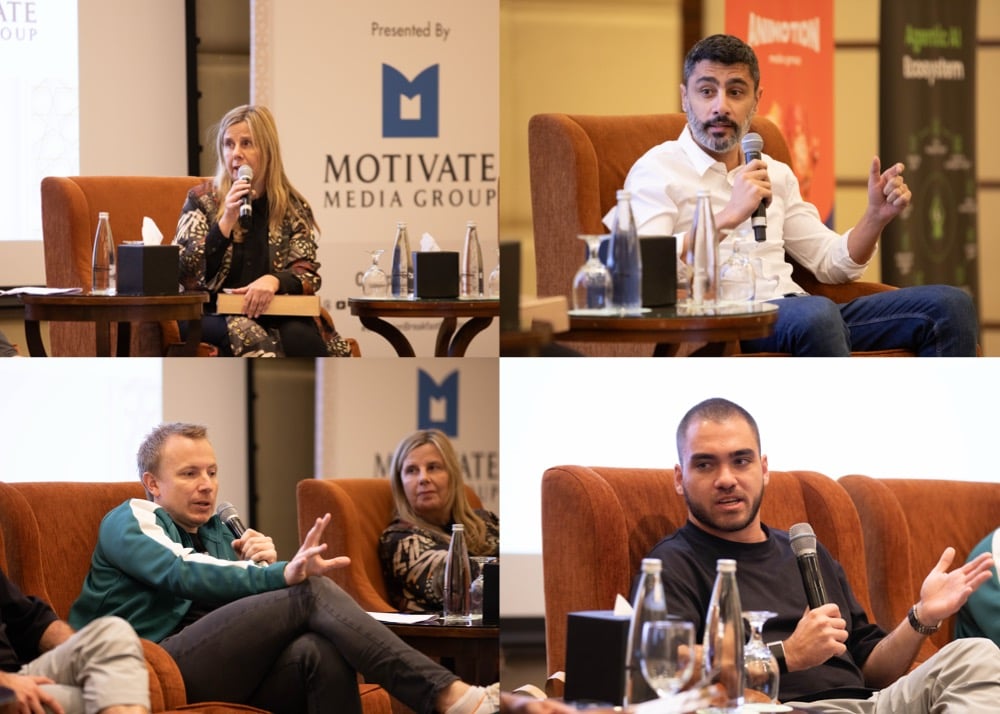
The shift from attention to participation was framed as both a behavioural and platform reality.
Mayni said, “We invite brands to think of engaging formats that move the conversation from attention to active participation. But on that front, it needs to be authentic, as well. As a result, what we’re seeing is the rise of creator-first campaigns. Maybe, over the last year or two, it might have been enough to include a creative element in a campaign, but now we’re seeing brands adopt a participatory, interactive and creator-first approach within their campaigns.”
Building on this notion, panellists also called for a greater focus on local creators and regional talent to inform campaigns in order to build trust, garner attention and build intent during Ramadan.
Sivzattian said, “The shift is going to continue towards authentic content that is led by creators on the ground. But for the content to resonate with audiences here in the region, it needs to be told through the lens of the local creators. That’s why our mission is to continue focusing on the regional talent that we have, and give them the stage that they deserve. There’s no doubt about it: we need to prioritise regional talent, lean into micro and macro creators who reflect local culture, and build content anchored by those creators.”
Leaders also emphasised the need to highlight product credibility within marketing initiatives, while working with genuine influencers who not only use but are also passionate about the product.
PUMA’s Bannister said, “Everything starts with the product. Everything that we’re trying to promote through a performance lens starts with a great product. Product truth is where credibility begins. Then, we want to genuinely work with people who want to work with us. If they love the brand and what we stand for, that matters more to us than all their millions of followers because that’s what garners the right attention and intent. When you have that, you pivot to promoting a lifestyle or sports, and then, shift the focus again to influence.”
Keeping the focus on people, IKEA’s Klumpenaar doubles down on the need to listen to consumers, whether that’s offline or online. She calls for a deeper understanding of what works best for each platform, for each campaign.
Klumpenaar said, “It’s important to keep the conversations constantly going with consumers and listen to them. There’s a reason we don’t automatically go for a full-360 marketing campaign every time. We really look at the messaging and what is the best campaign and for each channel. For example, our biggest channel, of course, is still the IKEA store. And there, of course, we look at our room settings, and how people can recognise themselves in each room. But for example, on the social media platforms, we lean into the visual aspect in a short-storytelling format in short films. During Ramadan, food is also very important, so that’s something else we look at in terms of what influences people and what their needs are at different times of the day.”
The final notes on the panel point to how relevance, purpose and mindfulness lead to attention, intent and trust.
Panel 3: ‘Ask Me Anything’
The final panel of the day introduced a new, unscripted and live format that permitted the audience to pose questions to four brave leaders. As such, the conversations veered from measurement to creative magic; from procurement and pricing problems to trust and transparency; from emotional resonance and craft to the client-agency dynamic and more. The panel moderated by Campaign Middle East editor Anup Oommen, included insights from:
- Alka Winter, Vice President – Destination Marketing and Communications, Ras Al Khaimah Tourism Development Authority (RAKTDA),
- Ali Rez, Regional Chief Creative Officer, IMPACT BBDO,
- Joe Al Lahham, Managing Director, TBWA\RAAD, and
- Ramya Menon, Director of Marketing and Communications, Bayut
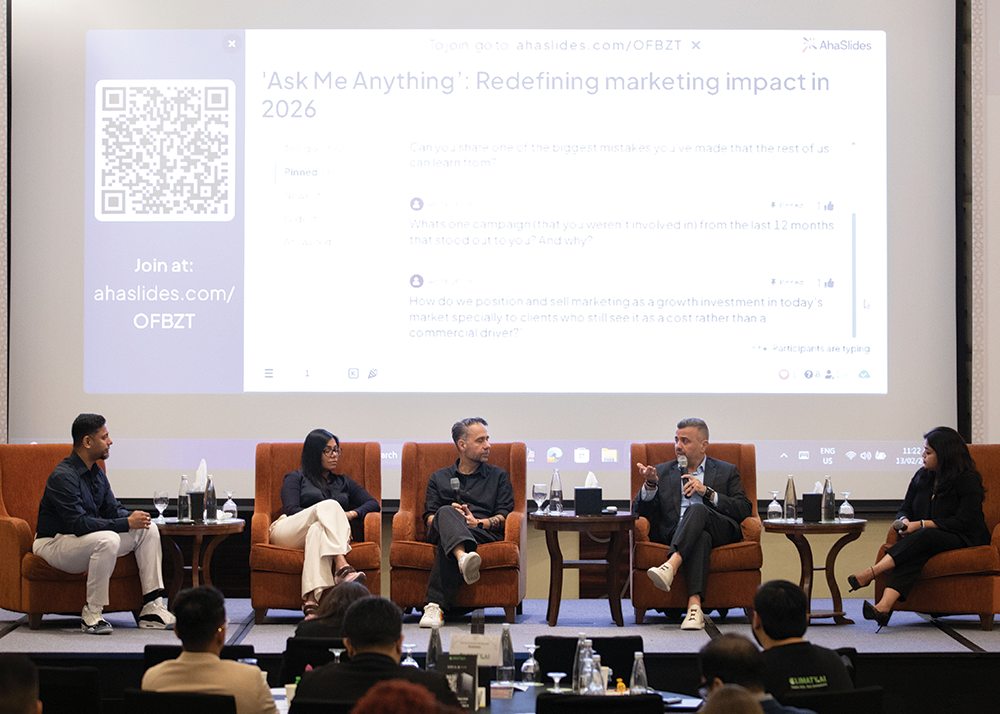
Without giving too much away on an unfiltered conversation meant specifically for the live audience in the room, some leaders discussed the need for clients to map out the right outcomes and measure what they’re trying to truly solve for, while others called for a greater focus on methodologies, processes and AI.
The leaders shared how “marketing has lost some of its magic” and how the industry needs to bring back the “stopping power” that resonates really well with people and goes beyond attention to live for a lifetime in people’s brains.
They also opened up lessons that can be learnt from mistakes made, such as “going ahead with mediocre work because of pressure from a brand”.
The client–agency dynamic also received robust scrutiny. The leaders highlighted the need to frame marketing as an investment and a value-driving exercise rather than constantly viewing it as a cost centre. They described how the strength of a brand can be measured by the strength of the CMO-CFO relationship.
Procurement practices were inspected under the spotlight: from unpaid ideation and ‘window shopping’ to industry-shaping approaches such as pitch or concept development fees to safeguard creative value.
Craft, creative originality, and expertise also emerged as a competitive edge in a market increasingly driven by metrics and speed. Behind-the-scenes storytelling and handcrafted productions were flagged as differentiators, showcasing how audiences increasingly value the human element that goes into creating campaigns.
All in all, the event reiterated how brand-building in the Middle East now rests on a living, multi-touchpoint ecosystem underpinned by authentic storytelling, local resonance and intelligent tooling. Agentic AI emerged as a practical enabler rather than a sci‑fi promise, compressing time, amplifying creative testing, and guiding real-time decisioning while keeping human judgement, brand guardrails and cultural sensitivity squarely in view.
In this atmosphere, the path forward was showcased as a balance of heart and analytics: nurture enduring brand equity by investing in meaningful, culturally aware content; deploy AI to accelerate planning, testing and cross-channel execution; and design measurement frameworks that capture attention, intent and incremental demand across longer conversion windows.
Creators, platforms and brands must work in tandem, not in isolation, with procurement and agency partnerships that prize transparency, craft and fair value.
Lessons for Ramadan 2026? Participation over mere attention, authenticity over box-ticking reach, and purpose-driven storytelling — these are not season-specific tricks but a blueprint for enduring growth.
The region’s marketers now have a compass: build lasting franchises that feel human, move with the rhythms of the calendar, and evolve alongside the communities they serve.
After the keynotes and panels at the Campaign Breakfast Briefing, attendees stayed back for a time of networking, collaborating, engaging with ideas, learning and brainstorming together.
For those of you who were unable to attend this stellar gathering of like-minded leaders shaping the top trends and addressing the top challenges in the industry, keep an eye out for the YouTube video of the entire event.
Mark your calendars. Campaign Middle East‘s next event, the Campaign Saudi Briefing: Strategy and Technology, scheduled for 23 April 2026.