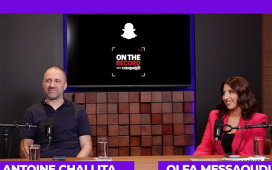
Podcasting was built on intimacy – the ability to listen anywhere, letting voices, stories and conversations fill moments when screens were not an option. But as video becomes important for discovery through platforms such as YouTube, TikTok and social media, the podcast format is increasingly being shaped by cameras, clips and visual-first consumption.
So we asked industry experts: Is the rise of video podcasting diluting what made audio powerful in the first place? Some said that the change risks shifting the focus away from the authenticity and imagination that made audio unique, while others believe video is simply expanding podcasting’s reach without taking away from its core strength.
Here’s what they all said:

 Kassandra Panagiotopoulos
Head Of Strategy, The Romans
NO
Video may be a great storefront for podcasts and a great discovery tool, but once people are in, audio consistently outperforms. Its real strength is its simplicity. When all you have is voices, the conversation becomes the experience, no visuals, no distractions, just ideas, stories and personality. That creates a level of engagement few formats can match. It’s still one of the most powerful storytelling mediums we have, and the continued growth of podcasting shows people haven’t lost their appetite for it. Long may it continue.
 Ajit Ramaswami
Chief Communications Officer, VFS GLOBAL
NO
Video podcasting isn’t dimming the shine of audio. Poor content is. Audio remains one of the few formats that fits around everyday life. We listen while driving, working out, cooking, commuting or doing chores. Moments when our eyes are busy but our minds are open. We do ourselves a disservice by treating audio as a mere delivery channel rather than an entertainment medium. Great audio doesn’t just communicate; it meets the audience where they are, it stirs up emotions and rewards them for listening. Nobody opens a film, concert or halftime show with something forgettable. Audio deserves the same creative ambition. When it gets it, audiences still show up.
 Eid Abu Musaed
Head of Production, SOCIALEYEZ
NO
Audio isn’t powerful because it lacks pictures. It’s powerful because it creates intimacy. Video podcasts don’t take that away; they simply give audiences another way to engage. The best podcast conversations still work when you close your eyes and listen.
Video has expanded discovery, particularly among younger audiences who often encounter podcasts through short clips and social platforms before becoming loyal listeners. It has also opened up new creative and commercial opportunities for creators.
The challenge isn’t the video itself. It’s remembering that the conversation remains the product. If the audio experience is strong, adding a camera doesn’t dilute it. It simply expands its reach.
 Dalia Baddar
Associate Integrated Communications Director, Gambit Communications
YES
Podcasts have been around since the first iPod. People often forget their original purpose: content you could download and listen to while running, exercising, painting, or commuting. Today, video podcasts give almost anyone the chance to have their own “Joe Rogan” moment. Many hosts aren’t experts; they’re simply creating content because it looks good on social media. With anyone able to rent a studio and appear professional, credibility is often confused with production quality. In my opinion, podcasts should aim for the standard of Diary of a CEO – delivering meaningful conversations, genuine insights, and real value to the listener.
 Rayan Ahmed
Director of Action Studios and Social Media, Action Global Communications
NO
Video podcasting is not diluting what made audio powerful, in fact, it is expanding its reach. The core strength of podcasts has always been authentic storytelling and meaningful conversations that engage audiences in a personal and immersive way. Video simply provides another way to consume the same content. What matters is not whether a podcast is audio-only or video-first, but whether the content is compelling enough to hold attention.
In today’s media landscape, audiences consume content across multiple platforms and formats. Video podcasting allows brands and creators to increase discoverability, engagement, and extend content across channels while preserving the authenticity and depth that made podcasting successful.
 Malek Sleem
Performance Manager, Equation Media
YES
It doesn’t. If anything, it made the audio more powerful. Every podcast now works in two layers, the visual and the audio, and the audio actually gets sharper because of the camera.When people know they’re being recorded, they pay attention to how they speak: their pronunciation, pacing, and confidence. That carries straight into the sound.
On top of that, it lives in more places at once, like YouTube and short clips on social. So, nothing got diluted. It got amplified and picked up by the dominating social layer, which is video.
 Aurelien Fonteneau
Managing Director, We Are Social
NO
It’s not diluting, it’s diversifying: video meets people in different moments. I listen in the car, switch to video while cooking because it feels like company in the room, and grab a social clip when I’ve got 90 seconds to spare. Same content, three formats, three moods.
What made audio powerful was the intimacy of the content and the host, not the absence of a picture – that doesn’t disappear with video. Data backs it up: 66.2 per cent of UAE users and 62.4 per cent in KSA tune into podcasts weekly, both well above the 52.5 per cent global average, putting the UAE in the top five worldwide.
 Neha Sathe
Senior Creative Copywriter, Amber Communications
NO
Podcast formats and genres have constantly been evolving. However, the core concept of a podcast hasn’t changed. Screen or no screen, podcasts still seem to cast the same spell on its audience. Of course, the risk of creators optimizing video podcasts for clips, reactions or set design rather than conversation or storytelling is always there, but the fact that it has expanded to a wider audience cannot be discounted. The magic of audio will never fade. The best podcasts still work when you listen to them with your eyes closed.
 Khaled Ben Ahmed
Creative Content Producer, Netizency
YES
Before I explain why, ask yourself this: would you rather listen to this answer, or watch it as a video? For most people today, the answer is probably video. If these same thoughts were delivered with a strong hook and visuals, you would likely stay engaged for longer. And when I say “podcast,” chances are you’re already picturing a YouTube video, a TikTok clip, or someone speaking directly to camera on Instagram. That alone shows how much the format has evolved. Social media has reshaped what we consider a podcast, and today, video is often the preferred way audiences discover and consume content.
 Martino O’Brien
Creative Director and Managing Partner, YouExperience
NO
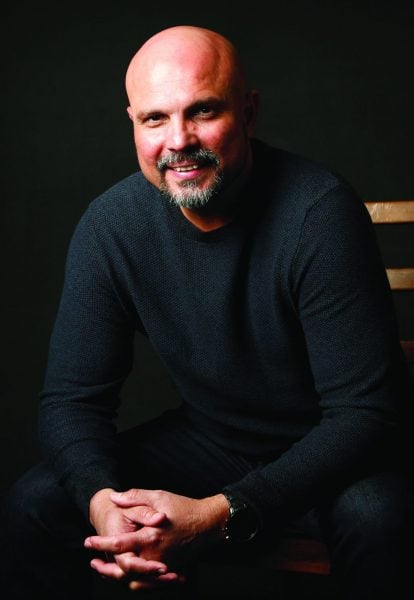
If video podcasting is diluting audio, then TV must have ruined books. People don’t tune into podcasts because they’re audio. They tune in because they’re interesting. The format is just the delivery mechanism. The truth is, most video podcasts are proving something uncomfortable: if your podcast only works because no one can see it, you may not have had much of a podcast to begin with. Yes, video changes the experience. Suddenly, there are facial expressions, awkward silences and hosts dressed as if they’ve just wandered in from Pilates. But none of that matters if the conversation is forgettable. Audio’s superpower was never the absence of pictures. It was the presence of substance. Video hasn’t changed the rules. It’s just removed the camouflage.
 Lemya Soltani
Co-Founder and Chief Commercial Officer, Next Audio
NO
Video podcasting and audio podcasting share a name, not a behaviour. A viewer watching a podcast on YouTube has a fundamentally different experience than someone listening through earbuds on a commute and the advertising signals that follow are completely different. What made audio powerful is still present: opt-in attention, eyes-free consumption, and host trust built over hundreds of hours of listening. Those mechanics aren’t weakened because a camera is now there. If anything, video’s rise has expanded the podcast ecosystem and brought new audiences in. The question for brands isn’t audio vs. video, it’s whether you understand what you’re actually buying. Audio delivers a measurable attention signal that no other format replicates. Video podcasting hasn’t changed that.
 Husam Haris
Co-Founder and Chief Operating Officer, The Hanging House
NO
Video podcasting isn’t diluting the power of audio; it’s expanding the ways people connect with ideas. The strength of audio has never been the absence of visuals. It’s the intimacy. A voice creates a different kind of relationship with an audience because it leaves space for imagination, interpretation, and reflection.
What we’re seeing now is not the replacement of audio, but the evolution of storytelling. Different audiences consume content differently. Some want the depth and companionship of audio on a commute, while others engage more deeply when facial expressions, body language, and visual context are added.
The core challenge remains the same: creating conversations worth listening to. Whether it’s audio-only or video-first, the format is not what makes content powerful. The quality of the thinking, authenticity of the voice, and value of the conversation are what ultimately matter.
 Santesh Row
Executive Creative Director, Liwa Content Driven
NO
What we’re calling video podcasting isn’t a dilution of audio. It’s a reframing of how attention gets allocated … not a reinvention of what the medium is. Audio was never just a file format. It was always a condition. Low-friction, high-trust, high-attention in motion. A space where presence is imagined, not shown. That core hasn’t shifted.
Video doesn’t replace that condition. It competes for discovery, not devotion. It operates upstream in the attention economy, where visibility is earned through faces, framing, and feed-native storytelling. But once attention is captured, the consumption habit often reverts to audio’s original strength. Which is, companionship in the background of real life.
So the shift is infrastructural, never philosophical. Audio didn’t lose primacy. It lost monopoly on entry. The mistake is treating this as a format war. Audio versus video is not moot. It’s different layers of the same attention curve. Video creates the hook. Audio sustains the relationship. So, the future belongs to podcasts that stop thinking in formats and start thinking in states of attention. What gets you discovered. What gets you to stay. And what keeps you returning without effort.