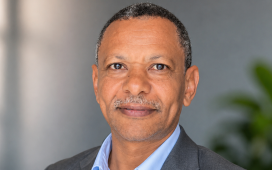
Jon Holloway, Managing Director, AKQA MENA.
If you buy creativity like stationery, don’t be surprised when it performs like office supplies. The Middle East and North Africa (MENA) region isn’t short on ambition; in fact, it’s the most ambitious marketing region in the world. New brands, new sectors, new destinations and new expectations. Clients want standout work. They want cultural relevance, commercial impact, modern brand systems, smarter experiences and ideas that can cut through in an increasingly noisy market.
But these ambitions and these transformational services are being acquired through systems designed for unbreakable caution.
A huge contradiction lies at the heart of MENA’s procurement and pitching problem.
This is not an argument against procurement. Good procurement is essential. It creates discipline, accountability and fairness. In any serious organisation, that matters. But there is a difference between protecting value and stripping it out.
There is also a difference between buying a standard service and buying strategic, creative and innovation services expected to transform and go beyond known frontiers. Repeatedly, that distinction gets lost.
This is your last chance to book tickets to the first-ever Campaign Breakfast Briefing: Retail & Commerce Media on Friday, 22 May. Get yours now for actionable strategy on enhancing ROI for retail and commerce media in the region.
The issue is not procurement itself. The issue is what happens when commodity logic is applied to non-commodity work. Strategic thinking, creative quality, cultural instinct and transformative potential do not sit neatly in a spreadsheet. They cannot be reduced to line items without some loss of meaning. Yet across too many pitch processes, that is exactly what happens.
Usually, the problem starts before procurement even enters the room. It starts when brands have not fully aligned on what they are buying. What question are we answering? Do we need better execution? Sharper strategy? A stronger brand? Effectiveness? More innovative thinking? Faster delivery?
And when value is not clearly defined, price takes over.
That is when discussions narrow too quickly to rates, scopes, timelines, deliverables and discounts. All are important, of course. But none of them on their own are reliable measures of future impact. When a business is buying creativity, strategic clarity or a step-change in brand thinking, cost should be part of the judgement, not the whole of it.
This becomes even more visible in the region’s pitching culture.
Pitch processes are not designed to identify the best long-term partner. They are designed to simulate rigour. Large agency lists. Multiple rounds. Significant speculative work. Shifting briefs. Unclear stakeholder groups. Vague scoring criteria. Timelines that drift. ‘Final rounds’ that are not final. Long processes that create the appearance of thoroughness but often reveal something else: a lack of alignment or understanding of the problem to solve.
A bloated pitch process is rarely a sign of confidence. More often, it is a sign that uncertainty inside the business is being externalised into the market.
“We say we want brave work, but build processes designed to make brave choices less likely.”
And that matters, because broken pitching systems rarely reward the right things. They don’t identify the smartest partner, the most distinctive strategic thinker or the agency best equipped to solve the actual business problem. They reward stamina. The agency willing to absorb the most unpaid effort, stretch the furthest, underprice the hardest or overpromise the most convincingly.
That may produce a winner. It will not always produce the right one.Agencies have their part to play. One of the first things I did when coming to the region was to slow down the new business approach. Agencies need to be calmer, more confident and more selective about what they do. No other region that I have worked in has so many agencies that do almost entirely the same thing. Everyone goes for every RFP or pitch and builds the business on what they win. It’s madness.
Above all else, the real cost is market-facing mediocrity. When selection processes are built around comparability, caution and price compression, they quietly shape the kind of work that gets made. Ideas become safer. Thinking becomes flatter. Distinctiveness gets diluted. The result is work that may be professionally delivered, but lacks the sharpness, boldness or memorability that ambitious brands say they want.
In the MENA region, that has become the norm rather than the outlier.
We are in a region that already has a huge white noise problem. There is more output, more competition, more content and more pressure on attention than ever before. The cost of blandness is rising. Yet many businesses still use buying mechanisms that reward what is familiar and easily defensible over what is differentiated and has high potential. We say we want brave work, but build processes designed to make brave choices less likely.
To be fair, the best procurement teams understand this. They are not the problem. At their best, they help create clarity, discipline and better decision-making. But procurement works best when it sits inside a broader model of judgement – one that includes marketing leadership, clear business objectives, strategic evaluation and the confidence to value quality properly.
A more mature model is not difficult to imagine: fewer agencies in the process; better briefs; real stakeholder alignment before the pitch begins; paid stages when meaningful strategic or creative work is requested; clearer criteria from the outset; more emphasis on chemistry, business understanding, operating model and the quality of thinking; and less obsession with late-stage price squeezing as though that is where the real value lies – because it absolutely isn’t.
If the ambition is transformational, the buying model cannot be purely transactional. If the region wants more distinctive brands, stronger ideas and more commercially effective work, it needs to be more intelligent in how it selects the partners expected to create them.
By Jon Holloway, Managing Director, AKQA MENA