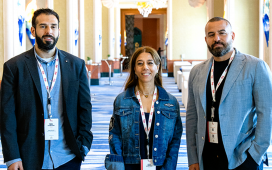
 Lara Arbid, CEO Initiative MENAT and Magna Global MENA.
We have spent recent years deepening our understanding of technology – from artificial intelligence (AI) and automation to data platforms and MarTech integration. That learning was essential.
But as we move into 2026, the conversation matures: the competitive advantage lies not in the tools themselves, but in how we apply them to solve problems unique to our clients, and that shift will manifest across five dimensions in 2026.
From data asset to revenue stream
The first transformation accelerating in 2026 isn’t about activating data better – it’s about monetising it completely. Agencies have mastered using client data for campaign optimisation. The 2026 mandate: help clients turn that same data into direct revenue streams or watch consultancies claim the conversation.
This isn’t reserved for banks or telecom operators. Automotive dealers, retailers and healthcare providers – every business sitting on customer data is realising it represents millions in untapped commercial value, not just targeting fuel.
The monetisation split is clear: internally, through cross-selling engines and lifetime value models that expand margins; externally, through clean room partnerships that enable anonymised insight licensing to non-competing brands.
Agencies that transition from data activators to revenue architects – transforming client assets into measurable business growth through consented, enriched, and commercialised data strategies – will secure their seat at the strategy table whilst others fight for media budgets.
More consolidation, less fragmentation
The consolidation momentum that accelerated in 2024 will reach a tipping point in 2026. Across the region, major holding companies are restructuring their marketing approach – moving from brand-by-brand agency relationships to unified, portfolio-level partnerships. The drivers are clear: economies of scale, cross-brand intelligence and holistic decision-making.
“In 2026, agencies solving for both velocity and authenticity will demonstrate genuine solution architecture.’’
What’s emerging is demand for solutions providing executives with comprehensive portfolio visibility. The requirement isn’t simply consolidated media buying but decision intelligence platforms that enable sophisticated allocation strategies, prevent overlap between business units and identify white-space opportunities visible only at portfolio scale.
The competitive advantage shifts from negotiating power to strategic architecture. Agencies building systems that enable C-suite executives to make data-driven decisions across dozens of brands simultaneously will become indispensable.
More strategic thinking, less operational drag
Client expectations around agency time allocation have fundamentally shifted. Hours historically spent pulling spend reports, reconciling invoices or extracting performance data are now seen as friction, not function. Clients expect automation, immediacy and self-service.
The opportunity lies in what automation enables. Consider an interface connected to booking and finance systems that instantly answers, ‘what did we spend on digital channels in the fourth quarter (Q4)’ or ‘show budget remaining for the first half of the year (H1)’. Manual aggregation becomes seconds, redirecting human capital toward strategy.
Sophisticated systems go further – they learn. Processing recommendations, outcomes and performance patterns, they develop nuanced understanding of what works in which contexts, suggesting optimal approaches informed by historical intelligence.
In 2026, operational efficiency is table stakes. Differentiation comes from deploying reclaimed strategic capacity.
More scalable authenticity, less manufactured volume
As agencies take accountability for business outcomes, content production becomes a critical capability challenge. Clients can’t achieve brand salience or purchase intent without content velocity – yet manufactured volume damages the metrics we’re accountable for.
The solution lies in building content infrastructure: influencer platforms that activate thousands of creators through automated performance-based compensation, creating always-on ecosystems rather than campaign activations. For categories where authenticity isn’t tied to human identity, AI brand ambassadors deliver consistent voice at scale with strict guardrails.
The strategic question: how do brands capture cultural moments without compromising brand truth? How do they scale content while preserving emotional intelligence? In 2026, agencies solving for both velocity and authenticity will demonstrate genuine solution architecture.
More hybrid fluency, less siloed expertise
Solving for client-centric innovation requires agencies to fundamentally rethink capability. Clients aren’t asking for specialists who execute within lanes – they’re demanding partners who architect solutions at the intersection of technology and strategy.
Whether building data monetisation infrastructure, portfolio intelligence systems
or scalable content ecosystems, these challenges require hybrid fluency: teams who intuitively blend technical sophistication with commercial judgement.
As AI becomes operational backbone, our talent strategy shifts from hiring solely for domain expertise to recruiting for hybrid fluency. The most valuable talent in 2026 will be those who intuitively navigate the intersection of human judgement and intelligent systems – cultivating teams who don’t just trust the data, but interrogate it with critical acumen, ensuring automated speed is always governed by human empathy and commercial nuance.
The agencies that rise to these challenges won’t just win more business – they’ll become embedded in how their clients create value.
By Lara Arbid, CEO Initiative MENAT and Magna Global MENA