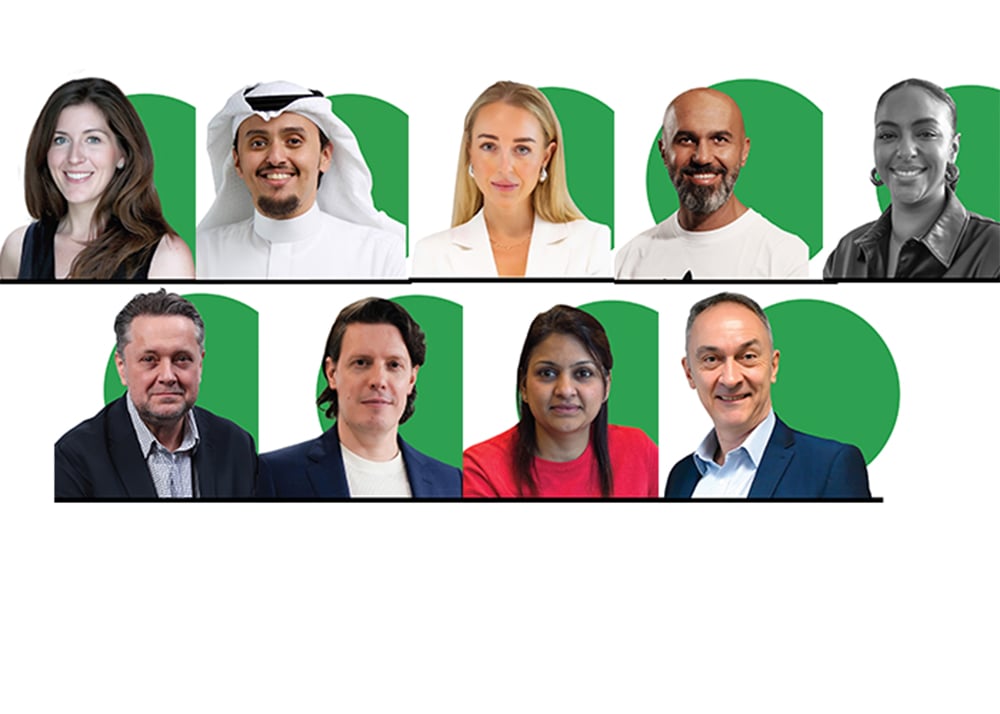
 Top row, from left, Dawn Barnable, Founder, The Mettleset; Ali Aljehani, Senior Vice President – Consultancy, dentsu Sports and Entertainment KSA; Sophie Ryan, Head of Corporate Communications, Marketing and Brand, Dubai Racing Club; Bilal Fares, Senior Vice President and General Manager, adidas EMC; and Razan Karim, Head of Communications – Fashion, Beauty, Lifestyle, HAVAS Red Middle East.
Bottom row, from left, John Nolan, Head of Sport and Commercial Investment – MENA, Publicis Groupe Middle East; Dr. Craig Wilkie, Managing Director of Maydan Sports, a Stagwell sports collective; Neha D’Souza, Senior Media Director, Equation Media; and Alan Holt, Group Managing Director, ES Sport.
Top row, from left, Dawn Barnable, Founder, The Mettleset; Ali Aljehani, Senior Vice President – Consultancy, dentsu Sports and Entertainment KSA; Sophie Ryan, Head of Corporate Communications, Marketing and Brand, Dubai Racing Club; Bilal Fares, Senior Vice President and General Manager, adidas EMC; and Razan Karim, Head of Communications – Fashion, Beauty, Lifestyle, HAVAS Red Middle East.
Bottom row, from left, John Nolan, Head of Sport and Commercial Investment – MENA, Publicis Groupe Middle East; Dr. Craig Wilkie, Managing Director of Maydan Sports, a Stagwell sports collective; Neha D’Souza, Senior Media Director, Equation Media; and Alan Holt, Group Managing Director, ES Sport.Sports marketing is shifting gears. It is accelerating past traditional sponsorship plays, broadcast tie-ups, naming rights and endorsements. The old manual that mandated mere brand presence is being rewritten. Marketers are beginning to move beyond the clutter of logos plastered on sports jerseys, media walls, racing cars, virtual on-screen overlays, and banners on the perimeters of the playing field. Rather than only being seen, brands are now also attempting to be felt, experienced and remembered.
Binoculars that once zoomed in on athletes and their achievements have now given way to cameras that capture every bit of emotion on the faces of fans. Every moment matters – from celebrations and commiserations when fans walk out of the stadium to memories made with friends, families or a fiancé-to-be – before, during and after a sports season ends.
Brands are being urged to become participants in the narratives they inhabit. The shared emotions and lived experiences that forge strong bonds between sports fans – or rivals – can now extend to a brand-consumer relationship. The result is a marketing discipline that looks less like a slideshow or a logo on a looped video, and more like a living, breathing relationship between fans, athletes and the brands that align with their hopes, dreams and values.
Consumers and communities are not content with passive consumption; they seek purpose, co-creation and cultural alignment. The new marketing manual, therefore, has to account for experiences that fuse sport with entertainment, culture and identity. It needs to be informed by data but must be anchored in human storytelling. The end goal is more about resonance than reach, more about trust than visibility, more about cultural movements than sporting moments.
Taking a deep dive into the new age of sports marketing, including investments, rebalanced budgets, content collaborations, building brand love and loyalty, and data-led storytelling, Campaign Middle East speaks to client side marketers and agency leaders, including:
- Bilal Fares, Senior Vice President and General Manager, adidas EMC,
- Sophie Ryan, Head of Corporate Communications, Marketing and Brand, Dubai Racing Club,
- John Nolan, Head of Sport and Commercial Investment – MENA, Publicis Groupe Middle East,
- Ali Aljehani, Senior Vice President – Consultancy, dentsu Sports and Entertainment KSA,
- Dr. Craig Wilkie, Managing Director of Maydan Sports, a Stagwell sports collective,
- Razan Karim, Head of Communications – Fashion, Beauty, Lifestyle, HAVAS Red Middle East,
- Neha D’Souza, Senior Media Director, Equation Media,
- Alan Holt, Group Managing Director, ES Sport, and
- Dawn Barnable, Founder, The Mettleset, one of the Middle East’s first and only sports media platforms to put women in sport first.
As the following responses suggest, the most durable campaigns are those that can be worn, shared and lived – whether through personalised products, creator-driven content or community-led and culturally relevant stories that outlive the scoreboard. The consensus is clear: Sport’s greatest partnerships will be those that help fans feel seen, heard and part of an experience.
From chasing CPMs to following CPS: Culture, participation and storytelling in sports
Industry leaders articulate a shift from visibility to relevance, from impressions to emotions, from interruption to integration, and from a one-way message to co-authored narratives.

Publicis Groupe Middle East’s Nolan says, “Old school sports marketing was about being seen. New school sports marketing is about being relevant and being part of the story. Fans don’t just want to see a logo; they demand authenticity, interactivity and emotional relevance. Gen Z and millennials prioritise purpose and participation over passive consumption, driving brands toward co-creation and genuine passion. The new playbook now centres on experiences that blend sport, entertainment, and culture, leveraging creators, data and storytelling, and going beyond live moments.”
Echoing these thoughts, dentsu Sports and Entertainment KSA’s Aljehani adds, “The old playbook is obsolete because the game has fundamentally changed. We are moving from an era of interruption to an era of integration. Fans are no longer a passive audience; they are the protagonists of the story, demanding a role in the narrative. In a region such as the Middle East, where sport is the lifeblood of cultural pride, the only strategy that matters is to build with them – not for them. True connection isn’t found in exposure, it’s forged in shared experiences, authentic identity and a deep sense of belonging.”
“The winning brands will be those that transform athletes into storytellers, fans into collaborators, and every campaign into a cultural experience that lives beyond the moment.”
Leaders agree that the playbook has shifted from transactional performance plays to purpose-driven storytelling and purpose-driven connections. Connecting with consumers, collaborating and co-creating with fans, community building narratives and cultural experiences come back to the fore.

Adidas EMC’s Fares explains, “The way audiences engage with sport today has evolved. For brands, it’s no longer just about who we sponsor, but about the stories we tell and the meaning we bring to people’s lives through that connection. At adidas, we see sport as a cultural language that transcends the field. When we show up in sport, we’re not simply buying visibility; we’re shaping narratives that inspire communities, empower creators and reflect the values of the next generation. For us, sport is culture, and the most powerful connections happen when our stories live authentically at that intersection. That’s where real impact, relevance, and loyalty are built.”
Equation Media’s D’Souza says, “Having worked with several global and regional sports brands, I can say that today’s consumer isn’t just watching sport, they’re living it through culture, lifestyle and identity. The new playbook is built on participation that celebrates real stories, micro-moments and shared values. The winning brands will be those that transform athletes into storytellers, fans into collaborators, and every campaign into a cultural experience that lives beyond the moment.”
This calls for a framework that treats fans as co-creators, sports marketing as relational rather than transactional, and storytelling as an ongoing practice rather than a sprint to the next launch.
Leaders agree that since social media algorithms have morphed to mirror human behaviour, sports marketing must evolve to match new emotional, psychological and social demands.

Dubai Racing Club’s Ryan says, “There’s a continuing shift from spectatorship to participation, creating ecosystems of interaction that extend far beyond the finish line or the final whistle. In a world now fully connected – through travel, social media and shared digital culture – every touchpoint has global potential. Sports marketing today isn’t about reaching a market; it’s about reaching a mindset. What drives long-term connection is the emotion that surrounds the sport – the stories, people, and shared experiences that turn admiration to attachment.”
ES Sport’s Holt says, “Thankfully the days of putting a superstar on a billboard to promote a product that you know they wouldn’t ever use and calling it a sports marketing campaign are almost gone. Consumers are arguably more savvy now, and obviously with social media, the negative backlash this type of marketing can cause makes both brands and the athletes think twice before signing these type of endorsement deals.”
Holt adds, “Sports fans are extremely passionate, and frankly obsessive, about their particular teams and sport. So, they are naturally vocal, and love to be involved in the debates and discussions around particular games, players or brands. They also operate as a collective group. So, when a brand has a marketing campaign that resonates, this will no doubt be shared and often go viral within their networks. The best sports marketing now is where the brand taps into those topical issues of the day and resonates the emotions they are feeling and discussion they are having while still staying true to what they stand for.”
Marketers and agency leaders also call for a better understanding of fans and their preferences rather than ‘moment-washing’ based on what sporting event happens to dominate discussions during the year.
This requires a shift from pursuing CPMs (cost per thousand advertising impressions) to CPS – an abbreviation for culture, participation and storytelling.

Stagwell sports collective Maydan Sports’ Wilkie says, “Fans want immersive experiences, not just passive viewing. They want to influence, share and co-create. That means focusing on ‘what will the fan do?’ not just ‘what will the fan watch?’ Audiences expect brands to stand for something. They want to know who the brand is. Brands that stand at the intersection of culture, sport, and identity will achieve resonance as well as reach. The playbook is moving from ‘drive impressions’ to ‘drive involvement and meaning’.”
The recent professionalisation of trail running in the UAE is a perfect example. Once a niche sport, it now drives increasingly high levels of participation and engagement, reshaping how brands and audiences connect with each other. These communities aren’t just watching the story unfold; they’re writing and shaping it.

Echoing sentiments on the move towards meaningful marketing, The Mettleset’s Barnable says, “We’re seeing a shift from mass appeal to marketing with meaning, from reaching everyone to resonating deeply with specific people. Sport is increasingly defined by its subcultures: running crews, cycling clubs, adventure sports, fan communities, and grassroots leagues. The new playbook isn’t about visibility, it’s about belonging, connection and adding real value to the cultures shaping sport’s future.”
From owning a logo on a jersey to owning a moment in culture
Sports marketing has also seen a definitive shift from transactional sponsorships to being timely cultural programming. Context and local storytelling are combining to connect brands with hyper-local communities in the region. From jerseys grounded in national pride to behind-the-scenes storytelling, sports marketing has instilled a sense of shared identity, belonging and purpose.

HAVAS Red Middle East’s Karim says, “Sport is a cultural force that shapes identity, belonging, ambition and even social progress. Brands have a responsibility to show up in ways that honour that meaning. Audiences no longer respond to logo slapping, but rather to brands that understand the emotional fabric of the game and the communities behind it.”
When HAVAS Red launched the Saudi Arabian Football Federation (SAFF) jersey in partnership with adidas, the agency grounded the story in national pride and hyper-local communities.
“The story was not about logos on kits, but instead a story of pride, belonging and the people who breathe life into the game every day,” Karim adds.
Referencing the seven-season documentary, Formula 1: Drive to Survive, and the All or Nothing TV series about Arsenal Football Club, Nolan adds, “Sport is now as much about the entertainment franchises as the numbers on a scoreboard, whilst still delivering incredible reach. Sport is a defining factor in cultural identity: My local team, my national team, my club, my country. It matters; it cuts deep. It has always been an unpredictable, unfolding narrative that defines who we are and who we want to be. So, sports marketing must evolve from transactional sponsorships to narrative-driven cultural ecosystems.”
“Sports marketing is not about being there; it is about belonging there. Fans reward brands that are in for the long haul – across the highs and lows. It is not about a quick win.”

Explaining the evolution of sponsorship “from a transaction to a transmission of culture,” Aljehani says: “A logo on a jersey is just visibility; it’s the old currency. The new currency is voice, values and narrative. Sport is the language of national spirit, and brands must now be fluent storytellers, not just loud advertisers. The real opportunity isn’t to buy space on the field, but to earn a place in the fan’s heart by becoming an authentic part of the cultural soundtrack.”
Leaders agree that sports marketing is no longer about owning a patch on a jersey, but more about owning a moment in culture in a way that reflects emotion, values and identity.
Wilkie explains, “Maydan works with clients who don’t just ask ‘Which team can we sponsor?’ but ‘What narrative can we weave? What experience can we craft?’ Our approach says: ‘Let’s identify the story that sport is telling in this region right now; let’s identify the audience who live and breathe that story; and let’s ask: How can our brand meaningfully join that story?’ Brands that act like they’re just sponsoring the event will be visible but not loved.”
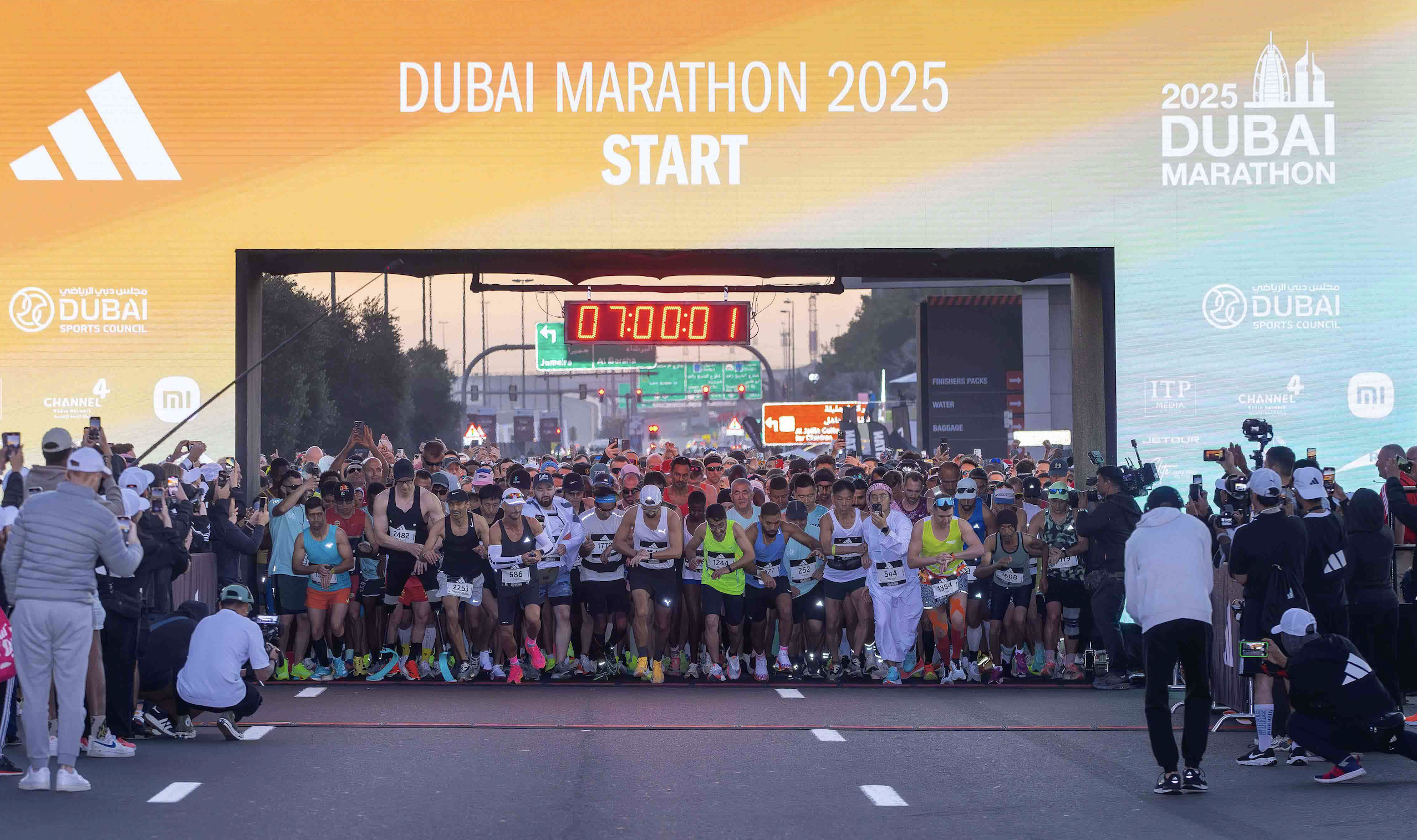
Similarly, Holt at ES Sport, which partners with major sporting events such as the Dubai Marathon and teams such as the UAE national football team, calls for a more culture-driven approach with a shared set of habits, values and actions.

He says, “We advise and support our clients to create experiences that genuinely reflect what matters to fans at all steps in their journey, using authentic storytelling and integrated brand presence. When executed well, this strategy enhances how sports marketing is experienced and strengthens the bond between brands and the audiences, which will last much longer than the specific event they have sponsored.”
Building on the discussion, Barnable adds, “We live in an era of hyper-personalised worldviews shaped by intelligent algorithms, where audiences connect both online and in real life through shared identity and purpose, not visibility alone. The most effective sports marketing now lives at the intersection of culture, creativity and community. It’s not about attaching a logo to a jersey; it’s about aligning with a movement and supporting the growth of that movement. The brands winning today are those creating meaning, not noise, in people’s lives.”
That said, marketers leaning into sports marketing with a culture-first mindset also often tend to overfund the launch, get absorbed in the live moment, and underinvest in the aftermath. Agency leaders agree that the time has come to rebalance budgets and activate campaigns toward the ‘shoulder’ and ‘after’ windows of a campaign – through replays, creator cuts and community rituals – when loyalty compounds and CPMs are lower. Leaders press the case for sustained momentum, rather than one-off, temporary spikes.

D’Souza says, “A launch is just the ignition and what sustains relevance is the ‘always-on’ engine. Momentum shouldn’t fade after the reveal; that’s when real brand equity begins to build. The real value lies in sustaining the momentum, keeping the conversation alive and delivering consistent value. Continued investment during these phases drives cost-efficiency, deepens loyalty, and builds the kind of long-term equity that one-off bursts can’t achieve.”
Nolan adds, “We’ve been discussing how sports marketing goes beyond the live moment. While there is an opportunity for clients to rebalance budgets, the real opportunity is for clients to do more with what they have. Owning the conversation is critical, before, during and after the game. Real metrics, real returns-on-investment (ROIs) aren’t just a media number based on a cost-efficient reach, they are a measure of brand values, brand relevance and brand love. Sport isn’t a cheap option. If you are buying the wrong thing for the wrong reasons, it is going to be very expensive. If, however, you are buying the right thing for the right reasons, it can be a bargain.”
Data as a compass, not the destination: When does it elevate and when does it erode?
Through the conversation with marketers and agency leaders, the role of data in sports marketing emerges as indispensable, although leaders question the intention of using data.
They call for data to illuminate human truth, not eclipse it. Leaders warn that in a sector charged with emotion, data must inform storytelling by leading to a better understanding of human emotion rather than overshadowing the beauty of the sport.
“You can’t ignore the ‘D word’, but there is a risk that it becomes the story. Data is part of the story, but the best stories start with a blank sheet of paper and are then enhanced by data. There’s a great phrase about not letting facts get in the way of a great story. Sport is a classic example of opinion being more important than facts and figures. However, when data is used correctly it can become valuable social currency.”
Karim adds, “Data-led storytelling is at its best when the intention is to better understand our audiences’ motivations, emotions and the moments that matter most to them. When used well, data brings clarity to fan behaviour and cultural shifts, enabling us to create stories and experiences that feel genuinely personal and relevant. It becomes noise when marketers lead with numbers over meaning, or use data just to be clever rather than to connect on a deeper level.”
The power of data, when paired with human sensitivity, can enable brands to respond in real time to live moments, preserving relevance long after the stadium lights dim.
“Build with empathy. The brands that will stand out are those that understand one truth: connection is the real currency.”
When misrepresented, numbers crowd out emotion and risk alienating the very fans that brands seek to celebrate. Experts insist on a disciplined approach: let data illuminate the human experience, never replace it.
Aljehani says, “Data is the compass, not the destination. Its true power is in illuminating the ‘why’ behind the ‘what’. Data elevates the moment when it fuels empathy, allowing us to understand the rhythm of a fan’s passion and craft stories that resonate with their very identity. It becomes noise the instant it overshadows the soul of the sport, reducing passion to a percentage and legacy to a statistic. The future doesn’t belong to those who can simply collect data; it belongs to those who can translate it into meaning, emotion and unforgettable human moments. The ultimate algorithm is, and always will be, the human spirit.”
Addressing the argument from a creative perspective, D’Souza says, “Data becomes the backbone of modern sports marketing when it doesn’t replace creativity but refines it. When used right, it gives depth to storytelling by decoding fan sentiment, predicting momentum, and personalising engagement in real time. But when brands start optimising for metrics instead of meaning, the story loses its pulse. The key is to use data as a creative lens, not a leash.”
“In today’s game, emotions drive impact and data leads the insight to make that emotion sharper,” D’Souza adds.
Experts reach a consensus that while data is one of the most powerful tools in a marketer’s toolkit, it’s effectiveness entirely depends on how it is wielded.
“Data-led storytelling should give insight that actually changes the fan experience. Used in real time, it lets brands respond to live moments, build relevance and deepen a connection. The key is to let data inform the story. It becomes noise when it produces numbers without context. Especially in sport, where culture and atmosphere define occasions, data alone can’t carry the narrative. When it’s tied to story and context, it can be transformative,” Wilkie says.
Sports marketing as a human story, not a media asset
Before the discussion concludes, marketers and agency leaders are invited to share a parting message on sports marketing. They offer succinct, practical counsel, calling for focus, clarity of purpose, cultural literacy and a commitment to long-term relationship building.
Leaders unanimously agree that sport is not an arena in which brands merely occupy space but a space in which brands earn trust by aligning with communities’ values and aspirations.
Nolan says, “If you’re going to do it, do it right. Don’t do five things, do one thing brilliantly. You need to own the passion for sport with the same intensity as your audience. Sports marketing is not about being there; it is about belonging there. Fans reward brands that are in for the long haul – across the highs and lows. It is not about a quick win.”
Fares adds, “Stay true to the athlete, to the community and to culture. Sport is evolving faster than ever; it’s no longer confined to stadiums or screens. Brands that thrive in this space are those that listen first, understand the pulse of their audience, and show up authentically in their world.”
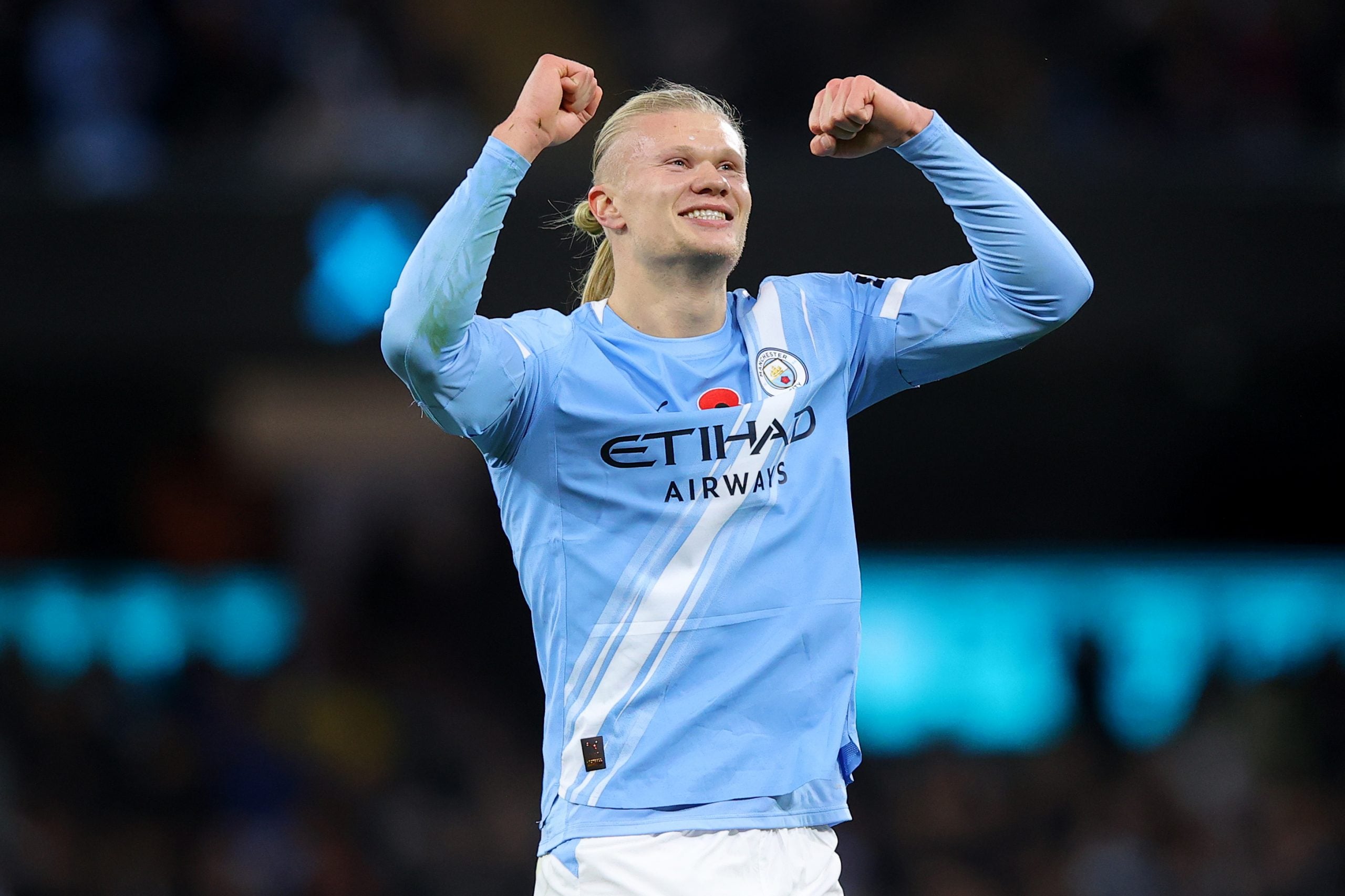
The through line is that sport has the power to not only unite people through shared emotions and lived experiences; it also has the power to connect brands with individual fans in a way that drives love and loyalty. Cue: Manchester City fans who make the most of every opportunity to don their jerseys when they head to the Etihad stadium in Abu Dhabi, or the Arsenal fans who just happen to own Sobha Realty properties.
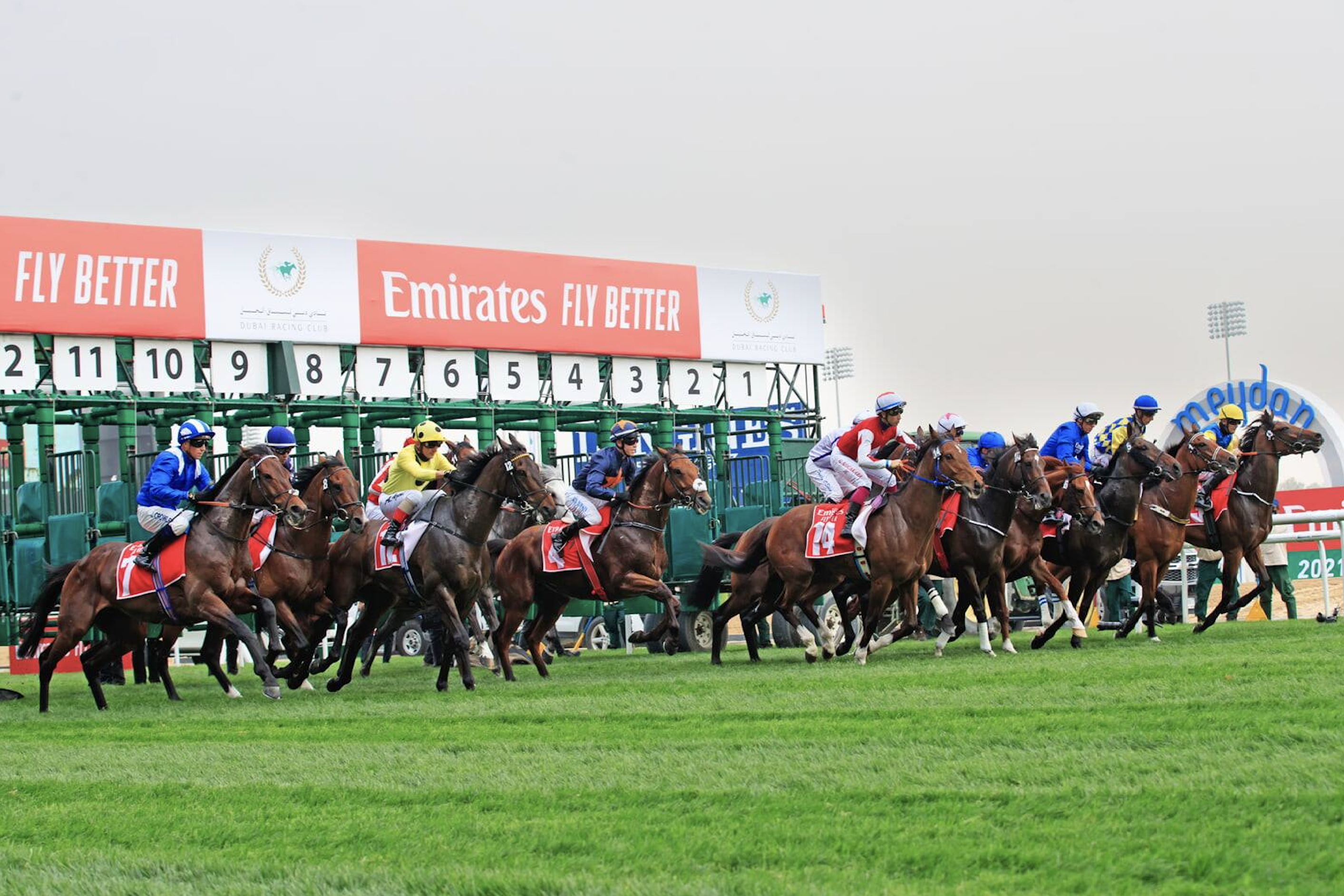
Ryan says, “The future belongs to brands that treat sports marketing as a human story, not a media asset. In horse racing, a race may last two minutes, but behind each stride are years of passion, teamwork and dedication – that’s where the magic lies. My advice? Build with empathy. The brands that will stand out are those that understand one truth: connection is the real currency. Winning hearts lasts longer than winning headlines.”
With a willingness to engage in the deeper cultural business of sport, brands can become more than sponsors; they can become co-authors of the communities they seek to serve. The Middle East’s vibrant and rapidly evolving sports culture offers a particularly fertile ground for these ideas to take root – where people are both deeply proud of their heritage and eager to participate in innovative forms of athletic expression and engagement.
Holt explains, “The Middle East is home to a thriving and active sports scene, and recent events such as the Abu Dhabi Grand Prix, Euroleague Basketball and Dubai Rugby Sevens highlight just how much impact sports marketing can have for brands wanting to attract either local, regional or international attention. This means the scale of opportunity is significant. However, sports marketing should never just be about logos or athlete endorsement – it can be so much deeper and longer lasting. What matters most is building real connections – whether through participation, strong partnerships, or campaigns that genuinely resonate with fans on an emotional level. Authentic connection leads to trust, and in this industry, that’s the true driver of value.”
Wilkie advises, “Ask yourself: What role do I want my brand to play in this sports landscape? Brands that win are those that have clarity of purpose. Cultural curiosity and being locally literate are so important.
He adds, “We’re clear on our own purpose at Maydan Sports: To drive real participation and all the benefits that sport brings; economically, societally and in individual wellbeing. We help brands move from being seen in sport to being felt in sport. We build strategies, stories and experiences that connect with fans and endure long after the final whistle.”
Aljehani concludes, “The brands that win tomorrow won’t be the loudest; they will be the ones that listen best and earn their place in the heart of the community.”
The dialogue leaves little doubt: Today’s sports marketing is a discipline in which culture, community, and character matter as much as campaigns and endorsements.
The leaders agree on a simple truth: Sponsorship is a starting line, not the finish line. To thrive, brands must integrate investments with the lived culture of sport, co-create with passionate communities, and cultivate relationships that endure long after the sporting season’s end.
The future belongs to those who can translate loud moments into meaning, who see fans not as a market but as a community, and who acknowledge sport’s power to shape identity as much as it entertains the eye.
The conversation ends where it began: Sport is a language of belonging. The brands that master this language will not only reach audiences; they will also become part of the emotional rollercoaster that connect communities and fan bases on a much deeper level.
The future of sports marketing, as these leaders suggest, is less about the reach of a single campaign and more about the resonance of a shared life in sport. It is a future defined by co-creation, cultural sensitivity,
and an unwavering commitment to meaning that outlives the next whistle.
And in that future, when fans look at a piece of branded merchandise or a co-created product, they’ll recognise more than a logo: they’ll recognise a story in which they themselves played a part.