Every year, the CMO Barometer offers a pulse check of how senior marketing leaders are navigating change. Based on insights from more than 800 CMOs across 15 markets, the study looks beyond tools and tactics to understand how confidence, investment and leadership priorities in the age of AI are evolving.
In its latest edition, one regional narrative stands out with particular clarity: Middle East CMOs are no longer debating whether AI will change marketing — they are focused on how deliberately they choose to lead that change.
That mindset was already evident at a small, closed-door CMO dinner in Dubai held ahead of the report’s release.
The conversation was pragmatic rather than theoretical. AI was discussed less as a future disruption and more as a present-day responsibility — something leaders must now embed into teams, workflows and decision-making, rather than leave at the edges of the organisation.
From those conversations, and from the survey itself, a clear pattern emerges. While the themes are familiar globally, the way they come together in the Middle East is distinctive.
Here are the three trends most discussed by regional CMOs, and most clearly reflected in this year’s CMO Barometer.
Optimism with intent
Confidence is not new to the Middle East, but this year it feels more grounded. CMOs are optimistic not because the environment is easy, but because they believe marketing can actively shape outcomes.
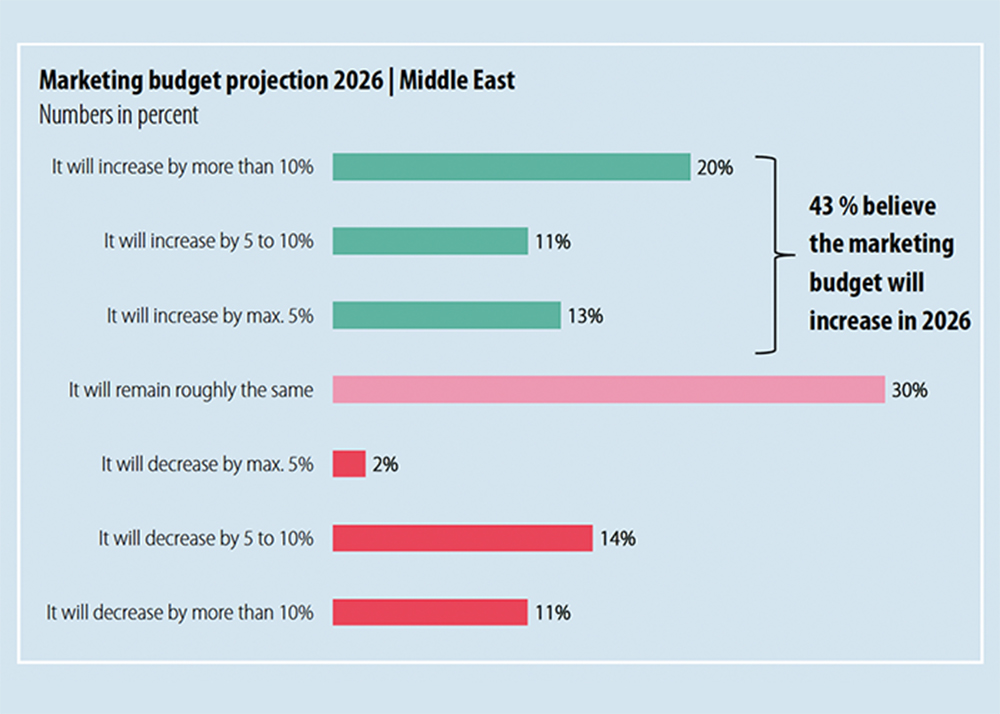
In fact, 52 per cent of CMOs in the region expect the economic situation in their sector to improve in 2026, making the Middle East the most optimistic market in the study.
What matters is how that confidence is applied.
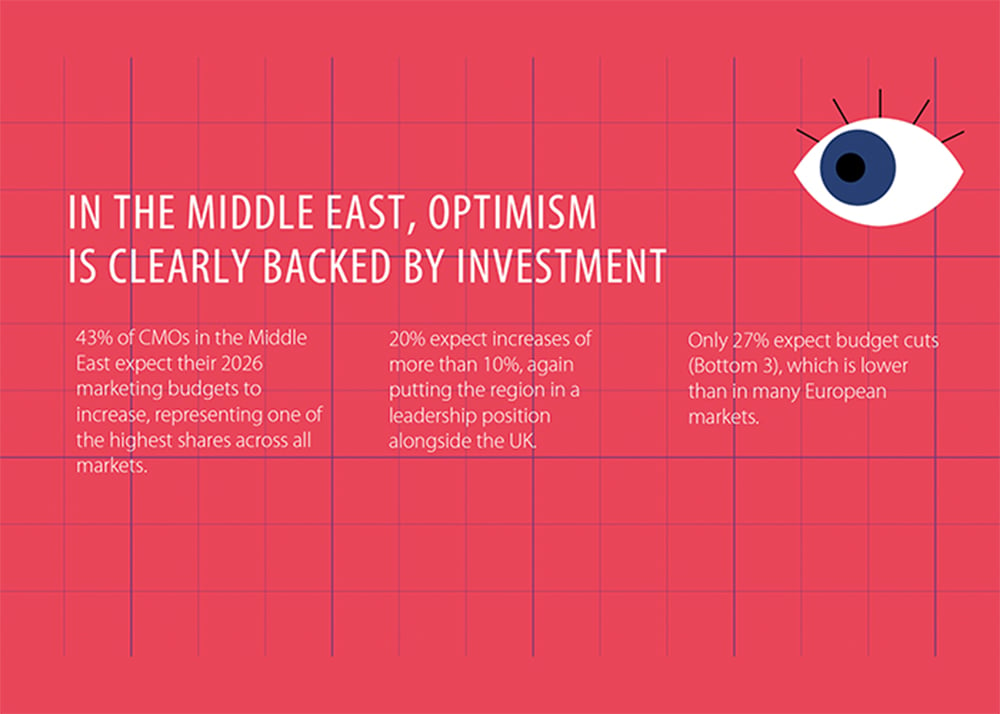
Rather than chasing scale for its own sake, many CMOs are doubling down on effectiveness — prioritising performance, accountability and long-term brand value.
Marketing success is increasingly defined by impact rather than activity, with AI seen as an enabler of better decisions rather than an end in itself.
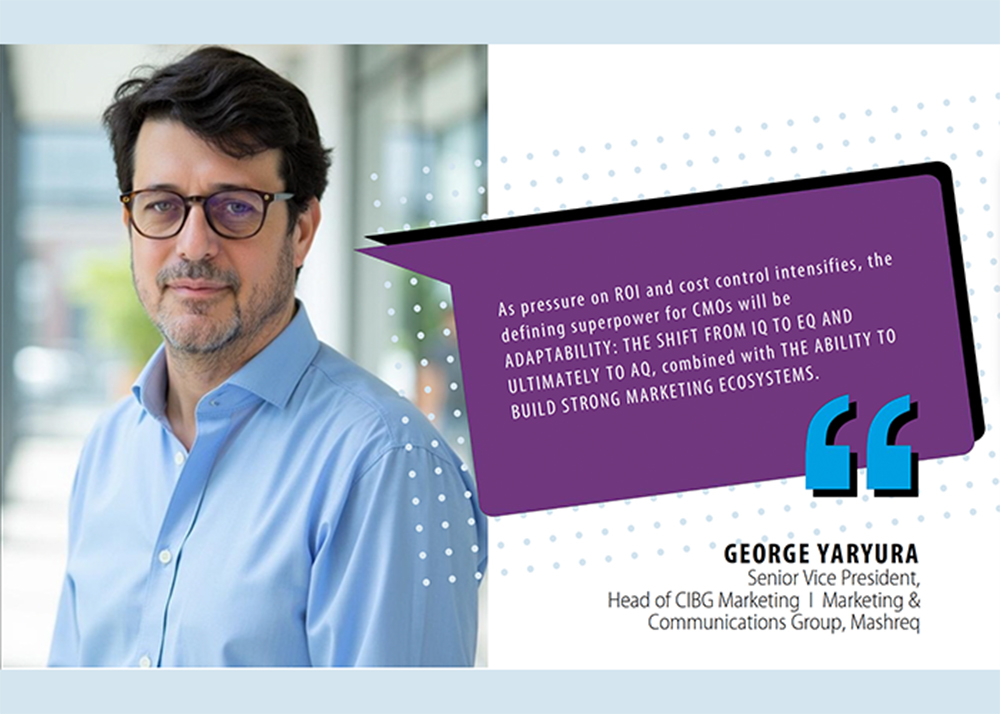
Culture x AI: Relevance at scale
AI dominates marketing conversations everywhere, but the Middle East stands apart in how tightly technology is linked to culture.
57 per cent of CMOs in the region say cultural marketing, spanning gaming, music and pop culture, is strategically important, the highest level across all markets.
For regional leaders, personalisation only works when it feels meaningful.
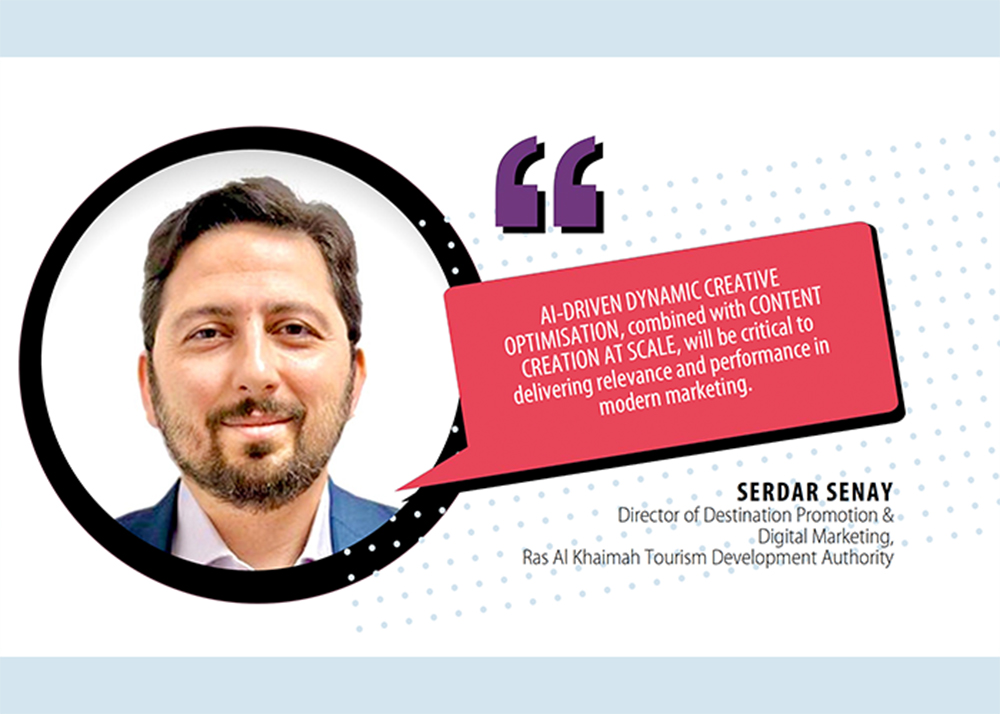
Data enables scale, but culture provides direction. From language and local behaviour to youth-driven platforms and content formats, cultural intelligence remains a critical differentiator — one that AI can amplify, but not replace.
The result is a more nuanced approach to personalisation at scale, where relevance is designed, not automated by default.
Talent + AI: The real transformation challenge is human
Despite strong momentum around AI adoption, CMOs are clear about what could slow progress. 36 per cent of Middle East CMOs identify skills and talent as the biggest capability gap holding them back from fully embracing AI, ahead of tools, data or governance.
This is reshaping how CMOs view their own role. Increasingly, leadership is less about functional expertise and more about change management — building confidence, upskilling teams and embedding AI into everyday workflows.
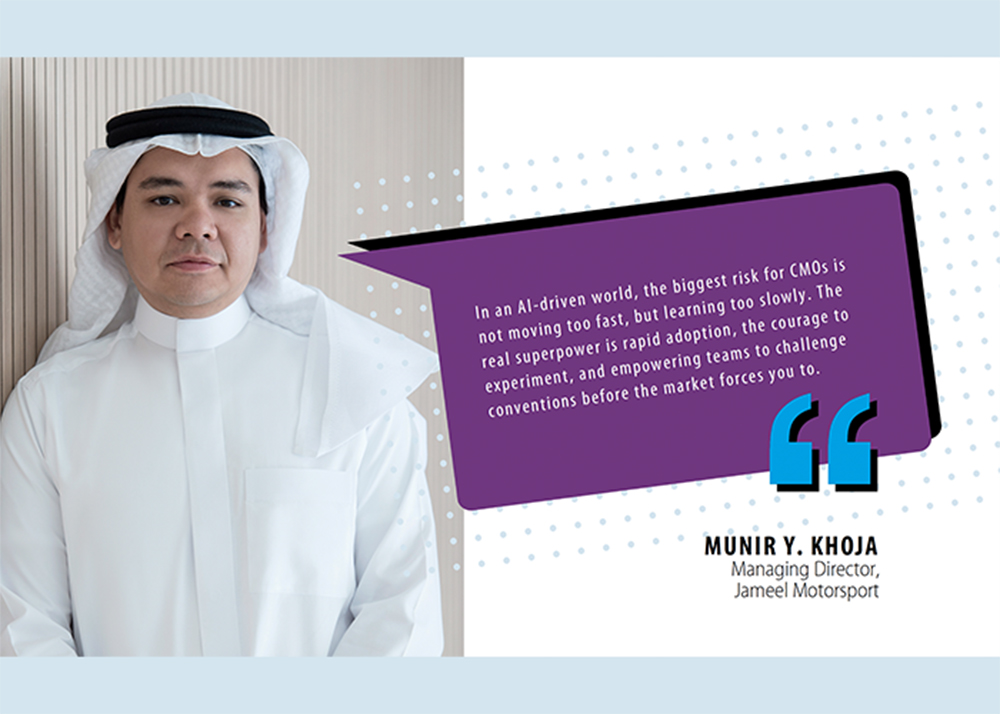
AI readiness, in this sense, is cultural as much as technical. The organisations that move fastest are those where curiosity outweighs fear and learning is treated as a leadership responsibility, not an individual one.
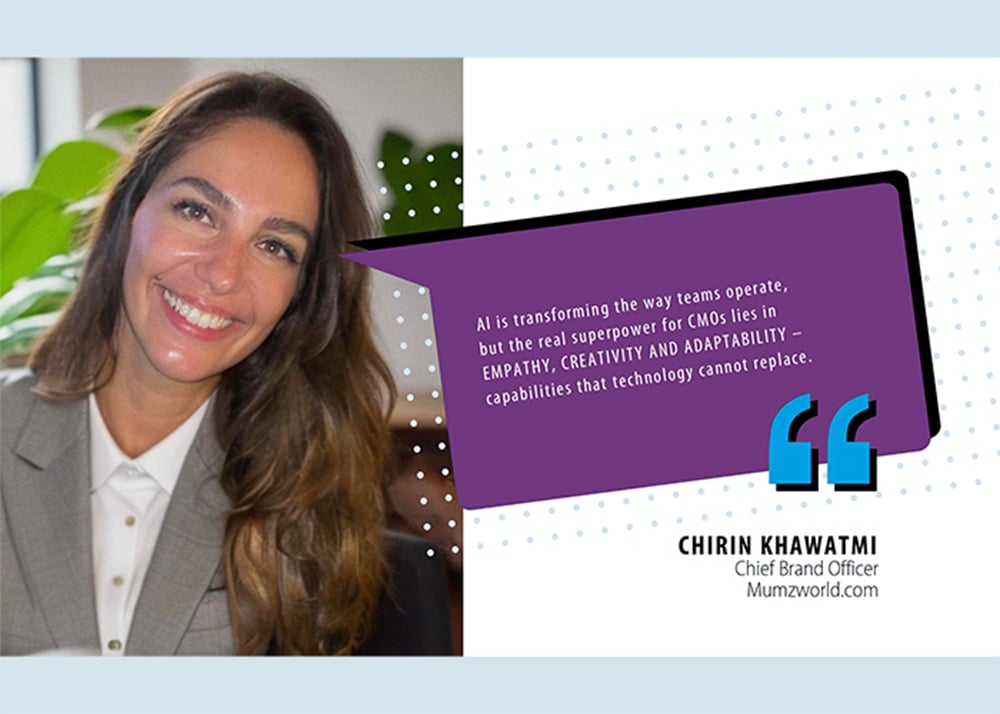
Across the Barometer, CMOs describe their superpower not as mastery of tools, but as the ability to lead change: to inspire teams, build belief, and turn complexity into clarity.
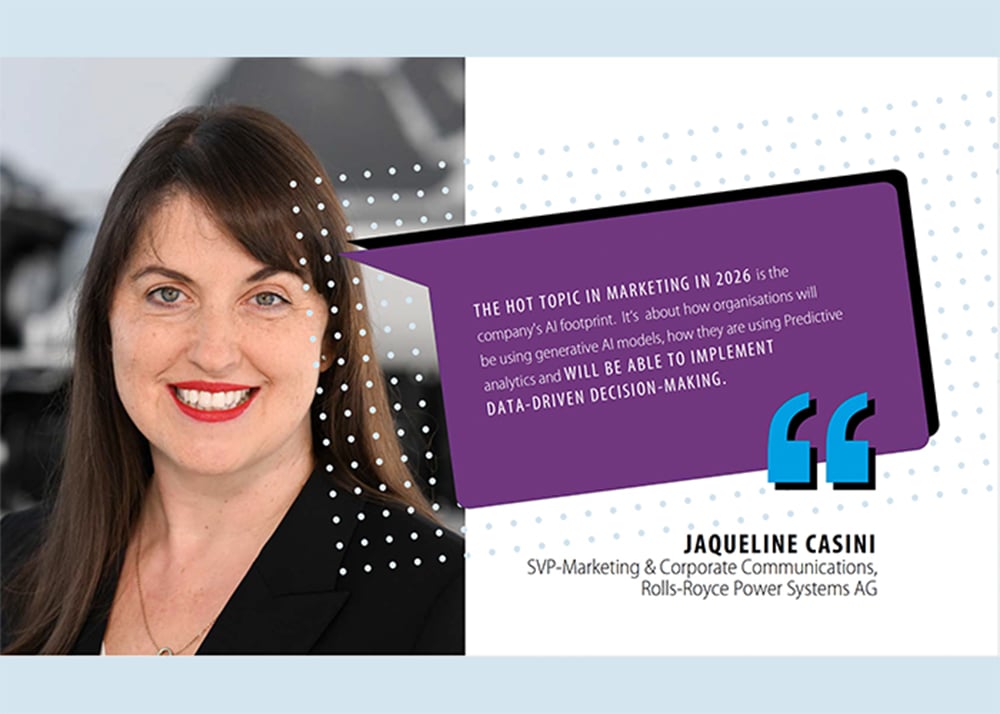
In many organisations, the lines between CMO and Chief Transformation Officer are increasingly blurred, as CMOs assume greater responsibility for driving transformation, setting direction, igniting momentum, and redefining what modern leadership looks like.
While many global markets prepare for cautious stability, the Middle East is leaning forward. 2026 will be a year to watch closely to see which brands turn optimism, courage and capability into real advantage, and which CMOs use their superpowers to actively shape what comes next.
This is a story still being written, and one we look forward to continuing together.