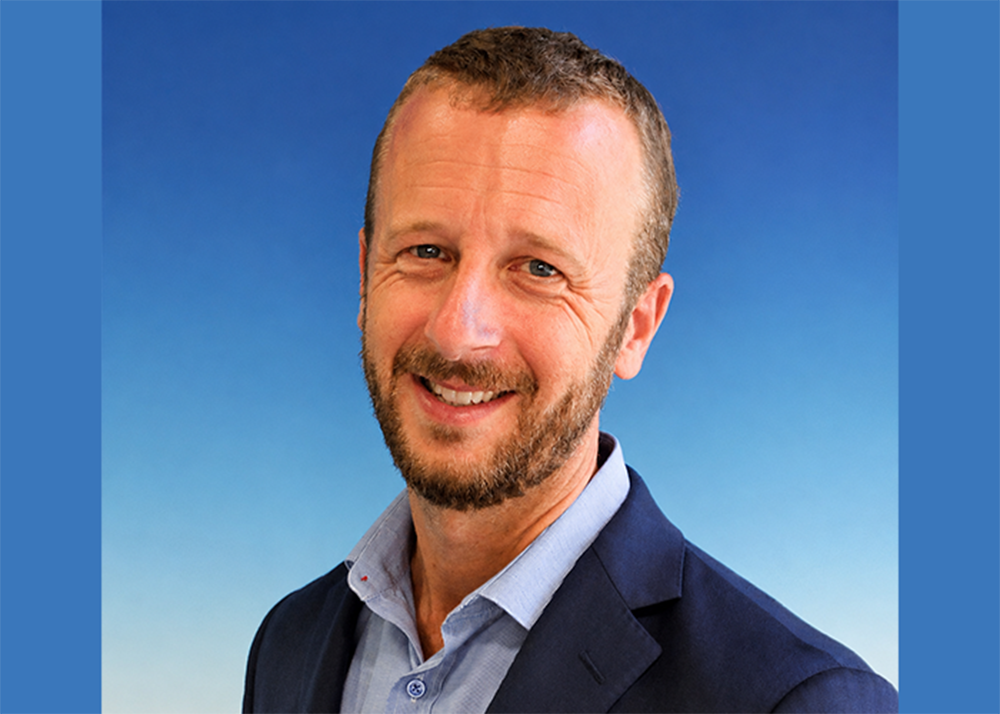
 Ralph Beckmann, Marketing Director Skoda at Volkswagen Group Middle East
Every July, the Tour de France reminds the world that cycling is a sport built on endurance. Not only the endurance of the riders, but of the stories, traditions, heritage and communities that have grown around it over more than a century. For brands, that idea feels especially relevant today.
We live in a time when attention is easy to chase and difficult to keep. Trends move quickly. Partnerships come and go. Campaigns are created around moments that can disappear almost as soon as they arrive. In that environment, heritage is often treated as an advantage: a founding story, a milestone anniversary, a long-standing connection to culture.
But heritage does not create relevance on its own. If it is only used as a reference point, it can quickly become passive; something a brand talks about when it wants to remind people where it came from, rather than something that helps shape where it is going.
The real question for any brand with history is not simply: what is our heritage? It is: what are we doing with it now?
At Škoda, that question has always been closely linked to cycling, as the first vehicle to ever come out of the Škoda factory line was, in fact, a bicycle.
Before Škoda became known for cars, our story began on two wheels. In 1895, Václav Laurin and Václav Klement started by building bicycles under the Laurin & Klement name. That origin is more than a historical detail for us. It is part of the way the brand understands mobility: as something practical, human and connected to everyday life. Cycling is in our blood.
That is why our relationship with cycling has never felt like a borrowed association. It is part of our foundation. It is also why Škoda’s long-standing partnership with the Tour de France continues to feel relevant more than two decades later.
Of course, the Tour is one of the world’s most recognised sporting events; a beautiful circus of sights and sounds, colours, moods and emotions. But for Škoda, the connection goes deeper than visibility. We have been the Tour de France’s official car supplier and partner since 2004, proving that behind every great bike is a great car. Our fleet of around 305 Škodas operates as support vehicles, including road crews and logistics vehicles, helping keep the race moving from stage to stage.
This year, we are bringing that connection closer to home through the collaboration Škoda Ali & Sons with Wolfi’s Bike Shop, one of the UAE’s most respected names in cycling and a long-standing champion of the local cycling community. Together, we are celebrating our enduring partnership by giving back to cyclists across the UAE and we recently offered a select group of enthusiasts the chance to win a fully paid trip to France and experience the Tour de France alongside Škoda, turning a global sporting spectacle into a once-in-a-lifetime opportunity for local riders.This is where many brands face an important distinction. Sponsorship can buy presence. Heritage can create a reason to be there. But only consistent action can make that presence believable.
Brands often talk about being “in tune” with culture. Increasingly, they are participating in cultural spaces and moments to reach and engage more of their ideal customers, from sport and music to design, food, wellness and mobility. But the moments that work are the ones that align naturally with a brand’s identity, heritage and timing. They succeed because the connection feels clear and credible, not because a brand has tried to force relevance.
That is why heritage is so important. It gives a brand a credible reason to participate, but it also creates a responsibility. In our case, if cycling is part of Škoda’s DNA, then that connection has to show up beyond archive imagery, anniversary storytelling or event sponsorship. It needs to influence the challenges we pay attention to, the communities we support and the way we think about mobility today.
One example is DuoBell, a recent Škoda initiative developed in response to a very modern cycling challenge. As more pedestrians move through cities wearing noise-cancelling headphones, cyclists can find it harder to alert them and safely share public spaces. DuoBell was designed to address that problem through a dual-frequency bicycle bell that can be heard even through active noise cancellation technology.
That, to me, is a more interesting expression of heritage. It takes a connection that began in the 19th century and applies it to a very current question: how do people move safely and considerately through the cities of today?
The same thinking feels especially relevant here in the Middle East.
This is a region deeply shaped by heritage, culture and identity, but also one that is constantly building toward the future. Across the GCC, heritage is not treated as something static or distant. It is visible in architecture, hospitality, design, national storytelling, major events and the way communities continue to evolve. In many ways, the region is a powerful example of how history can remain present while still helping shape what comes next.
Cycling reflects that same momentum. Across the GCC, it has become far more than a sporting pursuit. In the UAE, Saudi Arabia, Qatar and beyond, it is increasingly connected to wellbeing, community, active lifestyles and the way people experience cities and outdoor spaces.
For Škoda, that makes our cycling heritage feel especially relevant in the region. It gives us a natural way to think about mobility as something practical, accessible and human. Those principles are visible in our growing support for cycling communities and events across the Middle East, from our partnerships with Wolfi’s Bike Shop and L’Étape Dubai by Tour de France in the UAE to our sponsorship of the Doha Cycling Tournament in Qatar. They are also reflected in the way we think about our cars: thoughtful spaces, useful features and everyday usability for people with active lives, whether they cycle professionally, socially or simply on the occasional weekend.
With the Tour de France now underway, it is natural for brands connected to cycling to reflect on the sport’s global stage. But for us, the more important reflection is what cycling continues to teach brands about endurance, consistency and credibility.
A sprint may win attention for a moment. But trust is built more like a long ride: through rhythm, purpose and the ability to keep showing up. That is what heritage should do. Not keep a brand in the past, but give it a clearer reason to move forward.
By Ralph Beckmann, Marketing Director Skoda at Volkswagen Group Middle East