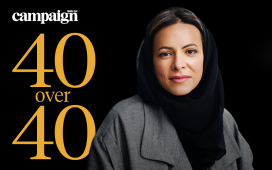
 Rasha Rteil, Managing Director at Omnicom Consulting
This month marks International Women’s Day, when organisations across the region reaffirm their commitments to diversity, equality, representation and progress.
These moments matter. They bring visibility to an issue that has historically struggled to hold sustained attention. But once the posts are published, a more practical question remains. What does inclusion actually change for businesses and brands?
In moments of pressure, organisations often default to the same voices in the room. It is rarely deliberate, but it is expensive.
The cost of a narrow room does not appear immediately. It shows up later in the decisions that were never challenged, the signals that were missed, and the opportunities that quietly passed by.
Across the Middle East and North Africa, women represent 24 per cent of the workforce but generate only 18 per cent of the region’s GDP, the lowest contribution ratio of any region globally. According to the McKinsey Global Institute, achieving gender parity in labour participation could add $830 billion to the GCC economy.
That number should matter to every CEO and CMO in the region, because this is not simply a workforce conversation. It is a growth conversation.
The region is already demonstrating what happens when participation expands.
In Saudi Arabia, female labour force participation has risen from 17 per cent in 20217 to 36 per cent by 2024 surpassing the Vision 2030 target years ahead of schedule. Women now lead 45 per cent of SMEs, while female unemployment has fallen from 31.7 per cent in 2018 to 10.5 per cent in 2025, according to Saudi GASTAT.
The UAE is further along the curve. Female workforce participation stands at 54 per cent, above the global average and the highest in the GCC. Women hold 68 per cent of government roles, signalling a shift from inclusion as policy to inclusion as infrastructure.
For brands operating in the region, these changes are reshaping consumer behaviour. Women are one of the fastest-growing economic forces in the region as professionals, founders and decision-makers within households. Yet in many organisations, leadership structures shaping brand strategy have not evolved at the same pace as the markets they serve.
Research from BCG shows companies with above-average diversity on leadership teams generate 19 per cent higher innovation revenue, an indicator linked to marketing effectiveness and brand growth. When leadership lags behind consumer reality, marketing effectiveness suffers.
Who designs the room
The $830bn opportunity in the GCC is not simply about workforce participation. It is also an organisational design challenge.
How a marketing function is structured determines what it can see, what it can build, and ultimately what it can sell. Teams built around familiar patterns tend to produce familiar outputs. In fast-moving markets like the GCC, familiarity can quickly become a strategic blind spot.
Representation in leadership shapes which consumer truths reach the boardroom and the brief, which signals get prioritised, and which growth opportunities are recognised early.
Across the region, many organisations are redesigning marketing operating models, integrating data, AI and commerce into how brands go to market. But transformation is not only about technology. It is also about who sits at the table when those systems are designed.
In consulting work across marketing organisations, including projects led by Omnicom Consulting, one pattern is increasingly clear. When leadership teams reflect the markets they serve, the quality of strategy improves.
Inclusive leadership in marketing is not an HR conversation. It is a quality-of-output conversation.
Women in senior marketing and consulting roles often see where briefs lose clarity, where strategy drifts from real consumer behaviour, and where commercial opportunities weaken. When those perspectives are embedded into the architecture of an organisation, growth becomes structural rather than occasional.
Three moves that change the output
For organisations serious about unlocking the region’s economic potential, the actions are not complicated. They have simply not been prioritised.
First, redesign the architecture, not the programme. Mentorship initiatives matter, but they operate inside structures not built to retain what they produce. Transparent promotion criteria and advancement tied to outcomes reshape leadership pipelines.
Second, put women where the stakes are highest. Crisis committees, P&L ownership, client strategy leadership and board seats. Decision-making diversity matters most when the pressure is highest.
Third, measure the cost of the gap. Many organisations track inclusion metrics. Far fewer calculate the economic cost of failing to meet them, including institutional knowledge lost, client relationships that leave, and capability that never develops.
Once that loss is quantified, the investment required to close the gap becomes far easier to justify. Across the GCC, the economic case is already clear. The next stage is ensuring participation translates into leadership, and leadership into decision-making power in the rooms where strategy is shaped.
Because diversity was never the point. Growth always was.
By Rasha Rteil, Managing Director at Omnicom Consulting