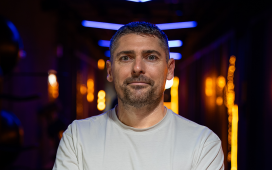
Melis Ertem, CEO, MMA
2026 will not be a year defined by a single breakthrough. Instead, it will be defined by a new operating reality. Technology, culture, platforms, expectations, and regulation are all shifting simultaneously, and not always in alignment.
The most important shift marketing leaders must make in 2026 is moving from optimisation to orchestration, from improving parts of the system to actively designing how those parts work together.
Success in 2026 will not come from mastering one new discipline, but from learning how to hold multiple forces in balance at once. This change in mindset matters because the pressures facing marketing today are no longer linear. Innovation is accelerating, but expectations around trust, transparency, and accountability are rising at the same time. Audiences are more fragmented, but also more informed.
Technology offers scale, but culture still determines relevance. Leaders are being asked to grow faster, while also acting more responsibly. These demands are not easily reconciled, and they cannot be solved through tools alone.
Tickets to Campaign Middle East’s Ramadan Breakfast Briefing & The Year Ahead event are selling out fast. Click here to claim your seat for Friday, 13 February to network with and listen to top clients and agency leaders.
Artificial intelligence becomes operational in 2026
AI will continue to be a central force in 2026, but its role is changing. No longer emerging, it is embedded. AI now sits behind insight, content development, media planning, customer experience, and increasingly strategic decision-making.
This creates both opportunity and responsibility. AI offers speed, efficiency, and precision at a scale marketing has not previously experienced. But when systems operate faster than human oversight, risks increase. Bias, over-automation, loss of context, and erosion of trust are not hypothetical issues. They are operational realities that require active management.
The brands that will perform best in 2026 will be those that treat AI not as a shortcut, but as an infrastructure that requires governance, clear principles, and accountability. This means investing not only in technology, but in processes, training, and leadership frameworks that ensure AI supports, rather than replaces, sound judgement.
When data tells “what,” creativity tells “why”
As automation expands, creativity becomes more important, not less. When content becomes easier to produce, meaning becomes harder to earn. Differentiation now depends less on volume and more on relevance, clarity, and emotional connection.
In this environment, creativity has to play a strategic role in helping organisations interpret culture, shape narratives, and build long-term brand value. Data can tell us what is happening, creativity helps explain why it matters.
In 2026, strong creative leadership will be defined by the ability to translate insight into resonance, not just attention. Brands that succeed will be those that use creativity to express purpose, not simply promote products.
Search reflects intent, not just demand
Search and discovery continue to evolve rapidly. Audiences find information across search engines, social platforms, voice interfaces, maps, and AI-generated responses. Discovery is no longer linear or predictable. Google now only accounts for 34.5 per cent of total search share, while YouTube (24 per cent), TikTok (16.7 per cent), and Instagram (20.9 per cent) collectively dominate over 60% of discovery.
This changes what visibility means. It is no longer enough to be present. Brands must be useful, relevant, and appropriate in the moment of intent. This requires a shift from thinking about keywords to thinking about needs: what people are trying to solve, decide, or understand in a specific context.
With the average consumer now using 3.6 platforms before making a purchase search has become a behavioural signal, not just a channel. It reflects motivation, emotion, and timing. Leaders who understand this will move from chasing traffic to designing relevance.
The new standard: consistency over claims in 2026
Purpose, sustainability and social responsibility are no longer peripheral considerations. They are increasingly central to how brands are judged and trusted. This is not because audiences expect perfection, but because they expect coherence.
In 2026, credibility will be built through consistency between what brands say, what they do, and what they enable. Impact is no longer something that sits alongside strategy. It is part of it. This places a responsibility on leaders to ensure that commitments are operational, not symbolic. Trust is built slowly and lost quietly. It requires ongoing attention.
Leadership becomes the differentiator
Ultimately, the defining factor in 2026 will not be technology, platforms, or even creativity. It will be leadership. Specifically, the ability to manage complexity without oversimplifying it. To balance speed with responsibility. To integrate global capability with local understanding. To grow while remaining coherent. This is not about control, but about design.
This tension is already visible in how marketing organisations allocate resources. A recent benchmark study of 168 companies found that 70 per cent of marketing budgets are still allocated to demand generation, while only 25% go to brand building, even though leaders say the ideal balance would be closer to 50/40.
This gap is not a question of intent, but of confidence. Leaders understand that brand investment strengthens demand efficiency and long-term growth, yet only a minority can clearly link brand activity to commercial outcomes, making it harder to defend in budget and boardroom conversations.
That is the work of 2026. Innovation must be matched with integrity. Creativity must be rooted in culture. Engagement must be meaningful, not accidental. And leadership must be inclusive, not exclusive. These are not aspirations. They are operating requirements for the year ahead.
By Melis Ertem, CEO, MMA