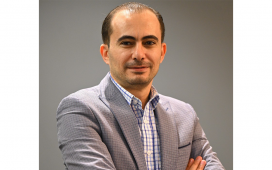
Firas Tirhi, Founder and Managing Director, ICON MarCom Group
In an increasingly complex brand environment, where attention is scarce and accountability is critical, the role of the agency must evolve from execution to shared ownership of ambition, outcomes and commercial progress. ICON MarCom Group‘s approach is grounded in respect for the client’s business, transparency in how decisions are made, and trust built through consistency over time. The agency believes the strongest agency–client relationships are those where goals are clearly aligned, expectations are openly discussed, and responsibility is shared rather than transferred.
Within this framework, creativity, strategy and technology are not ends in themselves, but means to a clear objective, driving meaningful growth that translates into demand, preference, and ultimately sales. This philosophy informs how the agency thinks, how it structure its teams, and how it defines success. It prioritises integration over fragmentation, value over volume and partnership over transactions. By anchoring its work in mutual respect, open communication and long-term trust, it aims to shape and build brands that are not only admired, but chosen through relevance leading to momentum and sustained commercial impact.
Firas Tirhi, Founder and Managing Director, ICON MarCom Group shares his thoughts in conversation with Campaign Middle East below:
“Integration isn’t about offering more, it’s about owning outcomes.”
As boundaries blur between content, commerce and community, how are agencies redefining their place in the brand ecosystem?
Agencies are being redefined by how much responsibility they are willing to own. As content increasingly drives commerce and communities influence brand perception in real time, fragmented agency models are becoming harder to sustain.
At ICON, this shift has meant moving decisively away from isolated execution toward ecosystem orchestration.
When strategy, creative, content, performance, and experience are connected through a shared operating logic by one integrated team, alignment becomes instinctive rather than procedural. In our model, the agency’s role is not restricted to delivering parts of the journey, but to absorb complexity for the client and own outcomes end-to-end.
What does meaningful innovation look like for agencies in 2026?
Meaningful innovation in 2026 is less about adopting new technology and more about embedding intelligence into how teams collaborate in ways that directly benefit clients.
Across the industry, agencies using AI-assisted workflows, automation, and modular creative systems are achieving 30 – 40 per cent efficiency gains. At ICON, the priority has been ensuring these gains translate into tangible client value. We have realized that when strategists, creatives, technologists, and producers work as one, technology has reduced friction, sharpened decision-making, and protected creative quality.
This has resulted in shorter turnaround times, fewer revisions, clearer strategic alignment, and more predictable outcomes. Innovation that lives in silos may create speed, but innovation embedded across teams creates scale with consistency allowing ourselves as well as our clients’ brands to grow without losing control of quality or intent.
What new forms of value are clients demanding beyond performance?
Performance is now expected. What clients increasingly seek beyond it are sustained value as well as clarity in communication and accountability.
Clients value agencies that simplify approaches, maintain brand coherence across channels and markets, and operate with strong governance. In ICON’s experience, brands are actively moving away from fragmented agency setups toward partners who can take end-to-end responsibility.
This shift reduces internal coordination costs for clients, and ensures strategic intent and purpose are preserved from planning through delivery. The added value lies not in doing more but in making everything work in a cohesive manner.
“The most important lesson is that growth without governance is short-lived.”
How is creative leadership changing in an era where technology increasingly shapes how ideas are built and scaled?
Creative leadership today is about protecting ideas as they scale.
With technology accelerating execution, the role of leadership is to ensure creativity remains aligned, relevant, and commercially effective.
At ICON, creative leadership operates in close partnership with strategy and delivery teams. Ideas are developed as systems, not standalone campaigns so they can seamlessly adapt across platforms, markets, and time without losing meaning. For our clients, this ensures longer creative lifespan, stronger brand recognition, and fewer reinventions.
When creativity is integrated into the wider brand ecosystem, it becomes durable and dependable.
With attention becoming the scarcest resource, how are agencies designing work that earns time rather than interrupts it?
Attention can no longer be bought at scale, it must be earned through relevance.
Brands investing in immersive experiences, culturally grounded storytelling, and participatory formats are achieving 2x – 3x higher engagement and retention.
At ICON, this has reinforced the importance of designing holistic journeys, where content, experience, and performance reinforce one another rather than compete.
When different specialists optimise independently, attention fragments. When integrated teams design journeys together, relevance compounds and time is earned rather than interrupted.
What are the biggest lessons digital agencies are carrying from 2025 into 2026?
The most important lesson is that growth without governance is short-lived.
2025 exposed the limitations of models built purely on scale or speed. At ICON, the focus has been on investing in team design, leadership depth, utilisation balance, and operational systems.
Agencies that prioritised integration and people architecture over rapid expansion are entering 2026 more resilient and better positioned to scale sustainably across markets.
How are agencies restructuring teams and processes to stay agile in a fast-changing environment?
Agility today is structural, not reactive. At ICON, we have adopted cross-functional team models that bring strategy, creative, content, performance, and production together under shared ownership.
This structure reduces handovers, improves decision quality, and increases accountability while reducing turnaround times by 25 per cent or more. Agility is no longer about working faster in silos; it is about deciding better together, with shared context and responsibility.
What does strong client feedback look like today, and what types of work are earning trust and repeat business?
Strong client feedback today is structural rather than emotional. It shows up in retention, expanded scope, and long-term partnership.
Clients stay with ICON when our teams understand their business deeply, operate with continuity, and act as an extension of their organisation. Trust is built through people who show up consistently, reduce complexity, and protect brand integrity across channels.
In an increasingly complex ecosystem, the agencies earning repeat business are those that think like stakeholders, not suppliers.