Campaign Middle East rounds up the latest updates on social media and content and streaming platforms from March. Here are the key highlights:
Meta:
Meta is making a significant change to how we define and report “clicks” in our attribution tools. In the current approach, Meta, like other social platforms, has historically counted a wide range of actions as “clicks” in click-based attribution — including link clicks, likes, shares, saves, and more.
Going forward, only “link clicks” (i.e., clicks that take a user to an advertiser’s website) will be counted in click-through attribution. Other actions (likes, shares, saves, etc.) will move to a new category called “engage through attribution.”
The changes announced will provide advertisers with the best of both worlds – click-through attribution reporting that will have more consistency with third-party reporting tools like Google Analytics, as well as engage-through attribution that will provide visibility into the added value of uniquely social interactions, such as a like, share, or comment – bringing advertisers one step closer to understanding the true impact of their ads.
Spotify:
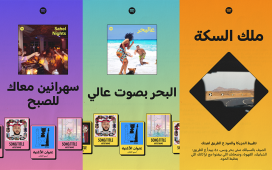
In celebration of the upcoming release of their 5th studio album ARIRANG, BTS is partnering with Spotify to give ARMY around the world more ways to engage with this comeback of the decade. From special in-app experiences, with surprise content from the members in store, to immersive pop-ups in select cities, the SWIMSIDE campaign will connect ARMY fans to the comeback, the music, and the artistic legacy behind it. BTS’s comeback campaign with Spotify begins on March 13 with the launch of Decoding ARIRANG, an interactive in-app experience that starts the final countdown to the album release.
Spotify also launched SongDNA, a new, immersive music experience that’s built to reveal the intricate network of people and creative connections behind the music you love.
Anghami:
Anghami has partnered with Cyanite to enrich 2.5 million songs using AI-generated music metadata. By integrating Cyanite’s auto-tagging API, Anghami has enhanced its catalogue with detailed audio-based metadata across mood, genre, energy, instrumentation, and more.
This structured data layer feeds directly into Anghami’s internal recommendation systems, enabling more precise and scalable music discovery.
Google:
Nano Banana 2, Google’s latest state of the art image model is now available in the Middle East and North Africa. The model is accessible on Google Gemini (desktop and mobile app) and Google Search via Google Lens and AI Mode. The new model brings the high-speed intelligence of Gemini Flash to visual generation, making rapid edits and iteration possible.
Google also announced the launch of Lyria 3, Google DeepMind’s latest generative music model, available in Arabic (beta version) around the world. Lyria 3 will be accessible to all users on Google Gemini website.
People can just describe what they want to hear, like “an upbeat, modern Arabic fusion track for Ramadan”, and in a matter of seconds, Gemini will translate the prompt into a high-quality track. The track length is 30 seconds with custom cover art generated by Nano Banana.
Canva:
Canva Magic Layers has been introduced as a new capability within the Canva Design Model, enabling static images to be converted into fully editable, multi-layered files. The feature addresses a longstanding limitation in AI-generated visuals, where exported JPEG and PNG files lose structural integrity, making text, objects and layouts difficult to adjust without restarting the design process.
By recognising and reconstructing design elements into editable layers while preserving layout relationships, the tool transforms finished images into flexible working files for further creative refinement.
Pinterest:
Pinterest has released its first-ever Parenting Trend Report for 2026, highlighting a shift towards “thoughtful parenting” and experience-rich childhoods shaped by rising concerns around screen time and digital overload.
The report identifies key trends including screen-free activities, offline learning, experiential travel and nostalgia-led parenting, with searches for terms such as “screen free activities” and “no phone summer” increasing significantly year on year.
The findings also point to growing demand for intentional family experiences, at-home engagement and informed purchasing, as parents increasingly use the platform to plan, research and curate everyday parenting decisions.