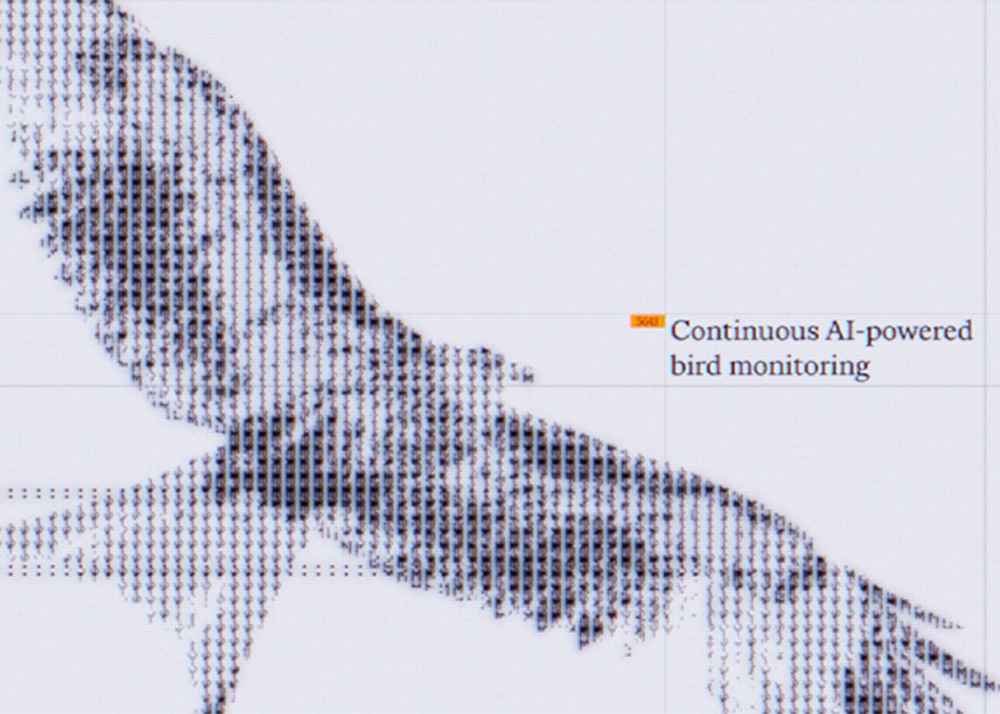
Spoor, in collaboration with FP7 McCANN MENAT, has launched The Birdwatcher, an initiative that turns complex AI monitoring data into a visible, public record, demonstrating that wind energy and wildlife can coexist.
The challenge: Yes, wind energy is built to protect the future, but for too long, one part of that future has remained harder to see. Every year, birds and bats, including endangered and protected species, face real risks around wind farms: collisions, habitat disruption and the buffer zones that slow development in response.
At a time when renewable energy must scale faster than ever, what if the answer is not less wind, but better intelligence?
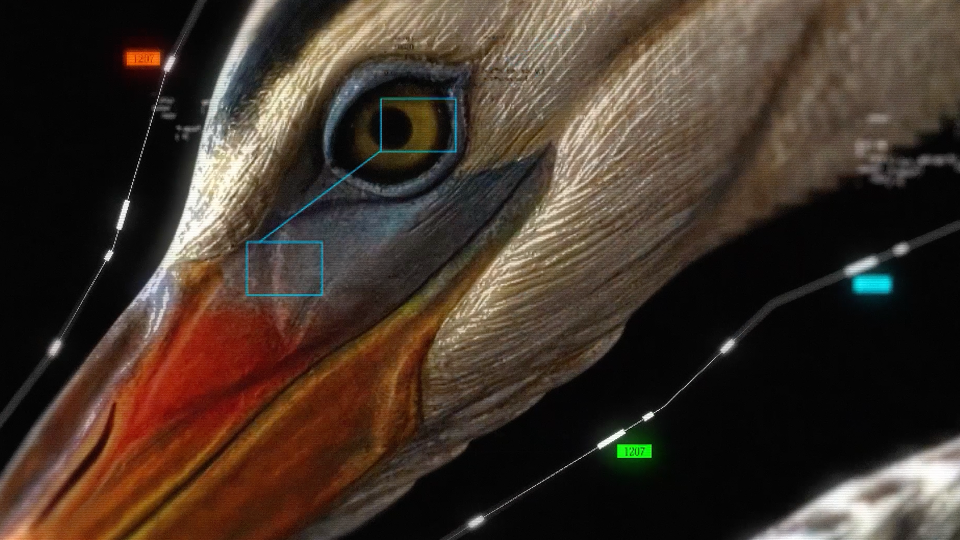
To address this, Spoor’s technology, a patent-protected system combining AI-powered computer vision, geometric flight analysis, and ecological domain knowledge, continuously detects, tracks and classifies birds and enables curtailment at wind energy sites to prevent fatalities.
Ask Helseth, CEO, Spoor said, “Every wind project faces the same question from regulators, communities and investors: what happens to the birds? We built the technology to answer that with evidence, not assumptions. The data shows coexistence is achievable, and it should no longer sit buried in reports that most people never read.”

The campaign ecosystem
The Birdwatcher campaign transforms Spoor’s data into an open, accessible experience, making bird activity around wind farms visible to everyone, from policymakers to the public.
The campaign ecosystem includes an interactive microsite where users can explore data-driven flight paths through the eyes of the largest gull on earth, an Instagram feed documenting bird activity, and a physical bird guidebook with augmented reality features distributed to key stakeholders.
“Our objective was to make complex data impossible to ignore,” said Federico Fanti, Regional Chief Creative Officer, FP7 McCANN MENAT. “By making it continuously visible, both online and in the real world, we ensured it reached the people who have the power to act. The argument against wind energy was built on missing data. Spoor produced it. The Birdwatcher makes sure the world sees it.”
From binoculars to The Birdwatcher
For decades, the wind industry relied on human observers with binoculars to track bird activity. The result was slow, fragmented data that failed to satisfy regulators, often leading to oversized buffer zones and stalled permits.
Estimates suggest U.S. wind facilities alone are responsible for several hundred thousand to over 1.2 million bird deaths annually, with global figures likely several times higher.
The Birdwatcher challenged that model by showing what becomes possible when biodiversity monitoring is treated not as a manual process, but as intelligent infrastructure.
Spoor built a smarter approach. Its Sky Intelligence Platform uses camera-agnostic AI to monitor wind sites continuously, with detection ranges of up to 1.5km and at least 95 per cent accuracy.
The technology gave wind developers and operators continuous, verifiable bird and bat activity data to support permitting, risk mitigation, operational decision-making, and long-term compliance.
That intelligence can be used across site prospecting, environmental impact assessments, permitting processes, operational risk analysis, and mitigation planning. It helps identify nesting areas and high-activity corridors, protect habitats used by endangered and protected species, and support smarter siting decisions before turbines are even built.
Across onshore and offshore wind projects, Spoor’s role is to replace uncertainty with evidence, helping the industry scale with better biodiversity intelligence, not assumptions.
At Aberdeen Bay, one Spoor system monitored bird activity around a turbine for 19 months, capturing approximately 95 per cent of daylight hours, recording 2,007 bird tracks, flagging five potential collision events and confirming none. The proof was there. It just was not visible.
Independent scientific trials have validated Spoor’s detection and tracking capabilities against human observations, with the system’s recall rates confirmed in a peer-reviewed report.
Spoor is also the first solution able to monitor bird activity from a buoy, FLiDAR, or metocean platform, expanding continuous monitoring into offshore and other hard-to-access environments.
CREDITS:
Client: Spoor
Mohyletska Uliana, Marketing Director
Ralph Natter Berg, CCO
Edgar Kamga-Sande, Content Director
Creative agency: FP7 McCANN Dubai
Leadership Team:
CEO – Tarek Miknas
Managing Director – Tarek Ali Ahmad
Creatives:
Regional Chief Creative Officer – Federico Fanti
Executive Creative Director – Nayaab Rais
Group Creative Director – Jonathan Cruz
Senior Creative Director – Paulo Engler
Associate Creative Director – Rob Hall
Associate Creative Director – Bruno Montoro
Associate Creative Director – Diego Fernandez-Cid
Senior Copywriter – Taha Khan
Copywriter – Liam Galt
Design Director – Arthur Melo
Motion Designer – Kaue Akimoto
Editor – Murilo DePaula
Senior Graphic Designer – Jovir Alipio
Art Director – Anna Smolkina
Copywriter – Liudmyla Ivakhnenko
Production – Diogo Borges – Creative Tech (Blou Studio)
PR – Senior PR Manager – Roksar Kamal
Global Creative Excellence Team
Global Chief Creative Officer: Andrés Ordóñez, McCANN
EVP, Global Creative Partner: Danilo Boer, McCANN
SVP, Global Executive Creative Producer: John Bleeden
Creative Excellence Manager – Alice Reindlova – McCANN
Corporate PR Specialist – Corina Nica – McCANN