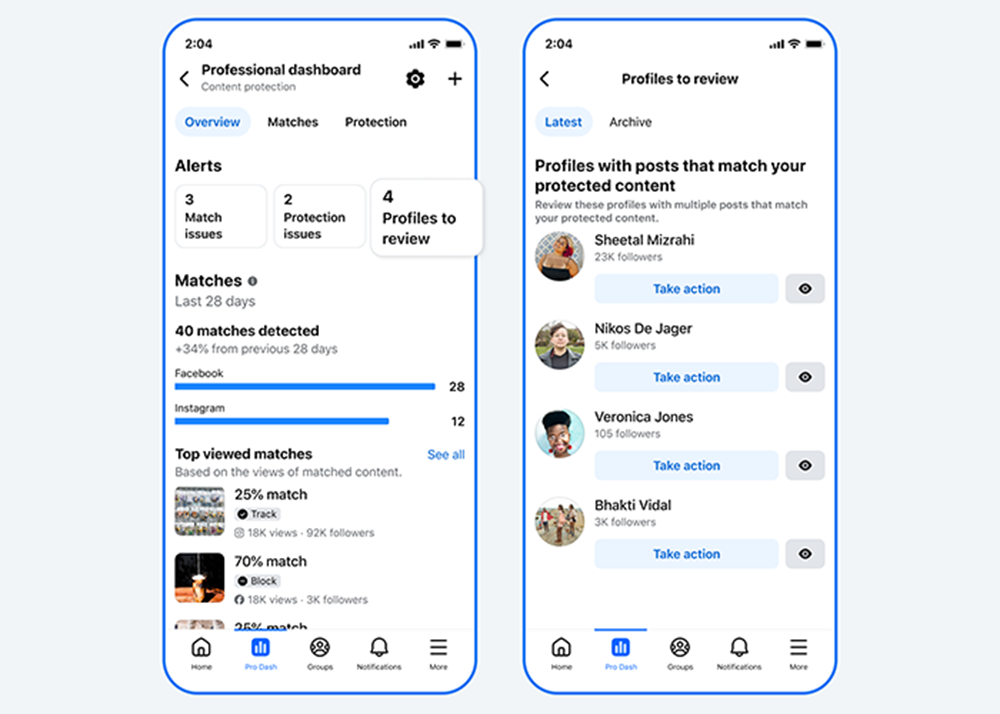
Meta has updated its content guidelines to clarify what it means to be ‘original’ on Facebook and has begun rolling out new tools such as the content protection tool on creators’ professional dashboards as part of its ongoing crackdown on spammy content, copycats and impersonators.
In 2025, Facebook removed more than 20 million accounts impersonating large content creators. As a result, impersonation reports related to large content creators dropped by 33 per cent.
As the outcry for more authentic content creator voices grows louder, Meta is looking to give creators more control over their content, helping them grow their following and attempting to improve the overall Facebook experience for all users.
As such, the platform has committed to prioritising original content in Facebook Feed and Reels, while reducing the reach of unoriginal content.
These efforts have driven measurable impact: both views and time spent watching original Reels on Facebook approximately doubled in the second half of 2025, compared with the same period in 2024. Also, the platform is incentivising original content by offering greater payout opportunities for original creators.
Updated Facebook guidelines for original content
Meta has also updated its content guidelines to clearly define what content is classified as original to encourage high-quality content production, and improve what shows up in its recommendations.
According to an official statement published in its newsroom, here’s what the updated content guidelines mean in practice:
- Content filmed or produced directly by a creator or owner of a Profile or Page is considered original content on Facebook.
- Reels selectively incorporating third-party content (such as remixes or overlays) are considered original when the focus is an on-screen presence from a creator presenting something genuinely new – such as fresh information, analysis or substantial improvements to a storyline. Simply watching along, reacting with facial expressions, stitching multiple clips together, or narrating what’s already on screen – without adding anything meaningful – is considered unoriginal and will likely be deprioritised in Feed and Reels.
- Content that is duplicative or involves minor edits to another creator’s post will be considered unoriginal and deprioritised. This includes re-uploading posts the Page or Profile had no role in creating, or making low-value changes to someone else’s content such as adding borders, inserting captions and changing the reel’s speed..
When creators transform content with creativity, their videos will be eligible for recommendation in Reels and Feed, and may benefit from increased distribution.
Creators who are not adding substantial creative value will see their content deprioritised, and they may see their account deemed non-recommendable and demonetised, if they continue to post primarily unoriginal content.
Creators always have the option to appeal decisions regarding originality, and we are continually working to improve the accuracy of our enforcement.
New tools to report impersonation
Apart from cracking down on impersonation and unoriginal content by incentivising good content and taking spammy and copied content off its recommendations, Meta is also building new tools to help creators protect their content and grow.
The platform launched content protection last year to automatically safeguard creators’ original Facebook reels and let them take action when matches to their reels are detected across our platforms.
It is now testing enhancements to this tool that will also detect potential impersonation and make it easy for creators to submit reports, all in one place. This new capability will be rolling out to more creators using content protection soon.