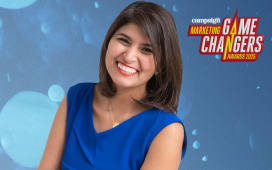
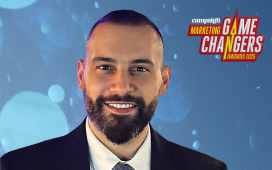
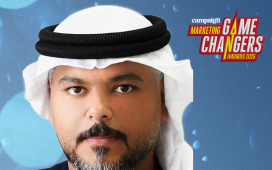
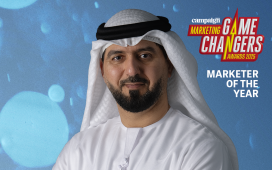
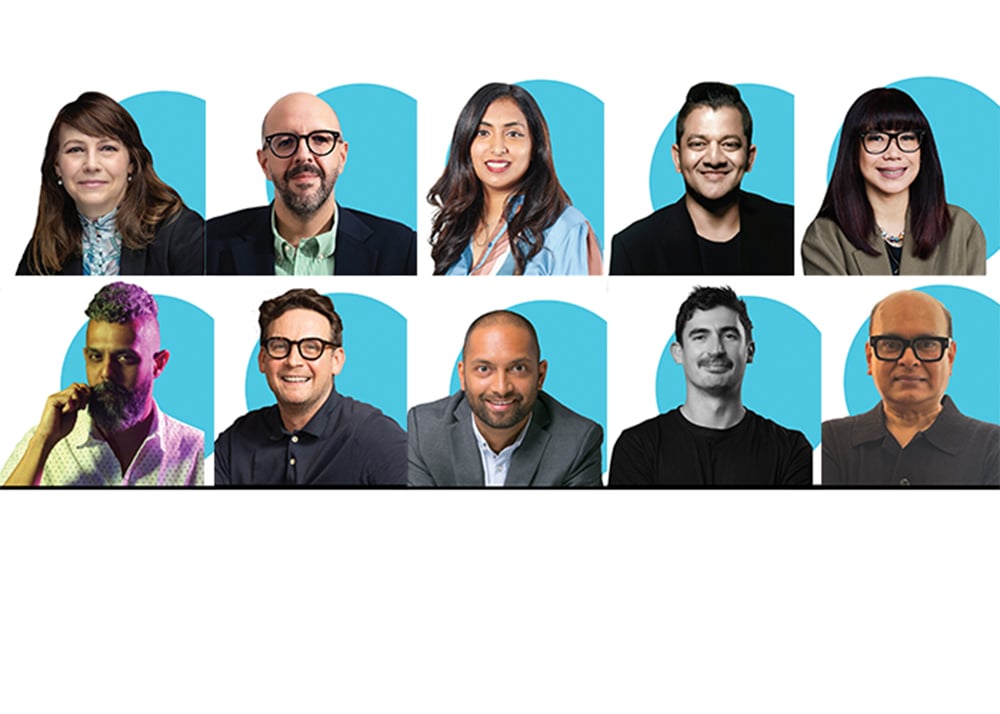
 From left, top row, Catherine Bannister, Chief Strategy Officer, TBWARAAD; Alejandro Fischer, Chief Strategy Officer, Havas Middle East; Sanita Sandhu, Chief Strategy and Growth Officer, Initiative MENAT; Tahaab Rais, Group Chief Strategy Officer, Publicis Groupe Middle East and Turkey; Frances Bonifacio, Head of Strategy and Director of HR, Serviceplan Group Middle East;
From left, bottom row, Sachin Mendonca, Chief Creative Strategist, YouExperience; Daniel Shepherd, Chief Strategy Officer, Omnicom Media Group – MENA; Alex Jena, Chief Strategy Officer, dentsu MENAT; Sebastian Roland, Group Head of Strategy, Impact BBDO; and Prabhakar Iyer, Head of Strategy and Planning – Middle East, Edelman.
From left, top row, Catherine Bannister, Chief Strategy Officer, TBWARAAD; Alejandro Fischer, Chief Strategy Officer, Havas Middle East; Sanita Sandhu, Chief Strategy and Growth Officer, Initiative MENAT; Tahaab Rais, Group Chief Strategy Officer, Publicis Groupe Middle East and Turkey; Frances Bonifacio, Head of Strategy and Director of HR, Serviceplan Group Middle East;
From left, bottom row, Sachin Mendonca, Chief Creative Strategist, YouExperience; Daniel Shepherd, Chief Strategy Officer, Omnicom Media Group – MENA; Alex Jena, Chief Strategy Officer, dentsu MENAT; Sebastian Roland, Group Head of Strategy, Impact BBDO; and Prabhakar Iyer, Head of Strategy and Planning – Middle East, Edelman. Once upon a time, as all good stories start, a strategist’s job used to be scripted in neat lines: find insights, brief the work, set the course, spark the magic, and measure the echo of the strategy. But then, the plot thickened, the stage stretched, the costumes multiplied, and expectations expanded to everything from product and pricing to platforms and performance.
From being the backstage operator, the protagonist was pulled on stage and placed under the spotlight of playback theatre – required to improvise based on real-time demands. The strategist soon played the roles of a creative thinker, trend analyst, tech tinkerer, growth driver, data scientist, coder, the voice of the consumer, gatekeeper and more.
Over time, some strategists became superstars – the kind that performed their own stunts on sets – while donning the different hats demanded of the ‘S’ between the ‘C’ and the ‘O’ in their titles. Meanwhile, others drew guardrails around their roles, choosing to orchestrate with care and craft for clients with a steadfast focus on human culture, resulting in less performance for marketing Oscars and more performance in the market.
Unsurprisingly, as the storyline progressed, the ‘strategy’ that made the strategist became polysemous –reaching a juncture where a critical evaluation of ‘strategy’ became highly subjective.
Today, as this play reaches its denouement, Chief Strategy Officers and Heads of Strategy representing some of the most respected agencies in the region demand an end to preparing purposeless presentations and pointless decks. Instead, they call for lasting salience in strategy along with a seat at the table; relentless inventiveness rather than running ragged by routine; clarity instead of complexity; and meaningful outcomes to replace mere outputs.
Campaign Middle East speaks to:
- Tahaab Rais, Group Chief Strategy Officer, Publicis Groupe Middle East and Turkey;
- Catherine Bannister, Chief Strategy Officer, TBWA\RAAD;
- Alejandro Fischer, Chief Strategy Officer, Havas Middle East;
- Alex Jena, Chief Strategy Officer, dentsu MENAT;
- Daniel Shepherd, Chief Strategy Officer, Omnicom Media Group – MENA;
- Sebastian Roland, Group Head of Strategy, Impact BBDO;
- Frances Bonifacio, Head of Strategy and Director of HR, Serviceplan Group Middle East;
- Sanita Sandhu, Chief Strategy and Growth Officer, Initiative MENAT;
- Prabhakar Iyer, Head of Strategy and Planning – Middle East, Edelman; and
- Sachin Mendonca, Chief Creative Strategist, YouExperience.
“Strategy is often staffed to fill the slides, not to steer the ship. You want power? Give strategists true ownership across the funnel and a veto right on the problem framing.”
Strategists’ dilemma – more strategy or more seats at the table?
At the outset, leaders agree that strategy can get lost in its own sprawl – too many roles, too many decks and slides, and far too little time and space to ‘strategise’. The hard truth: Strategy resourcing seems thin across the industry with ubiquitous under-investment.

Tahaab Rais, Group Chief Strategy Officer, Publicis Groupe Middle East and Turkey, says, “Strategy should be the operating system of the company, not some cheap little plug-in. Strategy is often staffed to fill the slides, not to steer the ship. You want power? Give strategists true ownership across the funnel and a veto right on the problem framing. You hand them the baton. And then you step back and let them conduct.”
When asked whether strategy is a well-staffed department in most agencies, and whether it needs more power at the table, Sachin Mendonca, Chief Creative Strategist, YouExperience, says, “Strategy remains criminally understaffed. Often, one poor soul is expected to conjure meaning from thin air just before the creative reveal. We’re still treating strategy as a support act, not the backbone of bold thinking. Creatives end up doing the heavy lifting, retrofitting rationale after the idea has already taken flight, and hope that it works. Hope, I’m afraid, is not a strategy.”
He adds, “More strategists at the table doesn’t just add bodies, it adds brains. It sharpens thinking, lifts ideas and will free up 40 per cent of a creative’s time to be creative. And when strategy is in the room, creativity doesn’t just look good – it works.”
However, Frances Bonifacio, Head of Strategy and Director of HR, Serviceplan Group Middle East, offers a different perspective. While agreeing that strategy is among the least staffed departments, she says that there’s a sound reason for it to be so.

Arguing that an agency’s core product is its creative prowess, Bonifacio explains, “Strategy sets the course, creative crafts the substance. Think of strategy as the bookends: steady both at the start and at the finish, keeping everything in check and intact so the storytelling stays strong and potent. You wouldn’t want a book’s cover to be thicker than the sum of its pages, would you?”
So, do we need more seats at the strategy table? Leaders suggest that before we add more seats, we must give current strategists the space to breathe, think, reflect and orchestrate. Then, embed strategy across teams and make it a shared language across the organisation.
Alejandro Fischer, Chief Strategy Officer, Havas Middle East, says, “Strategy often feels thinly spread because too few people are allowed to think. When strategy sits with a handful of people, everyone else stops asking questions. The fix isn’t necessarily more strategists; it’s more strategy. The problem isn’t power; it’s time. The pitch treadmill with tight deadlines leaves no room for reflection. Strategy doesn’t need a bigger seat at the table. It needs space to think.”

Alex Jena, Chief Strategy Officer, dentsu MENAT, adds, “Strategy often gets reduced to one or two people representing the whole ambition. But equally, you don’t want a ‘strategy department’ that bottlenecks creativity and vision to a chosen few, leading to cerebral atrophy. The good news is that when strategy is truly embedded across every discipline, you unlock far richer ideas while building even more resilient teams.”
Going beyond the ‘talk’ of the benefits of strategy, leaders call for the ‘walk’ by truly investing in strategy – whether that means more staff, seconds or space to strategise.
Sebastian Roland, Group Head of Strategy, Impact BBDO, says, “As an industry, we have historically had this strange thing where we simultaneously talk up the importance of strategy and being strategic at every turn, yet consistently under-invest in strategy departments. However, I’m starting to feel the winds of change. Clients are more uncompromising when it comes to demanding strategy. Investing in strategy is becoming a non negotiable, and I believe that’s a great thing for the industry at large.”
Catherine Bannister, Chief Strategy Officer, TBWA\RAAD, says, “I believe agencies must invest in ‘more planners’ and invest ‘more in planners’ – two distinct, but equally essential, commitments. When agencies do both, they empower planners to deliver greater value not just in daily work, but also by driving proactive projects that build consultancy credentials and thought leadership.”
The commercial case becomes far easier to make when strategy proves that it pays for itself. Conversations around strategy then pivot from it being a cost centre to a catalyst.

“Strategy can be a growth engine,” says Prabhakar Iyer, Head of Strategy and Planning – Middle East, Edelman. “When it’s scoped into retainers and tied to commercial key performance indicators (KPIs), it funds itself and uplifts every communications output.”
Iyer calls for the industry to give strategy two gates. First, the ‘Brief Gate’: Define the problem, audience, objectives as a starting point – prior to putting pen to paper. Then, the ‘Release Gate’: Define success metrics and monitoring.
“Strategy isn’t a slide factory. It’s the discipline that makes ideas make sense, gives creativity purpose and helps brands matter.”
AI strategists: sidekicks, copilots or colleagues?
Artificial intelligence (AI) has shifted from novelty to a necessity for several strategists. The debate is no longer whether strategists should use it, but how deeply one can rely on it, and where it should sit in the process.
In a world that’s demanding hyper-personalisation at scale and predictive solutions for problems that have yet to arise, some leaders have gone all-in on a new breed of ‘AI strategists’, while others advise caution.
Rais doesn’t hold back when he says, “The best ideas are a blend of instinct and brutal computation.”
In fact, Rais recommends an ‘AI strategist workflow’ that is human-led and machine-accelerated, including:
- A sensing layer: For always-on data listening, category signals and cultural trend mining.
- An insight engine: For pattern detection, clustering, anomalies and counter signals.
- A creativity copilot: For concept generation against constraints, rapid pre-mortems and scenario trees.
- An experiment operating system (OS): To test design, synthetic audiences, uplift modelling and routing.
- A decision dashboard: Live the objectives and key results (OKRs). Prove commercial impact and incrementality. Watch out for risk flags.
Several strategists, who currently survive on coffee and need sleep, welcome the army of agentic AI ‘colleagues’ who do not need either.
Bonifacio says, “Agentic AI? Absolutely! Let’s start building and deploying them to take the brunt out of tedious data digging and processing. Let’s design and automate them in all forms and functions to act as our disembodied yet highly cognitive extensions, faster and far more precise, sans the sighs and the countless coffee breaks.”
She adds, “Since they have greater capacity to plan, act, optimise, and analyse, let them handle all the tasks that often leave us uninspired. I say let them do the manual labour while we labour with our cerebral hustle. We divide and conquer. We think, plan, design and deliver vital context as human strategists, while they get to execute deep research, and orchestrate, personalise, generate and analyse complex campaigns autonomously and at scale as AI strategists.”
Some agency teams have already embedded agentic capabilities into their everyday planning. Strategy and workflow have already become the backbone of Omnicom Media Group – MENA’s OMNI platform, which has agentic AI embedded at every stage.

Daniel Shepherd, Chief Strategy Officer, Omnicom Media Group – MENA, explains, “In practice, this means ‘AI strategists’ are interacting with various leading AI platforms – Open AI, Anthropic and the like – to empower our human strategists and planners when they’re crafting solutions. Strategy remains, ultimately, a question of human judgement and taste, but time is released for this to be enhanced by an army of synthetic whizzes that don’t need caffeine or sleep.”
He adds, “Without AI strategists, the job would now be impossible. Trying to tackle the explosion of the digital footprint with traditional analogue methods doesn’t work in all aspects and disciplines within an agency or within any business. The sheer quantity of data created by machines requires machines with equal computational power to make sense of it. Otherwise, you’re taking a toothpick to a gunfight. This is certainly no different for strategy.”
It’s no surprise that several strategists have already embedded AI deep into their workflows: before, during and after thinking.
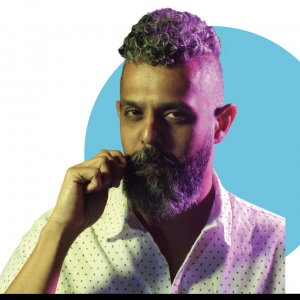
Mendonca says, “The best strategists already know: the trick isn’t outthinking AI, it’s thinking with it. AI is already the strategist’s operating system. It’s supercharged my output, sharpened my thinking and saved me from drowning in data. AI won’t replace us. But without it, we’re simply slower, blinder and buried.”
However, there are several other strategists who caution against this bold move towards AI strategists.
Jena argues, “Should the strategic process be retooled for a more agile, predictive era? Absolutely, and that shift is already under way. AI is a powerful, democratic tool, and every discipline in the agency can – and should – use it to sharpen its output and productivity, but the industry doesn’t need a new class of ‘AI strategists’.”
Reiterating this notion, strategists share that the call to action must be partnership: machines accelerate; humans improvise.

Bannister says, “We need to design processes and workflows for ‘AI sidekicks’, not ‘AI strategists’. AI is an incredible accelerant, turbocharging the journey from insight to idea and enabling strategists to cover more ground, faster. Let algorithms crunch the numbers, spot patterns and visualise complex data, extracting and simplifying what would take a human many hours to do. But true strategy needs a human heartbeat with personal flair, intuition and a knack for seeing what others miss. There are no cookie-cutter answers or off-the shelf solutions in this game. AI is a brilliant ‘sidekick’, powering up our process, but it shouldn’t steal the show.”
Fischer agrees, “We’re not there yet when it comes to replacing the dance that makes strategy human – the curiosity, challenge and back-and-forth that turn information into insight. I don’t want to over-romanticise human creativity, but instinct, empathy and lived experience still drive the best leaps. AI is an extraordinary partner. It just hasn’t learned how to improvise.”
The load and the line: What’s keeping strategists up at night?
As expectations balloon, strategists are juggling craft, code and commerce. Leaders point to clearer roles, better briefs and disciplined measurement as the way through.
“Across most agencies, strategists are running ragged,” says Rais. When asked why, he points to:
- Role sprawl: Strategists wearing several hats.
- Shallow briefs: Problems phrased as outputs. “We need a campaign.”
- Proof pressure: Ideas without believable evidence. It’s all hot air until you have the numbers.
- Silo friction: Handovers that kill momentum.
- Time poverty: Too many tickets raised, not enough critical thinking or problem solving.
- Capability drift: AI, commerce and CX are moving faster than training.
Pointing to another age-old problem of time, or the lack thereof, Shepherd quotes Mark Twain, “I apologise for such a long letter, I didn’t have time for a short one.”
Shepherd explains, “Being able to simplify and synthesise information and insight remains the most important function of a strategist. With so much information and so many different business imperatives, sifting the signal from the noise and distilling this into something potent, distinctive and measurable is as hard as it’s ever been.”

Fischer adds, “The brief keeps getting bigger and the deadlines shorter.”
“With AI entering the conversation, not only have deadlines become even shorter, but “everyone has picked the wrong lesson: cut corners,” Mendonca explains.
He adds, “There is nothing wrong with speed, until it comes at the cost of thinking. And right now, 95 per cent of our industry is fighting the wrong battle. Speed over quality. Volume over value. The real challenge? Staying thoughtful in a world obsessed with being fast. When everything is noise, clarity becomes your competitive edge.”
Several strategists also point to how they are expected to wear several hats while offering solutions to the challenges.
“Strategists are expected to know everything about culture, data and technology while diagnosing business problems and shaping creative work,” Fischer says.

Sanita Sandhu, Chief Strategy and Growth Officer, Initiative MENAT, says, “Strategists today are expected to be polymaths – creative thinkers, data scientists, trend analysts and even coders. The challenge is balancing these demands without losing sight of what strategy is truly about: understanding human motivation and culture. The overload of expectations is real, but the differentiator lies in focusing on cultural insight and turning complexity into clarity for clients.”
Bannister agrees, “Today’s strategists must wear a dizzying number of hats – creative, analyst, tech tinkerer, growth driver and more. The big challenge? There’s simply too much ground for one person to cover alone.”
They all agree that the solution to the ‘polymath problem’ lies in building T-shaped teams made up of strategists who can connect the dots across disciplines but have a superpower in at least one discipline. Ensure these teams have complementary strengths across data, culture, creativity and commerce. Then, add in a few endlessly inquisitive minds – pairing young experts and seasoned practitioners – and throw in a dash of AI support and you’ve got a strategy department that’s both resilient and relentlessly inventive.
Introducing another current concern to the conversation, Jena opines, “The biggest challenge is the polysemy of the word strategy. It means different things to different people. Agency interpretation vs. client briefing, brand vs. performance, directional architecture vs. tactical execution. Everyone carries their own definition, which makes both the creation and evaluation of strategy highly subjective. The solution? Precise definitions and key decision makers knowing what they want.”
Roland cites deeper concerns of a new generation of strategists who are more disconnected from the real world than ever before.

Making the case for why strategists must speak to real people, Roland says, “Qualitative research, ethnography and voice of the consumer – all of these are starting to feel like concepts from a bygone era. A brand’s audience is increasingly being reduced to on-demand, AI-powered, synthetic data dashboards. And that’s cool if you’re on a tight deadline – as we always are. Yet, one of the big issues I see is that these ‘insights’ have become completely commoditised. For strategists, it’s become harder than ever to have something interesting to say; it’s become harder than ever to stand in a boardroom and deliver a deep truth about people that literally has the power to change everything for a brand.”
To solve several of these problems, Rais suggests achieving clarity on the core purpose; designing specialist talent pods; building due-diligence rituals and a test-and-learn cadence as a default; making fewer, bigger and better bets; giving strategists room to think instead of turning them into glorified ‘typists’ or prompt engineers; enabling relearning programmes that treat tools and techniques as more than shiny toys and, most importantly, keeping strategists involved end-to-end – from the initial hypothesis to the packaging of results and reports.
Rapid fire
Before the discussion concluded, each of these leaders was offered the opportunity to share one thing they would eradicate within how strategy is perceived and how it works. The catch? They didn’t have visibility on each other’s answers. Yet, a pattern emerges.
Here’s what each of them said they would get rid of:
Rais: “The deck-dump theatre. Replace it with a living strategy operating system, which includes hypotheses, experiments, plays and proofs that travel with the work, the client and the teams. Treat your strategists like master conductors and you’ll finally hear the difference. The orchestra plays tighter. Solos get braver. And the audience doesn’t just clap. They come back, with friends, and they pay more for the ticket. That is strategy that works.”
Jena: “Written submissions that rarely get read. A mountain of slides no client really wants to sit through. Agency “themes” that feel interchangeable. It’s become borderline parody. A strategic process is more like an F1 circuit – high speed, constant feedback, sharp corners, unexpected red flags, and relentless two-way dialogue between driver and team. Yet the way we’re forced to pitch strategy feels more like a penalty shoot out: silence, one isolated strike, and then judgment. If you’re reading this and working in brand side procurement or at an intermediary then please, let’s brainstorm a better way.”
Roland: “Overcomplication, especially in briefing. We need simplicity, clarity and single-mindedness. We should not be measured by the number of slides and words we use to convey a strategic idea. Call me old school, but if you can’t get a strategy across on a single sheet of A4, you’ve probably lost the plot a bit.”
Mendonca: “The hamster wheel of performative deckbuilding. Layer on a few frameworks, a couple of cultural buzzwords, and voilà … strategy. What an incredible waste of brainpower. If I could change one thing, it would be this: educate the industry. Strategy isn’t a slide factory. It’s the discipline that makes ideas make sense, gives creativity purpose and helps brands matter. Our industry doesn’t need more templates; it needs a crash course in what strategy really is: a thinking function, not a formatting one.”
Fischer: “Writing decks that justify work instead of changing it. Too much time goes into packaging, not shaping. Too often we end up copywriting the creative platform instead of influencing it. The fix isn’t more polish, it’s more proximity. Go to the car dealer on Sheikh Zayed Road, do the test drive, sit with parents after school pickup, talk to the tribes that move culture. That’s where truth lives. We need to carve that time; it can’t be a luxury.”
Sandhu: “The absence of strong briefs and long-term planning. Too often, strategy is reduced to tactical execution, leaving little room for brand building or salience. This short-termism risks narrowing strategy to performance marketing alone.”
Bonifacio: “The culture of isolation must go. Strategists are makers in as much as they are thinkers.”
Bannister says, “We should put genuine client understanding – in all its dimensions – at the very heart of strategy. We ought to know our clients’ business, consumers, pressures and ambitions inside out. We must fall in love with their products and seeing the world through their eyes. Strategy must be both advocate and challenger: honest when a brief falls short, bold with new perspectives, yet always empathetic and constructive.
She concludes, “Our responsibility is to be both tough and understanding, pushing for braver solutions while keeping client ambitions central. True partnership means showing up this way every single day. That’s how we create work that truly makes a difference.”
And that’s how we create our happily ever after – as all good stories must end.