In less than two months, the first 48-team FIFA World Cup kicks off across the US, Canada and Mexico. For broadcasters, it will be the largest tournament ever staged.
For brands, it will be something else: the most fragmented one. Because the match is no longer where the audience lives. The experience now unfolds around it: in the group chat, the reaction lens, the half-time creator post, the order placed before extra time..
That changes what a World Cup brief should ask for.
Friendship groups have become the unofficial pundits of the game, shaping opinions and decisions as the match unfolds. In MENA, where Morocco’s run to the Qatar semi-final pulled record audiences into shared viewing, this behaviour runs deeper than almost anywhere else. The smartphone is no longer a second screen, it is the room where the match is argued, celebrated and remembered.
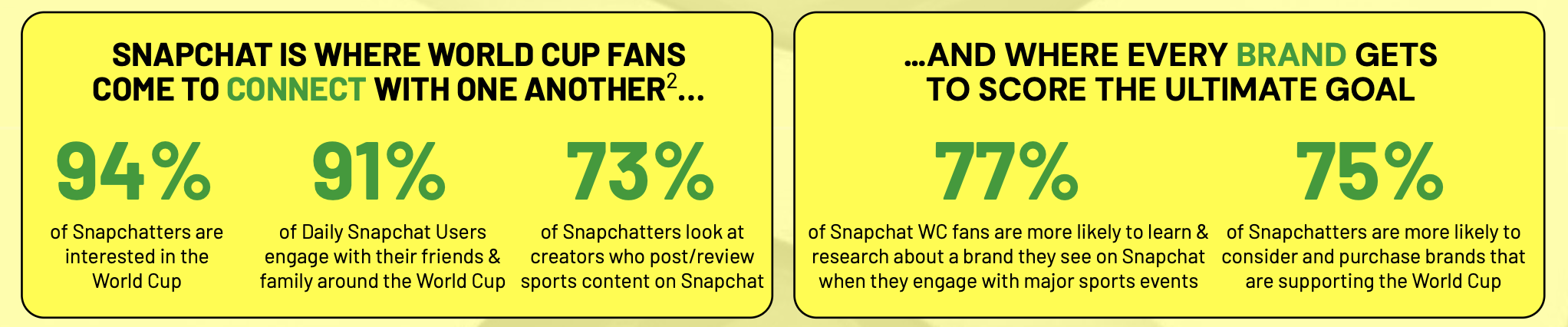
Our own data from Qatar 2022 made the shift visible. Across MENA, daily shares on Snapchat ran at 2.9 times higher than normal levels, impressions rose 21 per cent, and keyword engagement on match days doubled. The pattern wasn’t a viewership spike, it was continuous interaction, peaking and resetting with every goal.
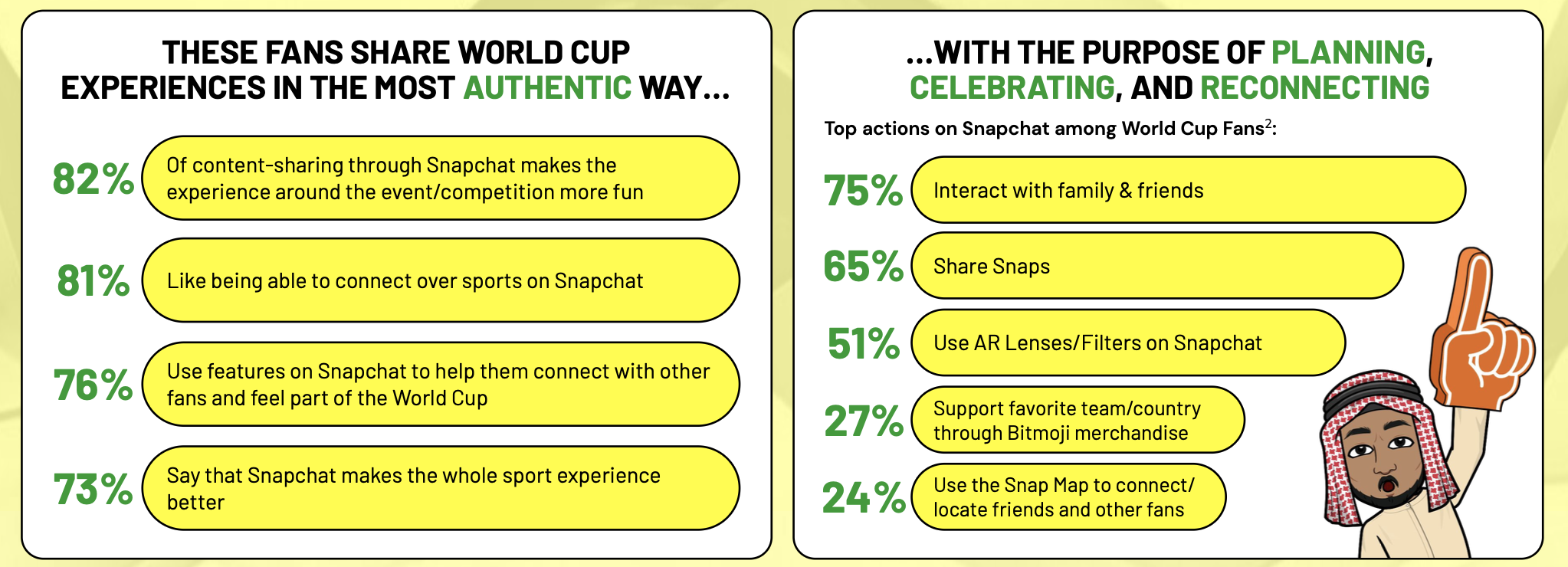
And these interactions happen within close, trusted circles. Two thirds of Snapchatters say they bond with friends and family through sport, and 57 per cent actively use the platform during live games.
This is where the brand opportunity actually sits. Decisions get made inside the conversation, not after it, what to order, where to watch, which side to back. The strategies that work in this environment are built around participation, not interruption.
That shift is already delivering results. During the FIFA Club World Cup, Riyadh Bank ran an augmented reality (AR)-led campaign on Snapchat in Saudi Arabia, pairing lens formats with performance placements to meet fans in the moment rather than around it.
The campaign delivered 85 per cent lower cost per lead, 58 per cent lower cost per click, and a 5.4 times higher increase in website visits, evidence that participation when built into the format moves the commercial numbers too.
At the same time, creators are playing an increasingly important role in shaping how fans experience the tournament. They don’t just cover the moment – they interpret it, adding humour, context and perspective that resonates with their audiences. On platforms where creators feel like part of the group chat rather than broadcasters, that translates into stronger trust.
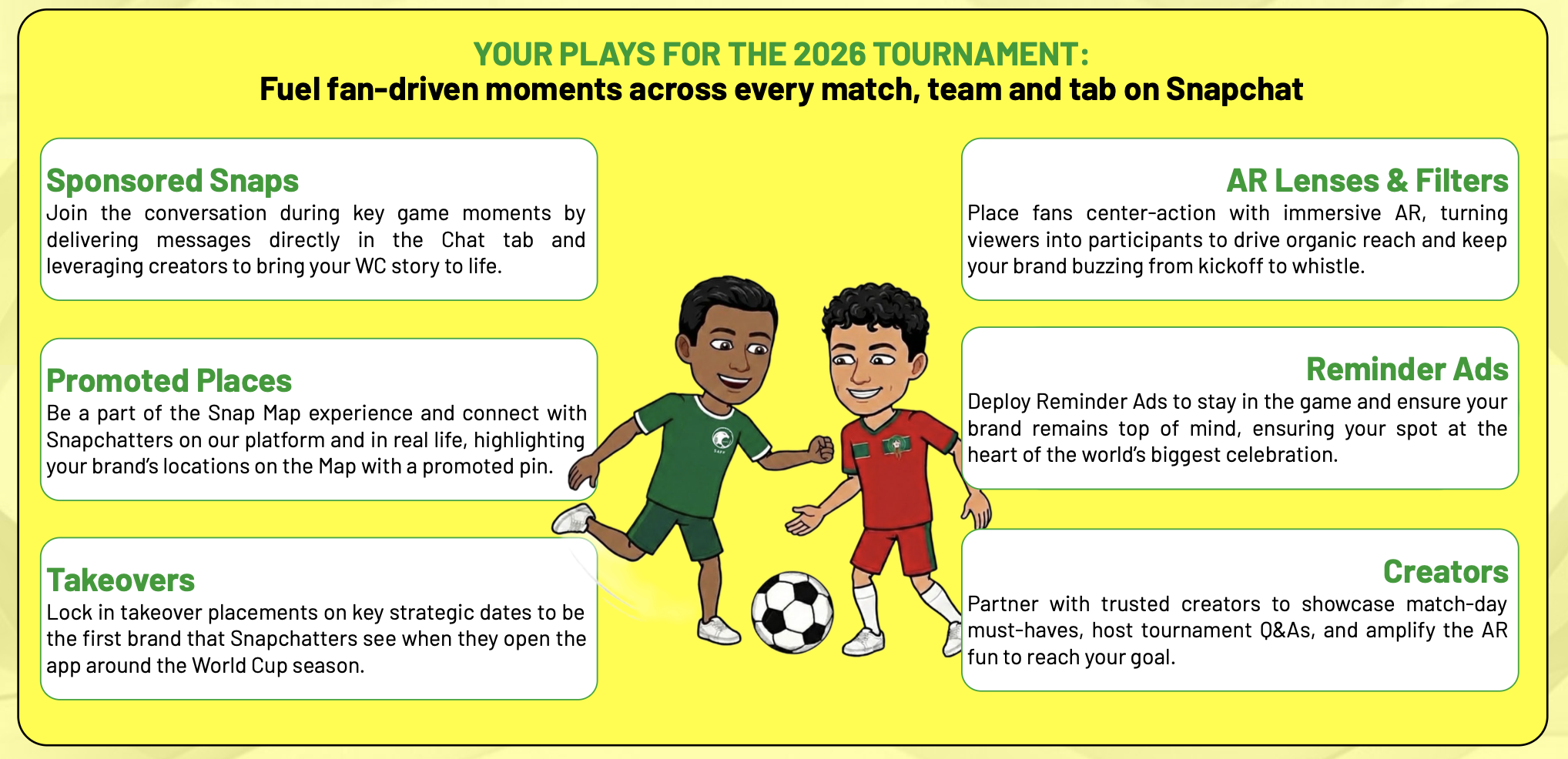
The camera matters too. AR has become a key tool for self-expression during major sporting events, allowing fans to react, celebrate and share instantly. During Qatar 2022, AR lenses across the region clocked over 124 million seconds of playtime across the region and shares increased by more than 150 per cent during peak moments.
The impact extends beyond engagement. Campaigns using AR formats drove 2.6 times higher ad awareness and up to 36 times higher action intent than those without, turning reaction into participation in a single tap.
And it converts. Purchase activity across MENA rose 21 per cent during Qatar 2022, with sharper spikes in the host market itself and meaningful ROAS gains for advertisers running through the tournament.
The implication for brands is clear, the World Cup no longer lives in one place, and neither does the audience.
The World Cup isn’t defined by what happens on the pitch anymore. It’s defined by what happens in the chat, in the camera, in the moments between friends.
The brands that win it in 2026 won’t just be seen. They’ll be in the conversation.
By Antoine Challita, UAE Country Head, Snap Inc