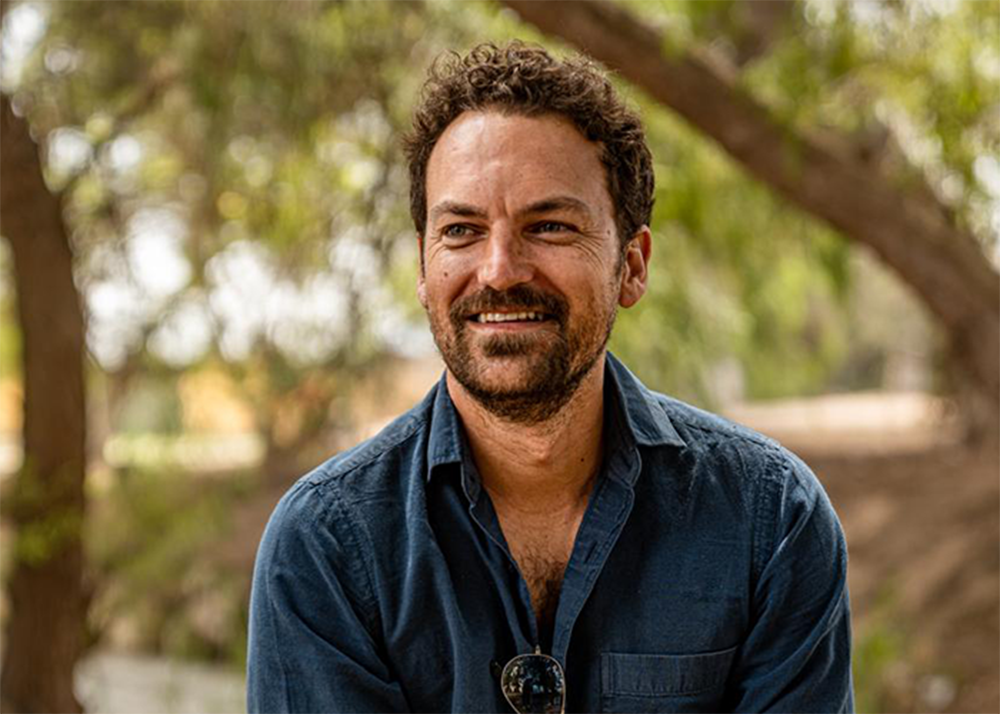
 Robert Scott, Director of Photography
There’s only so much content you can consume before you feel the need to create. In recent weeks, as global headlines have grown heavier, much of the creative industry in Dubai has found itself in a kind of limbo. Productions have slowed, briefs have paused, and for many filmmakers, the usual outlets for filmmaking and expression have quietly disappeared. What’s left is a strange combination of uncertainty and stillness – one that can easily pull us inward.
At the same time, the world outside feels increasingly defined by negative narratives. The kind that flatten places into headlines, and people into abstractions. And nuance – the thing storytelling is supposed to protect quietly disappears.
Which is why there’s a growing need – not just for content, but for intentional content. Work that reminds people of what’s actually here. Of connection. Of normality. Of humanity.
And just as importantly, there’s a need to resist the instinct to retreat. In moments like this, it’s easy to disconnect, to stay home, to wait things out. But what cuts through anxiety more effectively than isolation is togetherness – shared spaces, shared conversations, shared perspective.
Because the reality on the ground is not defined solely by crisis or uncertainty. It’s layered. Contradictory, even. There is anxiety, of course – but also routine. There is concern – but also connection. There are difficult conversations – but also moments of generosity, warmth, and togetherness that rarely make it beyond the people experiencing them.
And yet, those are the stories that go largely undocumented. Not because they don’t exist, but because we’ve convinced ourselves that they’re not the ones worth telling. Or worse, that they’re not the ones anyone wants to see.
For those of us working in film, that creates both a challenge and an opportunity. If the industry slows, the instinct is to wait for it to return. But perhaps this pause is also an invitation – to pick up the camera without a brief, without a client, and simply respond to what’s happening around us. Not as a campaign. Not as a deliverable. But as a reflection.
I found myself doing exactly that after coming across a simple Instagram post by Hattem Mattar, inviting people into his home for a community dinner. There was no agenda beyond bringing people together. I went with a camera and no plan.
The film that came out of that evening is not technically remarkable. No lighting set ups, no crew, no attempt to elevate it beyond what it was. And that, in many ways, is the point. Because what it captures isn’t production value – it’s perspective.
This isn’t about advocating for a wave of reactive, self-assigned filmmaking projects for the sake of staying busy. It’s about recognising that, in the absence of briefs, there is still a responsibility – specially for those of us with the tools and the instinct to document – to contribute something back into the narrative.
To counterbalance. To add texture. To show that reality is rarely as one-dimensional as it’s presented. Because if we don’t, someone else will continue to define it for us. And in a time where so much feels out of our control, that feels like a missed opportunity.
The pen is mightier than the sword, and the lens is sharper than silence. When the industry regains momentum – and it will – the risk is that we default back to the same rhythms. The same structures. The same dependency on permission to create.
But perhaps this moment offers something else. A reset of sorts. A reminder that filmmaking doesn’t begin with a budget or a brief – it begins with attention.
With curiosity. With the decision to engage rather than withdraw. Because the need for meaningful filmmaking doesn’t pause when the industry does. If anything, it becomes more urgent.
By Robert Scott, Director of Photography