The marketing landscape in the MENA region is undergoing a tectonic shift. According to the Ipsos study The Future of Marketing in MENA, the industry is moving away from traditional awareness-based models toward a high-accountability framework driven by talent, transformation and trust.
This piece shares insights from research conducted in partnership between Ipsos and the Advertising Business Group (ABG) as part of Marketer of the Future, a flagship event hosted by the UAE’s ABG.
The insights from The Future of Marketing in MENA report shared below are drawn from interviews with more than 60 CMOs and marketing stakeholders across four major markets, including the UAE, Saudi Arabia, Egypt and Morocco.
More than 80 per cent of the repondents were from C-suite and Executive roles, shaping strategy as key decision makers. Of these 53 per cent were female and 47 per cent male.
In 2026, being “future-ready” now requires balancing human-centric storytelling with rapid technological adoption. More than half of all marketers surveyed state ‘neutral’ or ‘weak’ future-readiness.
The capability gap: From digital to technology transformation
Marketing has moved beyond simple digital transformation. The next frontier is technology transformation, where marketing becomes predictive, automated, and intelligent.
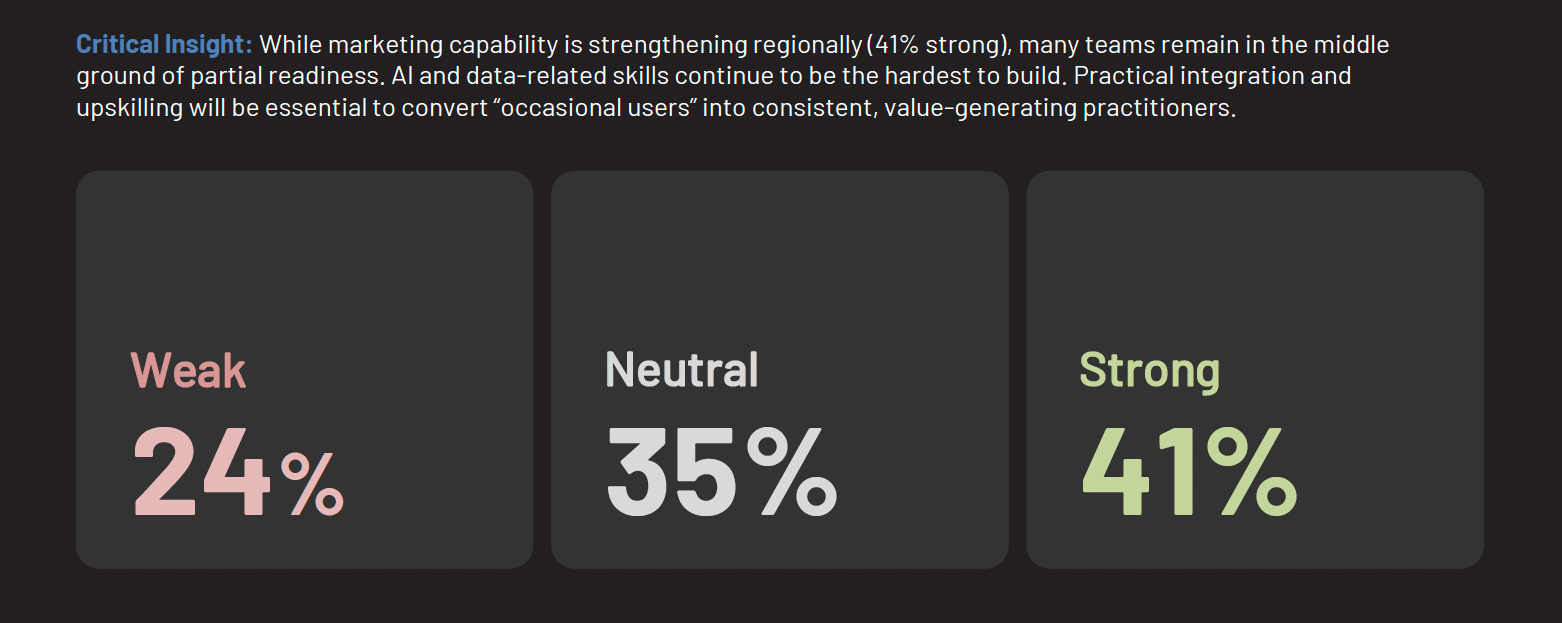
Regionally, marketing maturity is strengthening, with 41 per cent of organisations reporting “strong” internal capabilities. Yet, 35 per cent of organisations occupy a “middle ground,” partially ready for this shift.
The marketer of the future is defined not only by technical fluency and data intuition but also by adaptive intelligence.
While teams excel in customer engagement and CRM, AI and creative storytelling remain underdeveloped, with just 15 per cent citing them as core strengths.
Strategic leaders must recognise that the hardest capabilities to build are often cultural; brand building and data analytics continue to be the toughest skill gaps to close.

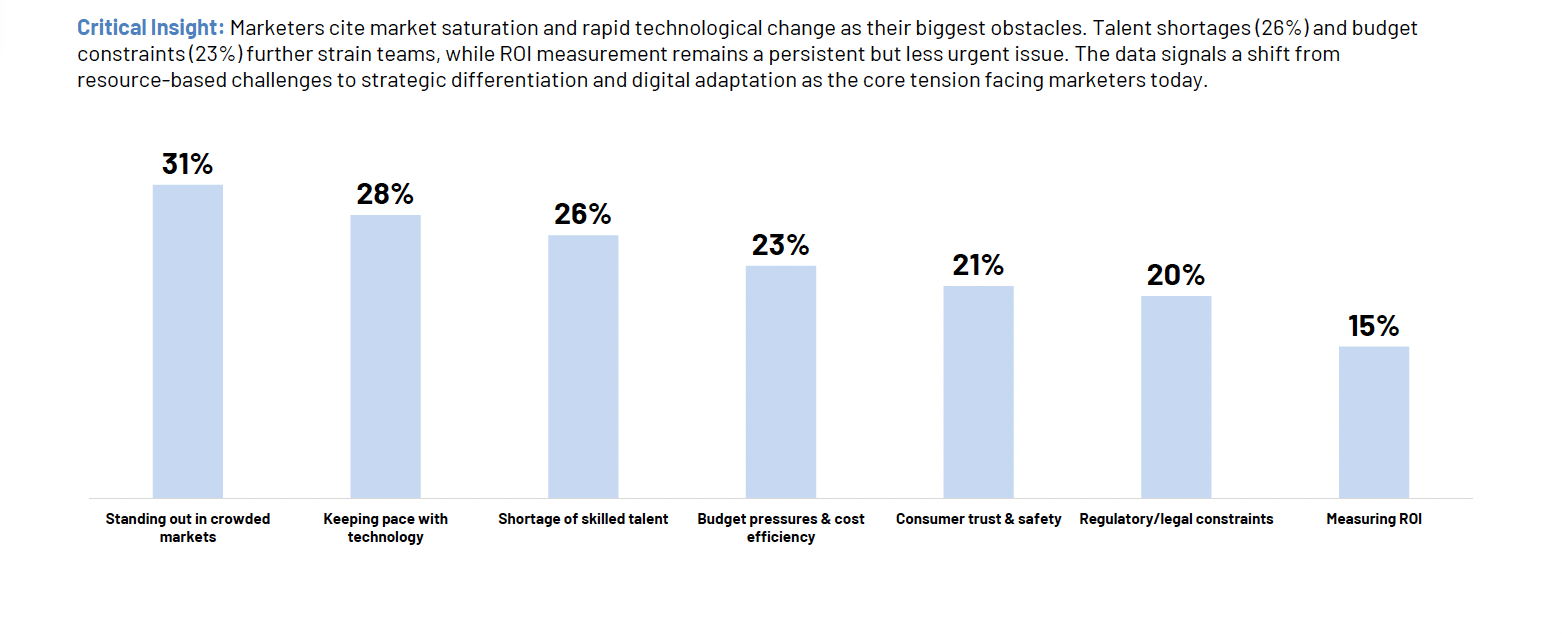
Top marketing challenges: Differentiation, rapid tech changes, talent shortage
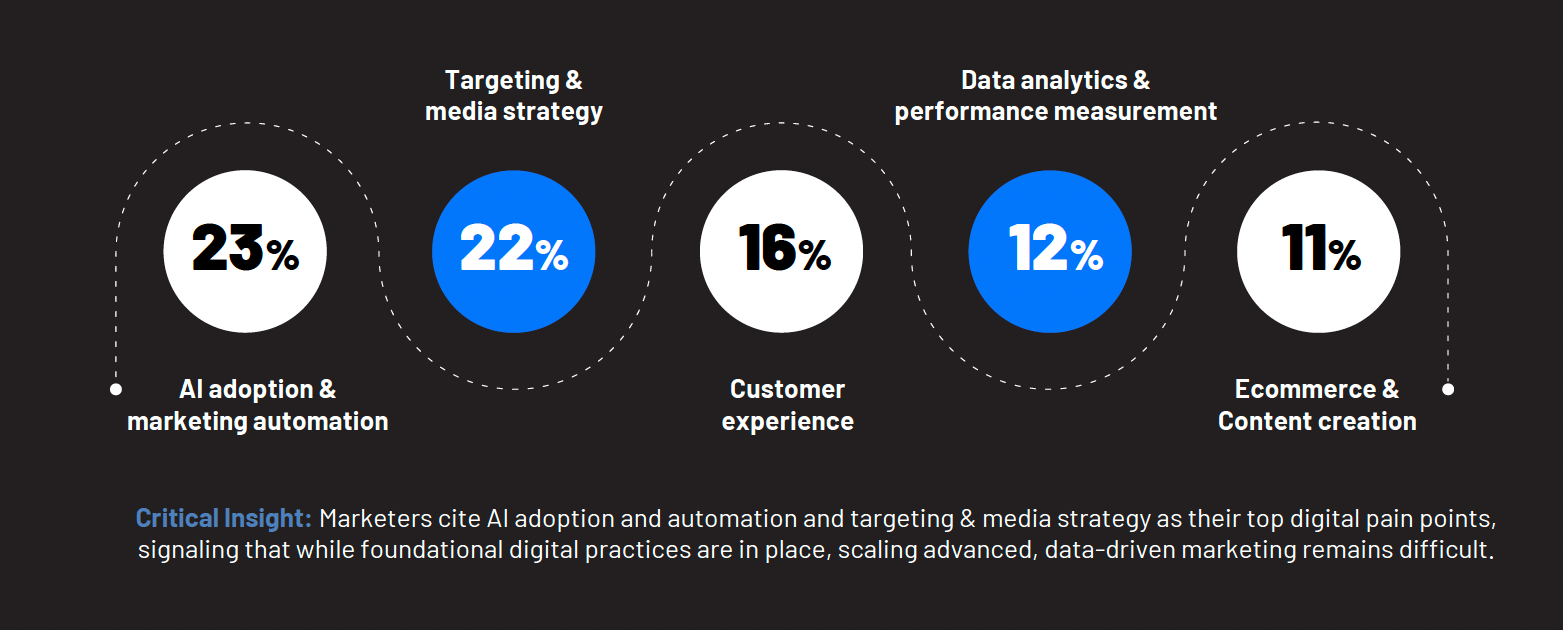
Biggest pain points in digital marketing: AI adoption and targeting capabilities
Regional approaches to marketing transformation
MENA markets are not moving at the same pace, each country is charting its own path toward technology-driven marketing.
The UAE leads in adoption and operational transformation, Saudi Arabia is scaling AI within a national vision, Egypt is experimenting with predictive and machine-assisted marketing, and Morocco is focused on building foundational infrastructure.
- UAE: The accelerator. Leading the technology agenda, 40 per cent of organisations in the UAE say digital has completely reshaped their operations, supported by a strong talent retention rate of 67 per cent.
- Saudi Arabia: The scaler. Saudi Arabia is executing an AI-first national vision where 41 per cent of CMOs focus on AI-driven customer experience, though 33 per cent find data analytics the hardest capability to scale.
- Egypt: The transformer. Egyptian marketers are among the most technically experimental, with 53 per cent already using predictive metrics and jumping directly from manual to machine-assisted marketing.
- Morocco: The next-gen tech hub. Moroccan marketers are focused on building foundations, with 40 per cent prioritising data infrastructure and performance platforms over traditional content creation.
The AI imperative and shifting mandates
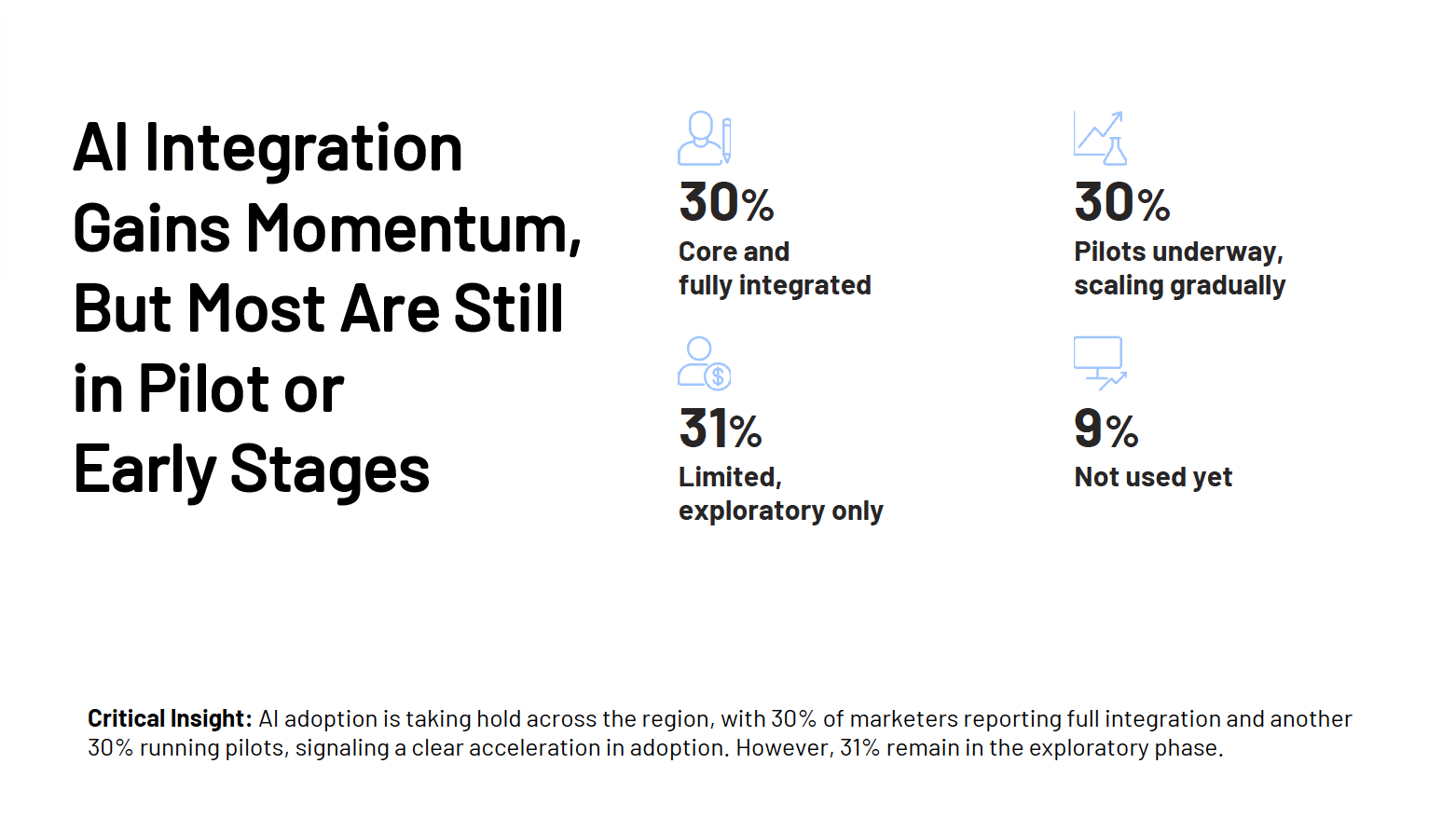
AI adoption is accelerating across MENA. Sixty percent of organisations are using AI in some capacity—30 per cent fully integrated and another 30 per cent running pilots.
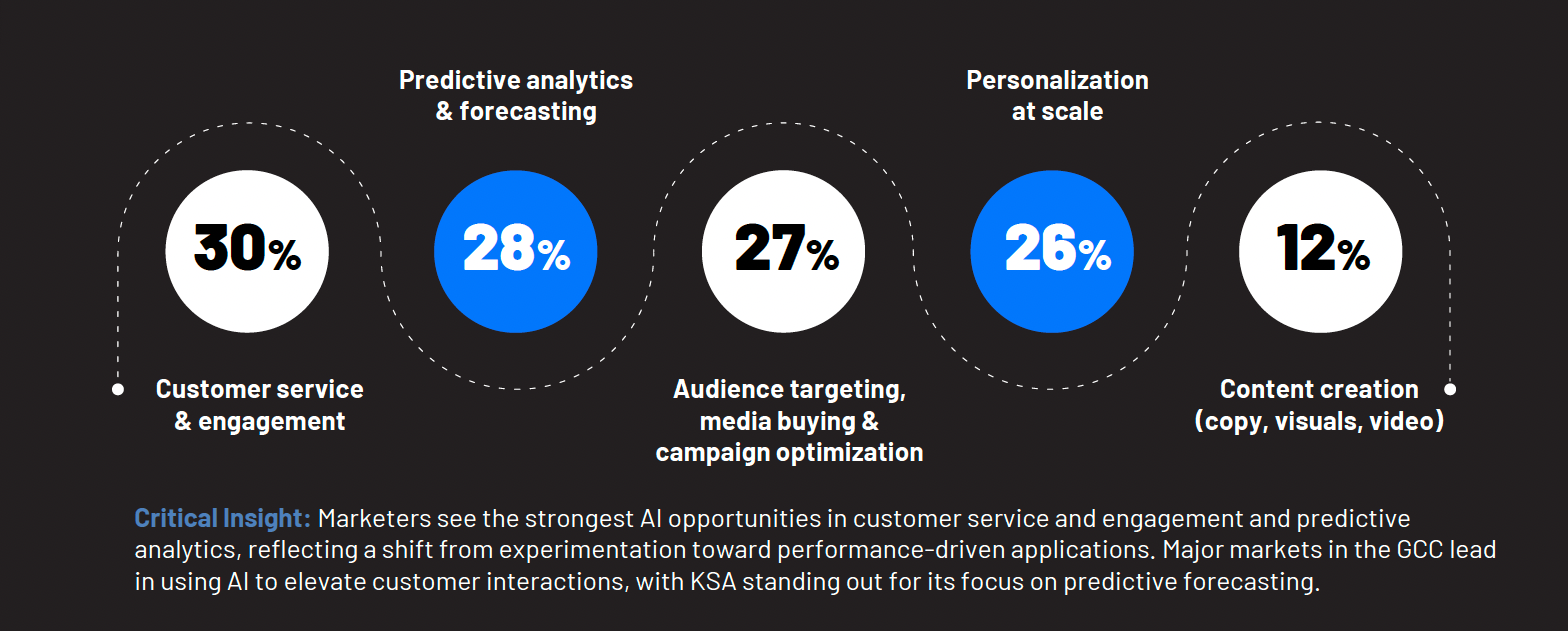
Strategic use is concentrated in customer service (30 per cent) and predictive analytics (28 per cent), though costs (33 per cent) and data privacy (26 per cent) remain constraints.
As AI moves from integration toward autonomy, the marketer’s role is evolving—from managing outputs to designing intelligent systems that continuously learn.
This technological surge is balanced by a dual mandate: driving performance while upholding responsibility.
ROI remains important (30 per cent), yet 28 per cent of marketers now place equal emphasis on purpose and sustainability. For one in three, purpose is now a core pillar of long-term strategy.
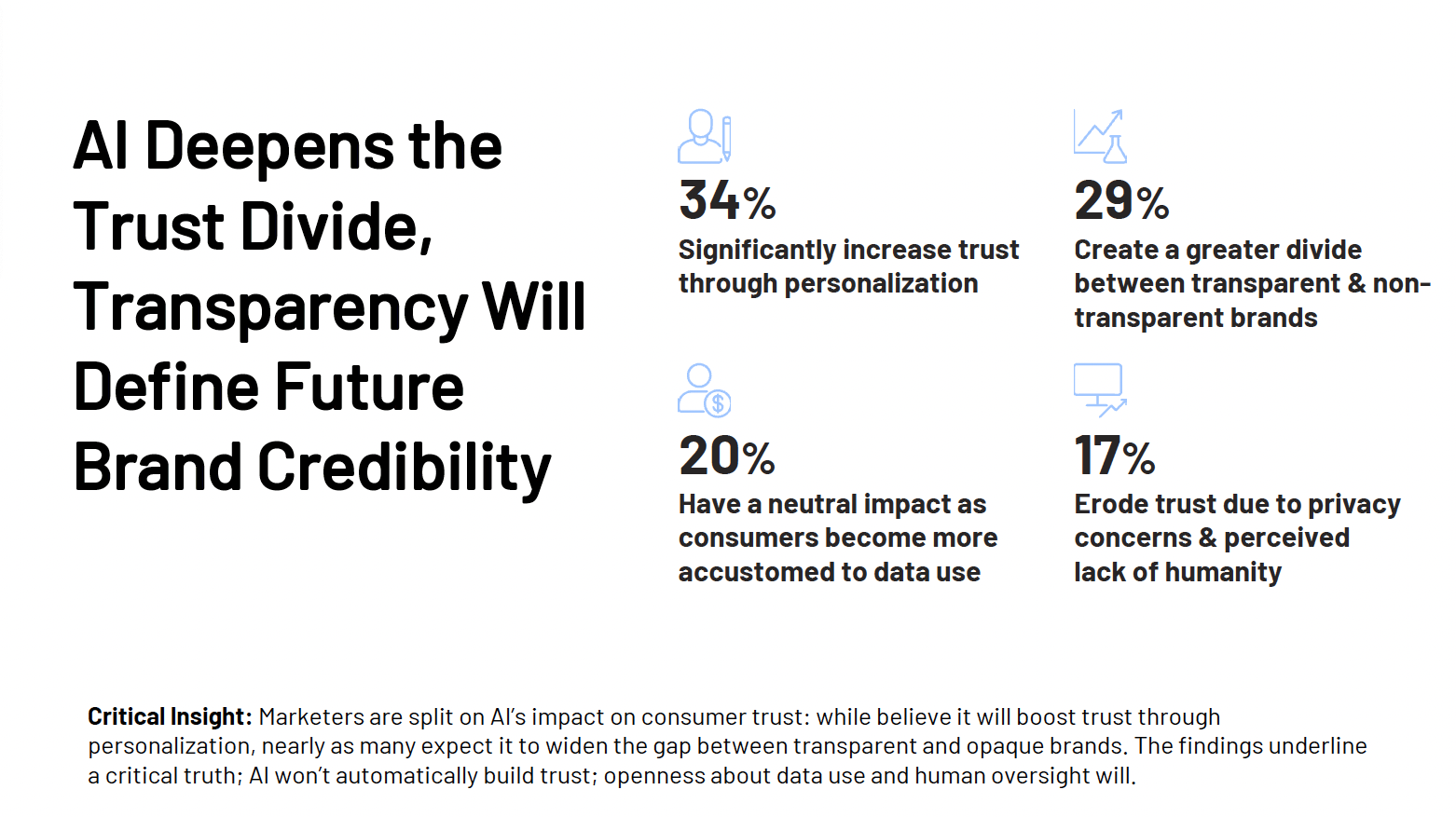
The new equation for regional success could be summarised as purpose × performance = trust. Without ethics, technology risks alienating audiences; transparency is becoming a key differentiator.
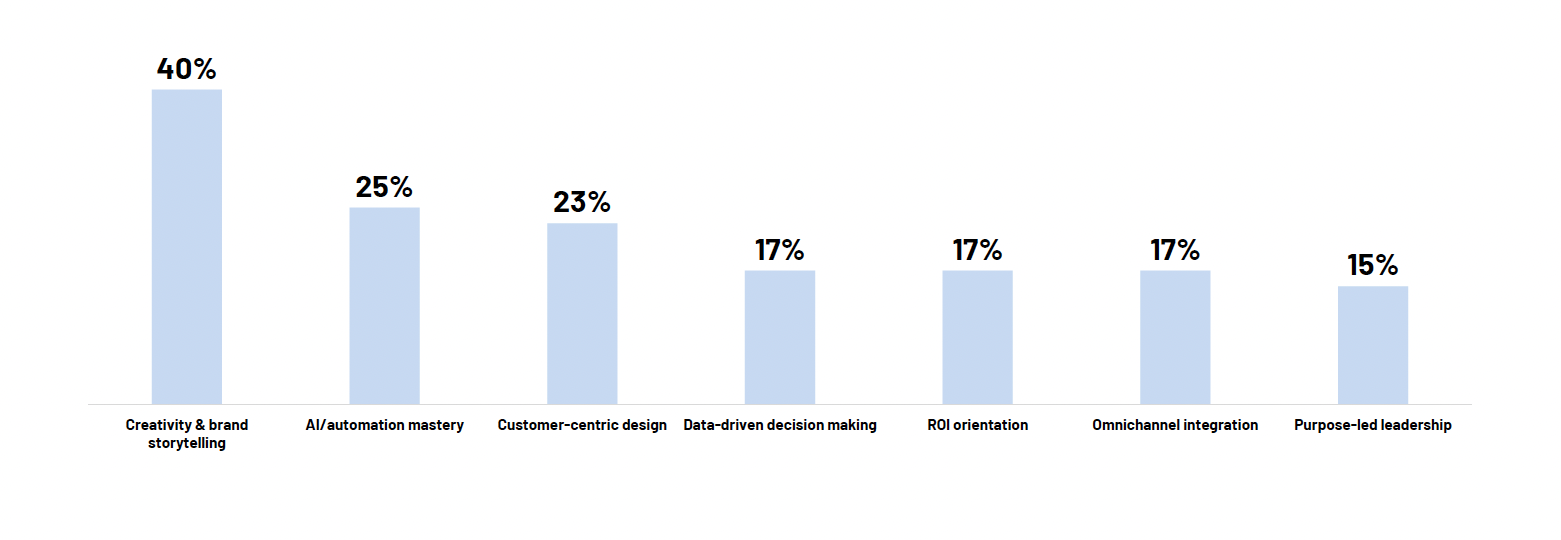
Priorities for future marketers: Creativity and brand storytelling beats AI mastery
Greatest potential of AI: Customer engagement and predictive intelligence
CMOs as orchestrators of growth and purpose
The CMO’s role is evolving from creative leadership to technological orchestration. Today, 33 per cent of CMOs lead purpose and sustainability agendas, and 25 per cent take greater ownership of business growth.
The CMO of the future will be defined less by communication skills and more by their ability to connect data, systems, and purpose to deliver measurable outcomes.
To thrive, organisations must move beyond digital execution and embrace AI-driven innovation. Marketers need to stop managing campaigns and start designing scalable ecosystems that fuel business growth.
By linking analytics-driven insights, already a daily reality for 60 per cent of marketers, to predictive action, marketing becomes the operating system of growth.
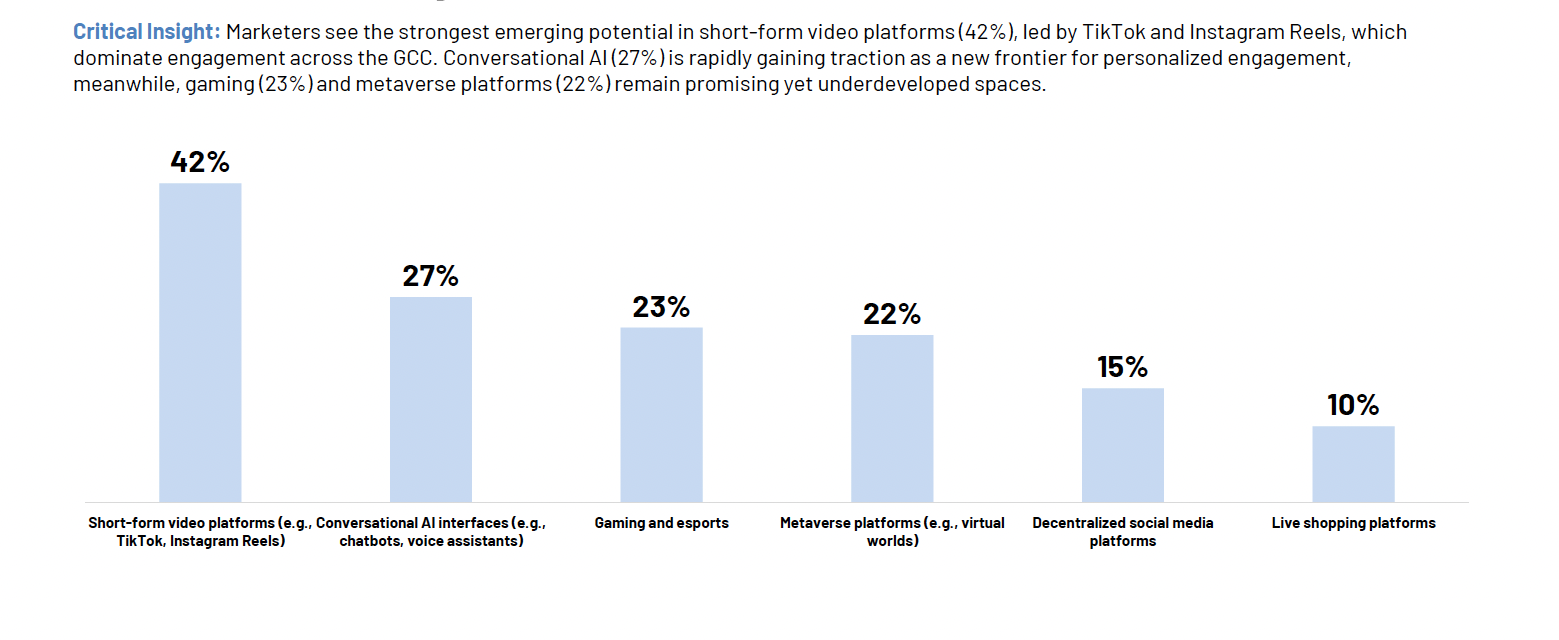
Next wave of marketing channels: Short-form videos and AI interfaces