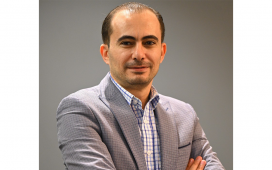


On the latest episode of Campaign Middle East’s On The Record podcast, Dr. Manfred Bräunl, Chief Executive Officer, Porsche Middle East, Africa and India, shares why the brand has accelerated down the path of experiential marketing; why it has prioritised community and fan engagement; why personalisation is key to customer-centric brand-building; and how the brand has developed a unique customer and prospect management (CPM) strategy to connect with four key target groups, including customers, prospects, influencers and fans.
With a shift away from traditional marketing and car shows to meaningful marketing that offers memorable experiences to fans and lifetime value to passionate consumers – far beyond the initial point of purchase – Porsche is not just selling cars; it’s fostering a vibrant community.
Dr. Bräunl reveals that experiential marketing is about creating a stage where enthusiasts can connect over shared passions. This is not about one-off events; it’s about fostering personal connections and creating a lasting relationship with the brand. He explains that this is so much more than just cars; it’s about lifestyle and community. He paints a vivid picture of Porsche’s core belief: “It’s not what you buy, it’s what you buy into.”
Dr. Bräunl says, “Here in the UAE, we are very close to the community. This community of Porsche customers, fans and enthusiasts has always been passionate, but what you have to do is give them a stage or a place to connect. So, that’s what we’ve done through the DRVN by Porsche café and the Icons of Porsche event. Last year, we witnessed more than 30,000 people at the event over two days. This space to bond with the brand, and with each other as a community, made it very successful.”
Strategic personalisation at Porsche
For Porsche, personalisation is an art that goes beyond tailoring to individual tastes. Dr. Bräunl emphasises the importance of recognising multiple target groups – not just potential buyers but also current owners, influencers, fans and the wider public.
It’s a multi-faceted approach that necessitates understanding of various channels and interactions to maintain and grow brand loyalty.
Dr. Bräunl outlines Porsche’s Customer and Prospect Management (CPM) strategy, which tailors communication to different audience segments. The CRM system is designed not just to sell but to cultivate long-term relationships by addressing these groups through appropriate channels. This nuanced approach ensures that everyone – from the youngest fans to long-time customers – feels valued.
He says, “You absolutely cannot treat even Porsche customers the same. Different customers have different interests. They’re driving different models. Someone driving a Porsche 911 obviously has different interests compared with someone driving a Porsche Cayenne.”
Dr. Bräunl adds, “The first target group you should be aiming for is your customer. Your customers are important because if they are satisfied with the product, they begin to actively repurchase and/or recommend. A happy customer is your best salesperson. The second group are the prospects. That’s the target group that everybody’s talking about. The third target group are the influencers – and I don’t mean your typical Instagram content creators; I mean those who are actually influencing your buying decision, whether that’s your wife, your child, your family, the car buffs you listen to and so on. The fourth target group, and in my opinion one of the most important ones, is the public. If the public in a country does not think that this is a nice product to have, the prospects will not buy you, and the customers will not stay with you. This is very important.”
Measuring the immeasurable
In the age of data, understanding the impact of marketing activities is crucial. Dr. Bräunl acknowledges the challenges of measuring intangible metrics, but emphasises the importance of balancing tangible and intangible outcomes.
Porsche’s strategic redirection of funds from traditional car shows to community-focused events exemplifies this balance.
While some effects can’t be precisely quantified, the overall sentiment and awareness generated through events such as ‘Icons of Porsche’ provide softer measurements of success. This holistic view involves more than just sales; it captures the spirit of engagement and connection that Porsche fosters.
Dr. Bräunl says, “With the Icons of Porsche, it’s not as simple as looking at how many cars did you sell the week after; it has far softer and longer-term measurements. Sure, we do monitor how many people came, how many posts were shared, and we try and put a value behind all that and measure the what happens in the showrooms in the weeks and months following it. But each of these are only some among almost 20 KPIs that we track and measure.”
He adds, “However, when it comes to our CPM, we are measuring the funnel in a much closer way. Here we can see exactly how much money we spent to be somewhere on social media, what how many inquiries came out of that. We can measure cost per inquiry, and then I follow that impact through the funnel. I can see exactly how many leads are coming out of each of the different sources, and measure it down to penny to decide whether a channel didn’t work as well as intended. This also helps with follow-ups with people, and accountability, in terms of not just how people representing Porsche have reached out to and connected with our target groups, but also how effective they have been.”
Authenticity is the fuel that fires up the Porsche
At Porsche, authenticity remains the cornerstone of brand activities. Dr. Bräunl concludes by reflecting on the brand’s history and values, emphasising the significance of genuine engagement.
The commitment to staying true to Porsche’s identity – Born on the Racetrack – underscores the importance of cultivating honest and lasting connections with customers and fans.
All in all, Porsche comes across as far more than a German automobile manufacturer specialising in luxury, high-performance sports cars, SUVs and sedans; it comes across as a community, a lifestyle and a shared passion.
By prioritising authenticity and personal connections, Dr. Braünl’s vision for Porsche is clear: to drive forward not just as a car manufacturer, but as a beacon of genuine engagement and community spirit.
Dr. Bräunl concludes, “The three main purchase reasons for Porsche is design, brand and customer experience. Although I’m very happy about our design, and people and customers love it, I cannot do so much about design. When you talk about brand, I think that our brand and marketing team is doing an excellent job. When it comes to brand activities, there’s one criteria that always needs to be met and that’s being authentic. Porsche is an authentic sports car brand, which was born on the racetrack in 1948 has an amazing history. And if you’re an authentic sports car company, and invite your customers and your fans and the communities to gather and have a good time and enjoy what they’ve always loved – then that for me is the key to success of any brand, whether it’s automotive or not.”
Watch the full video podcast here.
CREDITS:
Guest: Dr. Manfred Bräunl, Chief Executive Officer, Porsche Middle East, Africa and India
Host: Anup Oommen, Editor, Campaign Middle East
Production: Surajit Dutta, Content Production Manager, Motivate Media Group
Videography: Mark Mathew, Creative Content Producer, Motivate Media Group
Studio: Ekaterina Shirshova, Creative Content Producer, Motivate Media Group
Editing: John Melencion, Content Producer, Motivate Media Group