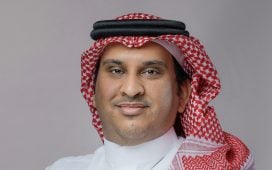
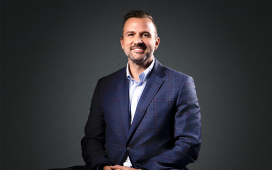
The latest episode of Campaign Middle East‘s ‘On The Record’ podcast was shot in the studio of CNN’s Emmy-award winning ‘Connect the World’ show in Abu Dhabi with the show’s host Becky Anderson, Managing Editor, CNN Abu Dhabi, as well as Alireza Hajihosseini, Deputy Bureau Chief, CNN Abu Dhabi and Director of CNN Academy.
Through the show, Anderson and Hajihosseini have critical conversations about prioritising truth and trust in the news; media literacy and differentiating fake news from credible sources of information; the ethics and standards expected of journalists and storytellers across various formats and channels; as well as sharing stories that matter with empathy, compassion, and context, from the lens of those who have lived through the experience.
The candid crossfire delved into the important of robust journalism in an era of AI, distractions, and fractured trust. The dialogue spanned from fundamental journalistic tenets — accuracy, fair-mindedness, and placing humans at the centre of every story — to the practical experiments of CNN Academy, including the immersive simulations that test both hard skills and soft skills in a safe-to-fail environment.
Across the exchange, a shared theme emerged: the bedrock of credible journalism is not novelty or gimmick but a disciplined blend of rigorous verification, empathy, and humility. Anderson and Hajihosseini agreed that the future of CNN, and the broader media landscape, lies in teaching new generations to sift signal from noise, to attribute sources with clarity, and to tell human stories that resonate without sacrificing truth.
As they described it, the goal is not to abandon traditional journalism but to reframe it — combining the best of technological fluency with an unflinching commitment to trust, context and compassion. The result, they suggested, could be a more credible, more human form of storytelling that serves both audiences and the society at large.
Focusing on the fundamentals: Trust and empathy in a crowded media landscape
Becky Anderson opened the discussion with a stark observation about the current information landscape and how the sheer volume of content, amplified by AI, presents a perilous risk to truth and trust.
Anderson said, “I’m quite terrified by the amount of content there is out there on both digital and social, particularly in an era of AI, when I think we’re seeing an increasing amount of AI slop out there. It worries me about just how much of a lack of truth and trust there is in storytelling. I often say this: all journalists should be good storytellers, but not all storytellers are good journalists. There’s a generation out there who have can produce and publish content in record time with new technology. They’ll call themselves storytellers. But I do think we need to get back to the basic toolkit as journalists and focus on accuracy, authenticity and trust.”
She added, “I’ve been in the business for 30 years, and during that time, everything has changed so far as the way that we the tech that we use and how we get out to the field, but at the same time, nothing has changed. So everything has changed that degree, but nothing has changed when it comes to the basic tenets of journalism, and that is trust, empathy, compassion. We talk a lot about authenticity these days, but we don’t talk enough about trust.”
Building on this conversation from the perspective of the CNN Academy, Hajihosseini explained that in order to be a good storyteller in the current day and age, people do need the latest tech, understand the latest ‘mojo’ of what’s trending, and how to shoot engaging content.
He said, “On one hand, we need to learn how to edit a piece on the phone quickly to deadline. How do you shoot things beautifully? What are the latest tools that you can use? But, on the other hand, how do you do all of that against the backdrop of trust, context, veracity, and ensuring that when people are consuming your content, they are absolutely sure that what you’re reporting on has been fact checked, verified and is the real story. So, if you combine the latest of storytelling techniques with a focus on truth telling, then you got a good product, and that’s what we’re trying to do with the CNN Academy project.”
Freedom of speech vs. Accountability for opinions on the news
The conversation then threaded into how how critical has it become to have a nuanced debate about: The balance of freedom of speech versus the need for greater accountability of ‘news’ and opinion disseminated by all content creators, especially in a world where comedians, content creators, podcasters and influencers seem to be contributing to the ‘news cycles’ and holding a sway on the court of public opinion – with millions of followers across the globe.
Hajihosseini said, “I think it’s great that comedians and podcasters are getting big guests on their shows and having good conversations. I follow a lot of them on social media. I consume a lot of that. I think the time has come that journalists go beyond just our linear and traditional formats. If you look at the younger audiences, the way they’re consuming media, and the conversations that they’re trying to have – it’s a lot more informal. It’s a lot more authentic.”
He added, “The days have gone where you just have a news reader sat behind the anchor desk, just talking to you. Today, people have so many more options available to them; so, we need to present stories in the way that younger people, younger consumers, are getting and consuming their stories. And for us to remain relevant, we need to innovate alongside them. That’s why, at CNN Academy, we’re not just training people to become anchors anymore. We’re training them to become multi platform storytellers; we’re training them to be as comfortable with digital storytelling as they are with linear storytelling. However, this is all layered with the key tenets of speaking the truth, maintaining trust and accuracy, and reporting fairly.”
Anderson offered a crisp articulation of CNN’s north star, saying “At the heart of what we do or who we are at CNN, and our brand equity is accuracy, fair mindedness and putting humans at the heart of our story. That’s the way that we report. What do I mean by that? So accuracy is about facts. Those are non negotiable. It’s about truth telling. Fair mindedness is about us: ensuring that we, as journalists, get out there and look at all aspects of an issue and report on what we find accurately. And what do I mean by by human reporting? I mean ensuring that we report with compassion, putting people at the heart of our stories. And if we do those three things effectively and responsibly. I think that ensures that we are fit for purpose as it were.”
CNN Academy’s focus on media literacy – differentiating credible news from fake news
The conversation then pivoted to the role of media literacy. Campaign Middle East raised a crucial question about whether people needs better information on how to differentiate credible news from fake news; to go beyond sharing and resharing a piece of news after reading a headline to, instead, search and research every angle of the story to get to the truth of the matter.
Hajihosseini said, “This is precisely why we at the CNN Academy are so passionate about media literacy. We believe that if we have a media literate society, there are a lot of things we can mitigate against, including how to spot AI content that is not factual, or how interviews are taken and then spun or sensationalised. Young journalists who pass through the CNN Academy also become better consumers of media.”
He added, “The other point that we are very keen on is to ensure that people have a healthy, diverse media diet. Don’t just watch CNN; don’t just follow mainstream media. Have a diverse diet, and recognise that all of the angles of all of the stories that we are consuming out there, when put together, probably will reveal the full picture.”
Anderson went on to explain how the CNN Academy’s simulation programme is a great example of how the brand shares its stance on media literacy,
She said, “This is an immersive, real-world scenario designed with social media, AI-generated information and all the latest forms of content to give journalists a deep dive into sharpening their skill sets. It helps them understand what they should be looking for. Where are the red flags, you know? How do you identify something that is fake news? How do you recognize that in the world of AI-generated slop? The simulation week is absolutely at the heart of honing those skills.”
The two leaders also spoke about attribution and the audience’s ability to navigate through echo chambers.
Anderson acknowledged a shift in how younger audiences process information and how attribution training can empower viewers to trace ideas back to their sources.
She said, “There is a real appetite for the truth. Already, Gen Z audiences understand that there’s a lot of nonsense out there, and there is an appetite to understand how you navigate through this. It gives me such pleasure to see a younger generation very focused on ensuring that they’ve got an avenue, a roadmap that shows them how to get to the truth of the matter.”
Humanity as the compass – humility and the ethics of storytelling
The conversation returned to the human-centred core of journalism — the power of portraying a story through the perspective of a person’s lived experiences rather than through abstract or clickbait headlines.
Anderson said, “Every now and then, it’s good to get out of the way as a journalist. Get out of the way. It’s not about you. We know that some of the most powerful storytelling is told through the lens of the person impacted by that story. And some of the best storytelling that I’ve done, and certainly some of the best storytelling that some of my brilliant colleagues at CNN do, is through the lens of the kid in the refugee camp or the young woman who’s been affected by climate crisis; it’s also really important that we put them at the heart of the story.”
She added, “Successful journalism is about it is about humanity. We’re in the business of trying to make an impact by inspiring people, through empathy. We can’t land a story unless it’s a human story and unless audiences know that we are speaking with compassion. And I think a lot of people forget that.”
Alireza reinforced this through a practical reminder about the media’s responsibility to humanise even the fastest, most timely news moments: “The fundamentals of storytelling haven’t changed, and those haven’t changed for hundreds of years. And we, as humans, we’re storytelling animals. No matter what happens with the AI revolution, we will remain storytelling animals.”
The essence was clear: even amid tech disruption, the core of journalism remains the same — put people at the centre, tell their stories with care, and respect the truth.
Parting advice from CNN stalwarts
As the conversation neared its close, the mentor’s microphone turned to aspirations and purpose.
Anderson’s closing centred on impact and the desire to enable younger storytellers to carry the torch: “My dad was a lawyer. My mum was a teacher, who had a strong moral compass. Mum taught special needs for maybe 60 years, and she taught us that it was important to ensure that everybody felt included. She had an enormous amount of impact on the kids and adults that she taught in her adult literacy classes. So, it’s really important to me that people understand what’s going on, that people are literate about the world, and that everyone feels included in a way that their story is heard. In this region, most of our staff are from this region. And if I’ve got one legacy, it is that I can move out of the way eventually and allow young journalists, who I hope will become great storytellers, to tell their own stories. That’s really important.”
Hajihosseini ended on an inspirational note urging young journalists and storytellers to follow what they’re genuinely passionate about while staying relevant and credible in a noisy landscape.
He concluded, “So, my advice is to find something that you’re really passionate about. For me, global affairs, news, and what’s happening around the world was always a passion, and that’s why I would watch CNN when I was a kid; and now, I work for CNN. There’s so much noise out there. There are so many different distractions. But if you’re passionate about something and you’re dedicated to it, the doors will open and the opportunity will come. This is hopefully what we’re doing with CNN Academy — democratising that access of opportunity to people all around the world who are now engaging with this brand founded by Ted Turner, nearly 50 years ago, but going strong, innovating, evolving and remaining a relevant part of the conversation.”
Key takeaways
The discussion did not merely catalogue what the CNN Academy does; it offered a working philosophy for how credible journalism can thrive in a hyper-connected, AI-enabled era.
Trust, empathy, and human-centred storytelling are not just ‘nice-to-have’ principles but are guiding north stars for both pedagogy and practice. CNN Academy’s programmes — its immersive simulations, its emphasis on attribution and source-calling, and its insistence on teaching multi-platform storytelling — are not add-ons but essential tools in constructing a more reliable information ecosystem.
In this view, the newsroom becomes less a fortress of gatekeeping and more a workshop of discernment, where the next generation learns not just to report the news but to shepherd it with care and accountability.
The final message from CNN’s Anderson and Hajihosseini was both aspirational and pragmatic: find your passion, tell human stories, and build a pipeline of capable, empathetic journalists who can navigate an increasingly noisy landscape without surrendering the core obligation to the audience — truth-telling with humanity.
CREDITS:
Guests:
– Becky Anderson, Managing Editor, CNN Abu Dhabi, and host of Emmy award-winning CNN show ‘Connect the World’;
– Alireza Hajihosseini, Deputy Bureau Chief, CNN Abu Dhabi, and Director, CNN Academy
Host: Anup Oommen, Editor, Campaign Middle East
Production: CNN Abu Dhabi
Jude Oommen
Raed Ballan
Post-production: Motivate Create, Motivate Media Group
Surajit Dutta, Content Production Manager, Motivate Media Group