Across the GCC, the creator economy appears unstoppable. Influencer numbers are climbing, AI adoption is accelerating, and the region’s digital ecosystem continues to expand. Yet beneath the scale and speed of that growth, a quieter shift is taking place: audiences are becoming harder to convince. The Cultural Power Report 2026 from M+C Saatchi Group explores why.
The report examines a series of emerging behavioural and cultural shifts across the region, offering a data-backed look at how audiences are navigating a world increasingly shaped by automation, artificial intelligence, and digital saturation.

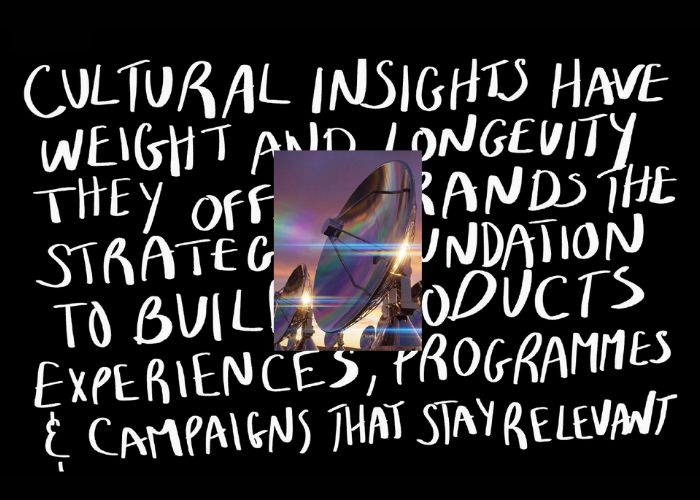
Rather than focusing on fleeting trends, the report maps the deeper changes in values and behaviours that influence how people spend their time, attention, and money. The report argues that these shifts build slowly but build up over time, ultimately reshaping industries and redefining how brands earn cultural relevance.
It identifies eight cultural shifts shaping the GCC’s new trust economy: trust shift in the creator economy, nostalgia, energy economy, interest-led communities, escapism, lifespan to healthspan, craft over convenience
The trust shift: influence, AI and digital fatigue
One of the most visible examples is the evolution of the creator economy. The GCC now counts more than 263,000 influencers, following a 74 per cent surge in creator growth over the past two years. Yet as the industry expands, influence itself is becoming more complicated.
Trust is becoming one of the biggest pressure points. Influencers were recently ranked as the least trusted profession in the UAE, falling below both telemarketers and real estate agents, highlighting a growing credibility gap between creators and audiences.
For Mark Haycock, Head of Strategy at M+C Saatchi Middle East, the shift reflects a broader cultural fatigue with digital content that feels increasingly manufactured.
He says, “I hate the word authenticity, but I think we’re all yearning for things that feel real and tangible again. As every interaction becomes digitised and our feeds get filled with AI slop, there is a growing sense of not only fatigue but apathy; not just toward brands, but towards all content,”
At the same time, the report suggests smaller creators may be better positioned to close that gap. Micro-creators are seeing engagement rates of 4.59 per cent, significantly higher than those of macro influencers, largely because they operate within tight-knit communities rather than broadcasting to mass audiences.
Empowering your own teams to create content can be a powerful engine for authenticity too. Employee-Generated Content (EGC) is becoming one of the most authentic influence engines. From Currys in the UK to Talabat in the UAE, brands are empowering their teams to create content that is relatable, grounded and culturally closer to the audience than many paid influencers ever are. This approach often results in content that is more relatable and culturally closer to the audience than traditional paid influence.
For brands, this signals a need to reset influencer strategy back to its original purpose: collaborations built on credibility. Partnering with people who genuinely understand the category and their audiences. The brands that earn their place in these communities — rather than simply paying for reach — are more likely to build lasting cultural influence.
“I feel influencers somehow morphed into another mass reach channel for some marketers, where audience size was prioritised over audience and creator relevance. If we get back to the original intent behind these creative partnerships – creating mutual value for audiences, creators and brands – that’s half the battle won. A more disciplined scorecard to matchmake these relationships is required, over having a certain budget assigned to influencer marketing and spending it regardless,” says Haycock.
He adds, “Our PR team does a lot of work in building relationships with both creators and brands. On the creator side, it’s about understanding whether they have a genuine passion for the category or the brand, whether they have ever worked with a competitor before, and does the tone of their content suit the objectives of the campaign, etc.”
Commenting on the role of EGC, Haycock says its an interesting spaces for brands. “In a world that lacks trust, it’s a deliberate strategy to show either the human side of the brand to customers or prospective employees. Just last year Deloitte appointed its first Corporate Influencer, in the UK you see employer-led strategies working for retailers like Currys and M&S, and locally I think Talabat are doing a great job of showcasing their culture.”
Rather than signalling the collapse of influencer culture, the report suggests the opposite: influence is entering a more mature phase, where cultural pull is earned through credibility, community, and relevance rather than scale alone.
Truth under pressure
That fatigue is unfolding alongside the rapid rise of artificial intelligence. The UAE is already leading globally in adoption, with the country announced in October 2025 as having the highest AI-adopting workforce in the world. But the technology is also creating new ambiguities around trust.
The question of trust is becoming more complicated. As AI-generated content spreads across platforms, audiences are beginning to treat the digital world with greater scrutiny.
Consumers are behaving more like digital fact-checkers — cross-referencing information, questioning automated outputs and looking more closely at what sits behind the content they encounter online. Concerns about AI hallucinations, the growing risk of impersonation and the rise of virtual influencers are all contributing to a more cautious digital landscape.
At the same time, attitudes towards AI are evolving in unexpected ways. Research cited in the report suggests 23 per cent of teenagers now trust AI-generated recommendations as much as those from friends or family, highlighting a new and increasingly complex relationship between technology and credibility.
As the boundaries between human and machine-generated content continue to blur, the report argues that brands are entering a new trust economy, where credibility must be earned more deliberately than before.
For brands, the shift has practical implications for how they communicate in an AI-shaped ecosystem. A recent study by System1 Group in the UK suggests audiences are relatively comfortable with AI being used in brand-building content, but concerns rise sharply when it comes to areas that require clarity, such as product explanations, educational materials or AI-generated influencers. In these moments, transparency becomes critical.
The report argues that openness about how AI is used will increasingly become a form of cultural currency — particularly deeper in the customer journey, where credibility matters most. At the same time, the rise of generative platforms is reshaping how people search for information, as a result changing how brands think about discoverability.
Brands are beginning to move beyond traditional search engine optimisation (SEO) towards generative engine optimisation (GEO) also known as AEO, designing content that can surface in AI-driven recommendations from tools such as ChatGPT.
The energy economy
Younger audiences are rethinking how they spend their time and attention. The report highlights the rise of what it calls the “energy economy”, where Gen Z treats emotional and mental energy as a finite resource.
Traditional social norms are shifting. Cancelling plans is no longer taboo and is increasingly framed as self-preservation, while behaviours such as ghosting group chats – even while engaging with content about loneliness – reflect a new pattern of selective connection.
For brands, this creates a clear design challenge: how to create experiences that require less effort from audiences. The report suggests companies should focus on “low-energy belonging” – frictionless experiences such as one-tap reorders, flexible subscriptions, or pause-anytime features that minimise mental load.
Another shift is taking place within social platforms themselves. Audiences are gradually migrating away from mass feeds towards smaller, interest-led communities built around shared passions.
In Dubai, for example, there is a record number of running clubs, including female-only crews and night-running groups. These micro-communities are becoming powerful cultural spaces because they offer belonging that feels curated rather than broadcast.
For brands, the implication is clear: participation must add value.
Rather than interrupting these spaces, brands are more likely to succeed by acting as enablers – partnering with community gatekeepers such as run-club captains, supper-club hosts, or niche organisers who shape the culture within those circles.
“In uncertain times, physical experiences become the lifestyle equivalent of putting your money into gold. In the year ahead, brands creating physical experiences that deliver something genuinely enjoyable and culturally additive will be the ones rewarded. We’re not talking generic pop-ups with thinly veiled attempts to borrow credibility from a culture, but partnerships and moments that create something of value to that sub-culture,” says Haycock.
Some examples of this include Adidas’ recent participation at the Dubai Marathon, partnering with a pasta mom-and-pop shop to help runners carb-load. Another moment was when Puma delivered on their runner’s high platform locally by taking a group of runners for a sunset dopamine hit 219m above ground in Downtown Dubai.
“In terms of knowing whether a shift has landed, there is no single definitive metric for this. Whilst we do have proprietary tools like the Cultural Power Index to track a brand’s cultural relevance across its category, ultimately these shifts become clear when you start to see the same pattern emerging across different sectors. It still requires human judgment to connect those dots and articulate what is really happening,” says Haycock.
Nostalgia
In an increasingly digital world, the report also highlights the growing power of nostalgia as a cultural anchor.
Across social platforms, trends such as “I met my younger self for coffee” have gained traction, while remixes of 1990s Arabic pop jingles are finding new audiences online. Offline, events such as Sole DXB and BRED Abu Dhabi are increasingly leaning into early-2000s aesthetics and archive-inspired merchandise.
This isn’t nostalgia as simple remembering. It’s about actively stepping back into earlier versions of ourselves, remixing the past, and letting it land in the present. In a world that feels increasingly optimised, accelerated and just out of reach, it’s a way to feel something human again.
Nostalgia has become a tool for both escape and grounding — a way to pause without stepping completely out of the world around us. It creates warmth, sparks shared memory, and give people permission to slow down.
For brands, nostalgia offers an opportunity to build emotional resonance – particularly when rooted in authentic storytelling rather than manufactured retro campaigns.
Designing for longevity, escape and craft
Beyond digital culture, the report identifies shifts shaping how people live, travel and spend their time.
One of the most significant is the move from lifespan to healthspan – focusing not simply on living longer but on living better for longer.
Demographic changes are already pushing the conversation forward. The GCC’s median age is projected to rise from around 32 today to 51 by the year 2100, prompting new thinking around wellness infrastructure and long-term quality of life.
“In this region, real estate has a major role to play in our healthspan. We already expect a lot from our communities, and developers have raised the bar further in terms of amenities. The next step is designing environments that actively support long-term health. Developments like Athlon by Aldar are interesting because they go beyond adding facilities. The masterplan itself encourages healthier behaviour, from the layout of pathways to the integration of movement into everyday life. That feels more credible than simply promoting the number of gyms available,” says Haycock.
He adds, “Fitness brands also have a responsibility to shift the conversation from performance and intensity to longevity and sustainability. It’s less about pushing your limits and more about maintaining strength and mobility over time. Food, beauty and self-care brands can adapt their messaging in a similar way, focusing on long-term benefits rather than quick fixes. To avoid fatigue, the tone needs to be practical and evidence-based rather than preachy. Healthspan should feel like a sensible evolution, if a brand has no value role in the topic, then steer clear.”
The great escape
At the same time, the pressures of what many describe as a “polycrisis” world are fuelling a growing desire to disconnect.People are overstimulated, overwhelmed and craving spaces that let them breathe. The report refers to this shift as The Great Escape, noting that 49 per cent of UAE residents admit to experiencing FOSO – the Fear Of Switching Off – even while travelling.
More and more, people are looking for spaces — physical or digital — where they can step away from the constant noise of connected life. Whether it’s switching off notifications, travelling somewhere remote or simply immersing themselves in an experience, the goal is the same: to disconnect for a moment and feel present again.
“The obvious ones are travel and tourism. These have always been gateways to escape the everyday, but perhaps now with even more meaning and power than ever. Read any travel trend piece and you’ll come across purpose-led breaks, wellness retreats, slow travel and even noctourism (nocturnal tourism / stargazing); all manifestations of a shared desire to escape,” says Haycock.
He adds, “But I think escapism also exists in our day-to-day and our weekends. The growth of sports participation, community participation and immersive experiences are not only passion pursuits, they’re antidotes to always-on connection. Ironically, it’s this always-on connection where I keep discovering new escapism experiences; everything from sensory deprivation tanks to TeamLab, Abu Dhabi. Maybe that says more about me than anything else. However, what we do know now is that there is growing evidence to support the idea that experiences aren’t just a collection of social currency, but that novel and diverse experiences have been strongly linked to happiness, gratitude and optimism. So, what once was viewed as a self-indulgence might now be the key to keeping us grounded.”
The brands that resonate in this space are not simply offering entertainment or distraction. Instead, they are creating experiences designed to transform — from wellness-led environments to sports and community activities that reshape how people connect emotionally, giving audiences the chance to slow down, reset and take a breath.
Craft over convenience
The report also points to a growing counter-movement to automation: craft over convenience.
In a region where instant access and speed are the norm, craftsmanship is becoming a form of quiet luxury. From artist residencies in AlUla to the flourishing maker culture within JAX District, visible skill and human creativity are increasingly valued as antidotes to automated production.
For brands, the opportunity lies in revealing the people and processes behind the product – turning the often invisible labour of artisans, makers and specialists into the centre of the story.
Ultimately, the Cultural Power Report suggests that while automation will continue to reshape marketing and media, cultural relevance will increasingly depend on something far less scalable: credibility.
“This is where we look beyond impressions and engagement rates. At M+C we have developed a Cultural Power Index that assesses a brand’s desirability, influence, presence and momentum versus its competition across an extensive dataset. It’s designed to give a more pointed view on how well a brand injects itself into culture, and highlights untapped opportunities for it to do so more effectively. It’s still early, but we are beginning to see correlations between stronger Cultural Power scores and commercial outcomes such as revenue growth and market share. For C-suite stakeholders, that has often been the missing link. Cultural relevance is not just a creative ambition. It is a leading indicator of long-term brand and business performance,” says Haycock.

As the report makes clear, the brands that succeed in this new landscape will not necessarily be the loudest or the fastest. Instead, they will be the ones who understand how culture is shifting – and find meaningful ways to participate in it.