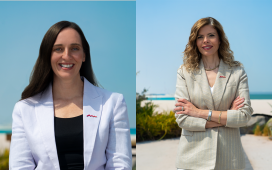
Zia Mandviwalla, Director, FINCH
Zia Mandviwalla, Director of FINCH, is a globally awarded film and commercials director recognised for her finely crafted, human-centred storytelling, who has now taken on the mantle of Film Craft Jury President at Dubai Lynx Awards,
Working across Australasia, Asia and the US, she directs campaigns for leading brands and agencies, and is known for her emotional precision, nuanced performance direction and refined visual craft. Mandviwalla has served on multiple industry juries including Spikes Asia, Axis and Dubai Lynx – and always aims to bring a thoughtful, rigorous perspective on craft, storytelling and impact.
In an illuminating discussion with Campaign Middle East, Mandviwalla discusses the evolving landscape of film craft. She also emphasises the significance of crafting choices that are not merely aesthetic, but integral to the concept, creating work that resonates deeply and moves with purpose.
Reflecting on the creative strides in the MENA region, Mandviwalla observes a transformation in confidence and ambition. She reveals how the region’s creative outputs are becoming increasingly rooted in authentic experiences and cultural nuances, showcasing layered storytelling and assured craftsmanship. She adds that this complexity, paired with a willingness to engage audiences actively, is elevating the region’s global standing in the creative domain.
Here’s how the conversation played out:
What kinds of creative thinking or approaches are you hoping to see in the jury room this year? Are there any themes, formats or creative disciplines you’re excited to see represented in this year’s entries?
I’m hoping to see work where craft is inseparable from the idea – choices that are intentional, considered and necessary. Not just beautiful execution, but execution that deepens meaning and has a powerful impact.
I’m particularly excited by films that feel culturally specific yet universally resonant – work that understands and reflects its local context, but speaks with confidence on a global stage. In terms of format, I’m drawn to blurred boundaries: film that borrows from documentary, design that behaves like storytelling, or technology that’s used as an expression of humanity rather than spectacle.
Ultimately, the work that excites me most is brave in its specificity, rigorous in its craft, clear in its messaging and potent in how it makes you feel.
Do you feel that the MENA region’s creative work has elevated and evolved over the last few years? How?
Absolutely. There’s been a noticeable shift from work that proves it belongs on the global stage, to work that assumes it does.
What feels particularly evolved is the confidence in voice. We’re seeing more work rooted in lived experience, geographic nuance and cultural truth. The storytelling feels layered, the craft assured, and the ambition sophisticated.
There’s a growing willingness to embrace complexity – emotionally, politically, socially – a trust that audiences will meet the work halfway. That confidence is powerful, and it’s changing how the region is perceived creatively.
According to you, what does it take to impress the jury panel? How does this reflect the type of real-world outcomes that these pieces of work are attempting to achieve for clients and brands?
Work that impresses a jury is often work that shows clarity of intent. You can feel when a piece knows exactly what it’s trying to do – and has made disciplined, sometimes difficult, craft decisions to serve that.
Great craft isn’t ornamental; it’s strategic. When craft choices are aligned with purpose, the work resonates more deeply, travels further, and ultimately delivers stronger real-world outcomes.
If you were to share a few strategic insights or pieces of advice that would help clients and agencies in the Middle East region compete at global awards, what would they be?
First, start with truth – cultural, human, emotional. The more specific and honest the genesis of an idea is, the more universal the result becomes.
Second, be rigorous and bold in craft decisions. Ask not just can we do this? but should we? Restraint, precision and coherence often elevate work more than scale or complexity.
Finally, trust your voice. The region doesn’t need to imitate global trends to be relevant. Some of the most compelling work comes from leaning into where you are, who you’re speaking to, and what the work is saying about both of those things.
All in all, Mandviwalla asserts that for work to impress in global jury rooms, it must demonstrate clarity, strategic craft and authenticity. She advises creatives in the MENA region to ground their ideas in truth and embrace rigorous craft while trusting their unique cultural voices. By doing so, the region can both preserve its distinct identity and exert a compelling presence on the world stage.
Following the final deadline for submissions on 22 January 2026, jury members will now review the entries to decide who will be awarded at the highly anticipated awards ceremony on 1 April 2026.
For more details on Dubai Lynx Awards and submission guidelines, visit www.dubailynx.com/awards.