

 From left, Anup Oommen, Editor, Campaign Middle East; Wissam Najjar, Chief Operating Officer, Omnicom Media Group – MENA; Laurence Baldwin, Senior Regional Brand & Marketing Manager, Talabat; Dylan Temple-Heald, Head of Programmatic, Hypermedia; and Bruce von Kaufmann, Mall Director, Reem Mall.
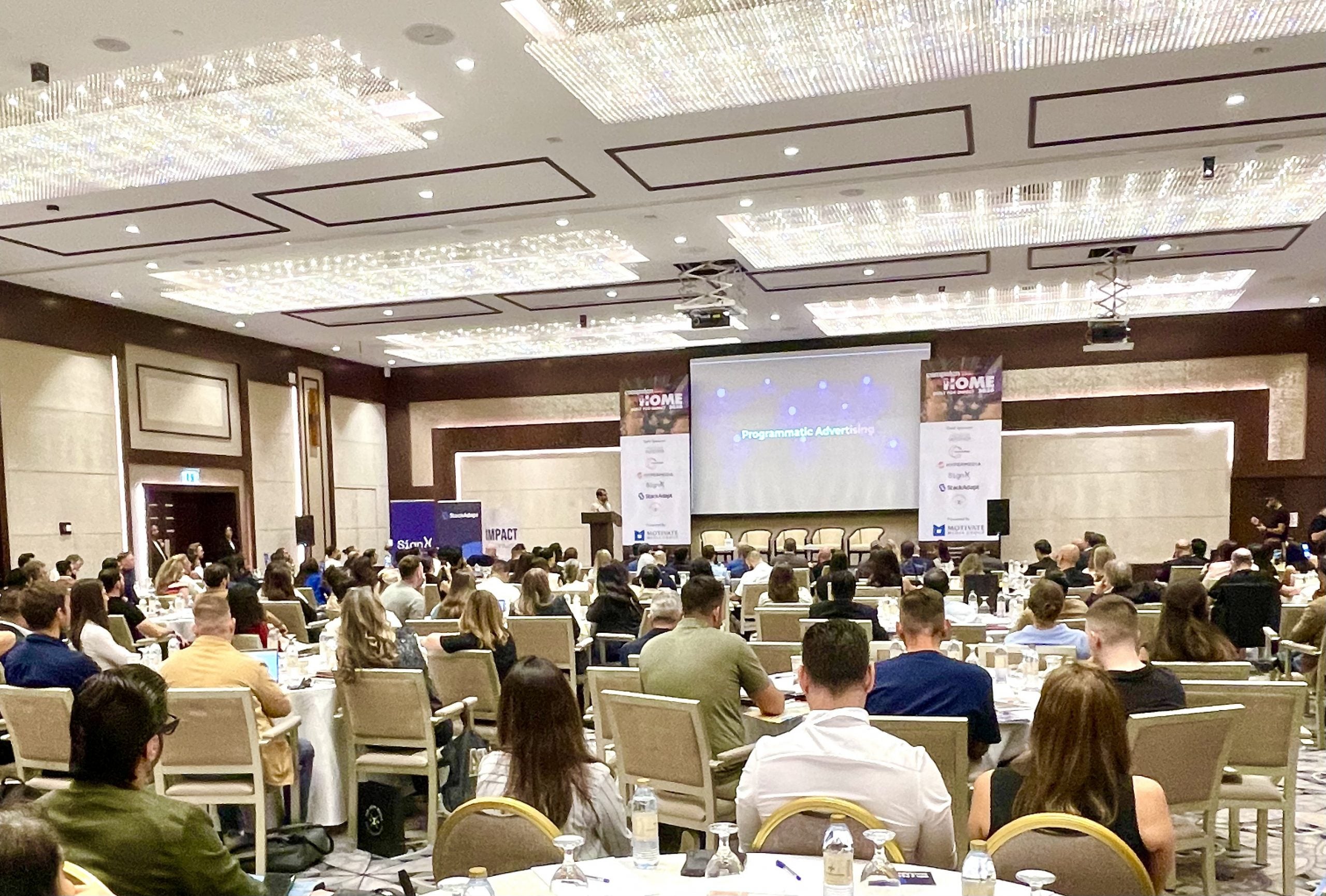
Campaign Middle East has successfully concluded its final industry event of the year: Campaign Breakfast Briefing: Out of Home 2026. The event brought more than 200 marketers, agency leaders, media owners and adtech leaders under one roof at The Metropolitan Hotel in Dubai on 21 November to take cognizance of challenges faced and set the pace for the out of home (OOH), digital out of home (DOOH), and the programmatic DOOH (prDOOH) industry for the year ahead.
Industry leaders from Arada, Al-Futtaim Motors, Talabat, Al Masaood, Aster DM Healthcare, Reem Mall, Domino’s Pizza, Union Coop, Omnicom Media Group – MENA, Publicis Groupe Middle East & Turkey, Hypermedia, Das Kapital, Choueiri Group, Landsec, StackAdapt and Sign.X took to the stage at the event.
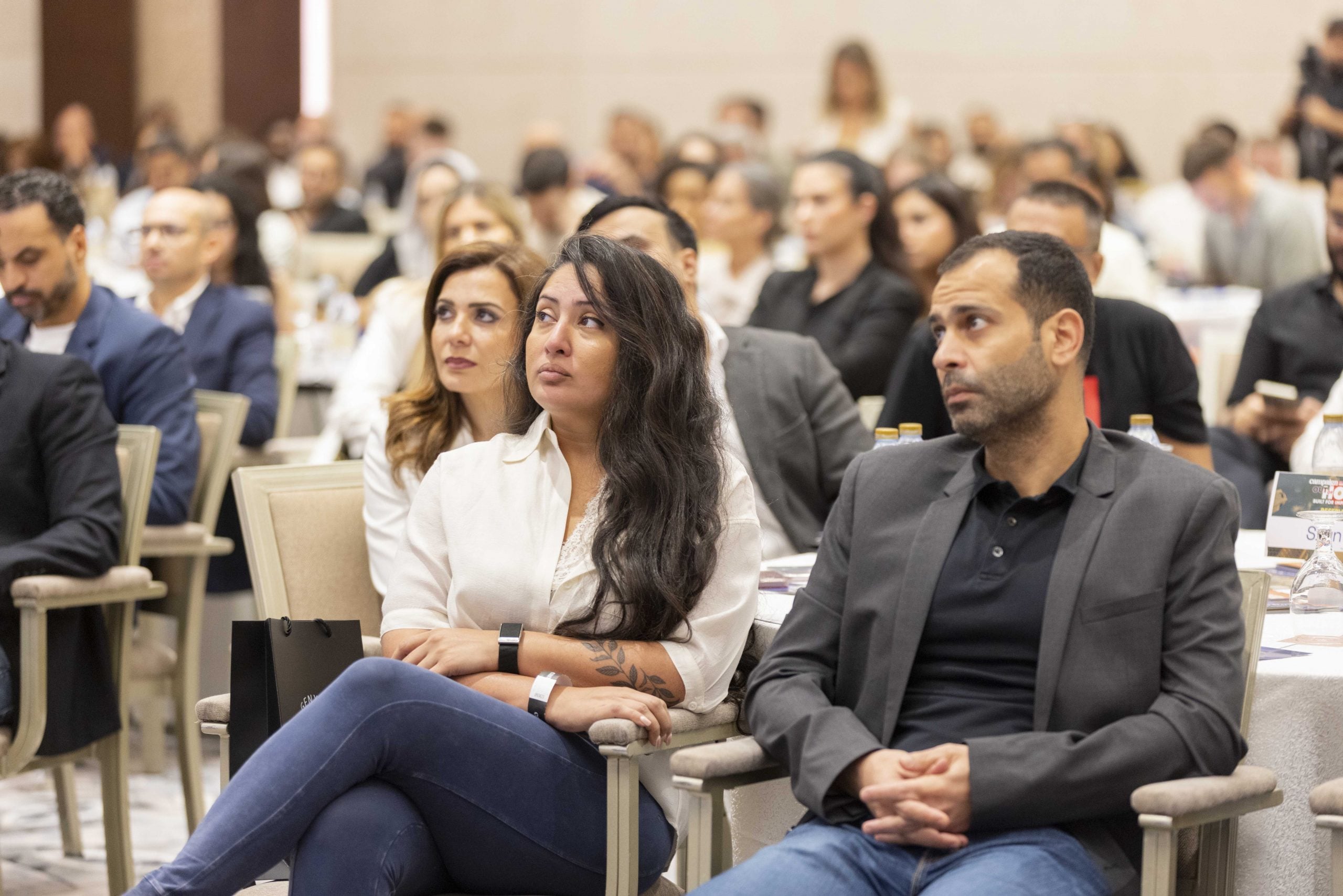
The event – brought to life through two keynote presentations, three in-depth panel discussions and a meaningful time of networking – offered actionable insights on leveraging human-led creativity, programmatic DOOH, dynamic creatives, cross-channel strategies, measurement, audience intelligence, automation, real-time optimisation strategies and much more.
Leaders delved into several key areas of focus, including:
- Digitisation of outdoor advertising screen inventory.
- Benefits of programmatic DOOH, including agility, flexibility and enhanced efficiencies.
- Real-time measurability and unlocking better targeting, personalisation and segmentation capabilities.
- Integration of DOOH with other digital marketing channels to create a cohesive omnichannel strategy.
- How brands can stay relevant, contextual and timely through responsive, real-time prDOOH.
- Evaluating the emotional resonance and creativity of outdoor campaigns – beyond targeting and metrics.
- How geographical context, authority, exposure and movement create emotional impact on OOH.
- How to stay culturally relevant in OOH creative communication, while resonating with diverse audiences.
- The potential of AI in enabling more dynamic and contextual out-of-home advertising.
- Integrating cultural moments and authentic social amplification into ‘experiential OOH’.
- Reviewing governance frameworks and the measurement playbook for compliance, brand safety and ROI.
… and much more.
The event was organised by Motivate Media Group’s Campaign Middle East in partnership with Arabian Outdoor, Contour Media, Hypermedia, Sign.X, StackAdapt and The Gen X Media.
Welcome speech
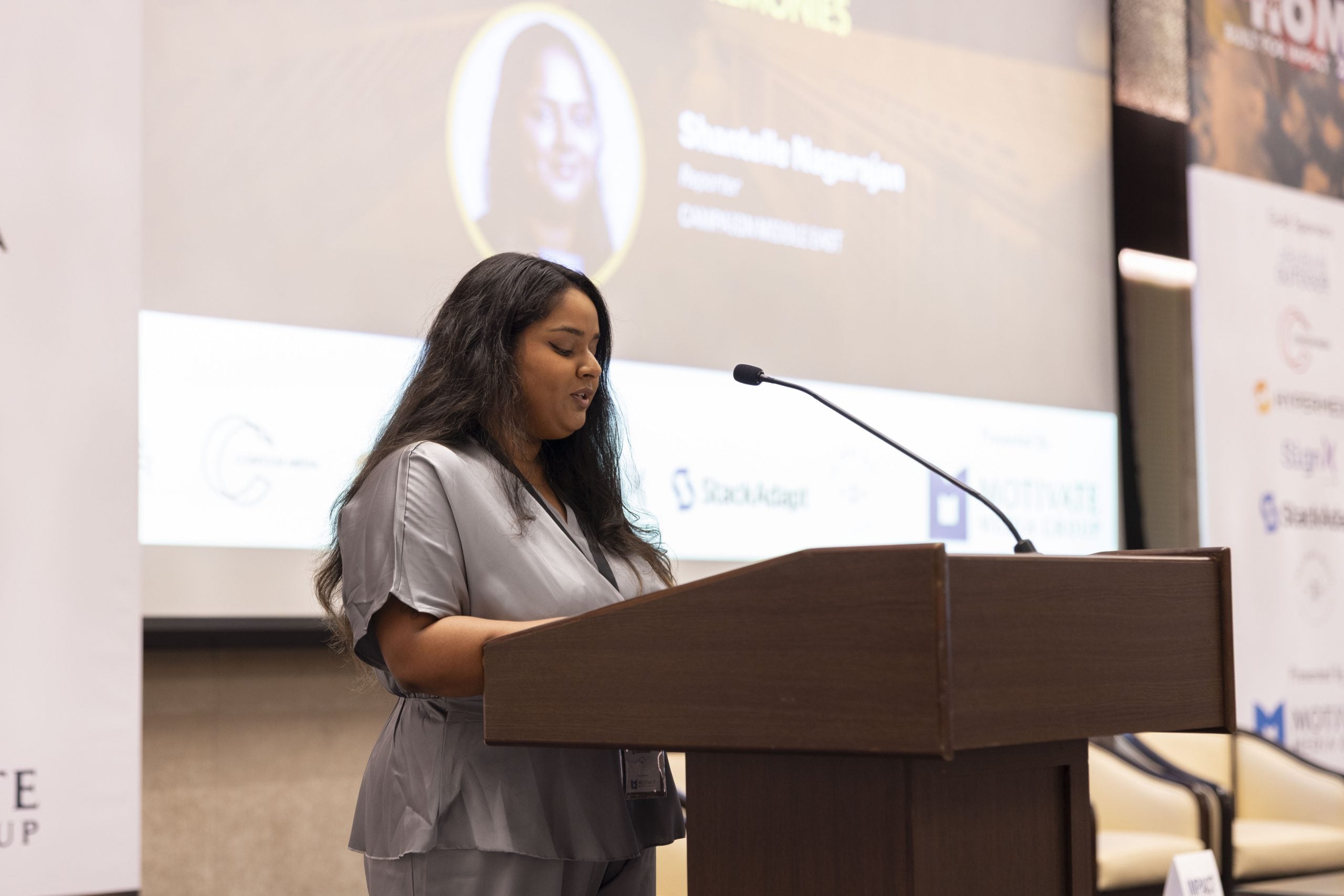
The event began with a welcome speech by Nadeem Quraishi, Publishing Director, Campaign Middle East, who briefed the attendees about the brand’s latest developments and upcoming plans for the fourth quarter of 2025. He also unveiled the brand’s Editorial and Events Calendar for 2026.
Quraishi introduced the 9th annual edition of Campaign Middle East’s MENA OOH Guide, which features insights from industry leaders, along with details on all the outdoor suppliers with a huge pullout OOH location map for UAE and Saudi Arabia.
He also introduced Campaign Middle East’s first-ever Marketing Game Changers Awards, a dedicated platform to celebrate client-side marketers shaping the future of our industry.
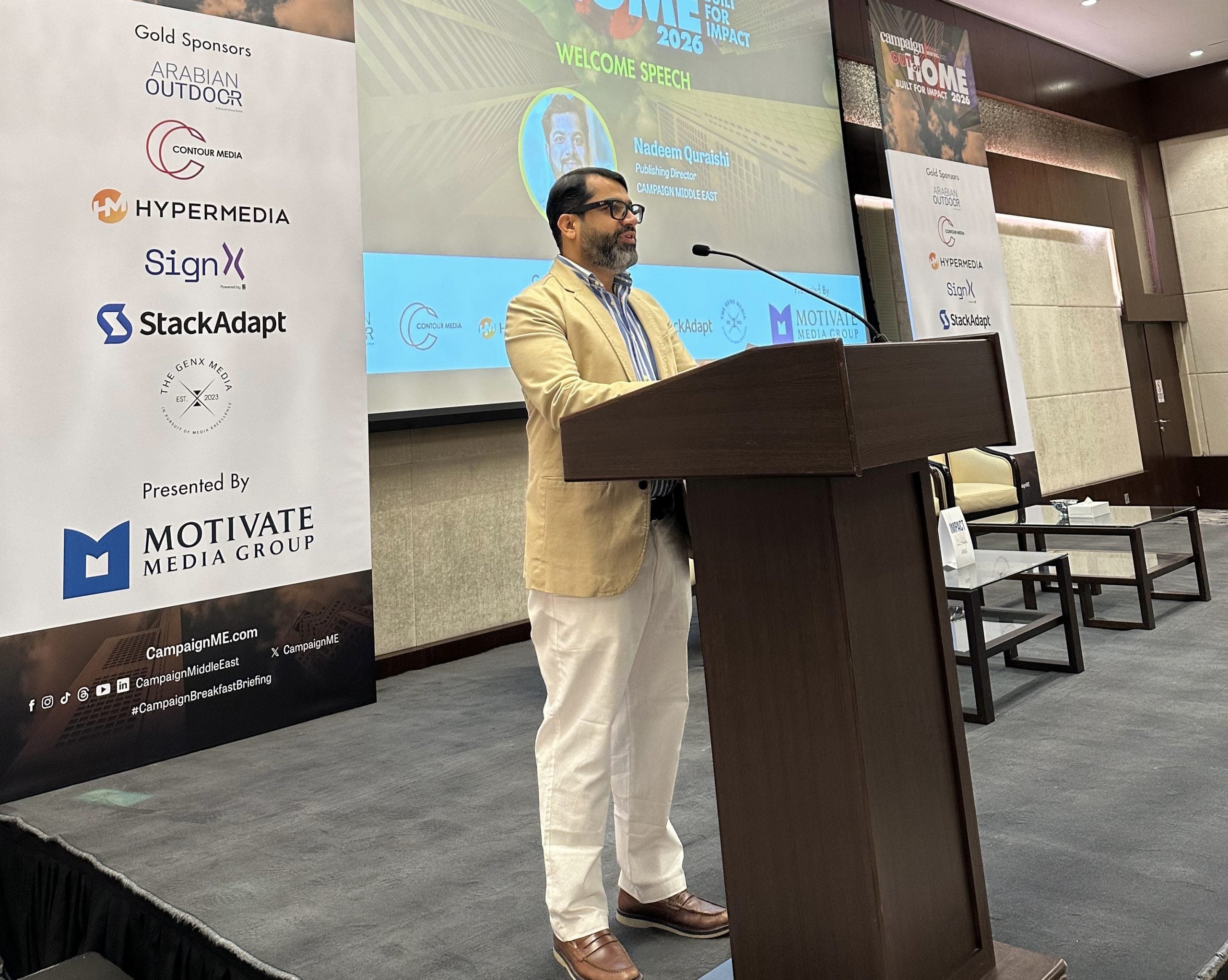
Quraishi also announced the Agency of the Year Middle East 2025 Awards, which is scheduled to take place on 11 December at the S/O Uptown Hotel Dubai. He revealed a record number of entries for all award categories, and congratulated agencies shortlisted for the third edition of these annual awards.
Chair’s opening remarks
Campaign Middle East Editor Anup Oommen then took the stage to deliver the chair’s opening remarks. He dared marketers to codify the path to real, measurable outcomes by investing in architecture for data-driven buying, transparent pricing and unified reporting, which ensure clarity in attribution.

He called for the industry to champion human‑AI collaboration, using AI to scale, personalise, and analyse consumer data for insights, while keeping the creativity human-led and rooted in local culture, humour, and language.
Oommen said digital OOH can also be so much more than a web of interconnected screens. He explained how it can also be curated in real-time based on time of day during Ramadan, and footfall patterns during peak hours, and offer real-time response to weather, traffic and audience movements – the type of campaigns that can be activated, paused or optimised in real-time – enabling flash sales, event triggers or even crisis response.
He said, “Brands are demanding transparent pricing, clear proof-of-play, and supply-path visibility that reduces waste and fraud. They are calling for better attribution models in a world where we can tie screens to mobile IDs, retail data and geolocation. It’s no longer about paying top dollar for the shiniest asset and hoping for the best. Brands and advertisers are choosing performance over placements; creative brilliance over clutter; language and localisation over sheer scale; and a full-stack automation approach that makes DOOH more ROI-driven, not more complex.”
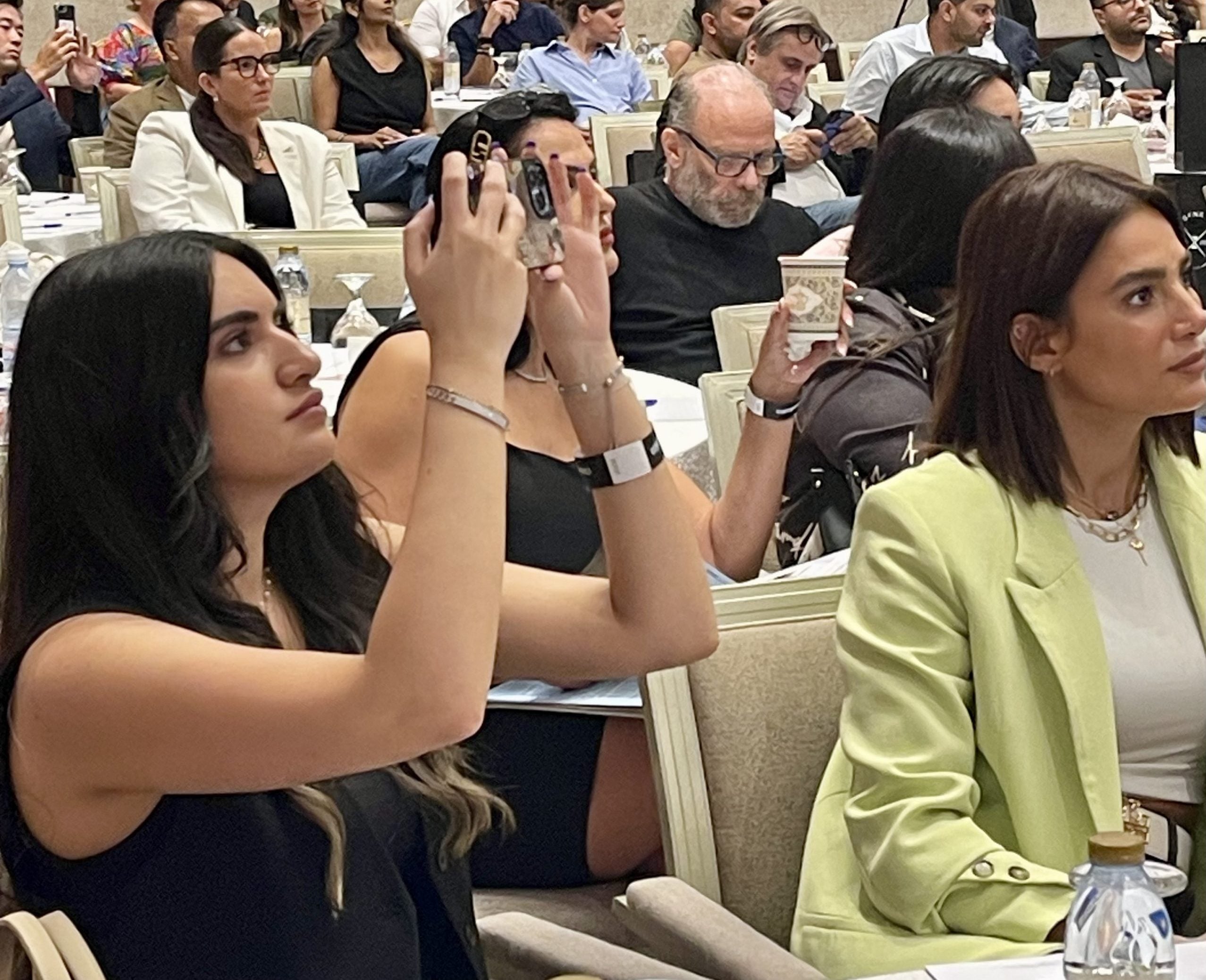
Oommen also highlighted industry challenges, resonating concerns from leaders about delays that plague the current approvals processes, as well as concerns around the oversupply in the market, and its domino effect on visual clutter, pricing, visibility and quality.
He challenged marketers to truly listen to consumers, build memorable customer experiences, and break existing silos within the industry. He called for a move from attention to outcomes, and for industry leaders to lean wholeheartedly into wholesome, culturally led and locally rooted storytelling.
Oommen concluded, “The future of OOH in this region is not just about screens or technology; it’s about turning streets into conversations, data into direction, and moments like Ramadan into meaningful connection. Let’s trade vanity for value, prime positions for precision, noise for nuance – and let us move forward with curiosity and courage.”
Keynote 1: The DOOH shift: Powering smarter brand connections across MENA
Getting the event started, Khaled Alfangary, Senior Manager of Client Services, StackAdapt, delivered the first keynote address of the day. He delved into how DOOH is redefining marketing strategies; shared his take on the future of programmatic DOOH in the region; and shared case studies of the success of prDOOH in retail.
He shared how DOOH offers the flexibility to switch creatives mid-flight, enables quicker activations, unlocks real–time messaging capabilities, while offering transparent and detailed measurement and reporting on ad success.
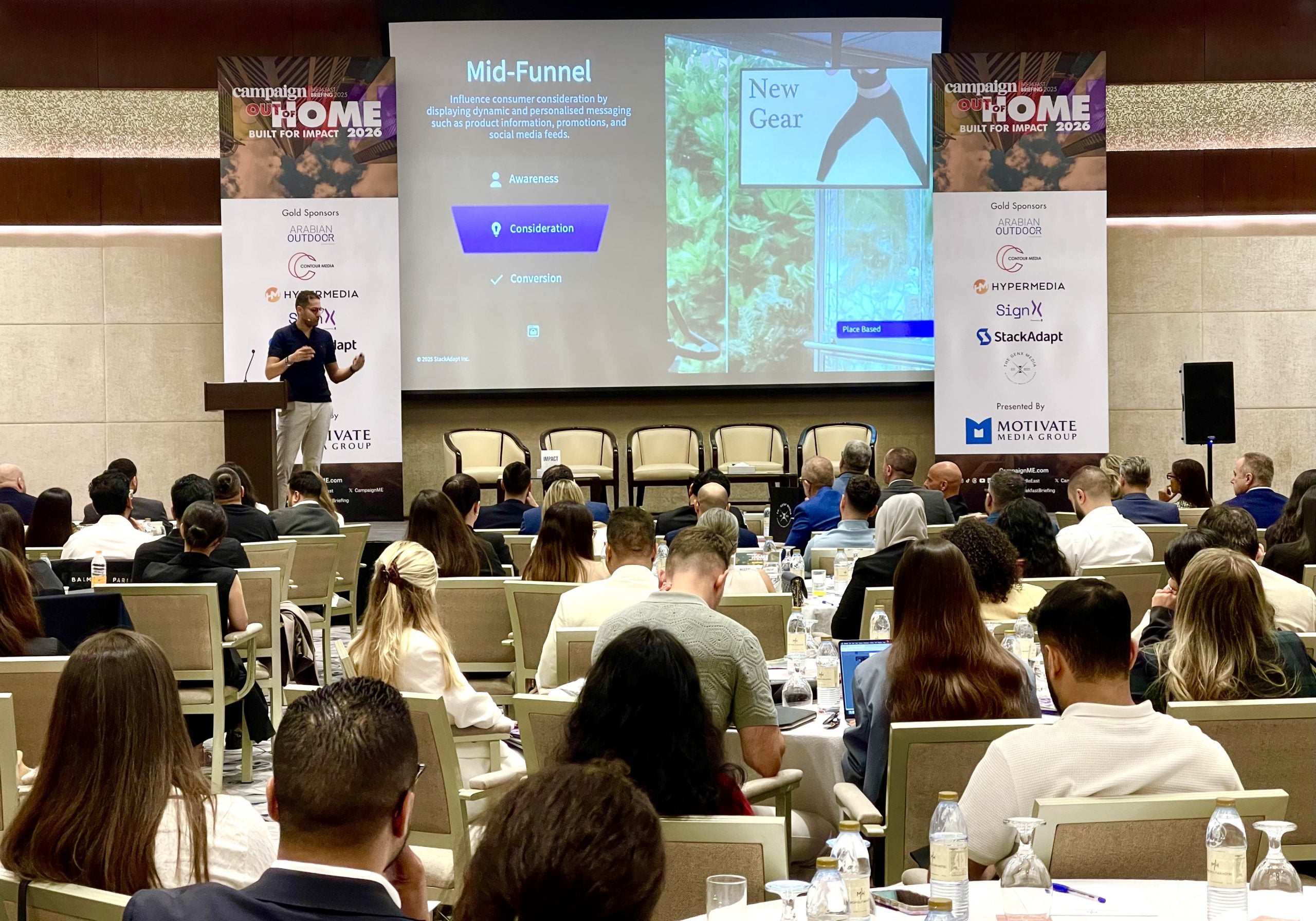
Alfangary provided an insightful exploration of how technology is transforming outdoor advertising across the Middle East, particularly in the GCC region. Drawing from personal experience and global trends, the presentation illuminated the rapid evolution from traditional static billboards to dynamic digital screens that offer unprecedented targeting and messaging flexibility.
The core narrative centered on how DOOH is revolutionising advertising strategies by enabling real-time, contextually relevant messaging. He explained how advertisers can now deploy campaigns that adapt instantly based on various parameters such as weather conditions, time of day, geographical location, and audience behaviours and mindset.
Alfangary also explained how programmatic capabilities have expanded DOOH’s potential dramatically, allowing marketers to reach consumers at precisely the right moment with hyper-targeted messaging. The technology enables integration across marketing channels, creating synergies between digital and physical advertising strategies. Dynamic creative optimisation (DCO) now allows 96 per cent of marketers to personalise content in real-time, making advertisements more engaging and relevant.

He emphasised that DOOH is no longer just a top-of-funnel awareness tool but can effectively support the full-funnel marketing journey — from initial brand introduction through consideration to conversion. By leveraging advanced targeting criteria and measurement technologies, brands can now create more holistic, measurable campaigns that provide deeper insights into consumer behaviour.
Looking forward, Alfangary painted an exciting picture of DOOH’s potential, highlighting global growth trends, with more than 1.5 million screens now programmatically enabled. He concluded with an explanation of how the future of DOOH promises even more sophisticated targeting, more creative flexibility, and increasingly integrated marketing approaches that blur traditional channel boundaries.
Panel 1: From screens to smart networks: How programmatic DOOH is powering the dynamic era
This first panel discussion of the day offered a profound exploration of an emerging media landscape, highlighting the transformative potential of programmatic DOOH. Moderated by Campaign Middle East Editor Anup Oommen, the panel welcomed on stage Wissam Najjar, Chief Operating Officer, Omnicom Media Group – MENA; Laurence Baldwin, Senior Regional Brand & Marketing Manager, Talabat; Dylan Temple-Heald, Head of Programmatic (pDOOH), Hypermedia; and Bruce von Kaufmann, Mall Director, Reem Mall.
Setting the scene, Oommen stated how in the UAE, DOOH is still a small fraction of total OOH spend – less than 10 per cent – while programmatic DOOH spend is almost negligible. He pointed to challenges around limited digitised inventory, fragmented standards, and cautious adoption by advertisers. With screens becoming smarter and more data-driven, Oommen also pointed to the opportunity for the industry to leapfrog into a dynamic era where DOOH is measurable, automated and performance-led.
Omnicom Media Group – MENA’s Najjar, representing the agency perspective, provided a compelling overview of the industry’s evolution. He said, “Today, despite the fact that it is small, DOOH is one of the fastest-growing medium within the landscape that we are operating with.” Najjar highlighted how programmatic DOOH is transitioning from a test activity to a “must-have” in media planning, offering unprecedented flexibility and precision in targeting.
Making the case for prDOOH, Najjar explained, “We are seeing growth in the digitisation of inventory, acceleration of demand side providers (DSPs), and we’re seeing technologies being developed in our region and being exported to the world. So, what was a test activity within a media plan two years ago has now become a must have activity in every single media plan. Programmatic DOOH is minimising waste and maximising flexibility. The ecosystem can finally deliver what we have been pressuring it to offer: Automation, transparency and measurable outcomes. Also, for vendors, this is a complete game changer. They can venture into a completely different pool of clients who may not afford a two-week campaign, but can afford a tactical campaign in a very specific area in a very particular period of time – and this pool of clients is massive. This also makes room for a yield management approach and dynamic pricing.”
Talabat’s Baldwin brought a client-side perspective, illustrating the practical applications of programmatic advertising. Using Ramadan as an example, she demonstrated how dynamic messaging can be tailored to specific times and contexts — avoiding showing food imagery during fasting hours, but strategically promoting food delivery services right before Iftar. “It’s all about being human at the end of the day,” she noted, capturing the essence of personalised advertising and connecting with consumers with cultural context.
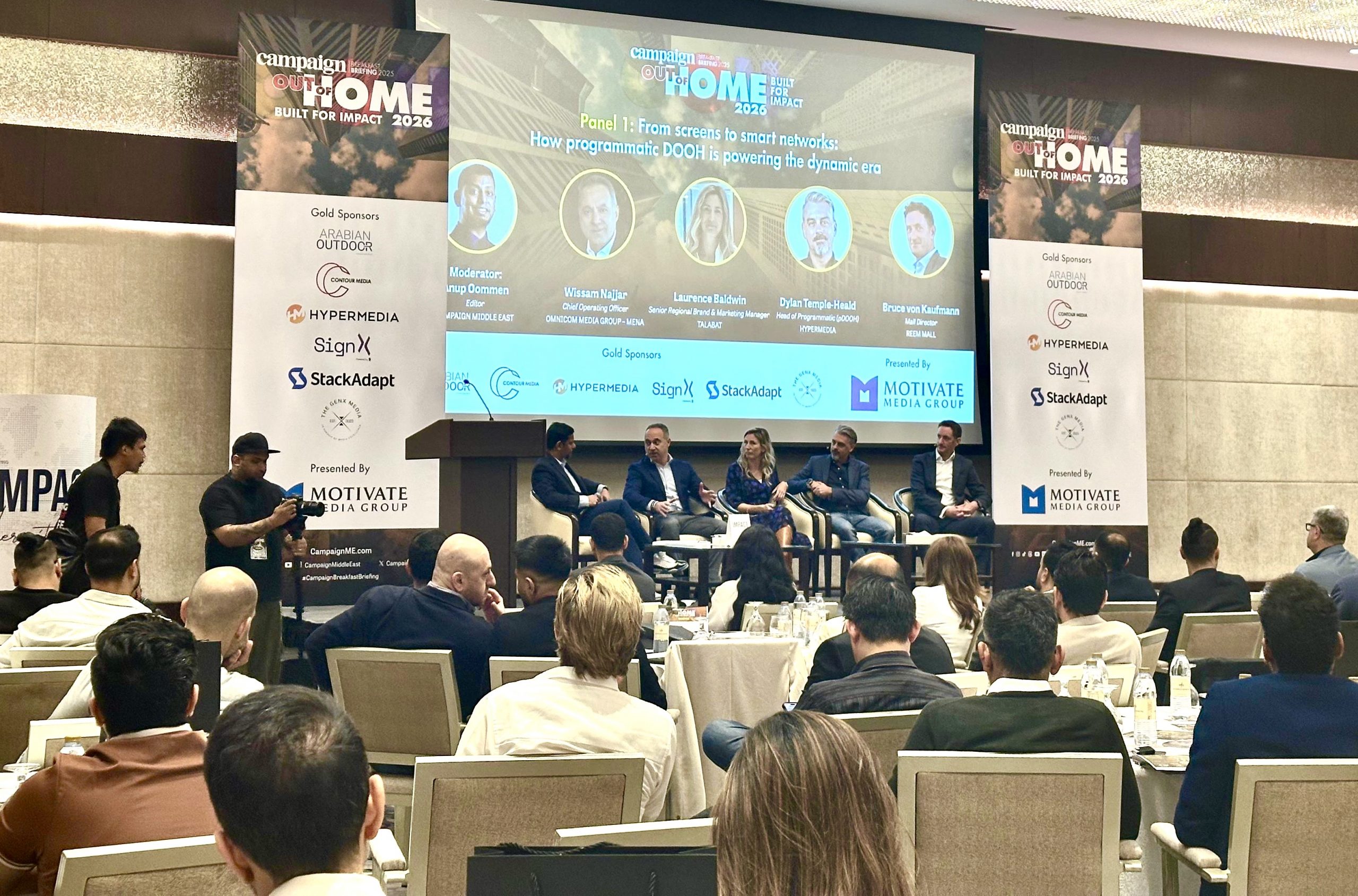
Hypermedia’s Temple-Heald, offered a perspective from the technology corner of a media owner, highlighting the current capabilities of programmatic DOOH. Stating that the “future being discussed has already arrived in the present”, he revealed capabilities currently available through the convergence of sensor technology, journey intelligence, and dynamic creative optimisation. He also offered relatable examples, sharing how Hypermedia already have access to more than 4,000 screens with sensor technology enabling real-time audience targeting.
As a landowner and Mall Director Bruce von Kaufmann added that within malls, DOOH offers the ability to diversify budgets. He said, “Having particular settings within the mall that can be programmatic to that location or price point helps because it caters to different depths of pockets, unlocks previously untapped budgets, while still offering advertisers far better bang for their buck. And then again, you’ve also got the end user, the consumers, who want that targeted experience in terms of relevance that they’re looking for, so it’s a win-win whichever way you look at it.”
The panel unanimously agreed that programmatic DOOH represents more than just a technological advancement — it’s a paradigm shift in advertising. The discussion concluded with a powerful message about adoption.
As Najjar provocatively concluded, there are “organisations that make things happen; organisations that watch things happen; and organisations that wonder what the heck is happening”, calling for leaders in the audience to choose who they want to be. The panel’s underlying theme was clear: programmatic DOOH is not a future possibility, but a present reality demanding immediate attention and strategic integration.
Keynote 2: ‘Unmeasurable’: The infuriatingly delightful unpredictability of OOH
The second keynote of the day, presented by Ramsey Naja, Creative Partner, Das Kapital, challenged traditional metrics and emphasised the profound emotional potential of out-of-home (OOH) advertising.
Naja passionately argued that the industry has become overly fixated on measurability, often mistaking quantifiable data for meaningful impact. His core thesis centred on the “unpredictability” inherent in advertising, a quality that industries typically resist but which can be remarkably powerful when understood correctly.
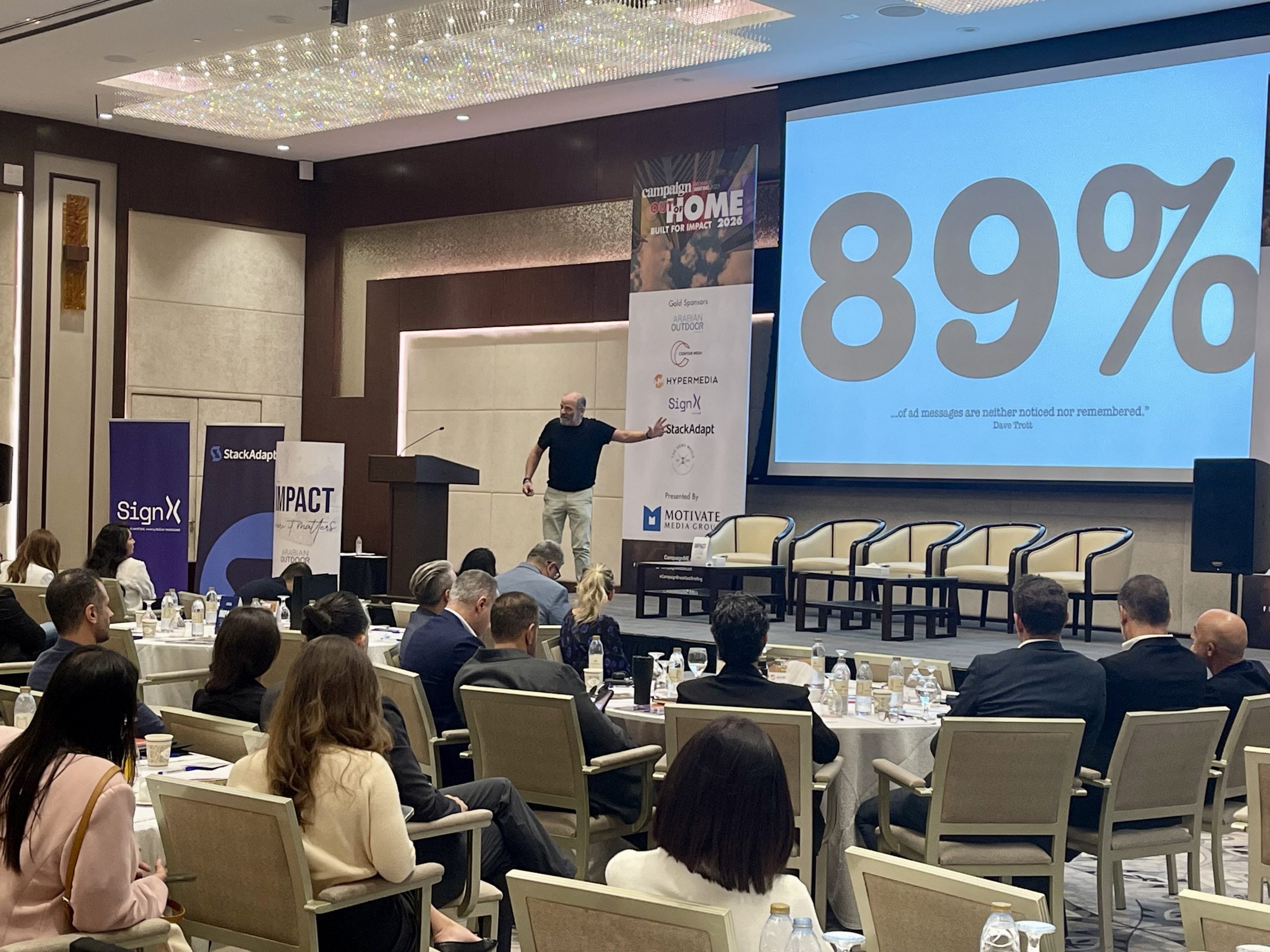
He provocatively stated, “We hate unpredictability. The stock market hates it. The CFO hates it. But that very unpredictability, in many ways, has always been magical.” This sentiment encapsulates the tension between rigid measurement and creative spontaneity.
Naja said, “Targeting isn’t always the key. Brands grow by focusing on people who aren’t customers yet. Ad effectiveness often relies on the creative and the emotions it generates. Measure that. Customers decide what segments they fall in. Not marketers. This is the unpredictability of measurement. And that’s where the opportunity lies. This is the power of OOH. Because it caters to everyone and consumers get decide how they feel about it and what segment they fall into.”
He explained, “70 per cent of OOH ads score low in emotional resonance. This is where the opportunity lies. If you want your campaigns to work, if you want them to convert, if you want to make your CFOs happy, focus on emotional resonance.”
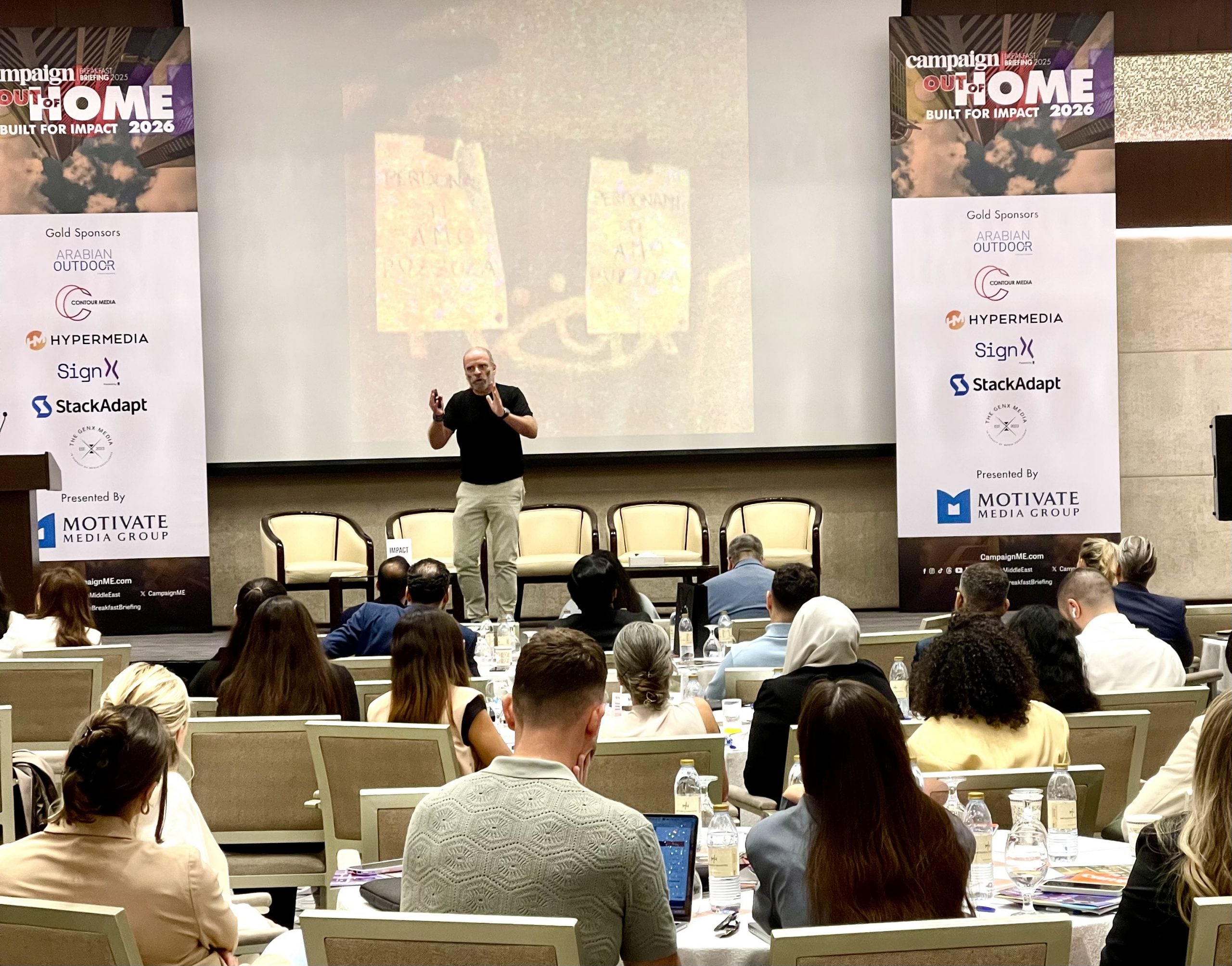
A critical critique emerged around digital media’s transformation, which has shifted focus from making people “feel” to making them “click” – a reductive approach that fundamentally misunderstands brand growth.
Naja extensively explored emotional resonance in advertising, identifying four key emotional drivers in outdoor advertising: geographical contextuality, authority, exposure and movement. Through compelling examples – ranging from Coca-Cola billboards to Nike’s controversial campaigns – the presentation illustrated how powerful emotional messaging can transcend traditional advertising boundaries.
The presentation culminated in a powerful reminder that consumer decision-making is fundamentally driven by creative advertising content, not necessarily its technical sophistication. As Naja eloquently concluded, “What really leads a consumer to buy or not to buy is the content of your advertising, not its form.”
Panel 2 – OOH Creativity: Choosing “cool” culture over clutter
Moderated by Walid Yared, CMO, Choueiri Group, the panel comprising four client-side marketers, including Katib Belkhodja, Marketing Director, Al-Futtaim Motors; Melissa Bayik, Chief Brand Officer, Arada; Alisher Ziyaev, Associate Director – Retail Media, Union Coop; and Gaurav Sinha, Director- International Marketing, Domino’s Pizza discussed creativity and culture in the OOH landscape in the age of AI.
The panel discussion of the day took a deep dive into what it means to ‘break the clutter’; balance the speed and scale of AI with human-led creative originality rooted in culture; integrating OOH naturally into urban spaces; and how AI is enabling more dynamic and contextual OOH.
Choueiri Group’s Yared set the scene highlighting the resilience of traditional OOH and its remarkable growth, noting that ad sales in the OOH landscape were projected to rise from $30.7m in 2020 to $49.8bn by 2025.
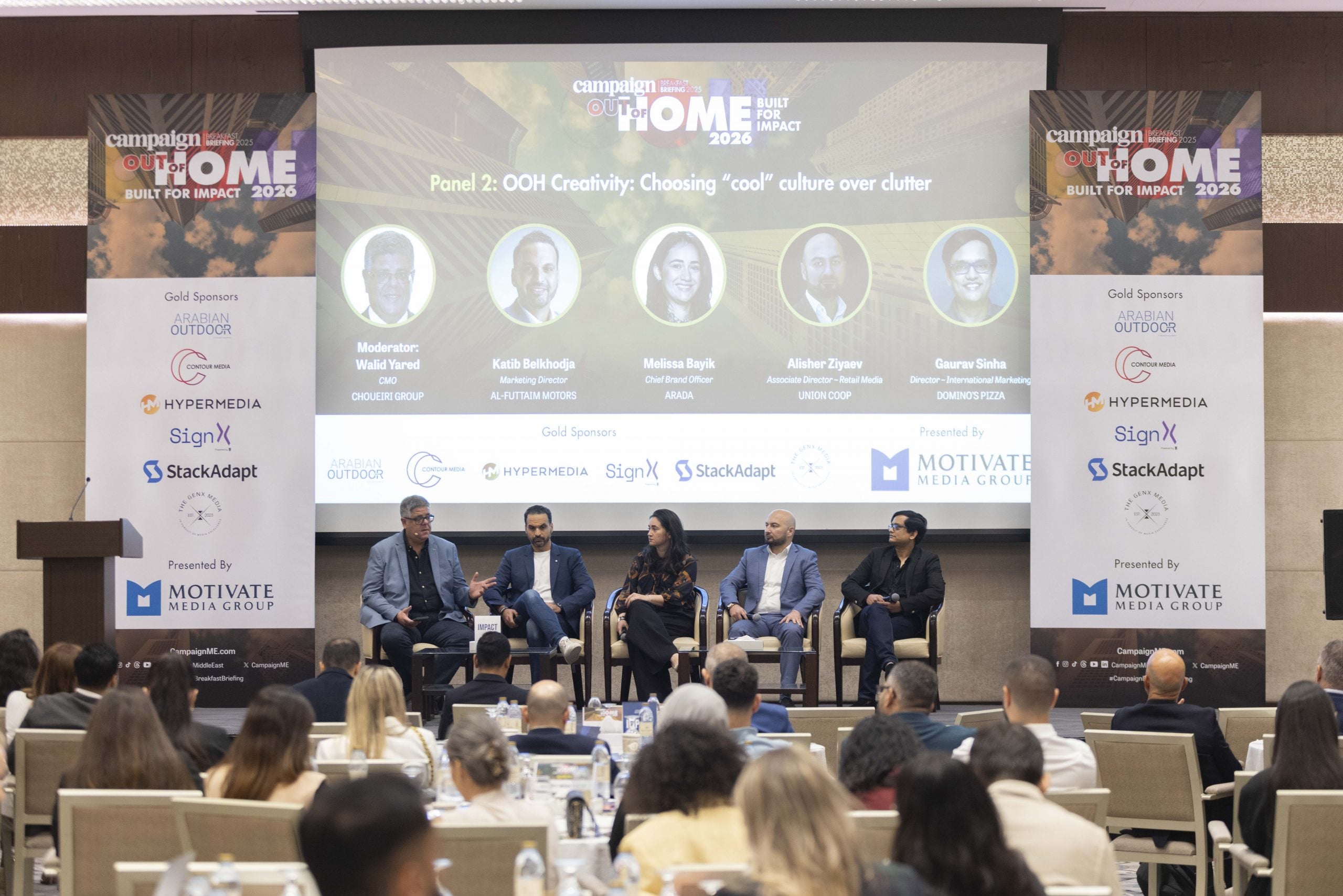
A key theme of the panel was cultural authenticity, human-led creativity and relevance in advertising.
Al-Futtaim Motors’ Belkhodja said, “Ever since the industry started becoming obsessed with targeting, digital tools, programmatic buying, and real-time bidding, we can began to take our eye off the ball in terms of creativity. Over-analysis causes paralysis. Traditional OOH has become the last forte of true creativity with the ability to both tap into and draw out the emotion of consumers, rather than looking at people and campaigns as just numbers.”
The panel also delved into the challenges of a mass medium personalising messages for diverse communities, with Union Coop’s Ziyaev arguing that minor creative tweaks — such as adapting language, colours, and copy — can create significant impact. He said, “When the message is communicated in a familiar way, it is received and absorbed better by the audience. But in multicultural markets such as the UAE, this requires a far more nuanced approach.”
Domino’s Pizza’s Sinha added, “Storytelling is key. OOH billboards should stop looking and feeling the same – because then it becomes a wallpaper. It goes without saying that creative thinking will definitely break the clutter irrespective of how we use it. Let’s not make OOH boring whether we’re leaning into AI or human creativity.”
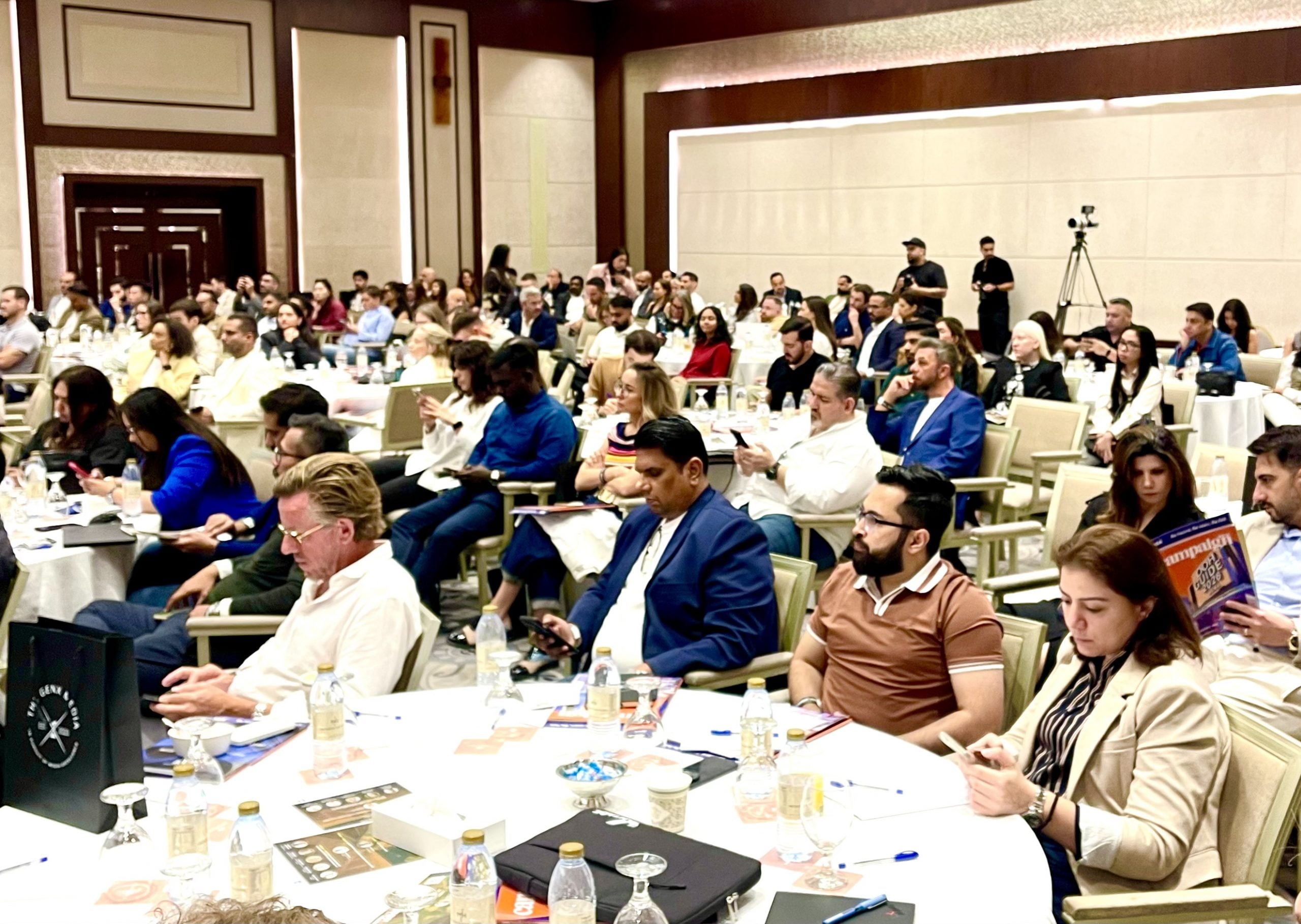
The panel also explored how OOH advertising can integrate meaningfully into urban spaces. Arada’s Bayik added, “OOH has a very important place to play in public realm. It plays a big role in shaping behaviours, shaping culture, and shaping the identity of the city. And, at Arada, this is why we really think about how we’re designing out of home inside our developments, and in locations where it feels natural. It should stand out, but still fit naturally into the environment. It shouldn’t distract, but should also be very nicely curated.”
Talking about AI’s potential in OOH advertising speakers responded with both excitement and caution. Ziyaev talked about the tremendous potential in making advertising more dynamic and measurable, comparing the current state to early stages of digital advertising. Meanwhile, Belkhodja warned about the risk of losing creativity if AI becomes too focused on optimisation and lower-funnel activities.
The discussion concluded by reinforcing the potential of OOH advertising to drive real business outcomes, not only through visibility, but also through meaningful, culturally resonant, creative communication that connects with audiences on a deeper level.
Panel 3 – Settle or dream big: What’s next for DOOH?
The final panel discussion of the day was moderated by Marwa Kaabour, Group Head of Marketing and Communications, Al Masaood. The panelists on stage included Rahul Kadavakolu, Chief Marketing Officer, Aster DM Healthcare; Mazen Mroueh, Head of Performance Product & Operations & Retail Media, Publicis Groupe ME&T; Derek Manns, Head of Commercialisation, Landsec, UK (Media owner of Piccadilly Lights); and Muneef Khan, CEO, Sign.X.
Al Masaood’s Kaabour opened with an observation about the marketing community’s continued advocacy for human-driven insight and human-led creativity in advertising. The panelists then explored the complex juxtaposition of digital innovation and creative messaging as they set the scene for ‘what’s next for DOOH?’.
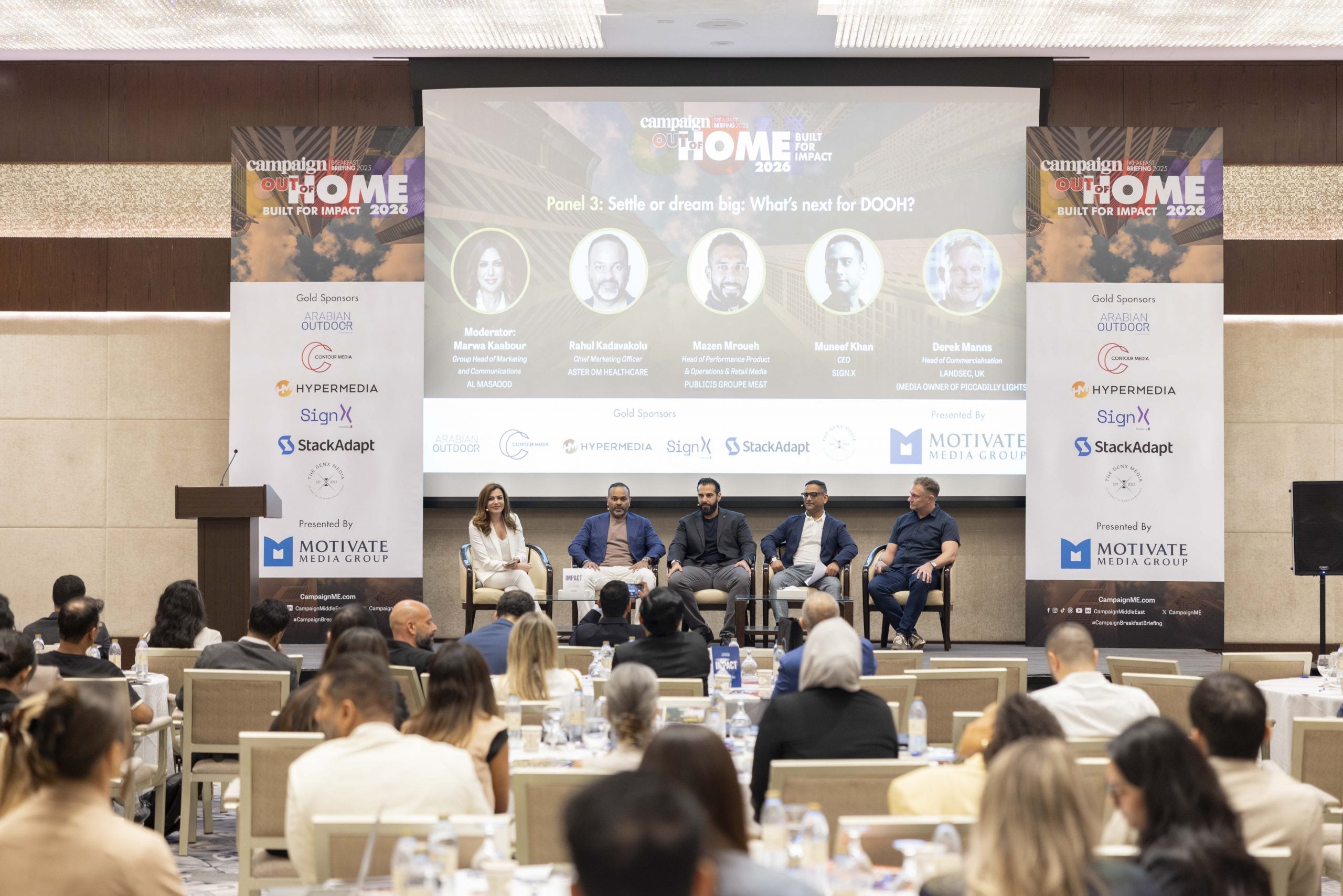
Aster DM Healthcare’s Kadavakolu excellently articulated the key pillars of advertising, stating, “The fundamentals of brand, advertising, communications and marketing do not change. You’ve got to stick to message, ensure that creative is able to capture the power of that message, and know who you are talking to.” His insight set the tone for a discussion that repeatedly emphasised how technology should enhance, not replace, creative storytelling.
Landsec’s Manns from the UK brought a global perspective, highlighting how outdoor advertising has always maintained high creative standards and has the potential to go beyond spurring emotion to have a cross-channel impact. He shared an example of how outdoor media can create an experiential and cultural moment that lasts the test of time, noting how a campaign with L’Oreal generated 14 million impressions on TikTok.
The panel discussion also explored data integration. Publicis Groupe Middle East and Turkey’s Mroueh explained how first-party data can be strategically used in DOOH. He shared a compelling case study where they used technical data and location insights to create dynamically changing advertisements that resulted in up to 70 per cent uplift sales uplift, effectively demonstrating how technology can be an “enabler” and how DOOH can have a lower-funnel impact, as well.
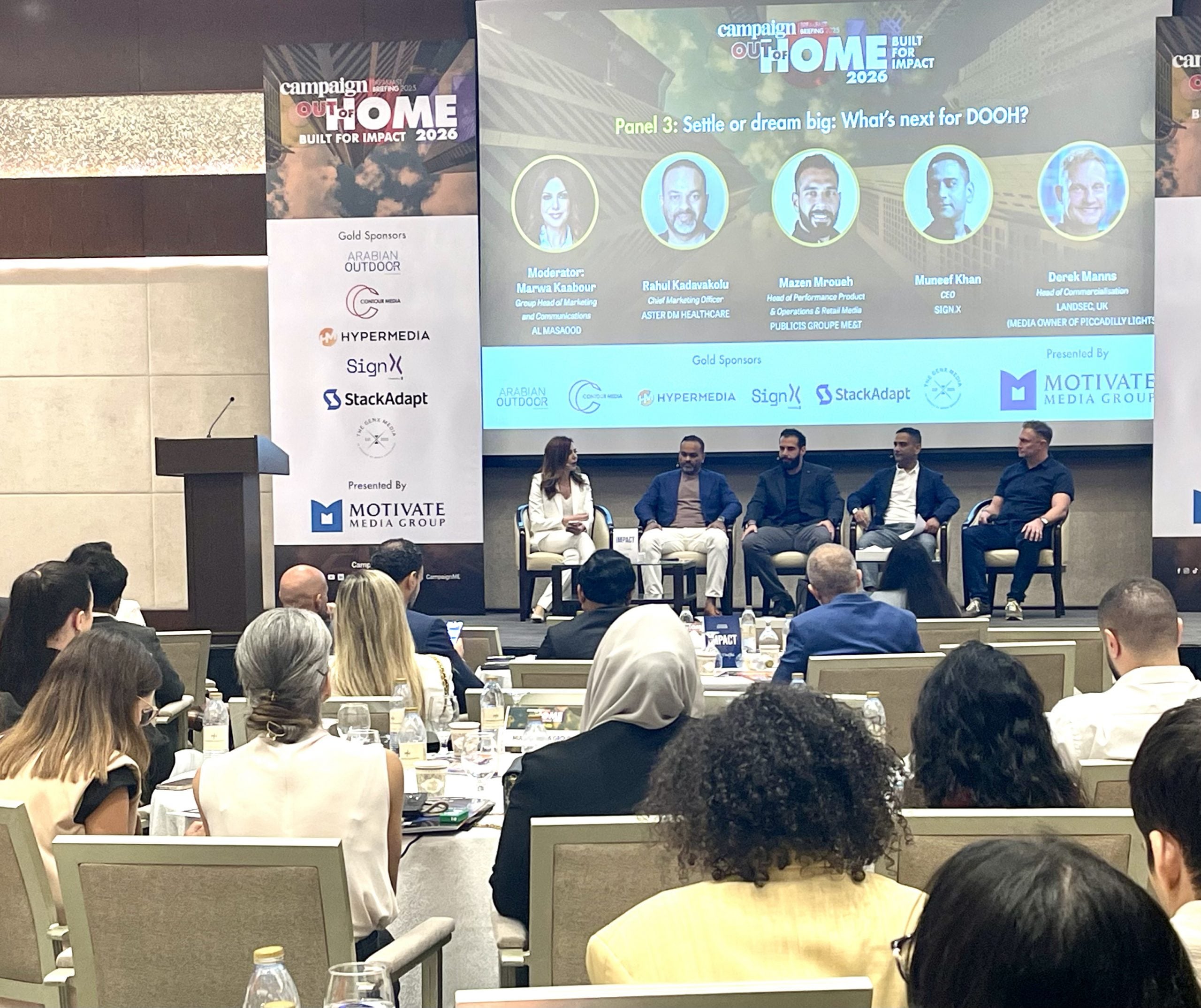
Programmatic advertising emerged as a critical topic, with speakers discussing how automation can help hyper-localise messaging and ensure precise targeting. The panel also discussed how DOOH campaigns can have a global impact and connect consumers very closely to brands. Kadavakolu provided an illuminating example of a Barcelona jersey unveiling campaign, which created an immersive, participatory experience for worldwide fans.
Building on the untapped potential of OOH and DOOH, Sign.X’s Khan added, “Dubai has great Instagrammable places, and out of home billboards now have capabilities to highlight what even consumers want to upload on social media channels such as Meta. The capabilities of OOH are far greater than what we often use it for.”
Learning from global trends in the attention economy, Khan also discussed how DOOH must integrate creator-driven content. He offered the example of TagTalk, explaining how the world’s first socially connected DOOH network resulted in more than 70 million user posts through location-led Instagram integration on DOOH.
Khan also highlighted how a full-stack automation platform can make DOOH more efficient, transparent, and ROI-driven. He shared how this is unlike the growing layers of tech that increase cost and complexity which eliminates technology’s core role: Measurement.
The panel ended with a consensus that DOOH advertising represents an exciting frontier where data, technology and human creativity can harmoniously coexist.
“DOOH has thrived for decades because of its simplicity, scale and impact. As the digital world pushes new buzzwords and jargon onto the medium, we must ensure innovation doesn’t dilute what makes DOOH exceptional. The real opportunity is in elevating DOOH through clarity, transparency and intelligent tools – not by forcing complexity borrowed from digital advertising,” Khan concluded.
After the keynotes and panels at the Campaign Breakfast Briefing: OOH 2026 event, attendees stayed back to catch up and network.
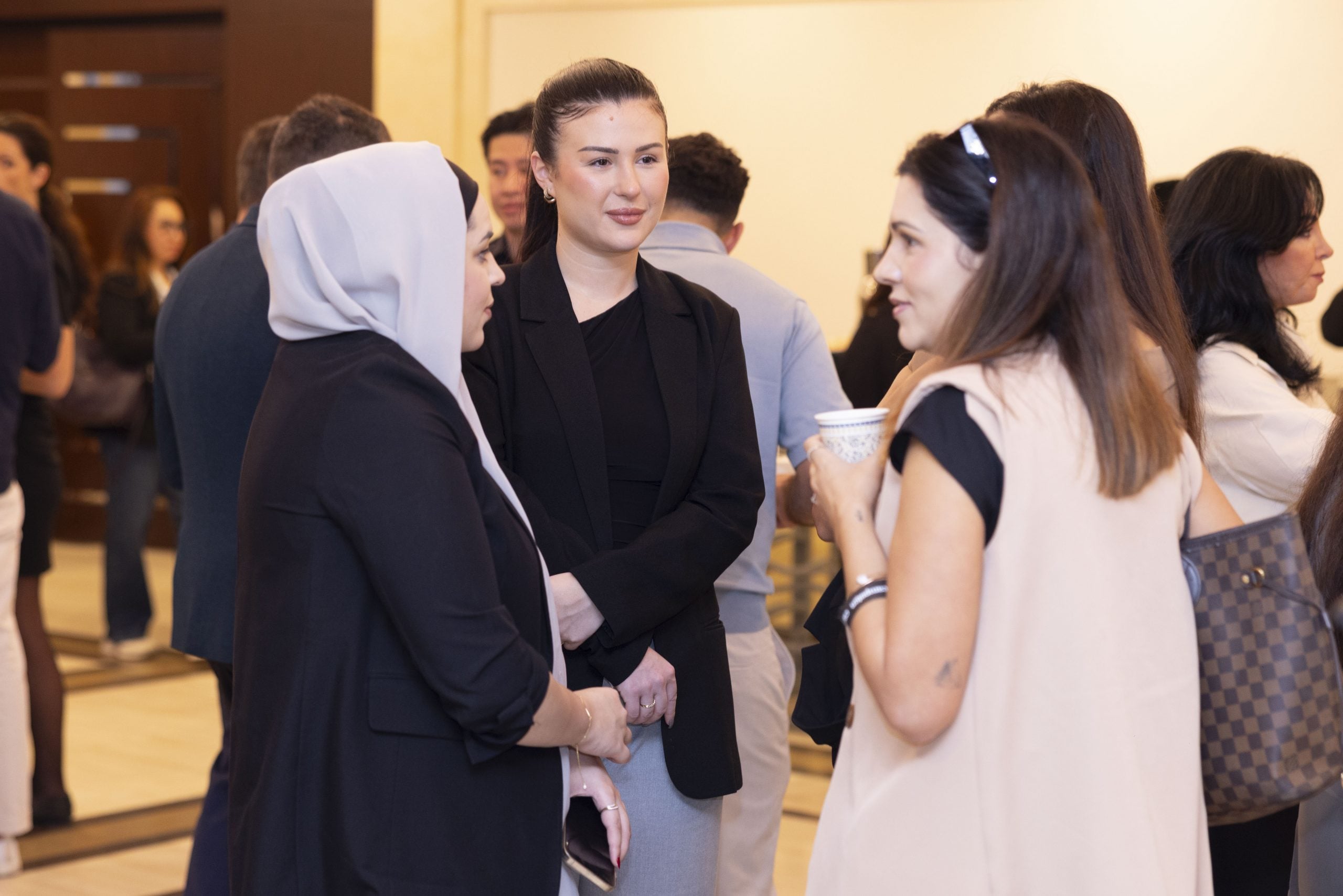
For those of you who were unable to attend this stellar gathering of like-minded leaders shaping the top trends in the industry, keep an eye out for the YouTube video of the entire event.
Mark you calendars. Campaign Middle East‘s next event, the Agency of the Year Middle East 2025 awards will be held on 11 December 2025 at S/O Uptown Hotel in Dubai. See you there!