In the rapidly evolving marketing landscape of the Middle East and Africa (MEA), the traditional “spend-and-get” loyalty model is hitting a ceiling.
As markets such as the UAE and Saudi Arabia lead the charge in digital transformation, consumers are no longer just looking for discounts—they are looking for experiences.
According to Comarch’s latest industry insights, a staggering 33 per cent of customers now explicitly seek challenges and gamified quests within loyalty programmes.
The message for CMOs is clear: to capture the attention of a mobile-first, tech-savvy generation, you must move beyond transactions and toward emotional engagement.
The psychology of play
At its core, gamification isn’t about turning a banking app or a retail programme into a video game. It is the strategic application of game-design elements in non-game contexts to drive specific behaviors.
As explored in the comprehensive e-book, “Level Up Your Loyalty Game,” effective gamification relies on the BJ Fogg Behaviour Model. For a customer to take action (such as making a repeat purchase or referring a friend), they need three things simultaneously: motivation, ability and a prompt. Gamification provides all three by turning a “chore” into a “challenge.”
Moving from extrinsic to intrinsic rewards
Most loyalty programmes in the MEA region rely heavily on extrinsic motivation — points, coupons, and cash-back. While these are effective for short-term spikes, they rarely build long-term brand advocacy.
Senior strategists are now shifting focus toward intrinsic motivation. This involves tapping into the customer’s internal desire for:
- Mastery and achievement: Using progress bars and “streaks” to give users a sense of growth (e.g., a “Coffee Master” badge for 10 consecutive visits).
- Social influence: Leaderboards and community challenges that leverage the region’s high social media penetration.
- Purpose: Allowing users to “gamify” their sustainability efforts, such as earning badges for eco-friendly choices that translate into carbon-offset donations.
Regional success stories: Real-world mechanics
We are seeing successful implementations across diverse sectors. In the airlines industry, carriers such as JetBlue have moved away from simple mile-tracking to interactive maps and “badges” that reward exploration.
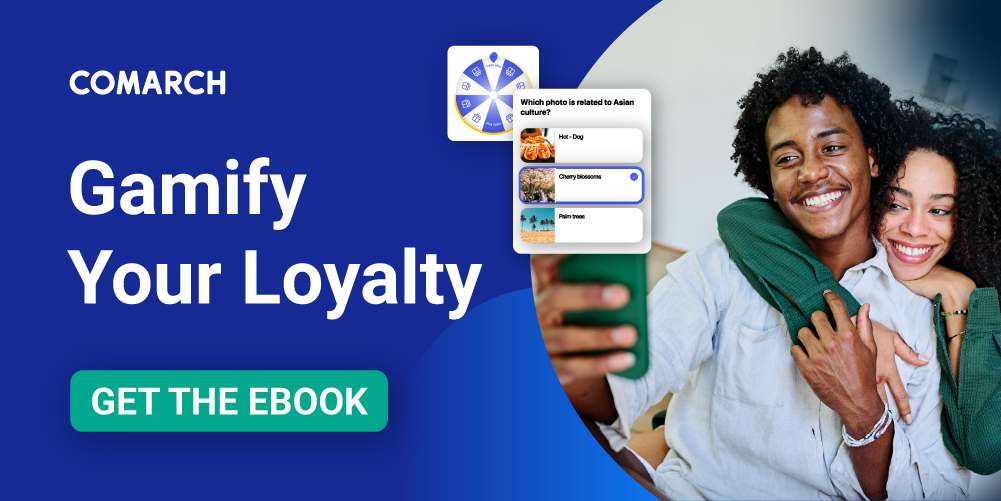
In retail, brands are using “Spin-to-Win” mechanics to inject a sense of “unpredictability and curiosity” — one of the eight core drives of human motivation — transforming a routine app open into a moment of delight.
The golden rule: Avoid “over-gamification”
A common pitfall for brands is the “everything everywhere” approach. Bombarding a user with badges, pop-ups, and leaderboards simultaneously leads to “template fatigue” and frustration.
Comarch’s recommendation is simple: Start with the business goal, not the game. If the goal is to increase frequency, use “streaks.” If the goal is data enrichment, use “product quizzes.”
Keep the interface clean and the value proposition clear. In a mature loyalty landscape, simplicity is the ultimate sophistication.
Conclusion: A roadmap to engagement through gamification
The transition from a transactional programme to a gamified ecosystem is a journey.
To stay ahead, brands must leverage AI for hyper-personalisation — ensuring that the “quest” offered to a Gen Z shopper in Dubai is fundamentally different from the one offered to a corporate professional in Riyadh.
Are you ready to redefine customer relationship?
Download the full e-book, “Level Up Your Loyalty Game,” to access the ultimate gamification launch checklist and take Comarch’s exclusive “gamification style” quiz to see how brands can better connect with today’s digital consumer.