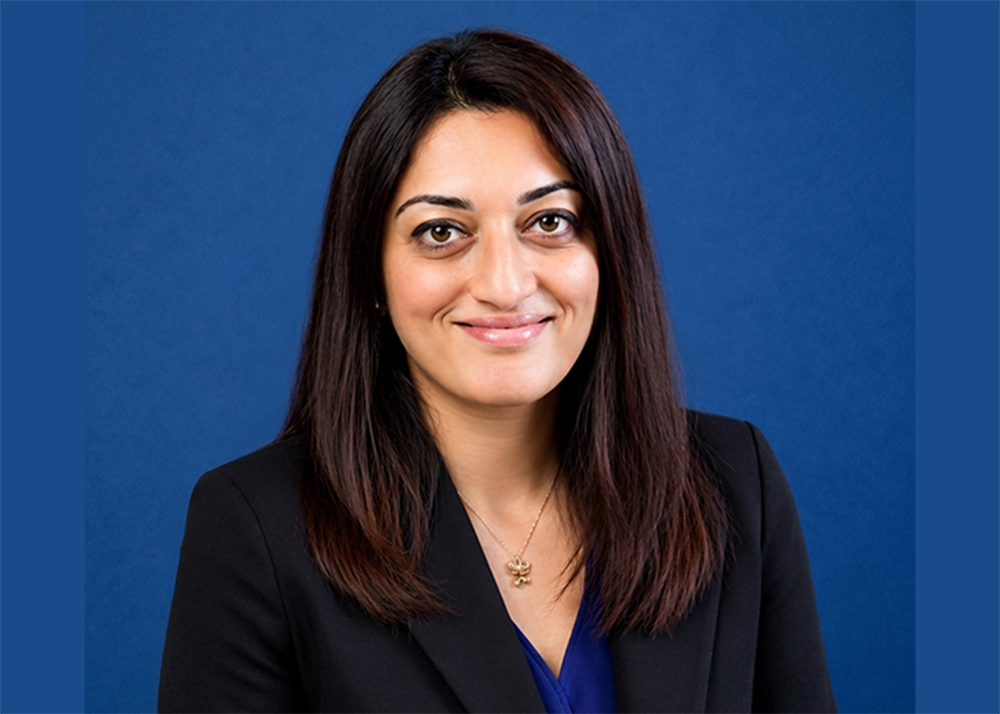
 Mythreyi Chari, MENA Head of Solutions, Merkle
The Chinese concept of weiji suggests that danger and opportunity often arrive together. Rarely announced, rarely convenient, yet often transformative. That tension now defines the Middle East’s luxury travel and hospitality sector.
For years, the region positioned itself as one of the world’s most ambitious luxury tourism destinations, built on scale, experience and confidence. By the end of 2025, international arrivals across the Middle East had grown 39 per cent above pre-pandemic levels, making it the fastest tourism recovery globally. Dubai International processed 95.2 million passengers, while Hamad International surpassed 54 million. The region was not simply recovering; it was setting new global benchmarks for premium travel and hospitality.
Then, on 28 February 2026, the system was tested. What followed exposed how deeply interconnected the regional travel ecosystem had become and how quickly certainty could disappear. Within 48 hours, more than 5,000 flights were cancelled across the region.
Major hubs including Dubai, Doha and Abu Dhabi experienced severe operational congestion, while airline capacity fell sharply below pre-conflict levels. Airspace rerouting extended journey times, weakened service consistency and created ripple effects across the broader hospitality economy.
Hotels that had been operating near peak occupancy suddenly faced dramatic declines. Dubai occupancy rates dropped to nearly 22 per cent by mid-March, forcing staffing reductions and scaled-back guest experiences across food and beverage, wellness and leisure services.
But operational disruption was only part of the story.
The real pressure emerged within customer experience systems that had been designed for optimisation, not instability. Booking platforms became overwhelmed as cancellations overtook new demand. Loyalty systems struggled to process real-time policy changes at scale.
Search behaviour shifted globally toward uncertainty, with queries increasingly centred around safety and travel reliability. Automated support channels failed under volume pressure, forcing rapid escalation to human intervention.
At the centre of all of this was a deeper shift in customer expectation.
Travel is no longer judged solely by convenience or efficiency. It is increasingly judged by confidence. Customers today are navigating a world shaped by unpredictability, whether geopolitical, economic or operational. In that environment, trust becomes the experience itself.
This is redefining the role of customer experience across tourism, hospitality and luxury travel. Silence now feels like avoidance. Delayed communication feels like concealment. Generic messaging feels emotionally disconnected from the reality customers are experiencing.
The brands performing strongest during periods of uncertainty are not necessarily the fastest or the most technologically advanced. They are the ones creating emotional reassurance. In many cases, travellers are more willing to tolerate delay than ambiguity. A slower but transparent experience now carries greater value than an efficient but uncertain one.
This is particularly important in the Middle East, where hospitality has always carried strong cultural meaning. The region’s travel economy was built not only on infrastructure, but on trust, generosity and service. Technology can support those principles, but it cannot replace them.
And yet, many organisations are currently widening what can only be described as a trust gap.
Across industries, businesses are accelerating automation while customers continue signalling a strong preference for human reassurance during emotionally sensitive decisions. Around 65 per cent of consumers still prefer human interaction when navigating uncertainty, disruption or high-value purchases. Yet many digital ecosystems remain designed primarily around cost efficiency rather than emotional intelligence.
This tension is becoming increasingly visible across luxury travel as well. High-net-worth travellers still expect seamless digital convenience, but they also expect intuition, empathy and personalised human support when circumstances shift unexpectedly. Luxury, after all, has never been purely transactional. It has always been emotional.
The same behavioural shifts are appearing across the broader GCC economy. Consumer demand has remained resilient, but purchasing behaviour has decisively migrated online. In the UAE, search demand for trusted hypermarket platforms increased significantly as consumers prioritised reliability and fulfilment confidence. In Saudi Arabia, online shopping adoption accelerated rapidly under uncertain conditions.
Interestingly, luxury demand itself rebounded relatively quickly, particularly within durable categories perceived as long-term value assets. Meanwhile, discretionary sectors such as beauty experienced temporary pauses rather than demand erosion, reinforcing the idea that strong brand equity still matters deeply, even during periods of hesitation.
The disruption has accelerated a deeper shift already underway across luxury travel and hospitality: customer experience is increasingly being defined by reassurance, transparency and emotional confidence as much as efficiency or convenience.
The industry’s mindset is shifting away from asking, “How do we optimise the journey?” to a far more important question: “How do we make customers feel confident enough to continue the journey at all?”
That distinction changes everything.Communication is no longer a differentiator; it is an expectation. Flexibility is replacing rigid policy-led experiences. Loyalty is evolving beyond points and rewards into something far more behavioural, defined by empathy, responsiveness and reduced customer effort during moments of stress. Human support is regaining importance not as a fallback mechanism, but as a trust anchor.
In many ways, the crisis has accelerated the evolution of customer experience across the region by several years. The organisations that will emerge strongest are not necessarily those with the most advanced systems, but those capable of combining intelligent technology with emotional clarity and human-centred design.
For luxury travel brands across the Middle East, the real differentiator will be the ability to create confidence during moments of uncertainty through transparency, responsiveness and human-centred experiences.
In today’s luxury travel landscape, trust is becoming the foundation of long-term brand value.
By Mythreyi Chari, MENA Head of Solutions, Merkle