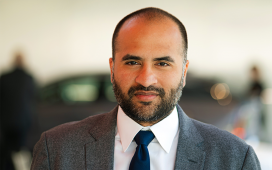
 Curtis Schmidt, CEO, RAPP MENA
We’re currently living through one of the most profound periods in marketing history. AI and data are rewriting the rules of the traditional ‘marketing funnel’ and discoverability. Consumers expect brands to know them and understand the information they seek before they’ve even clicked ‘buy’.
And here in MENA, we’re not just keeping pace with global digital transformation trends; we often find ourselves leapfrogging them. Yet, in boardrooms across the region, I’m hearing and have witnessed the same bottleneck: “We know what needs to happen. We just can’t seem to make it happen.”
The consumer has left the building
Let’s be honest about what’s changed. The consumer journey we spent decades mapping has now flipped and collapsed. People research on TikTok, buy on Instagram, and trust creators they’ve never met more than brands they’ve known for years.
People no longer search for what they like; large language models (LLMs) now drive consumers straight to the source of what they want, from Amazon’s Rufus to AI shopping experiences on Alibaba and Shopify. Generative search now means your brand might not even appear in someone’s decision making process.
Meanwhile, advanced personalisation has gone from impressive to mandatory. The brand is the experience now, and the marketing and sales funnel is found within it.
There’s nowhere to hide behind a glossy campaign if your checkout process is clunky, your customer service feels robotic, and recommended purchases feel disconnected. I now spend significantly more on Amazon and talabat than any traditional brick-and-mortar store.
MENA’s unique pressure cooker
What makes our region uniquely challenging is the sheer velocity of transformation and leapfrogging. We’re not gradually evolving; we’re executing giga-projects whilst simultaneously digitising entire national economies.
The world’s biggest technology players are all here, competing for the same massive briefs, the same talent, the same attention, with unprecedented expectations.
Organisations are ready for CX transformation, but the plumbing’s messy
So why do so many brilliant CX initiatives stumble at the pilot stage – at investment validation for further metered funding, that incremental investment approach based on concrete outcomes? After working with dozens of brands and institutions, navigating the MENA landscape for close to a decade, I consistently see a repeating pattern. Internal teams are stretched thin, often lacking the specific skills these new mega projects demand.
Data very often sits in silos – marketing doesn’t talk to commerce, commerce doesn’t talk to services, services doesn’t talk to guest relations. Everyone’s using different platforms, different metrics ladder to different outcomes, different definitions of CX success whilst solving the same universal and interconnected opportunity: delivering great customer experiences.
The quantifiable ROI question seems to haunt many in the game. How do you prove value when capital expenditure (CAPEX) and operational expenditure (OPEX) internal allocation isn’t right-sized to complement each other? What happens when technical KPIs and commercial KPIs don’t speak the same language? It turns into a game of ticking your departmental box, not connecting the CX dots.
The AI-native question mark
There’s also this growing conversation about becoming ‘AI-native organisations’ – and honestly, I’m not sure anyone truly knows what that means yet. We’re all incrementally moving in that direction of human and machine, having AI at the heart and centre of the organisation’s operating model and workflows, stress-testing automation, dynamic journeys, and decision gates at a speed no human can comprehend.
Exploring what it means to have machines make creative decisions or take strategic calls is still in its infancy. But if everybody has access to this booming technology, what will your competitive advantage be in delivering memorable experiences that are culturally relevant and in the moment?
The human solution to a technology problem
Here’s what keeps me optimistic: despite all the AI, automation and algorithmic magic, the real differentiator heading into 2027 isn’t technology. It’s people who define the real friction and opportunities in experience design and the resulting loyalty.
The brands winning at CX aren’t necessarily the ones with the biggest budgets or the fanciest tech stack. They’re the ones who’ve worked out how to combine great creative minds with great data minds – and given them permission to collaborate, not compete, with the use of AI.
They’re creating single-minded ‘moments of truth’ that feel empathetically personal, not creepily intrusive – people need to feel understood, not watched. Brands should understand that lifecycle management isn’t about triggering the right email at the right time; it’s about making someone feel genuinely understood throughout their entire relationship with your brand.
Moving forward on CX
If I could give one piece of advice to fellow leaders navigating this complexity, it’s this: start with end-to-end CX alignment before innovation. Get your internal stakeholders speaking the same language across people, processes and platforms.
Break down those silos and friction points in the customer journey, then focus on the magical ‘new’ moments that drive value creation for the customer and you.
The technology will continue accelerating. Consumer expectations will keep rising. But if you can create clarity internally while delivering intuitive, empathetic experiences externally, you’ll have something far more valuable than any AI tool: genuine customer loyalty, or repeated moments of usefulness.
By Curtis Schmidt, CEO, RAPP MENA