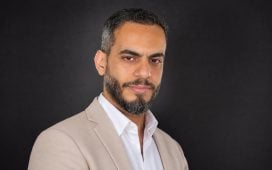
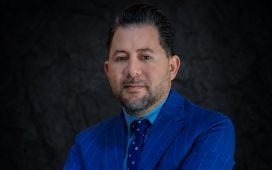
Dr. Hoda Daou, Managing Director, Annalect.
We have witnessed a significant focus in recent years on empowering women, whether in the media or other industries. We have seen this at the workplace, where we aim to ensure an inclusive environment that meets the needs of everyone, regardless of gender, age, background or culture, especially those who are underrepresented.
As a woman who has been in the tech industry since I was 18, I have witnessed decades of gender-based bias.
I remember the days when we would be, at best, 5 per cent women within the overall attendance in our engineering classes. There, it was hard to fit in as a woman and be treated just like any man, with the same level of respect and equal importance. Twenty years ago, women were seen as the outliers of engineering degrees. We had to fight a lot for the right to belong in that environment.
Then I moved to the workforce and worked as a research scientist for the biggest human capital management company in the US. On my first day, the VP of technology looked at me and said, “I am glad I was finally able to hire a woman for the role”. My reaction was a mixed sentiment of joy and bitterness.
Joy – because it was a great position to be in after I graduated with a PhD in Engineering. It was one of the first data scientist roles building the latest machine learning and artificial intelligence (AI) solutions, and experimenting in that field that was still in its initial stages.
Bitter – because of the word ‘woman’. Why did my gender play a role in my selection? This is when I realised that 10 years ago in the US, corporates were incentivised to hire women in tech.
“Women do not need to act like men to fit in, to feel empowered or to be strong. Women can belong in any environment.”
This made me question the reason why I was selected and left a very bitter feeling. And as a woman, I needed to prove that I am in the role ‘despite’ being a woman. I deserved it just like any ‘man’. I needed to push harder and show that my gender didn’t play a role in my being in this position.
Academia came next. I moved from being a research scientist to working as an academic professor at the American University of Beirut. As part of my role, I was giving very quantitative courses for the business school, focused on data processing, coding in Python and social media analytics. I grew to love teaching and began my academic research on AI applications in social media.
As a woman in that role, I felt my gender – or my gender-based experience – helped me build very strong connections with my students and teaching assistants. It is through my compassion as a mom that I could understand them and create unique bonds to empower them. Similarly, because of my struggles as an engineering student back in the 2000s, I could shelter them from any biased treatment.
Today, as a woman and leader in media, I feel things have changed a lot.
We owe it to ourselves to acknowledge that:
(1) the environment has become more supportive and empowering, and
(2) we have changed internally and become stronger.
I lead the analytics unit of Omnicom Media Group, a team of data engineers and scientists. I never notice the gender of my team. I see everyone as a person with their own struggles and challenges in life – wanting to grow, and feel valued and supported, no matter what gender.
However, as a woman leader, I feel my gender-biased experiences and challenges helped me become the individual I am today. A person who puts compassion first.
As women, we are where we are because of everything we fought for, collectively as women. We fought to be treated and respected regardless of gender. Women do not need to act like men to fit in, to feel empowered or to be strong. Women can belong in any environment. But as women, we build from the struggles and challenges we faced because of our gender. This gave us resilience and strength.
Nowadays, there is widespread awareness of the importance of DEI. It has witnessed strong integration into our culture and workforce.
We are treated equally and feel welcomed and valued for the people we are, regardless of gender. This should come naturally in all environments and industries. We can confidently say that DEI has outgrown its gender dimension and it’s time to focus on other pressing challenges.
By Dr. Hoda Daou, Managing Director, Annalect