Women for Change, a civil society non-profit organisation and advocacy movement, in partnership with Edelman, has revealed details about The Unburied Casket campaign, which recently won a Silver Lion – Glass: Lion for Change and a Bronze Lion – PR at the Cannes Lions International Festival of Creativity 2026.
The campaign was created to address South Africa’s femicide crisis by moving beyond awareness and compelling meaningful government action. Women For Change sought to transform public grief into collective pressure that would force the government to formally respond to gender-based violence and femicide (GBVF).
Strategic objectives and key insights that informed The Unburied Casket campaign
The objectives of the campaign were to increase public engagement, change attitudes and behaviour, mobilise nationwide participation, strengthen support for the organisation through petitions and donations, and ultimately drive systemic policy change.
The campaign was built on the insight that repeated protests and media coverage had led to public desensitisation, while government had become largely unresponsive to traditional forms of protest.
However, funerals hold deep cultural significance in South Africa, and are public, sacred occasions that command respect and cannot be ignored.
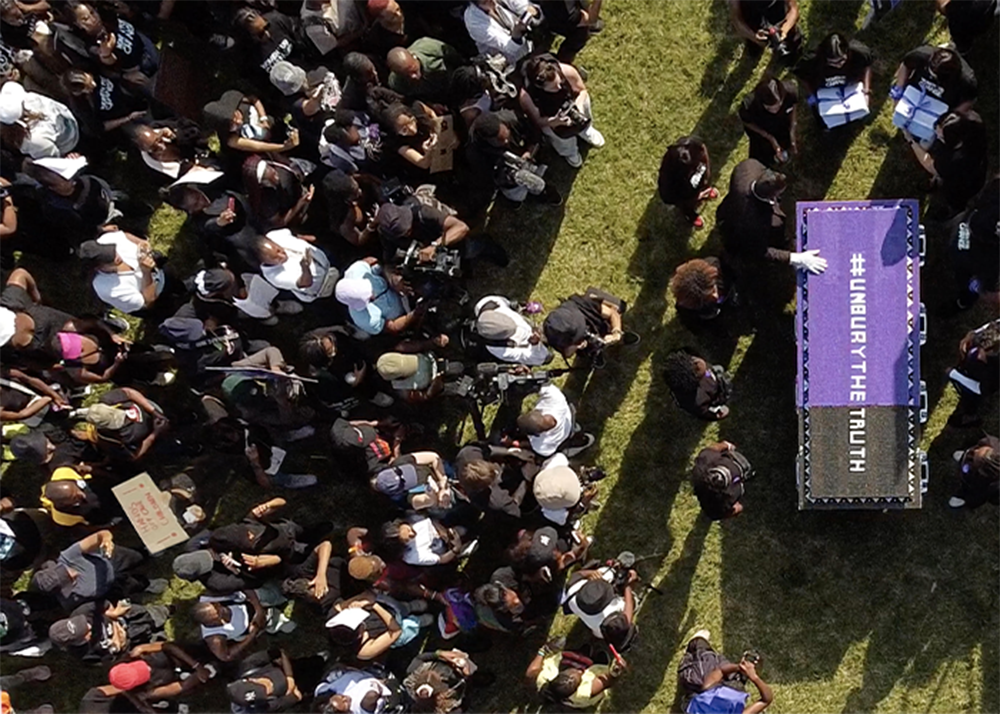
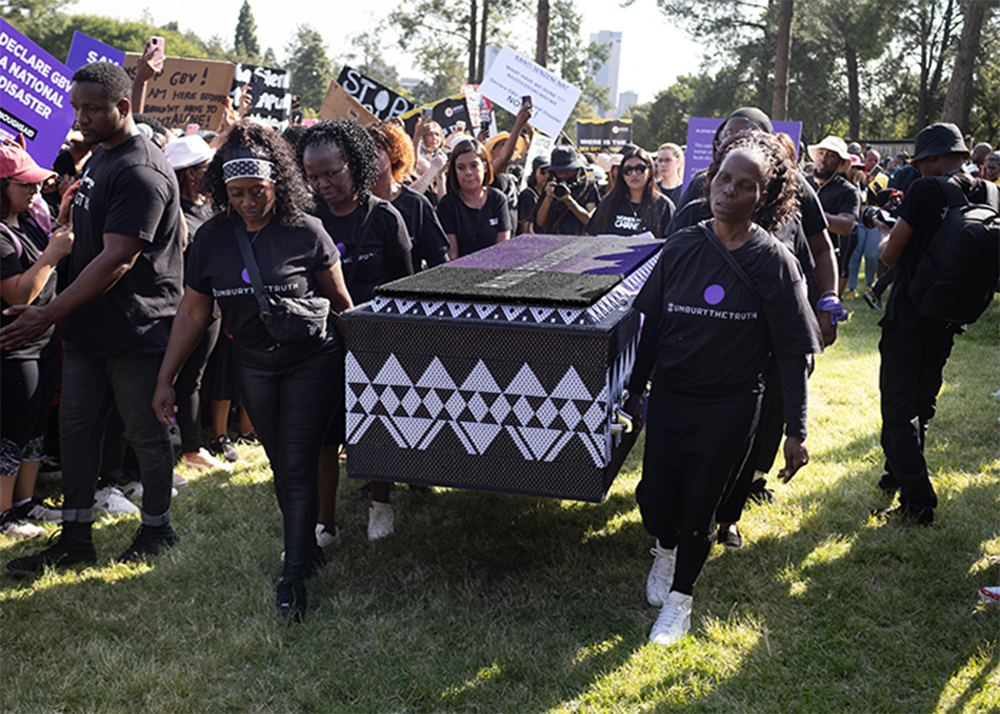
By replacing another protest with a symbolic funeral procession, the campaign transformed mourning into an unavoidable act of public accountability, making the human cost of femicide impossible to overlook.
Rollout of the campaign
The campaign was executed through an integrated earned, experiential and digital strategy by Edelman UAE and Edelman Africa in partnership with Big Brave Digital, The Rexime Project, Imprint Media, Enzo Wood Design, Rand Funeral Services and Beading Collective.
The campaign rollout included:
- A symbolic funeral procession to the Union Buildings in Pretoria, continuing across the country.
- The Unburied Casket displayed at major public events, including the National Dialogue, WomenIN Conference and National Women’s Shutdown.
- A dedicated campaign website featuring victims’ stories and petition access.
- A social media campaign across Instagram, TikTok and X, including the purple avatar movement.
- National and international PR through press releases, broadcast coverage and earned media.
- Organic landmark activations, with sites including Table Mountain and Nelson Mandela Bridge illuminated in purple.
- A static billboard positioned at the G20 Leaders’ Summit.
View this post on Instagram
Each channel was selected to maximise visibility, cultural relevance and public participation. The live funeral procession directly confronted government leaders in a culturally respectful yet impossible-to-ignore way.
Conferences and public events kept the conversation alive throughout the year, while digital channels enabled widespread participation through petitions, social sharing and storytelling. PR and earned media amplified the campaign nationally and internationally, extending its reach far beyond the physical activations.
The campaign targeted three primary audiences:
- Government decision-makers with the authority to implement policy and legislative change.
- The broader South African public, many of whom had become desensitised to the ongoing crisis due to repeated exposure.
- Civil society organisations, activists and communities already engaged in the fight against GBVF.
The physical campaign was executed across South Africa, including Pretoria, Johannesburg and Cape Town.
The digital component, including the campaign website and social media were global, enabling international participation and support. Press coverage extended across the Middle East and Africa, while the campaign gained international attention through the G20 Summit.
The campaign was organically amplified by influential public figures including Springbok rugby captain Siya Kolisi and international popstar Tyla, who helped broaden awareness and reinforce the campaign’s cultural significance.
Their support contributed to the widespread adoption of purple as a national symbol of solidarity and expanded the campaign’s reach across social media and earned media.
The campaign’s success is being measured across four key areas:
- Public participation and behaviour change, including petition engagement and social participation.
- Awareness and media impact through earned coverage, impressions and public conversation.
- Brand and fundraising outcomes, including donations and support for Women For Change.
- Systemic and policy impact, including government response, legislative progress and long-term institutional change to address gender
CREDITS:
Client: Women for Change
Agencies:
Lead agency:
- Edelman UAE
- Edelman Africa
Supporting partners:
- Big Brave Digital
- The Rexime Project
- Imprint Media
- Enzo Wood Design
- Rand Funeral Services
- Beading Collective