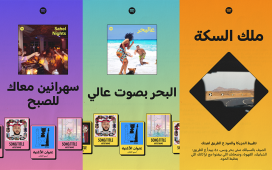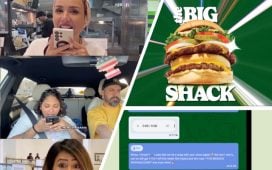


 For years, the industry has debated formats, platforms and content mixes: short-form versus long-form, creator-led versus brand-led, or more recently – the migration to gaming or Substack.
Writing about social media trends has never felt easier – or harder. On one hand, artificial intelligence (AI) makes it effortless to manufacture a ‘perspective’. On the other, it feels as though everything worth saying has already been said.
Spend five minutes scrolling, and you’ll find everyone and their cat has a prediction post for 2026 – and many of them have begun to sound uncannily similar. The same phrases – ‘bankable assets’, anyone? – the same structures and the same conclusions. Polished, plausible, yet strangely empty.
This isn’t just an ‘AI slop’ problem; it’s a symptom. In 2025, AI matured in a quiet, destabilising way. It accelerated production to the point where volume is no longer a flex and virality is no longer linear. In doing so, it exposed a raw, uncomfortable truth: we are no longer sure what is real, what is credible or what is worth our belief.
Thousands gathered at the Brooklyn Bridge on New Year’s Eve, counting down to a firework display that never happened. They were there because of a fake video. #TrueStory. The moment became a kind of anti-spectacle – not just disappointing, but disorienting. A small example, perhaps, but a telling one. When enough of these moments accumulate, shared reality begins to crack. This is the context brands are entering in 2026. And many don’t fully realise it yet.
For years, the industry has debated formats, platforms and content mixes: short-form versus long-form, creator-led versus brand-led, or more recently – the migration to gaming or Substack. We talk about the ‘reinvention of search’ as if it’s a technical update. But the mistake is assuming that mere presence in these spaces solves the problem. It doesn’t.
The deeper shift is that social media is moving from attention economics to trust economics. And trust doesn’t respond to more touchpoints or faster output. It responds to work that feels grounded – content, creators and cultural insight that help people orient themselves. When reality feels unstable – economically, culturally and politically – people retreat into what feels slower, more relational and more embodied.
We see this in the burnout narratives of 20-somethings, the rise of shared ‘admin days’ where friends meet just to manage life logistics, or the surge in bhajan raves and spiritual retreats. These aren’t ‘trends’ in the marketing sense. They are coping mechanisms.
For a brand to be relevant now, ‘showing up’ isn’t enough. Your presence must be believable. You must signal an understanding of the psychological state of your audience – not just the cultural moment, but the mental state behind it. This is where many brands are still focused on the wrong problems.
Authenticity, for instance, is still being treated as an aesthetic: unpolished visuals, shaky cameras and a founder in a hoodie. But authenticity isn’t a look. It’s about lived reality.
Does the person speaking anchor something real, or are they just performing relatability? Similarly, the debate around short-form versus long-form content misses the point. The real question isn’t length, but usefulness. In an information-saturated feed, success is less about views and more about what people save, share and return to.
Depth begins to outperform hooks – especially in an emerging ‘search everywhere’ culture, where Google is no longer the default starting point for discovery. Visibility increasingly depends on authoritative assets: content that genuinely answers questions rather than simply capturing attention.
This requires a shift in storytelling. Reactive, trend-chasing content doesn’t build memory. Narrative does. The winning brands in 2026 are those investing in ‘brand worlds’ – ideas that accumulate meaning over time rather than chasing a 24-hour cycle.
In 2026, that may mean taking engagement off the feed altogether. Think: Closed communities. IRL experiences. Moments designed to be lived first and shared second. The real tension for brands won’t be ‘on-feed vs. off-feed’ – but rather, how to connect the two.
Nowhere is this tension more visible than in the Middle East. The region has long been one of the most digitally connected in the world, but historically it consumed far more content than it created. Today, that power dynamic has flipped. Saudi Arabia is no longer just “opening up”; it is exporting its own cultural code. Initiatives such as the Kingdom of Gaming aren’t just local activations – they show Riyadh positioning itself as a global creator of culture, not just a customer.
The creative power structure has shifted, and our creative briefs for 2026 are increasingly simple: if it doesn’t work in Riyadh, it doesn’t work. In low-trust environments, culture becomes the shortcut to belief.
The Middle East is stress-testing this shift in real time. Brands here are often more comfortable with ambiguity and more willing to treat technology such as AI as infrastructure rather than a threat or ideology. While agencies elsewhere are bogged down in conversations about “risk and restriction”, the conversation here is simpler: how do we learn faster, together?
Ultimately, the scarcest assets in 2026 won’t be impressions or views. They will be belief and belonging. About how brands listen and how they build relationships with consumers and partners alike. About being human. Not just as a ‘tone of voice’ – but perhaps more, a mode of presence.
Sometimes that means fewer decks and more face-to-face conversations. For me, it meant taking longer to write this piece than planned, missing a deadline and letting the process show. In a year where everything can be generated in a second, taking the time to mean something is the most strategic move a brand can make.
By Akanksha Goel, Vice President, Regional Lead for the Middle East and India, We Are Social