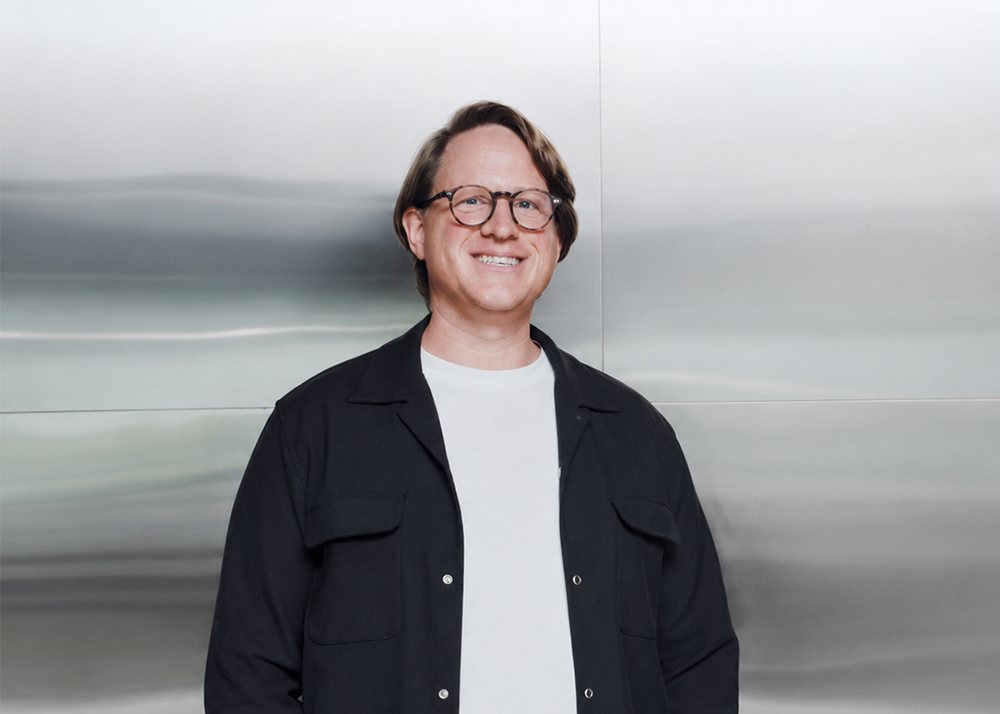
 Kevin Alderweireldt, Co-Founder & CEO, BUREAU BÉATRICE
Luxury has always understood the power of presence. The right room, the right guest, the right cultural context, the right moment of tension before something is revealed. For years, the industry invested heavily in digital acceleration, social reach, creator amplification, always-on content. But as audiences become harder to capture and screens grow increasingly saturated, luxury is rediscovering one of its oldest and most effective tools: the physical experience.
According to Launchmetrics, brand experiences across fashion, beauty, and lifestyle have increased by 54 per cent globally since 2019, while attendance has grown by 65 per cent. This is not simply a rebound from the pandemic years. It signals something deeper, a fundamental shift in how brands choose to build relevance, desirability, and cultural impact.
In a world where consumers are exposed to an average of 13 hours of media per day, often across multiple screens simultaneously, the challenge is no longer visibility. The challenge is attention.
“A brand experience is no longer a standalone marketing moment. It has become a cultural asset, a content engine, a relationship platform, and the bridge between a brand’s world and a consumer’s memory.”
More specifically, meaningful attention. Luxury brands are realising that true emotional connection cannot be fully outsourced to algorithms, paid media, or content calendars. It needs to be staged, felt, remembered, and then amplified.
This is where agencies are playing an increasingly strategic role.
A brand experience is no longer a standalone marketing moment. It has become a cultural asset, a content engine, a relationship platform, and the bridge between a brand’s world and a consumer’s memory.
What has changed most profoundly in our work at BUREAU BÉATRICE is the architecture of the experience itself. We no longer design activations as self-contained moments. We design them as the origin point of a longer journey, one that begins in the physical world and extends, with intention, into the digital one. The room is the spark. What travels beyond the room is the fire.
This is the digital-physical build: a methodology that treats the live experience not as the end of the creative process, but as the most powerful generator of content, emotion, and cultural signal that a brand can produce. Every sensory detail, the temperature of the lighting, the choreography of arrival, the object left in a guest’s hand as they leave, is designed with two audiences in mind simultaneously. The people present in the room. And the far larger audience that will encounter the moment through what those people carry with them afterward.
“We do not build experiences that generate content. We build worlds that people need to tell others about.”
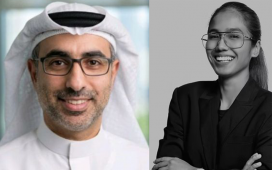
We saw this most clearly in our work for DIFC on the Zabeel District launch. The brief was to introduce a new vision for one of the world’s most ambitious urban development projects. But a press release would have been invisible. A digital campaign would have been scrolled past. What the moment demanded was a physical experience so considered, so layered with meaning, that everyone who passed through it left as a carrier of the story. Mahmoud Nsouli, who led the project on the client side, described it afterwards as a moment that did not just communicate the vision, it made people feel that they were already inside it.
That quality, the feeling of being inside something, rather than being shown something, is what physical experience makes possible in ways that no digital format has yet replicated. And it is what makes the subsequent amplification so different in character. When a guest shares a moment from an experience that genuinely moved them, they are not posting content. They are testifying. The emotional register is completely different, and audiences feel it.
We do not build experiences that generate content. We build worlds that people need to tell others about.
Launchmetrics’ own data supports what we observe in practice: physical experiences generate 10% higher attention concentration than digital environments, translating into 17 per cent higher consumer spend. But the number that matters most to us is not in any report. It is the length of time a guest remembers how they felt. Memory is the only metric that truly compounds.
The future of luxury will not be defined by scale alone. More activations do not automatically mean more impact. As the volume of brand moments increases, the difference will come from precision, why the experience exists, who it is genuinely for, what cultural territory it occupies, and how every element has been designed to travel beyond the room.
Innovation, in this context, is not only technological. It is strategic. It can mean designing an experience around a specific community rather than a generic guest list. It can mean using a destination as part of the narrative instead of treating it as a backdrop. It can mean turning hospitality into storytelling, retail into theatre, or a product launch into a cultural ritual that a city talks about for months.
Storytelling is also evolving. Luxury brands can no longer rely on visual perfection alone. Audiences want context, access, intimacy, and meaning. The most successful experiences are those that feel intentional before they feel spectacular. They give people something to belong to, not just something to photograph.
This is where agencies become cultural translators. We help global maisons enter local markets with sensitivity and specificity. We connect heritage with contemporary behaviour. We understand how to move between VIPs, creators, press, clients, institutions, artists, and communities in ways that feel entirely natural rather than choreographed. We build the invisible architecture that allows a brand moment to feel effortless, and that effortlessness is itself a luxury signal.
The most relevant agencies today sit at the intersection of strategy, production, cultural programming, talent, hospitality, content, and measurement. We are no longer vendors at the end of a brief. We are partners in shaping how luxury brands show up in the world, and, increasingly, in deciding what showing up should mean.
The winners will not be the brands that activate the most. They will be the ones that understand how to make every moment carry meaning, and how to let that meaning echo.
Luxury’s return to the real is not a rejection of digital. It is a correction. The future is not physical versus online. It is physical experiences designed with emotional depth, cultural intelligence, and digital amplification built in from the first sketch, not added on at the end.
For agencies, this is the new mandate: to create experiences that do more than fill a room. To build worlds. To shape perception. To generate measurable value. And to leave a trace, in memory, in culture, in the consumer’s sense of what a brand means to them, long after the lights go down.
By Kevin Alderweireldt, Co-Founder & CEO, BUREAU BÉATRICE.