The agency model has been pronounced dead so many times that its obituary has become a running gag within the Middle East brand and marketing industry – especially when geopolitical pressure, economic uncertainty or the latest technology wave gives the industry another reason to panic.
However, such humour is also perceived as a coping mechanism for recurring concerns such as flawed commercial logic, procurement and pricing challenges, the democratisation of creative output, the fallout of huge mergers and acquisitions, and the effect of automation and artificial intelligence (AI) on client expectations.
When the financial toll is felt – even momentarily or for a single quarter – agencies are told that their days are numbered. Some bend, others are bruised; some complain, others cruise; most of them reorganise and, somehow, the media and marketing industry perseveres.
Campaign Middle East speaks to industry leaders, who are clear about one thing: the region’s agencies will find a way to remain resilient even through recessions. However, they also advise caution: the value that agencies bring to the table is under intense scrutiny.
In the Middle East, that scrutiny is sharpened by the speed of the market. Brands are being asked to launch faster, localise better, prove impact sooner and produce more content across more platforms, often while budgets are under tighter pressure. That makes the agency question less theoretical here than in more mature markets. Clients need partners who can move at regional speed without reducing strategy to output.
The agency model conversation is not as simple as whether the future belongs to holding companies, global networks, regional joint ventures, local independents or in-house agencies. It is a more complicated, and more useful, discussion than that.
The consensus is that the future belongs to better combinations: teams built around business problems rather than agency labels, and partnerships based on measurable outcomes rather than billable hours.
The agencies best placed to thrive will be those that combine judgement, craft, speed, cultural fluency and commercial accountability, without losing the confidence to challenge the brief. That puts measurement, remuneration and trust at the centre of the debate. Clients need to involve agencies earlier in solving business problems, while agencies need to be clearer about where they add value and how that value should be rewarded.
To fix this, briefs need to be written around business problems rather than predetermined outputs; key performance indicators (KPIs) need to connect brand, performance and commercial outcomes; and payment models need to reward strategic thinking, collaboration and measurable impact.
Contributing to this conversation are:
- Rory McEntee, Chief Marketing Officer, GymNation;
- Habiba Allam, Head of Creative, Careem,
- Ramzi Sleiman, CEO, Saatchi & Saatchi ME and Publicis Health ME;
- Faysal AbdulMalak, CEO, VML Dubai;
- Scott Feasey, CEO – Europe and Middle East, M+C Saatchi Group;
- Dan Shepherd, Chief Strategy Officer, Omnicom Media MENA;
- Rami Hmadeh, Managing Partner, Serviceplan Group Middle East;
- Naveen Chacko Mathews, Managing Director, HAVAS Media Middle East;
- Abdallah Safieddine, Senior VP – UAE and Lower Gulf, Mindshare MENA, a WPP Media brand;
- Nick Walsh, Founder of Migrate Group and The Alliance of Independent Agencies Middle East; and
- Lauren Sanders, Head of Client Services, The Romans MENA.
Their arguments don’t begin with the death of agencies, but with the economics that govern them.

Marketing value: redefined and rewarded
Industry leaders begin the discussion by explaining that the agency model itself is not the only issue. The deeper problem, they say, lies in how value is priced and assessed.
Agencies are being asked to provide more specialist support and remain always available, while many buying processes still reduce that contribution to rates, hours and discounts.
The implementation of AI-augmented tools and processes has only exacerbated the existing problem.
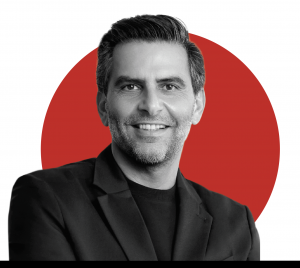
Sleiman draws a clear distinction between the agency model and the version of it that no longer deserves protection.
“The agency model isn’t broken. The mediocre agency model is,” Sleiman says. “Every few years, something comes along that is supposed to kill agencies. Digital was going to do it. Social was going to do it. In-housing was going to do it. Now it’s AI. Yet here we are.”
Sleiman explains that such pressure is exposing a more fundamental problem: agencies can no longer justify their role by simply producing more work.
“What is broken is the idea that an agency can survive by simply taking a brief, making something, delivering it and moving on,” Sleiman says.
He adds, “That model deserves to disappear. Clients don’t need more output. They have more ways than ever to produce output themselves.”
McEntee claims that the commercial foundation was weakening even before AI entered the conversation.

“What has been broken is the pricing model, and AI is only the latest thing exposing it,” McEntee says. “Procurement-led pitching did plenty of damage long before AI showed up, turning agency selection into a spreadsheet exercise on rate cards rather than a judgement call on who will actually move the needle. Add in scope creep, where the retainer quietly expands to cover everything nobody wants to line-item, and you get a model that was fraying well before AI arrived. The truth is AI has just made the fraying impossible to ignore, especially because now there’s a cheap, fast alternative sitting right next to the expensive one.”
McEntee adds, “In the past, I’d be paying six figures a year for a retainer where 80 per cent of that work isn’t needed. I don’t need agencies for things such as reports, research and due diligence anymore. I can do much of that in an afternoon with AI. Also, the creator economy fractured the idea that creative output only comes from agency talent. Real-time culture and social speed killed the value of the three-week turnaround long before generative tools did, and clients bringing more in-house has been a decade-long trend, not a 2026 invention.”

Discussing the pressure forcing agencies to justify what clients are really paying for, Hmadeh says, “What’s broken is the assumption that scale alone justifies a retainer. Clients don’t want to pay for headcount or process any more. They want a fast, sharp decision from someone who knows what they’re doing. But most agency models still charge for the old thing.”
He adds, “AI has compressed production timelines to a fraction of what they were three years ago, but agencies that treat this as a cost-cutting exercise rather than a repositioning of value will lose the argument entirely. What should never change is craft under pressure. Speed without a point of view is just noise delivered quickly.”
That tension is now showing up in remuneration. Explaining how the commercial model is struggling to keep pace with what agencies are now expected to deliver, Mathews says, “What’s broken isn’t the agency model, it’s the economics. Agencies are expected to deliver strategic and always-on capabilities while remuneration continues to be driven by procurement-led cost reduction.”
He adds, “What’s evolving is the agency’s role: from campaign executor to business growth partner, connecting data, technology, creativity, commerce and AI to drive measurable outcomes. The agency of the future must never lose its independence of thought. Its greatest value lies in challenging assumptions, connecting diverse expertise and providing objective counsel that creates lasting commercial impact.”
Sleiman echoes this view, arguing that the agency-client relationship has to move beyond delivery and into earlier, more meaningful partnership.
“What clients need is a partner who can see what they can’t see,” Sleiman says. “Someone who understands their business, challenges the brief, connects the dots and brings an outside perspective that creates disproportionate value.”
He adds, “The best relationships I’ve seen are built when agencies are brought closer to the business, understanding the pressures, the ambitions and the opportunities early enough to make a real difference.”

Safieddine takes the argument one step further: if agencies are being asked to deliver results, they should be bought and measured that way.
“AI has done what every big shift in marketing eventually does. It has forced agencies to rethink what they actually sell,” Safieddine says. “Agencies are no longer just planning media. Many are now embedded inside client operations, closer to something we could call RaaS, Results as a Service.”
He adds, “But there is a problem. The way clients remunerate agencies has not caught up. Most requests for proposals (RFPs) and pitch conversations are still built around price: hours, headcount, discounts. Not impact. So agencies capable of driving real business results are often being evaluated the same way they were five years ago, on cost. This gap cannot hold much longer. Briefs and RFPs need to be rewritten around a simple question: what result are we actually buying?”
This is not simply a demand for higher fees; it is a demand for a more honest commercial contract between clients and agencies. If agencies are being judged on outcomes, they cannot continue to be bought as units of time. The question, then, is no longer whether agencies can create value; it is whether the industry is willing to buy that value differently.
Agency evolution, not extinction
The brand and marketing industry has always been part of a constant cycle of evolution and reinvention, and the current moment is no different.

In a world where the agency-model conversation takes the unnecessarily apocalyptic route, AbdulMalak suggests a more mature viewpoint of rebirth and growth rather than death and ashes.
“We humans love drama,” AbdulMalak says. “Give our minds room to wander toward the future or the unknown, and we’ll paint the bleakest picture possible – anchored in words such as ‘dead’ and ‘the end’. And almost every time, reality turns out far less dramatic.”
He adds, “Nothing is dying. The industry is adapting, the same way it always has. What’s changing is how value gets delivered – agencies are stepping into a new role, working in partnership with AI platforms to move at a speed and scale that simply wasn’t possible before.”

Shepherd drives this idea further. He quotes Bob Dylan from It’s Alright, Ma (I’m Only Bleeding), saying, “If you’re not busy being born, you’re busy dying.” Shepherd makes the case that change is not an external pressure on agencies; it must be an intrinsic part of their nature.
“Agencies have been declared dead almost from the moment they were born,” Shepherd says. “The very essence of an agency is predicated on change. Those that don’t, can’t or won’t change will wither on the vine. As this ecosystem evolves, agencies must never lose the ability to react and create new value for our clients.”
The point is not that agencies face more competition from technology companies, data providers, creators or in-house teams. It is that their value now depends on how well they can orchestrate those forces rather than pretend they sit outside them.
But if agencies are to keep reinventing themselves, the harder question is what they must never give up.
What an agency must not lose
Even as agencies morph within an ever-evolving ecosystem, leaders point to certain aspects that must never change.
Feasey cautions against mistaking changing delivery models for changing fundamentals.

“Clients today expect us to help solve much broader business challenges rather than just communication challenges,” Feasey says. “They expect us to move faster, to use data and analytics to provide better insights and strategies, and to bring significant expertise to the table, which genuinely spans disciplines, markets and sectors.”
Feasey adds, “But underneath all of that, what clients really value hasn’t shifted nearly as much as people assume. A clear understanding of their business and their consumer, insights that break through data stacks, strategic thinking that separates them from the competition, and creativity that participates in culture and captures attention, respect and brand love are all still there.”
The agency of the future may be faster, more automated and more integrated into client operations, but it still needs taste, judgement, craft and the courage to disagree.
For Sleiman, these human qualities are what agencies must protect at all costs.
Sleiman says, “Technology will make us faster. AI will make us more efficient. Data will make us more informed. But none of those things gives you taste. None gives you instinct. None gives you empathy. And none gives you the courage to put an idea on the table that everyone thinks is slightly crazy until suddenly it isn’t.”
McEntee says that, above all, agencies must protect their ability to make discerning choices when everyone has access to the same tools.
“What should never go: taste,” McEntee says. “The ability to look at a wall of options and know which one will actually land, which one a journalist runs with, which one gets you in front of the right room. That’s built through pattern-recognition over years of doing the work.”
Walsh adds that agencies must also protect their ability to push back. As delivery becomes more accountable and specialised, the danger is that agencies become efficient executors rather than useful partners. He says, “As agencies become more specialised and more accountable for delivery, they must never lose the confidence to question the brief, bring fresh thinking and act as genuine business partners.”
AbdulMalak makes the same argument through the lens of AI. While technology may change the speed and scale of delivery, he says that it cannot replace the human ability to interpret people and culture.
“What should never change, no matter how much the model shifts, is the human judgement at the centre of it,” AbdulMalak says. “Consumer behaviour, taste, cultural instinct, the ability to read a room and a market at once, that’s not a feature AI can replicate.”
Feasey explains that this is where creativity must continue to connect with business understanding and cultural participation. He says agencies still need to understand the client, the consumer and the world around them.
“The agency of the future needs to deliver the same ability to understand the client’s business, the consumer and the culture in which they operate,” Feasey says. “New technology, new channels and new content providers will enter the market, and the market will continue to change. Let’s not underestimate the importance of still showing genuine passion and energy for the client’s business, with the commercial acumen to provide tangible return on investment.”
If those fundamentals remain constant, the structures that deliver them can become more fluid.
No single agency model wins
The discussion also lays to rest the age-old debate about whether the future belongs to large holding companies, integrated networks, independents or in-house teams. Most leaders reject the idea of a single winner. Different business problems, they argue, require different combinations of capability.
That is particularly true in the Middle East region, where a single client may need global brand governance, Saudi cultural fluency, Arabic-first social content, rapid production, creator partnerships, commerce thinking and boardroom-level measurement, often within the same quarter.

Allam says the market will continue to need different kinds of agencies and marketing structures. She compares the future to a system in which different players each operate with a more specialised purpose.
“A lot of people say the big network agency model will eventually die, but I don’t agree,” Allam says. “Clients come in all shapes and sizes, with different budgets and ambitions. That’s why I think there will always be room for big networks, independent agencies, in-house teams and boutique shops, because they all serve different needs.”
She adds, “I see it more like a solar system. Every planet has its own orbit and purpose. Sometimes they align and influence one another, but most of the time, they move within their own space. The future is less about one model replacing another and more about them coexisting.”

Walsh says the real issue is not whether one structure beats another, but whether the right solutions are implemented for the right challenges.
“I don’t think the future belongs exclusively to any one model,” Walsh says. “It belongs to organisations that can bring together the right capabilities around the right problems. Large networks still offer valuable scale and integration. Independent agencies increasingly provide exceptional depth of expertise. In-house teams bring proximity and speed.”
This view is echoed by several leaders who described the future as hybrid by necessity. Networks have long been associated with scale and infrastructure. Independents are known for agility and specialist depth. In house teams can be held accountable within the business.

Mathews says, “Competitive advantage comes from orchestrating the strengths of each of these agency models around client needs rather than defending one structure. Increasingly, agencies will compete on how effectively they connect talent, technology, data, creativity and partnerships to solve business challenges. Success will be defined by agility, accountability and measurable commercial value, not organisational labels.”
McEntee adds that the industry must go “hybrid all the way” – especially for brands that have built internal teams over the past decade.
“It used to be in-house handling always-on content while agencies did the ‘big’ work. Now it means small, sharp in-house teams handling more of the always-on and the operational grind, with outside specialists brought in specifically for what they’re genuinely better at,” McEntee says.
Hmadeh responds, “In-house is right for tactical work and volume, but it caps diversity of thinking. Teams solve every problem the same way because they only see their own category. What’s shifting is that CMOs increasingly want the senior person who shaped the strategy still in the room when decisions get made, not handed off to a junior team once the pitch is won. Hybrid wins, but the case for independents doesn’t rest on running one.”

Sanders argues more strongly for independent agencies. For her, independents are not merely another option; they are a response to frustrations that clients have been dealing with in larger legacy structures.
“We are absolutely in the era of independents,” Sanders says. “The fluidity, flexibility and character suit this generation of talent, and clients have become bored of high churn, tight resourcing, pitch-and-ditch leadership and changing identities of larger legacy networks. Today’s indies are specifically designed to counter those things.”
Agreeing that each agency model has its strengths, Shepherd concludes this part of the discussion by saying, “The future belongs to all of them. Different clients and businesses will always have different needs. The highest value is in those who can best connect capabilities, collaborate smarter and deliver client solutions that prioritise simplicity over complexity. In short, the future belongs to those who can find the right people, the right ideas, the right technology and, most importantly, make stuff happen.”
This is not a network versus independent debate or an agency versus in-house discussion. It is whether the model around the client is flexible enough to solve the problem in front of it, without forcing every brief through the same, narrow structure. Yet even the best combination of people, platforms and structures will struggle if the relationship itself is treated as disposable.
The trust deficit
The conversation becomes more pointed when it turns to trust. Many leaders say that the relationship between clients and agencies has become too transactional, shaped by procurement-led reviews, short-term contracts, repeated pitching and governance structures that leave little room for real, strategic partnerships.
But the defence of agencies cannot become purely sentimental. Clients have questioned the model for good reason. Too many have experienced slow processes, senior people disappearing after the pitch, layers of account management and work that looks good in a case study but fails to move the business.
Sanders says the decline is visible in the everyday behaviour of the relationship.
“I’d argue that since the pandemic it’s been worse than ever,” Sanders says. “Many clients are favouring close governance over freedom to deliver. The general connectedness of agencies to clients is suffering. Sometimes a simple in-person meeting request is met with intense cynicism.”
McEntee adds that the buying process itself has trained both sides to behave like vendors and purchasers rather than partners.
He says, “Procurement-led reviews, RFPs scored on rate cards, annual repitches as standard practice – all of that trains both sides to treat the relationship as a vendor contract rather than a partnership.”
McEntee suggests that clients may need to buy fewer things from fewer partners, while agencies need to be more transparent about where they are creating value.
Shepherd says the quiet part out loud, describing why trust has eroded. When payment is tied too rigidly to time and materials, agencies think twice about challenging clients the way they should.
“One of the most negative consequences of an overly rigid, time-and-materials approach to compensation is how much it disincentivises agencies from challenging their clients,” Shepherd says. “If your focus is on ensuring someone does a good job of sweeping the kitchen, you’re probably not going to ask them to design you a new restaurant.”
Approaching the argument from another angle, AbdulMalak posits that the pressure clients now face has actually made trust more important, not less. In a faster environment, clients need partners they can rely on under pressure.
“Strategic trust between agencies and clients matters now more than ever,” AbdulMalak says. “Clients aren’t looking for a vendor right now; they’re looking for a partner who can help them navigate a landscape that’s more complex, faster and less forgiving than it used to be.”
Mathews agrees that the industry needs to move away from a supplier mindset and offers a solution.
“Trust is rebuilt when agencies move from suppliers to strategic partners, with shared accountability for business outcomes rather than campaign metrics alone,” Mathews says. “In today’s complex landscape, strategic trust is no longer optional. Clients must involve agencies earlier in solving business challenges, while agencies must be willing to challenge assumptions and take ownership beyond execution.”
Shared accountability, however, depends on a shared definition of success.
Is everyone speaking the same language?
The divide between agency language and client language appears most clearly in measurement.
Agencies often talk in scopes, channels and deliverables. Clients are increasingly judged on growth, profitability, acquisition, retention and market share. Until those two worlds meet, many partnerships will continue to feel misaligned.
“Briefs are still too often a shopping list of deliverables rather than a problem to solve, which locks agencies into scope-based thinking from day one,” McEntee says. “The fix is writing briefs around the outcome you actually need, and paying for the outcome you get.”
Shepherd takes this a step further, saying that digital infrastructure has made the industry better at viewing activity, but not necessarily better at understanding value.
“The hill I will die on is that, since the advent of digital, we have become better at counting and worse at measuring,” Shepherd says. “Until we can all ‘speak fluent CFO’, the gap will remain, and long-term strategic planning will fall foul of the sugar rush of short-term wins.”
This is where the agency debate becomes less about creativity and more about credibility. If agencies want to be paid for business impact, they need to describe their contribution in the language of business impact.
That gap also affects how marketing earns credibility inside the business. If agencies cannot explain their contribution in ways that the boardroom understands, they risk being trapped in a world of campaign metrics while client-side marketers are held accountable to commercial outcomes.
Mathews explains, “The issue isn’t data, it’s alignment. Success metrics should be agreed up front, linking brand, performance and commercial outcomes within a single framework. Agencies also need to move beyond reporting efficiency to demonstrating business impact. When both sides align around shared objectives and accountability, measurement shifts from proving value to creating it.”
Walsh agrees that the industry needs to shift from discussing scopes of work to discussing business outcomes. He says, “Every agency should understand exactly how its contribution connects to the client’s broader commercial objective, and success should increasingly be measured collectively rather than by isolated channel performance.”
However, this requires clients to bring commercial stakeholders into the conversation early.
In Feasey’s view, aligning with finance is not a bureaucratic exercise; it helps marketing earn greater respect inside the organisation.
“We work, early in the process, with the C-suite and the finance team, to understand the nuances around business margin and the ROI they need to see from work,” Feasey says. “Once the CFO, for example, is aligned and kept up to date with what we are doing and the ROI being achieved, the process always seems to go smoothly, unlocks more budget and builds greater respect for the whole marketing team.”
Once finance enters the conversation, measurement can no longer sit apart from money.
The final unlock
The last fault line identified was the gap between how work is commissioned and how it is compensated.
This is where measurement becomes commercial. If the brief defines the wrong problem, the payment model will reward the wrong behaviour.
Hmadeh says the brief is often written around budget justification rather than the result that matters.
“Most agencies are still paid for time while being asked to deliver outcomes, which might take more or less time than agreed, and that mismatch starts in the brief, written to justify a budget rather than define a result,” Hmadeh says.
He adds, “Getting this right requires agencies that are willing to price outcomes and clients that are willing to have that conversation early, before the brief is even written.”
Mathews says that some briefs tend to limit the agencies’ ability to interrogate real client concerns.
“Too many briefs are execution-led or arrive with predetermined solutions, limiting agencies’ ability to solve the real business problem,” Mathews adds.
However, as one of the industry’s biggest problems, this is also one of its biggest opportunities. If more time were spent defining the problem properly, improvements would be seen across team structures, campaigns, results and compensation.
“Too many briefs describe the solution before anyone has fully defined the problem,” Walsh says. “If we invested more time up front in understanding the business challenge, we’d create better briefs, build better teams and ultimately deliver better outcomes.”
As Sleiman puts it, the real evolution is not from one structure to another, but from output to impact. He says, “We need to move from being in the business of making things to being in the business of making a difference.”
The uncomfortable truth is that both sides – clients and agencies – have helped create the current model. Clients have often bought too narrowly, pitched too often and squeezed too hard. Agencies have sometimes overpromised, overstaffed, underchallenged and hidden weak thinking behind process.
Yet the message from industry leaders is consistent: the agency model is not dead, but the old bargain is under pressure. Clients still need outside perspective, cultural intelligence, specialist skill and creative judgement. Agencies still have a role, but they cannot defend it through old structures, broken briefs or underpriced thinking.
The next client-agency relationship will not be built by choosing one model over another. It will be built around clearer problems, shared definitions of success and payment for value that moves organisations forward.
The reset is behavioural, not structural. Agencies must prove value clients can recognise, defend and fund. Clients must decide whether they want cheaper suppliers or braver partners. Growth will belong to those who turn trust into value.