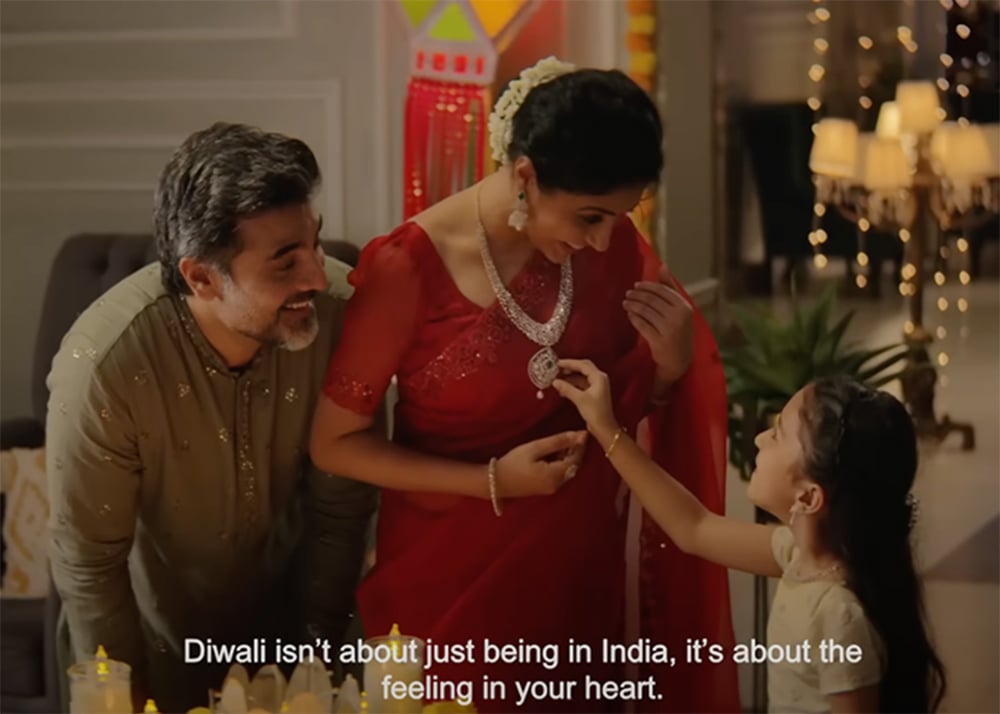
Tanishq, the global Indian gold and diamond jewellery brand owned by the Titan Group, has unveiled its ‘India Wali Diwali’ campaign across multiple international markets, including the GCC region, Singapore, and the United States, reflecting its growing global footprint and deepening connection with the Indian diaspora and communities around the world.
The brand leaned into a blend of short films, static visuals, influencer partnerships, and social-first formats tailored specifically to each market. Each geography had its own customised media plan, rooted in local insights and consumer behaviour, ensuring the message of ‘India Wali Diwali’ was delivered with authenticity, relevance and emotional depth.
The goal was simple: make Tanishq feel personal, familiar and meaningful everywhere. In the Middle East, the campaign was executed in close collaboration with the brand’s long-standing media and digital partners, Team Red Dot, who led the regional rollout with precision and speed.
Early bird tickets to the Campaign Saudi Briefing: Media and Marketing are now on sale. Get yours now for access to conversations with key stakeholders across governmental entities, brands and agencies in Saudi Arabia.
The creative development and film production were helmed by Lowe Lintas in India, the brand’s long-time creative partners who have played a pivotal role in shaping Tanishq’s emotionally rich brand storytelling.
Together, these agencies helped bring the campaign to life with a seamless blend of local insight and global creative excellence.
In the UAE and Qatar, the campaign came to life through an integrated ecosystem of out-of-home (OOH), digital, radio, and performance marketing, ensuring consumers encountered Tanishq across all relevant touchpoints.
Long-term OOH locations were secured at high-traffic areas such as Sheikh Zayed Road, Meena Bazaar, Karama, and Silicon Oasis in Dubai, and Hamdan Street in Abu Dhabi. These were supplemented by tactical short-term sites such as Al Khail Road, Hessa Street, and Umm Suqeim, enhancing festive visibility during peak traffic windows.
Tanishq also captured attention at the arrivals areas at Dubai and Abu Dhabi airports, making it the first brand many travellers see when they land during the festive season, instantly connecting them with a sense of home.
View this post on Instagram
Digitally, the brand leaned into a data-led and full-funnel approach, with top-of-funnel awareness through YouTube and Connected TV, mid-funnel engagement via contextual placements on platforms like Noon, and bottom-funnel conversion using Performance Max automation and geo-targeted push notifications seamlessly linking online engagement with offline store visits.
Over the radio, Tanishq brought the campaign’s vibrance to the airwaves through lively contests on Radio 4 and Gold FM, offering listeners AED 500 Tanishq gift vouchers in festive boxes and turning radio seconds into a time of celebration.
The brand also partnered with a diverse group of influencers and digital creators who truly reflect the spirit of Indian celebration abroad. Each collaborator shared their personal interpretation of “India Wali Diwali,” adding depth, relatability, and authenticity to the campaign.
This approach allowed the narrative to unfold organically, reaching broader audiences through real, lived experiences.
View this post on Instagram
In an exclusive conversation with Campaign Middle East, Aditya Kejriwal, Head of Marketing – International Business, Titan Company Limited and Tanishq, said, “we’ve always believed that Diwali is more than a celebration it’s a profound emotional experience rooted in shared joy, belonging, and tradition. With “India Wali Diwali,” we crafted a 360-degree cross-market campaign that combined emotion, data, and technology to make the brand felt, not just seen.”
Kejriwal added, “At its core, “India Wali Diwali” reflected our strategic philosophy: blending cultural authenticity with digital innovation to build emotional connections while driving real business outcomes.”
The central goal of the campaign was to deepen Tanishq’s emotional resonance with the global Indian diaspora by celebrating Diwali in a way that felt intimately familiar and genuinely reflective of their lives abroad.
“We sought to position Tanishq not just as a jewelry brand, but as a powerful symbol of continuity, belonging, and emotional connection to India a brand that bridges the distance between homeland and heart. While Indians across the globe share similar cultural values and emotional triggers, the way they experience traditions like Diwali is often shaped by their unique geographies and lifestyles. Our mandate was to authentically honour those differences to speak to their hearts while understanding their worlds,” Kejriwal said.
He added, “For Indians living overseas, Diwali is more than just a festival it’s a reaffirmation of identity, a celebration of roots, and a moment of reconnecting with loved ones and cherished memories. Through “India Wali Diwali,” our aim was to make Tanishq a vessel for that emotion enabling every global Indian to celebrate in a way that felt just like home, no matter where they are.”

The campaign was not targeted at a narrow demographic or specific income group because Diwali is a universal celebration for Indians cutting across age, gender, and socioeconomic backgrounds.
“We wanted “India Wali Diwali” to echo that universality, uniting all Indians abroad through a shared sense of nostalgia, identity and belonging,” Kejriwal added.
As a result, the storytelling through the campaign was both emotionally immersive and modern in execution. The media strategy balanced high-impact visibility with personal engagement.
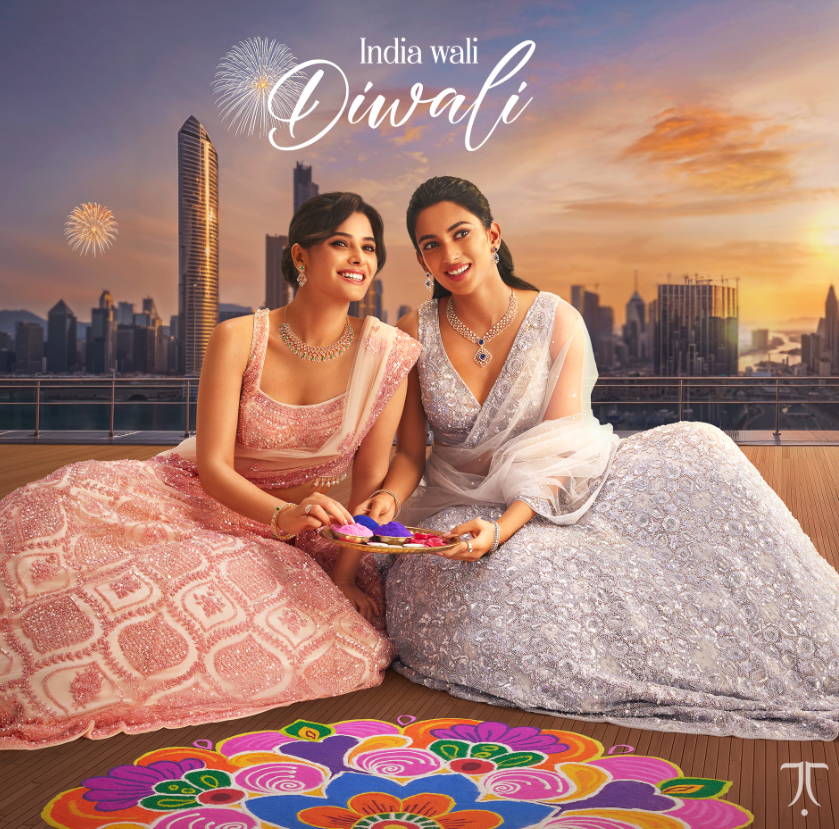
The campaign has been designed to run for approximately 40 days, spanning the full festive build-up and the Diwali celebration period. This extended duration ensures consistent visibility and allows for a gradual build-up of emotional engagement with our target audience.
In terms of the campaign’s success metrics, the brand is tracking conventional key performance indicators (KPIs) such as reach, engagement, viewership, retail growth, as well as its most valued measure of success – emotional resonance.
“When customers share stories of how the campaign moved them, reminded them of home, or brought a tear to their eyes that’s when we know we’ve truly connected. For a brand like Tanishq, success is measured not just in numbers, but in the strength of the emotional bond we build with our consumers. That’s what defines meaningful brand storytelling,” Kejriwal concluded.
CREDITS:
Client: Tanishq, Titan Group
Media and digital partners: Team Red Dot,
Creative development and film production: Lowe Lintas
UAE PR and communications: Watermelon Middle East