Agentic AI is remaking the strategic and creative process within marketing from the inside out. This is not a ‘nice-to-have’ plug-and-play tool that only improves efficiency; it is a holistic reformation of how end-to-end marketing workflows operate – from ideation, conception and exploration to adaptation, iteration and how the message is shipped and optimised for specific audiences.
Creative production is rapidly shifting from a limited number of human-made assets to an infinite abundance of hyper-tailored variations in terms of copy, images and videos that can turn a brief into go-to-market-ready campaigns within minutes for different media, channels, platforms, aspect ratios and hyper-local cohorts of local communities. This is speed, scale and cost efficiency like nothing marketing has ever witnessed before.
Being able to analyse millions of real-time behavioural cues, agentic AI is redefining marketing at its very core: changing one-to-many communication into one-to-one targeted, personalised, relevant and resonant two-way communication, where each consumer feels an individual and personal connection with a brand. Additionally, agentic AI can operate dynamic creatives that not only adapt to demographics but also to real-time variables such as cultural moments, current events, time of day and inclement weather.
Apart from creative agents, other listening agents can also monitor and understand changes in live user behaviour. Research agents can tap into historical reporting to not only forecast trends but also pre-emptively resolve customer complaints and react to customer churn. Brand agents can also hold active conversations with the agents that consumers have authorised and permitted to make shopping decisions on their behalf. And agents can act as constant watchdogs for other agents to ensure brand guidelines and regulatory compliance.
As a result, marketing strategies are shifting from linear campaigns to continuous, real-time feedback loops where agents proactively monitor and measure performance, adjust budgets, refine targeting, and modify messaging to ensure the constant impact and effectiveness of every dollar spent on campaigns.
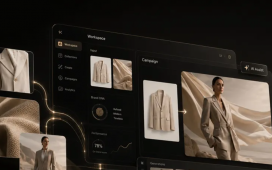
To dive deeper into how agentic AI is reshaping the marketing landscape, Campaign Middle East sits down with Jason Day, Head of Europe, Middle East and Africa (EMEA) at Luma AI, a frontier artificial intelligence (AI) company building multimodal artificial general intelligence (AGI), which recently launched its creative intelligence platform. This replaces fragmented toolchains with a unified system, complete with AI agents that unlock a new way of creating video, image, audio and text content within a real-time, collaborative environment.
Beyond the agentic AI headlines of speed, scale and cost efficiencies
Day argues that regional relevance, nuanced cultural knowledge and constant human-informed iterations result in outputs that respect the places and the people they serve.
Day says, “Agentic AI is not an incremental step forward. It is a seismic shift in how creativity is ideated, iterated, adapted and scaled. It is a full end-to-end, ideation-to-delivery tool.”
He then challenges long‑held habits such as templates in agencies and studios, which still lean into legacy, rigid structures that limit possibilities. He posits that custom, context‑aware systems can replace them.
He adds, “The reality that we are driving towards leaves templates in the rear-view mirror as a thing of the past. We no longer need to load up templates and operate within their constraints.”
To share the benefits of agentic AI within a tangible example, Day points to a case study with an automotive brand. He opens up about how a campaign that would usually have demanded big budgets, long shoots and turnaround times, and would have taken weeks to scale across geographies can now be completed effectively at a fraction of the cost and time.
Day explains, “Imagine an entire Mazda MX-5 campaign that aims to capture its evolution through the decades. You would need different MX models, and actors and sets made to look like the 70s, 80s, 90s and 2000s. Then this campaign would need to be localised across geographies, which would involve a lot of skill, resources, cost and time. Now, thanks to agentic AI, we can deliver all this at a fraction of the cost, time and effort, freeing up budgets and teams to focus on invention, creativity and optimising for effectiveness. What could have cost up to $2 million and take six months of production, post-production and fine-tuning, can now be done within a week for a few thousands. Add to that the fact that the campaign can also be scaled and personalised at the price of compute.”
He adds, “We can, quite literally, create infinite pieces of content. We can change the scenes, backgrounds, actors, messaging, content, trims, locations – and fix things so quickly, which would previously have been viewed as costly errors. In time, we will also be able to have live A/B testing on social content, where fully automated agents can make changes based on the performance of the content on a platform.”
The takeaway is that round‑the‑clock iteration no longer depends on human availability. Once tuned, the system keeps working.
“It’s now about training our agents, customising our agents, and then letting the agents work. And these autonomous agents don’t take a break, and don’t need a holiday.”
Compliance by design and clear data boundaries
As experimentation accelerates, governance becomes non‑negotiable. Day lays out why enterprise assurances – on provenance, policy and privacy – have been central from the outset.
“We’ve built the technology to be enterprise-ready from the get-go. We offer full transparency on creative lineage. We don’t train our model on customer data. And that’s reflected in the big organisations that partner with us because they trust us and are comfortable working with us.”
Recently, Publicis Groupe Middle East strategically partnered with Luma AI to support AI-driven advertising, creative production. and to serve as the preferred generative AI technology partner for the Groupe across Saudi Arabia and the wider MENA region. Through the partnership, Publicis Groupe Middle East will integrate Luma AI’s advanced generative video and multimodal AI technologies into creative and production workflows, enabling brands to deliver faster, more personalised, and culturally relevant advertising across markets and channels.
Similarly, in 2026, Serviceplan Group also revealed a strategic partnership with Luma AI to deploy AI for creative work across the agency group’s global operations. Under the agreement, Luma AI will serve as Serviceplan Group’s AI technology partner, embedding AI for creative work into professional workflows spanning strategy, creative development, content production and delivery.
Day clarifies that legal, compliance and ethical guardrails are baked into how Luma AI as a company operates and engages with the market.
“We need to always be enterprise-ready, which means that we are always in line with the regulatory frameworks of the markets that we operate in. That goes without saying,” he says.
In February 2026, Luma AI also opened a dedicated office in Riyadh, Saudi Arabia, marking a significant expansion of its presence in the Middle East and furthering the acceleration of HUMAIN Create. For Luma AI, this office will serve as a regional hub for client engagement, partnerships and advanced AI development.
Culture is not a filter; it’s a foundation
Local relevance, Day stresses, can’t be left to chance. He outlines a multi‑pronged approach designed to ensure that all agentic AI work reflects and resonates with the people, places, languages and norms where it operates.
Day explains, “Firstly, through our partnership with HUMAIN in Saudi Arabia, we are proactively and very actively working collaboratively to ensure that our model and our agentic AI platform are delivering for the Middle East and for the Arabic world. This means that it is being built for cultural relevance rather than being modified or reshaped to fit the Middle East marketing landscape.”
He adds, “Secondly, for our forward-deployed creative component, we’re working hand-in-hand with our customers to ensure there’s a feedback loop for what we’re doing. We’re very focused on training and enabling our customers to tap into the absolute maximum of what they can achieve through our technology. But, also, we’re paying close attention to the customers and listening to them. This serves as a feedback loop to our engineering teams and our AI research teams to ensure that we are continuously improving our product in terms of the experience, user interface and customising our agents to best serve people in the places where they are at – contextually, culturally and collaboratively.”
Day then goes on to explain how partnerships with the likes of highly experienced leaders at Publicis Groupe Middle East and Serviceplan Group Middle East, who have spent decades in the industry and not only have knowledge about nuanced audiences, but also have first-hand lived experiences in the region help improve the model on a daily basis.
He explains, “At the moment, a lot of models that are trying to make a Riyadh-specific campaign will throw up options that look a lot like a mash-up of Dubai, Abu Dhabi, Doha, Muscat, Amman or Cairo. For us, that’s not good enough. The way people clothe themselves is different; the colour of the sand in each area is different; the dialects of Arabic spoken in each place are different; the nuances in local humour based on cultural context within parts of the region are different – and all of this matters.”
Day adds, “You have to look at Luma as a full‑stack, enterprise‑ready company. So, the partnership with HUMAIN gives us the access to data centres, the access to compute. Then, we’re training the models, which offer the opportunity to make marketing faster, more nimble and more agile. What we’re also offering is the ability for agentic AI to create custom environments for brands, where agents learn the brand. This means that the agents are not starting from scratch every time a campaign needs to be built. Brand and performance growth go hand-in-hand.”
All in all, what emerges is not a story about a tool, but a story about systems that are changing rapidly. Rigid formats are giving way to adaptive environments. The marketing map is not painted reactively by numbers or vanity metrics; it’s being redrawn and composed in real time based on what customers are saying.
Of course, speed without steering is just motion – often in the wrong direction. The safeguards on data, the insistence on local lived experiences and cultural context, and the willingness to listen rather than only launching are key to keeping agentic AI airborne.
The future of creative production within marketing looks like this: ideas that move at the tempo of culture, delivered by systems that remember, respect and refine. This is less an assembly line and less about siloed teams operating in separate cabins; this is more playback theatre – tuned to the room, responsive to the audience, and capable of creating a culturally resonant message that lives beyond a mere moment to become a core brand memory.