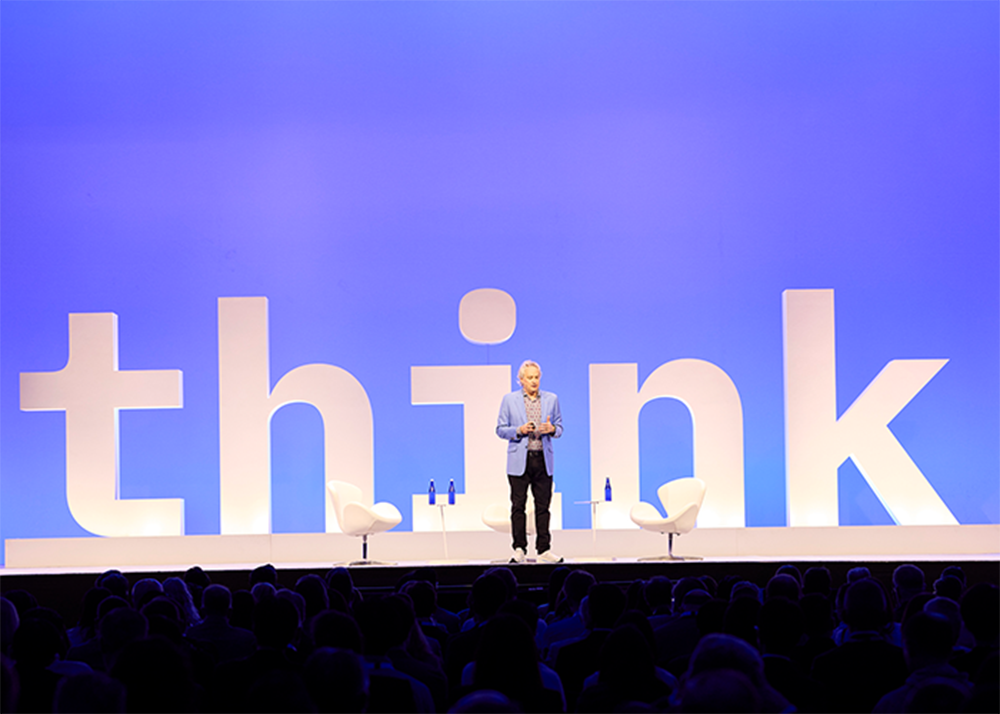
 Jonathan Adashek, SVP Marketing and Communications, IBM
This is not just another article about artificial intelligence (AI) adding to the cacophony of noisy opinions. This is an interview that reframes the conversation that marketers must have around orchestrating a fundamental shift.
For much of the past two years, marketers treated AI like a new instrument in the orchestra: useful, exciting and occasionally noisy, but still separate from the main score. It helped write copy, optimise media choices, personalise journeys and remove some of the friction from day-to-day tasks. Those early experiments mattered. They gave teams permission to learn, test and build confidence.
But the centre of gravity has moved. The more important question is no longer whether marketing teams can use AI for individual tasks; it is whether organisations are prepared to rebuild the way marketing and communications functions operate – from planning and workflows to decision-making, governance, skills and culture.
In that sense, AI in application is less like force-fitting another talented musician to the orchestra; it is more like evolving the entire score based on the skill, talent, insight and experience that’s entered the ensemble.
Jonathan Adashek, SVP Marketing and Communications, IBM tells Campaign Middle East that the organisations that will lead this next era will be those that move beyond tactical adoption and, instead, treat AI as part of the machinery of the business.
The call to action is clear: the period of experimentation and play is nearly done; now comes the harder work of redesign.
From isolated AI use cases to new ways of working
The first wave of AI adoption in marketing was largely about proving what was possible. Teams tested where the technology could help, often within existing structures. That was a necessary stage, but it also created a ceiling: if the underlying system remained unchanged, the benefits also remained limited.
Adashek says, “The difference is whether AI is being treated as a technology layered onto existing processes or as a core component of how work gets done across the enterprise. Over the last few years, most organisations have focused on AI use cases. They experimented with content creation, media optimisation, personalisation and productivity. Those efforts were important because they helped organisations learn what AI can do.”
The next stage, he suggests, is less glamorous but far more consequential. It requires leaders to look at the mechanics of marketing: how briefs are created, how approvals happen, how data moves, how insights are surfaced and how teams respond to customers and markets.
Adashek adds, “But we’re now moving beyond pilots and proofs of concept. The conversation is shifting from experimentation to operationalisation at scale. From ‘Where can I use AI?’ to ‘How do I embed AI into the workflows, processes and systems that drive meaningful gains?’”
This is where the distinction becomes important for senior marketers. Using AI to accelerate old habits may produce savings, but it does not necessarily create advantage. The larger opportunity lies in rethinking the model itself.
“Dropping AI onto existing ways of working limits impact,” says Adashek. “Real progress comes from rethinking how we work with AI at the center. In marketing and communications, that means moving beyond using AI to create content faster.”
If AI sits closer to the core of marketing operations, then leadership teams need to reconsider who does what, how choices are made, and what capabilities the organisation needs. This shift has implications well beyond output to overall orchestration across the organisation.
“It means redesigning how teams operate, how decisions get made, how data flows through the organisation and how customer engagement is orchestrated,” says Adashek. “It requires leaders to make hard, strategic decisions about workflows, operating models, talent and culture.”
The ‘client zero’ lesson: focus on the outcome, not the tool
IBM’s own transformation has made the company a test bed for AI application, automation and hybrid cloud.
While the numbers are significant, Adashek’s larger point is that the technology was never meant to be the starting point; the need of the hour was clarity on what the business needed to become in the age of AI.
“As client zero, IBM has unlocked more than $4.5bn in productivity gains and enabled more than 155 use cases through AI, automation and hybrid cloud,” says Adashek. “But the biggest lesson wasn’t about the technology; it was about the desired outcomes and the willingness to fundamentally change how we work to achieve them.”
The unspoken truth is that large organisations often carry complexity like barnacles on a ship; over time, even good processes can slow movement if they are not cleaned up and questioned.
The dawn of AI has accelerated a correction that was a long time in the making.
“In marketing and communications, we realised early on that if we want to drive meaningful outcomes – beyond just cost savings and efficiency – we had to be open and honest about what wasn’t working,” says Adashek. “That meant being willing to rethink and redesign how we operated, not just optimise around the edges.”
The important lesson here is that productivity was not coveted as the only prize. Instead, it emerged as part of a broader transformation aimed at making marketing more relevant, responsive and connected to business priorities.
“Focusing on the outcomes we wanted to achieve – being audience-centric, digital first and data driven – became our North Star,” says Adashek. “Efficiency and cost savings followed as a result.”
Culture, speed and alignment are part of the AI story
For experienced marketers, the hard part of transformation is rarely the launch of a platform; it is changing the rhythm of the organisation.
People need to trust new ways of working, teams need to share information more easily, and decision-making needs to move at the speed the market now demands.
“This is not just about implementing new tools,” says Adashek. “It required us to transform how we work – everything from people and culture to processes and how we make decisions. For a large, complex global organisation, that’s never easy.”
The next phase of AI adoption will test leadership as much as technology. Companies will need to make choices about skills, training and roles, while also helping people understand where they fit in a changing model. Without that, even the best systems risk becoming expensive furniture.
“Every business leader faces moments that force them to rethink assumptions about how they operate, how they serve customers and how they create value,” says Adashek. “With AI, we are in one of those moments.”
For Adashek, the industry’s challenge is not only to adopt AI, but to bring people with it. That means being deliberate about change, rather than assuming employees will adjust by osmosis.
“What’s required now is a willingness to challenge the way things have always been done,” says Adashek. “And a big part of that is how we take our teams along on this journey and help them prepare for the transformation.”
He points to IBM’s own research to underline the scale of the people challenge. The figures suggest that AI transformation will not be a narrow technology project; it will require a substantial rethink of capability across organisations.
“According to the recent IBM CEO study, 83 per cent of surveyed executives say that AI success depends on people’s adoption of technology,” says Adashek. “Moreover, over the next two years, they expect 29 per cent of employees to require reskilling for a different role and 53 per cent to need upskilling to perform their current role more effectively.”
The practical route, in IBM’s case, was not to attempt a grand overnight reinvention; it was to build momentum through smaller steps, learn from them, then extend what worked. That approach matters because marketing transformation often fails when ambition outpaces adoption.
“The key was to start small, learn quickly and build on it,” says Adashek. “Over time, we broke down silos, simplified processes, made data more accessible and aligned teams around shared outcomes.”
The final layer is capability-building. If teams are expected to work differently, they need support, education and tools that make the new model real.
“What are the tools and training they will need to work in this way?” asks Adashek. “The big opportunity ahead is shaping a clear point of view around AI and fostering a culture of continuous learning to drive that vision.”
The benefits, he says, have gone beyond internal efficiency. When information becomes easier to use and teams are better connected, marketing can move closer to sales, customer intent and commercial impact.
“The result has been faster time to market, stronger alignment between marketing and sales, and more actionable buying signals,” adds Adashek. “More importantly, it helped us set the foundation for what came next – our agentic AI platform ‘MCC Advisor’ that delivers data-driven insights across strategic areas like demand, sales pipeline, field and product marketing, and ecosystem partners.”
Turning dormant data into living customer experiences
IBM hasn’t just preached about AI. It is one of the brands that’s demonstrated it in practice. One of the most tangible ways the brand has shown AI’s value is through sport, including work connected to The Masters and Ferrari. These examples matter because they make something abstract visible.
Fans do not need a technical explanation to understand when an experience becomes richer, more personal or more useful.
Putting this into perspective for other brands and organisations, Adashek explains, “Every organisation is sitting on decades of underutilised data. Businesses have accumulated customer interactions, institutional knowledge, operational data and historical content. The challenge has never been collecting information. The challenge has been making it useful.”
This notion resonates with marketers across categories. Much like a vast library without a register, catalogue or thematically arranged books, many brands have spent years gathering information, but much of it remains locked away. AI creates the possibility of making that knowledge accessible and meaningful in the moment.
“With Ferrari, we’re helping transform large volumes of race, historical and fan data into personalised experiences for nearly 400 million fans around the world,” says Adashek. “With The Masters, AI is helping fans access insights that were once available only to broadcasters and analysts.”
The broader implication is that customer engagement is moving beyond message delivery.
The old shorthand of getting the right communication to the right person still matters, but it is no longer dependable in isolation. The more interesting opportunity is to convert knowledge into experiences that help people feel closer to the brand.
“What makes these examples powerful is that they showcase the power of technology in a tangible way,” says Adashek. “Fans can immediately see how data, AI and automation come together to create richer and more engaging experiences.”
For marketers, this reframes personalisation. It is not simply about segmentation or dynamic assets; it is about creating interactions that feel useful, timely and connected to the customer’s context.
“The broader lesson for marketers is that personalisation is evolving beyond targeted content,” adds Adashek. “The opportunity is no longer simply to deliver the right message to the right audience. It’s to use AI to transform data into insights, insights into storytelling, and storytelling into deeper customer engagement.”
While sport provides a vivid showcase because fans are emotionally invested and hungry for context, Adashek point on AI adoption goes well beyond stadiums, tournaments and teams. Any organisation with accumulated information has the potential to turn the contextual source material into something customers can experience.
“AI gives organisations the ability to activate the knowledge that already exists within their business and deliver experiences that are more relevant, contextual and valuable to customers,” says Adashek.
This is where the conversation becomes category-agnostic. The same principle can apply wherever customers need guidance, reassurance, speed, relevance or a clearer story.
“Whether you’re a sports organisation, an airline, a retailer or a government entity, the opportunity is the same,” says Adashek. “Use AI to turn information into insight, insight into action and action into experiences.”
Why trust needs to be tangible
As AI moves closer to business decisions, the time has come to take trust far beyond brand purpose statements or campaign messaging. It has to be designed into systems, processes and accountability structures. For marketers and communicators, this changes the nature of reputation management.
“Trust has always been the foundation of great brands,” says Adashek. “With transformative technologies such as AI, reinforcing that trust and staying true to your company values becomes even more important.”
The point is especially important because AI can can what customers see, and influence how employees work and how decisions are supported. If the technology is not understandable or responsibly managed, confidence can erode quickly.
“For business leaders, that means working with responsible technology and AI systems from the start and ensuring they are transparent and explainable to users,” says Adashek.
This also calls for formal structures for oversight and leads to a bigger question: Has trust in AI evolved into more than just a communications issue; is it also a governance issue?
Sharing his perspective from within IBM, Adashek adds, “We have a Responsible Technology Board whose mission is to provide governance and standards for how we develop and deploy AI and emerging technologies. This framework is built around transparency, fairness and human value alignment, robustness and privacy – and allows us to advance technology responsibly for our clients and partners.”
Trust is also built within purpose. The most mature organisations will not frame AI as a replacement story alone. They will ask where technology can absorb repetitive work and where people can add judgement, imagination and strategic value. That requires a practical plan, not a vague ambition. That’s where trust in the in technology adoption compounds.
“Having a strategy for what that human and AI collaboration is going to look like in your organisation is going to be key,” says Adashek. “What are the manual, repetitive tasks that AI can handle so humans can focus on higher value, strategic work?”
The message for senior marketers is that AI maturity will not be measured by how many pilots a company has launched or how many tools it has licensed. Those may be useful indicators of activity, but they are not the same as transformation. The real measure will be whether the organisation has changed how it thinks, decides, collaborates, learns and creates value.
In that sense, AI is becoming a mirror as much as an engine. It reflects the quality of an organisation’s data, the clarity of its priorities, the strength of its culture and the courage of its leadership.
For marketers and communicators, the task ahead is not simply to make AI useful; it is to make it meaningful, responsible and deeply connected to the way brands earn attention, confidence and loyalty.