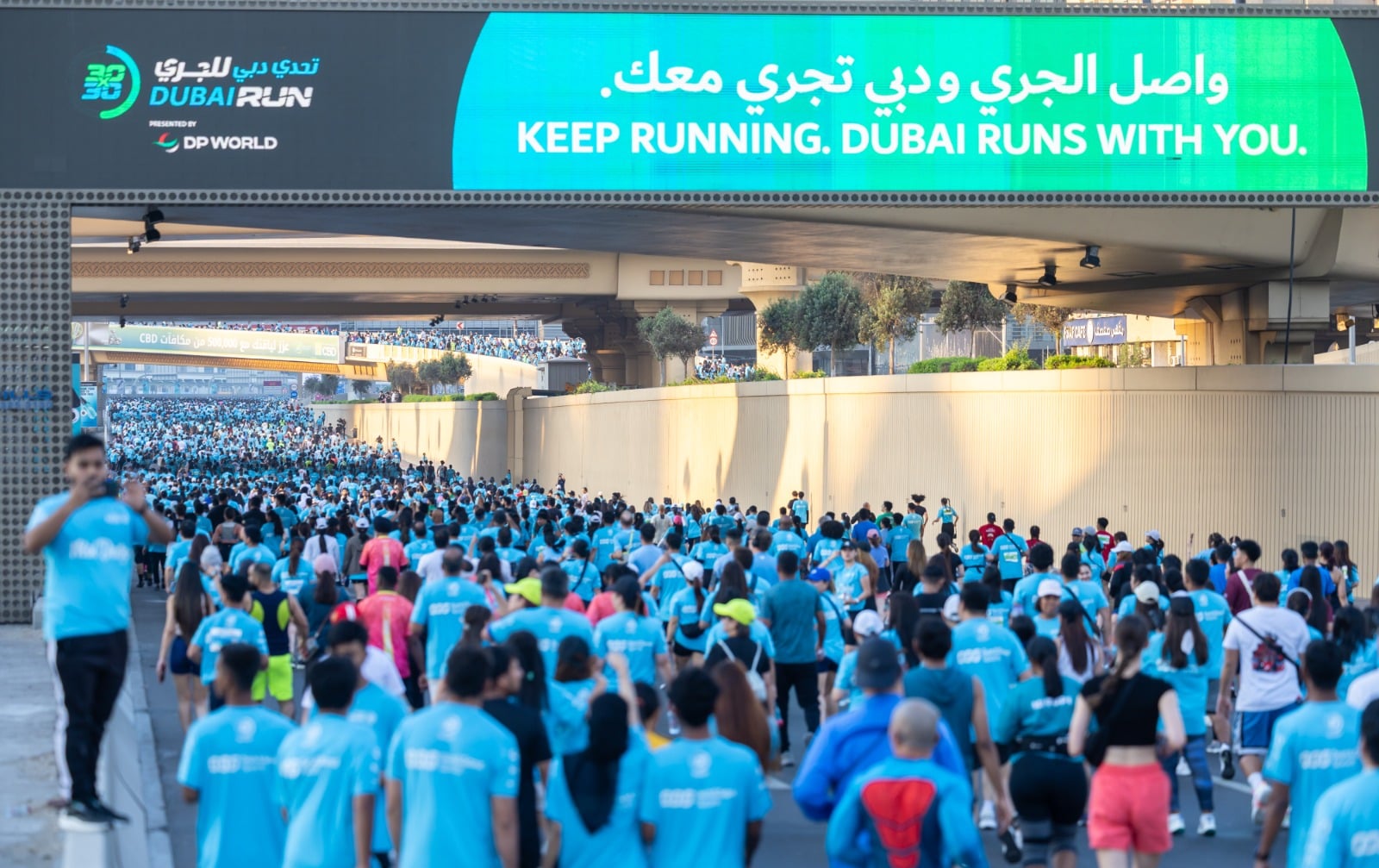
How many of us have been influenced to join a running club in the last year? And more importantly, how many of us noticed the brands behind those clubs?
At Campaign Middle East, we’ve been paying attention.
Beyond the hype and hashtags, a quieter strategy is unfolding across the region. Running events are no longer just fitness activations; they are becoming live data environments – places where brands observe behaviour in real time, test products in context, and build long-term relationships that extend far beyond a single campaign.
Conversations with industry leaders at GMG, SQUATWOLF and New Balance, one idea consistently surfaced: running has evolved into a lifestyle signal, and brands are responding by investing in ecosystems, not moments.
Running communities: from participation to identity
As fitness moves to a lifestyle identity in the GCC, brands are doing more than just showing up.
Industry leaders point to running’s unique appeal: its simplicity and inclusivity – it has the most accessible entry point into fitness and is democratic by nature.
Mohamed Bodiat, Senior Vice President, Brands – Sports at GMG, says, “You can go at your own pace, you can run alone or with a group, and you don’t need an intimidating learning curve or expensive equipment to get started. With the overall global emphasis on work-life balance and the promotion of living a more active, healthy lifestyle, this only feeds into the brand’s growing focus on running. By participating in these events, we are automatically getting a better understanding of our consumers’ lifestyle habits and fitness journeys.”
Recognising this, some brands are taking a hands-on approach, embedding themselves in the communities that shape these fitness habits, and in return gaining insight, connection and culture.
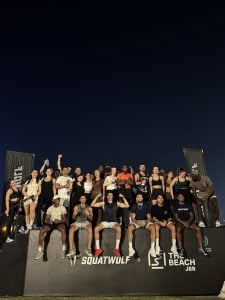
 At SQUATWOLF, that approach takes shape through partnership with serious performance communities like Collective 365, who are out at 6am multiple times a week, building discipline and connection on the ground.
“We’re seeing people build their social circle, routine, and even self-worth around training – and brands are leaning into that by building ecosystems, not just campaigns. Instead of simply sponsoring a race once a year, we’re investing in long-term packs – run clubs, hybrid training communities, and city-wide challenges – and then surrounding them with performance product, content, and on-ground experiences that make it easier to show up consistently,” says Anam Khalid, COO & Co-Founder, SQUATWOLF.
She adds, “The deeper strategy is about proximity: getting close enough to your consumer that you understand how they actually live, train, and buy. When we partner with Collective 365 or host our own 30×30 hub, we’re not just putting logos on arches; we’re observing behaviour, testing product in real conditions, and understanding what keeps people coming back at 6am and what makes them drop off. Those insights are gold when you’re building a brand that wants to live in someone’s daily routine, not just on their feed.”
For New Balance, this community-first mindset is not new; engagement through running has long been part of its DNA. The brand’s ethos is rooted in the belief that sport starts at the grassroots level, with real people and real stories shaping culture. The recent surge in running activations reflects a growing appetite for authentic, community-led experiences.
For instance, New Balance’s ‘Run Your Way’ campaign was created not just to inspire participation but to grow a community where runners of all levels felt they belonged.
“We wanted to highlight very clearly that ‘if you run, you are a runner’; no extra ‘requirements’ needed,” says Ana Elisa Seixas as Head of Marketing for the Middle East, Africa, and India (MEAI), New Balance. “While on-ground learning helps us create better experiences for our communities, the core purpose remains the same: offering meaningful spaces that connect people through movement in ways that naturally reflect our brand’s balance between sports and culture.”
Where experience becomes digital insights
These activations are where brand promise meets real behaviour – translating intent into action and offering a clearer view of what genuinely motivates communities. More than moments of engagement, they function as ongoing touchpoints that connect lifestyle choices directly to purchasing decisions.

While events create space for consumers to join supportive fitness communities, they also allow brands to engage audiences in more meaningful and measurable ways. Over time, these interactions surface patterns that go beyond surface-level participation, revealing how people prefer to move, train and connect.
“Once consumers interact with brands through event registrations or more consistently through apps and loyalty programmes, we start to understand them better over time. With our Ready Starts Here campaign with Sun & Sand Sports (SSS), for example, we amplify SSS as the destination for sport while encouraging local consumers to be active through their activity of choice, while Nike’s dedicated app gives consumers real-time access to the brand, with inspiration and product drops,” says Bodiat.
Industry leaders point to the growing number of data touchpoints embedded within these activations. Through online registration tools, brands collect consented information that shapes how they interact with participants, while also enabling analysis of behaviour and preferences linked to activity type and frequency.
Patterns such as whether participants favour group runs or solo sessions begin to emerge, alongside insights into how these choices influence purchasing decisions and broader lifestyle habits. This understanding helps brands refine their strategies and meet consumers where they are.
Brands are tracking participation metrics, including sign-ups, show-up rates, repeat attendance, time-of-day preferences and which formats fill fastest – whether runs, strength sessions or hybrid workouts.
According to Khalid, participation data is revealing how training culture is evolving. Consumers are no longer defining themselves by a single discipline, instead combining strength, conditioning and endurance across the week. Commitment is also deepening, with early-morning sessions and 6am clubs thriving, especially in Dubai, where running culture has accelerated over the past decade. Crucially, community now comes first – people align with the pack before the brand, allowing trust to drive longer-term brand relationships.
Engagement, purchase and the feedback loop
Engagement data adds another layer of understanding, measuring how long participants stay, how they interact with product touchpoints, levels of user-generated content and post-event social conversation.
Purchase and intent signals further deepen the picture, from redemptions of event-specific offers and app downloads following activations to spikes in specific categories such as shorts, bras or accessories.
Taken together, leaders explain that combining data from multiple touchpoints – spanning event registrations, digital activations, in-store technology and social engagement – builds a far clearer understanding of consumers, grounded in real behaviour rather than assumptions.
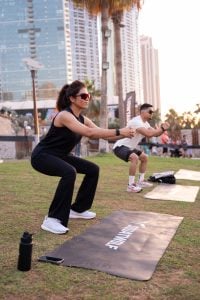
“We connect those patterns back into our CRM, so we’re not just saying “1,000 people came” – we’re seeing who they are, how often they come, and what that says about their habits and needs,” says Khalid.
The insights gathered through these touchpoints allow for experiences that feel increasingly personalised, shaped by passion points and community.
“When you connect those signals, you create an intelligence engine that reveals how people want to move, live, and engage with the brand, allowing us to serve them better in every market. In short, our understanding comes directly from what is happening on the ground. Our New Balance Run Clubs (NBRCs), for example, have expanded to new neighbourhoods and cities across the region, including Dubai, Abu Dhabi, Riyadh, Jeddah, and Doha, with the number of coaches and pacers doubling to meet the growing demand,” says Seixas.
Factors such as the rise in repeat participation, increased number of enquiries, word-of-mouth engagement, and the organic growth of partner-run clubs like Collective 365 and Jumeirah Johns Running Club (JJRC) have shown that these initiatives create genuine advocacy.
“These insights inspire collaborations such as Level 7, a unique vertical run format developed by JJRC when they identified a gap in the market: runners in the region have plenty of flat-track races but nothing that offered a new way to experience running,” says Seixas.
Together with JJRC, New Balance realised there was an opportunity to turn an everyday space like a car park into something unexpected, so instead of running laps on a track, Level 7 invited people to run up the structure, giving the community a fresh new challenge.
“The activation allowed us to blend creative engagement with running culture, turning performance into a shared experience. Every activation becomes an opportunity to strengthen emotional connection, which is far more powerful and sustainable than transactional engagement,” says Seixas.
She adds, “These moments aren’t just about running; they’re about connection, belonging, and helping to build the foundations of a lasting community. While on-ground learning helps us create better experiences for our communities, the core purpose remains the same: offering meaningful spaces that connect people through movement in ways that naturally reflect our brand’s balance between sports and culture.”
On-the-ground insights from running communities
These events are becoming some of the most honest data engines that brands have.
“For us, every activation is a live lab. We watch how athletes move, where the garment is under pressure, where they’re adjusting, what holds sweat, what dries fastest, what gets compliments, and what gets ignored. That feeds into very practical decisions: seam placements, pocket depth, breathability zones, even print visibility under night-time streetlights. Then the stories almost write themselves – instead of generic “community” content, we can tell real stories of packs like Collective 365 who are putting in the work week after week and show how the product is built around their reality, not a moodboard,” says SQUATWOLF’s Khalid.
“Digital data tells you what people click. On-ground data shows you what they actually do,” says Khalid. “From events, we see which pieces get chosen first from the kit table, how different fabrics perform in humidity, what kind of sessions fill up fastest, and what conversations people are having after the workout. With Collective 365, for example, we’ve learnt a lot about what serious runners in Dubai need from their gear in 35-degree “winter” weather versus cooler climates – and that influences everything from fabric choices to future capsules.”
She adds, “This certainly helps with future planning, as it helps us understand the most impactful way we can connect with consumers. We’re starting to see that more than ever before, brands are taking themselves to consumer communities rather than concentrating on a purely retail-focused experience. By reaching customers in the natural environment where they’re interacting with the sport, we’re encouraging emotional and physical connections to the brand. This helps build brand loyalty and undoubtedly improves the real-time feedback on the product.”
The Nike Calling All Runners as a great example of this. Through this campaign, an interesting insight found was that consumers preferred the Kite Beach activation over the in-store treadmill experience. There was more traction and a higher number of registrations with the 5K or 10K run over the mall activation, highlighting that consumers want an opportunity to test the product authentically in a familiar space. Running for a longer distance on the beach, surrounded by a community of like-minded runners, offered them a more personalised and true understanding of the product capabilities over the individual trial.
“We’re starting to see that more than ever before, brands are taking themselves to consumer communities rather than concentrating on a purely retail-focused experience. By reaching customers in the natural environment where they’re interacting with the sport, we’re encouraging emotional and physical connections to the brand. This helps build brand loyalty and undoubtedly improves the real-time feedback on the product,” says Bodiat.
For brands, the value lies not only in community-building but also in the immediacy of feedback that these environments provide. Through this feedback, consumers are actively influencing product design, as brands take note of what audiences resonate with more.
“Take races such as the Dubai Marathon, for example; by tracking and observing what footwear is the most preferred by the majority of athletes, we can understand performance trends and react accordingly. Interestingly, even though the technology era is still very much prevalent, we’re also seeing a renewed appreciation for face-to-face interaction and direct product trial,” says Bodiat.
“Every event is a feedback loop, not a one-off stunt. After each activation, our team sits with the coaches and community leads – like Nasir and Kane from Collective 365 – and we ask very direct questions: what worked, what didn’t, what the community loved, what they struggled with. That feedback shapes everything from tweaks to our next drop, to how we brief the next shoot, to which stories we prioritise in our campaigns. It’s a continuous loop: real experience → insight → iteration → better experience,” says Khalid.
Technology as the quiet backbone
While on-ground experiences offer qualitative insight, technology is increasingly underpinning these ecosystems. Wearables, brand apps and event platforms now provide additional layers of data, from pace and effort to attendance patterns and session preferences.

“I believe a lot of brands are using technology from wearables to enhance customer experience. Brand-dedicated apps, such as the Nike Running app, for example, embed wearables to provide coaching support based on one’s needs and preferences. By understanding their habits, the technology can even give recommendations and improvements based on customers’ fitness goals, while providing live progress tracking.
These touchpoints help give brands a clearer understanding of how products are being used in real life. It’s an exchange where customers feel supported in their journey while brands get valuable insight on how to continuously improve and respond to consumer behaviour,” says Bodiat.
“Tech is becoming the quiet backbone of these experiences. We use our own SQUATWOLF app and check-in systems at hubs and events to track attendance, session preferences, and repeat participation. Event platforms help us understand registration vs show-up rates, while social listening around hashtags gives us qualitative sentiment in real time. We’re also increasingly paying attention to wearables data shared voluntarily by communities – pace, distance, HR effort – because it tells us how hard people are actually pushing in our gear, which is very relevant for performance design,” says Khalid.
Running as a lens into consumer evolution
Across the industry, leaders agree that running has become one of the clearest lenses through which to understand consumer evolution.
Bodiat says, “It not only has the advantage of real-time feedback through product trials, but it also means that brands get exposure to consumers who actively engage with running, providing a more personal and targeted approach. Consumers get the opportunity to experience the product for themselves, while offering insight into their preferences for the products we’re bringing to market, witnessing first-hand how they respond to new cushioning technologies and silhouettes. This authentic feedback, in turn, helps us understand their needs and wants that ultimately influence our purchasing decisions and future plans on what products to introduce.”
“On-ground participation gives us context for the data sitting in our CRM. If we know someone didn’t just buy a running short, but also checked in at multiple run activations, we understand they identify as a runner, not just a casual gym-goer. That lets us: Build more accurate segments (e.g., hybrid athletes, beginners, performance runners). Serve content that matches their reality – training tips, community events near them, performance drops rather than generic sale messages. Measure retention beyond repeat purchase: are they still showing up for community runs, still opening event emails, still engaging with performance content? When those signals stay strong, we know the experience is resonating, not just the discount,” says Khalid.
She adds, “If experiential marketing becomes a space where brands collect real insight, build real trust, and create product that genuinely performs better because of what they learned on the ground – then we’ve moved from vanity metrics to meaningful impact. That’s the shift we’re betting on as a performance brand born in Dubai, building for the world.”
As a result, running activations are increasingly functioning as live research platforms – natural environments where behaviour, not declarations, shapes product development and campaign strategy in real time.