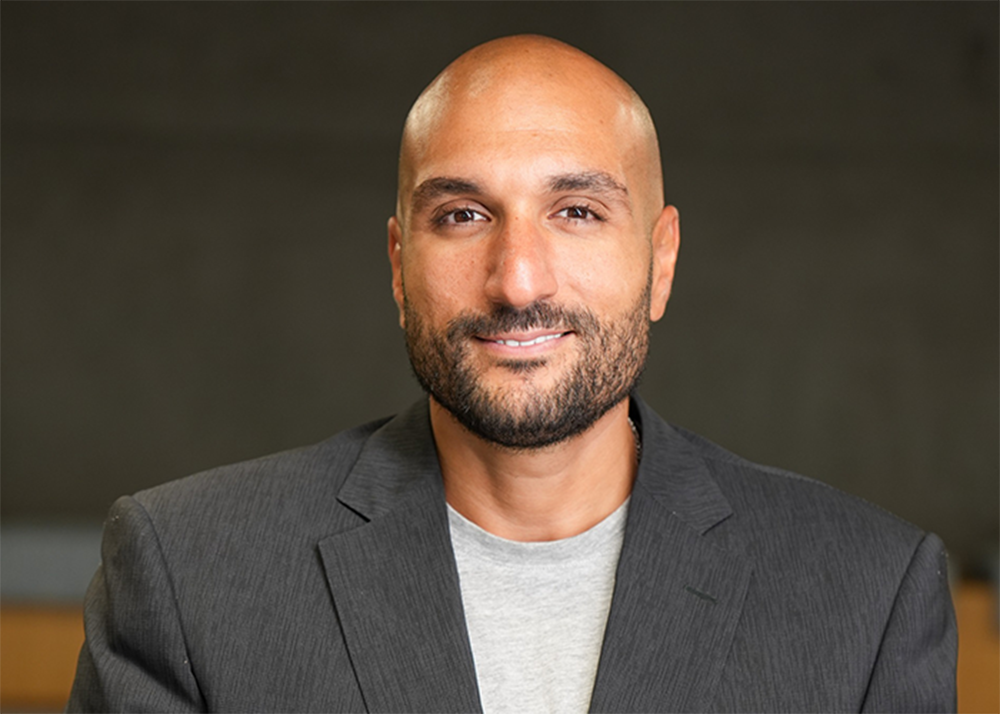
 Samer AlHussein, Business Director, FP7 McCANN KSA
In times of uncertainty, brands in Saudi Arabia and across the Middle East region tend to respond in one of two ways: they either go quiet, waiting for clarity, or they return quickly, filling the space with activity, offers and messaging to regain momentum. Neither approach works for long.
When the environment is shifting – economically, socially and emotionally – what people are looking for is not more communication; it’s understanding. More importantly, they are looking for consistency between what brands say and what they do. This is where many brands struggle.
The instinct is to focus on messaging, adjusting tone, reworking campaigns and increasing visibility, but the real challenge sits deeper. The issues arise because of how decisions are made, how quickly brands adapt, and how well they understand what is happening on the ground. Because in a landscape such as the GCC, assumptions move faster than reality.
So, what brands need is clarity: a real understanding of how people are feeling, how behaviours are shifting and where confidence is strengthening or softening across categories. Without that, even the best intentions can land poorly – not because they are wrong, but because they are mistimed.
This is exactly why FP7 McCANN introduced the GCC Consumer Confidence Monitor. This was not a reporting tool, but a way to help brands and clients navigate in real time.
Built on more than 1.6 million data points, the model distributes complexity into three clear signals: how people feel, how they behave socially, and how industry sectors are performing. It provides a near-daily pulse across markets, allowing brands to move away from reactive decision-making and towards informed, measured action.
And that distinction matters because what we are seeing right now is not a market that has stopped; it is a market that is recalibrating.
On one hand, search behaviour, which is slightly moderate, remains above pre-conflict levels. This tells us that intent remains strong – people are still exploring and considering – but with more caution at the margins.
On the other hand, social sentiment remains below the baseline, indicating that while there are early signs of easing, the overall tone is still sensitive. Simultaneously, media investment is beginning to return as brands cautiously re-enter the market.
Taken together, this paints a very specific picture. This is not a moment for silence, and it is not a moment for noise. Instead, it is a moment for precision.
For brands, this means moving away from broad, campaign-led thinking and towards more deliberate, responsive actions. It means understanding where demand is active – and engaging there with relevance. It means recognising where sentiment is still fragile – and adjusting tone accordingly. It means ensuring that what is being communicated is fully aligned with what can be delivered operationally.
Because in uncertain environments, misalignment is what breaks trust the fastest.
We’ve seen this before: during Covid, many brands either paused completely or defaulted to a wave of messaging that quickly became indistinguishable. But IKEA took a different approach. Instead of pushing new products or leaning into promotional messaging, they reframed their role. Their ‘Stay Home’ campaign didn’t try to sell more; it reflected what people were living through – it made home, and the products people already owned, the centre of its story.
It wasn’t louder. It was honest – and that honesty is what made it land.
That lesson applies even more strongly today. As brands return to the market – and they are returning – the risk is no longer absence. It’s excess. A flood of offers, promotions and transactional messaging that adds volume, but not value. Visibility is easy. Relevance is harder.
The brands that will stand out in this phase are not the ones that simply show up again, but the ones that contribute something meaningful to the lives of their audiences. Whether that’s reducing friction in the customer journey, offering genuine flexibility or supporting local communities in tangible ways – the work needs to do something, not just say something.
This is why creativity must evolve. It’s no longer only about storytelling; it’s also about problem-solving. It means coming up with ideas that resonate with current behavioural trends, not just influence it. It’s about creating platforms that help businesses, communities and consumers navigate their own realities.
This requires a different kind of thinking. It requires brands to communicate with care – understanding tone, timing and context. Brands must reduce friction – making it easier for people to engage, transact and trust. Brands must increase flexibility – adapting to changing conditions without overcommitting. Finally, they must use insight responsibly – not to follow or chase noise, but to respond to real signals that help people.
Ultimately, what this moment demands is not more traditional marketing; it demands better judgement – and better judgement stems from clarity.
With early signs of stabilisation following recent developments, patterns are beginning to emerge. Consumer behaviour is settling. Routines are returning. Confidence, while still measured, is gradually rebuilding.
It’s time for brands to move forward – not by returning to how things were, but by adapting to how things are. It’s time for brands to shift from visibility to value, from messaging to meaning, and from reaction to navigation.
Because in uncertain times, people don’t expect brands to have all the answers, but they do expect them to show up – thoughtfully, honestly and consistently.
The brands that can do that – not only in what they say, but also in how they act – are the ones that will navigate uncertainty successfully and grow through it.
By Samer AlHussein, Business Director, FP7 McCANN KSA