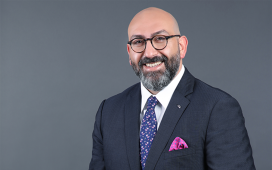


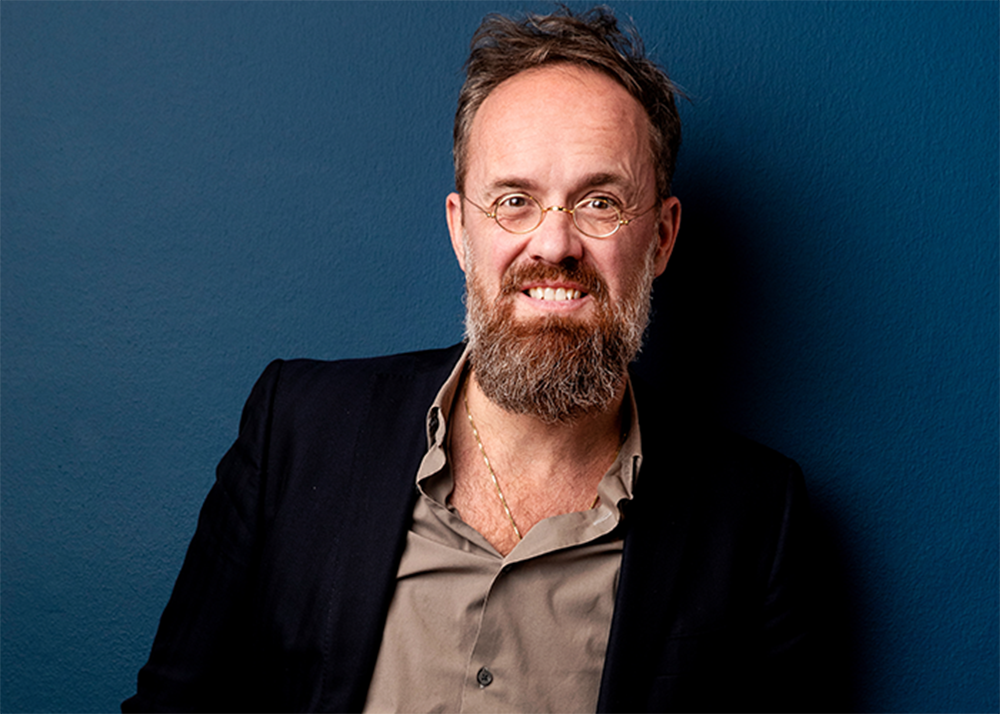
 Alexander Schill, Global Chief Creative Officer, Serviceplan Group, who served on the Clio Awards jury for Creative Disruption and as the Jury Chair for Creative Commerce & Direct.
For the past 66 years, the Clio Awards has been one of the global advertising industry’s clearest mirrors. It not only recognises creative excellence, but also reflects the values that creatives, communicators, brands and businesses cherish the most – and the resulting impact of their work on culture and communities across the world.
The renowned awards celebrate creative brilliance in advertising, marketing and communications, judging work on originality, boldness, execution, craft and the ability to stir people and shape societies.
With the Grand Clio winners for 2026 set to be announced at the Clio Awards gala on 12 May in New York City, conversations inside the jury rooms are already offering an early read on work that stands out – and where global creativity is heading.
This year, the jury conversations aren’t simple and straightforward; in a disruptive geopolitical and socio economic landscape, it’s no surprise that creative conversations are equally disruptive. On one side of the jury room sits a notion that outcomes, effectiveness, brand purpose, social causes and real-world relevance matter the most. On the other sits the older magic of advertising, calling for work that surprises, entertains, evokes emotion and lingers long after the screen goes dark.
Layered over this is the elephant in the room: artificial intelligence (AI), which is no longer a novelty or a tool. Instead, it’s being viewed by creatives as a co-pilot – a colleague to brainstorm consumer insights with, and create and execute great ideas with, but only when necessary rather than as a crutch to creativity.
For the Middle East, there is an especially interesting signal in that mix: as global markets wrestle with caution, complexity and growing pressure to prove value, the region’s creative output is beginning to project more conviction, boldness and relatability.
Alexander Schill, Global Chief Creative Officer, Serviceplan Group, who serves on the Clio Awards jury for Creative Disruption and as the Jury Chair for Creative Commerce & Direct, speaks to Campaign Middle East about all this and more, with exclusive insights from the Clio Awards 2026 jury rooms.
“The time has passed when we say, ‘Wow, this is made with AI’. Instead, we’ve returned to the fundamentals of: ‘Is it a good creative piece or not?’ Simply using AI will not win anyone an award anymore.”
Jury rooms shaped by difference – and a shared reality
People often imagine creatives in jury rooms as connoisseurs of fine wine or gastronomes picking their way through never-ending courses of gourmet food. Schill describes a reality that’s far more layered: a room full of varied perspectives, languages, cultures and backgrounds, but all shaped by the same current industry pressures.
Schill explains, “It’s always very exciting to be in jury rooms. It’s great being huddled together with creators from all over the world, and listening to opinions coming in from different cultures, different backgrounds, different viewpoints and different areas. So that’s always the most important and most exciting thing within jury rooms.”
That energy, he suggests, is sharpened by the wider upheaval affecting the business. The conversations in jury rooms have not only been about the entries, but also about how they connect to the context of the ground shifting beneath everyone’s feet.
Schill adds, “We are living in a period of great disruption – whether that’s in the form of geopolitical upheavals, social causes coming to light, or how AI is affecting the creative process and our work. The one thing connecting us all is that we are all in the same situation. So, no matter which country we come from, no matter which cultural background we hail from, we are all in a similar situation right now and we have choices to make.”
Compared with work from previous years, one of the clearest shifts Schill points to is that AI is no longer novel. It no longer earns attention simply by being present. The fascination with AI as a tool is fading. What matters now is how AI being used – and to what effect – whether it helps produce stronger thinking and sharper work or whether its use is detrimental to the creative process in a specific context.
Schill says, “The time has passed when we say, ‘Wow, this is made with AI’. Instead, we’ve returned to the fundamentals of: ‘Is it a good creative piece or not?’ Simply using AI will not win anyone an award anymore. What matters is how the problem within the brief is addressed – whether with AI or not; and what insights led to what ideas and whether the execution of those ideas in that specific manner had the impact that is intended.”
This is an important distinction for agencies and brands who are either still fascinated by new tools, or are leaning into it because of market pressures such as speed to market, tighter budgets or the fear of technological debt. Schill explains how AI, when used well, can broaden the view, offer deeper insights, sharpen the creative output and enhance performance evaluation.
Schill adds, “We are reaching a stage where campaigns are executed so seamlessly that it’s hard to tell for sure whether AI has been used or not, unless clearly stated, which leads us to focus on originality, the quality of craft within execution and the social impact of the work more than ‘whether it’s AI-driven or not’.”

What made the strongest work rise at The Clio Awards 2026
When Schill describes how entries are discussed, it becomes clear that the jury is not viewing work through the lens of a fixed formula.
Rather, it is weighing work across two broad dimensions: the importance of the issue being addressed and the distinctiveness of the creative response. Some jury members lean towards more socially driven or cause-led work, while others want work that feels more playful, fresh, daring and disruptive.
Schill explains, “There are two opinions in jury rooms: One is about the societal impact and the cause behind the campaign, and the other one is based on the work itself: was it bold? Was it fresh? Was it a creative approach to addressing the problem? Was it memorable?”
Many of the entries, he notes, are responding in real time and reacting to the world as it is now: fractured, fragmented, fast-moving and often uneasy. Some are built for the long haul, helping brands strengthen their relationship with consumers over time by addressing critical concerns such as immigration or fake news.
Based on the timelines that brands and agencies work with – whether a quick reactive piece completed in days or weeks, or more considered creative output over months – the jury takes into consideration the parameters within which they had to operate.
This means that a campaign addressing a deeply rooted issue is not judged in the same way as one responding to a flashpoint. But in both cases, Schill suggests, the work must be anchored in a genuine understanding of the situation.
Read: Clio Awards 2026: MENA agencies claim 19 Clios ahead of global awards in New York
Advertising has grown up – but has it lost its childish spark?
One of the most revealing parts of the conversation is Schill’s view that the industry is becoming more mature and more accountable, but perhaps less adventurous in the process.
The rise of measurable outcomes, clearer brand positions and more serious mandates has brought discipline, but it has also, at times, dulled the edge.
Schill explains, “Advertising has grown up. All the big brands who are winning awards had a strong sense of purpose. The industry is a little bit more driven by return on investment (ROI) and return on advertising spend (ROAS). In a way, this is a good thing because creative work is really creating results – business results and social change.”
While he is careful not to dismiss the need for such a positive evolution towards responsible and accountable advertising, he also shares the feeling that something is being forgotten along the way.
Referring to the ‘bad side to grown-up advertising’, Schill says, “We are lacking a lot of brave work. This year, I wouldn’t say that we have seen the bravest campaigns, even though we have seen some very creative campaigns.”
Schill’s point is not that purpose and performance have gone too far; it is that caution may have become too comfortable. Like an orchestra that has perfected its art and plays perfectly in time but has forgotten how to improvise, the industry risks becoming highly competent without being genuinely surprising or entertaining.
He adds, “There are a lot of brands and agencies that have done a great job in advertising campaigns – but we are lacking a little bit of the brave work and the fun flavour that stands out.”
Schill calls for brands to build relationships with people that go beyond the rational to the relatable. He shares the need for brands to connect with consumers, and reminds them to find a way to make people smile, flinch, laugh, pause or share something with a close friend or family member – because that’s where the magic happens and memories are made.
A message in parting – and a nod to the Middle East
Before the interview concludes, Schill reflects on what he would tell agencies and advertisers after the Clio Awards and his advice lands in two parts. The first is about balance: use AI fully, but do not let it take the wheel. The second is a call for braver and bolder storytelling.
Schill says, “We all know what AI can do, but we must find a way to come back to the question of what I must do. Creatives must not lose faith in their own judgement simply because a machine can generate options at speed. We should find our self-confidence again as creatives. The best idea that helps to solve a problem for a brand needs to be driven by us as creatives. And AI, just like any other colleague, may help us reach that goal, but it should not rule us. I’m a big fan of using AI in the whole process, but we should not follow AI; instead, AI should follow us.”
The second point is one the Middle East market will be pleased to hear. Sharing a final insight from jury rooms, Schill explains how the region’s work is beginning to stand apart from the rest of the world because it is showing more nerve.
Schill says, “Looking at the work coming out from the Middle East, I can say that this is a very interesting market that is evolving right now. The region is becoming a lot more self-confident in telling its story the way it wants to. This is reflected in the creative output coming from the region as it is a lot braver than what we’re seeing from other parts of the world. It is a lot fresher, younger and a bit more ‘wow’.”
All in all, if Schill’s view from the Clio Awards jury rooms tells us anything, it is that global creativity is facing a moment of recalibration. The industry has not abandoned ambition; it has simply become more burdened by responsibility, measurement and uncertainty. That has produced stronger discipline and, in many cases, more meaningful work. But it has also made some brands and agencies a little too eager to colour within the lines.
The opportunity now is not to choose between business results and creative electricity, or between human instinct and machine assistance. It is to hold those tensions together. For Middle East marketers and agency leaders watching the Clio Awards closely, that may be the most encouraging signal of all: the work attracting attention is not merely polished or purposeful; it is also work with backbone, perspective and a willingness to leave a mark. In a year when much of the world appears to be playing it safe, that confidence could be the region’s real advantage.