Not all crises are read in the same way. Some shake trust. Others damage reputation. Others create direct operational or legal harm. But there is another category altogether: crises that may appear light in their human impact, yet are strange in nature and more shareable than condemnable.
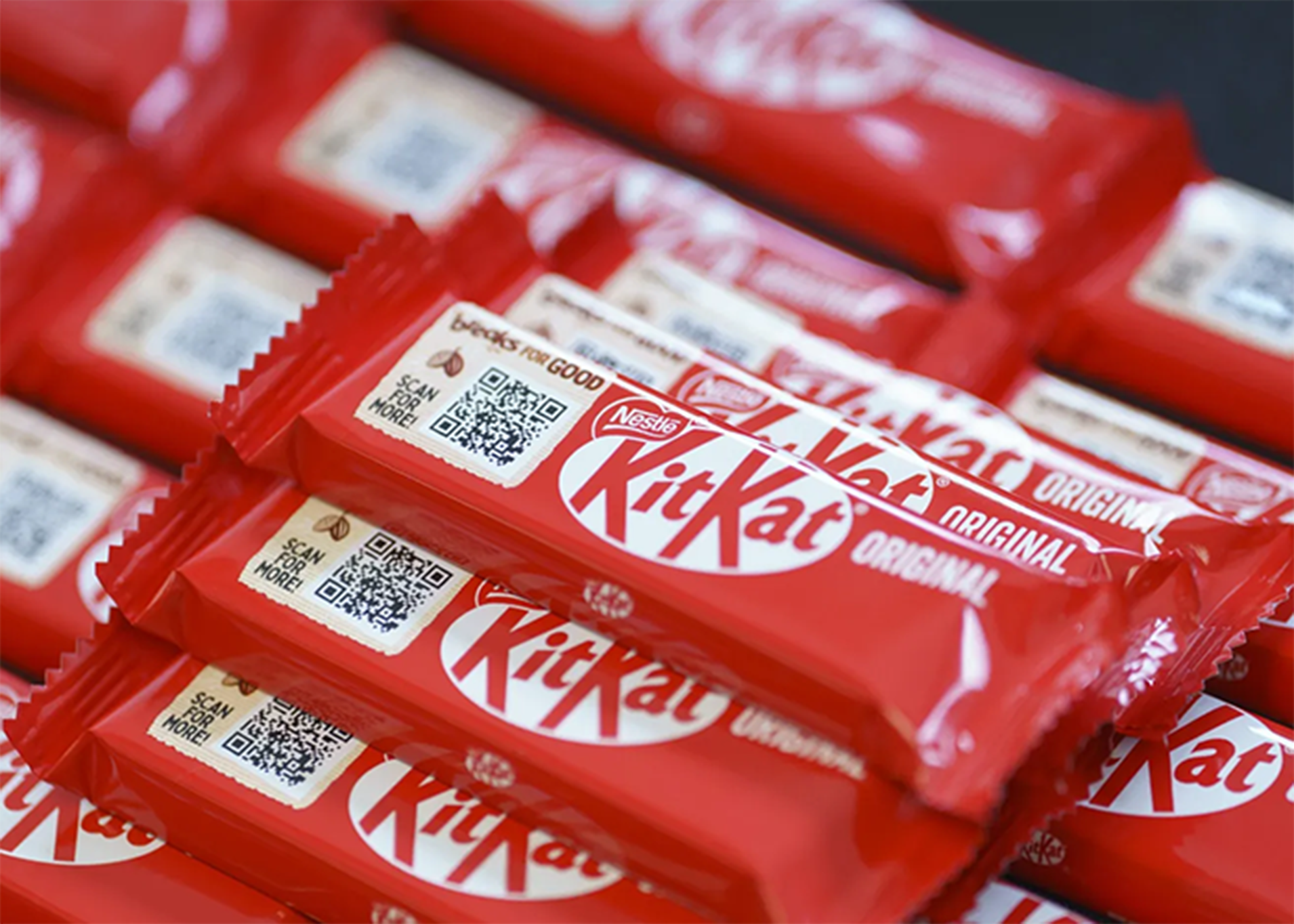
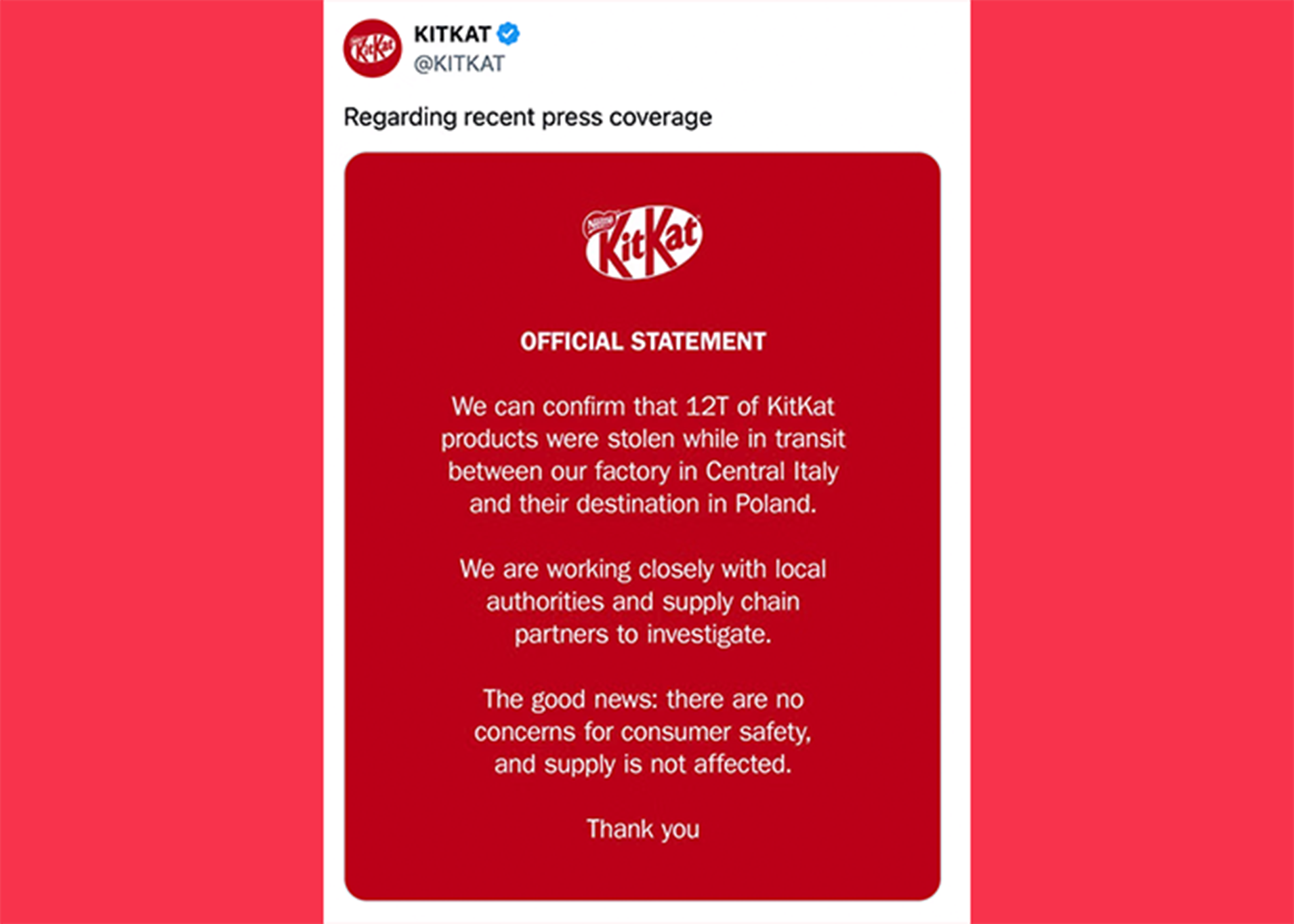
That is exactly what the recent global KitKat incident brought back into focus. In March 2026, a shipment weighing 12 tonnes — containing 413,793 units — was reportedly stolen while being transported from Italy to Poland.
What could have remained a passing logistics story quickly became a global talking point, not only because of the oddity of the theft itself, but because the brand chose a light, witty tone in responding to it.
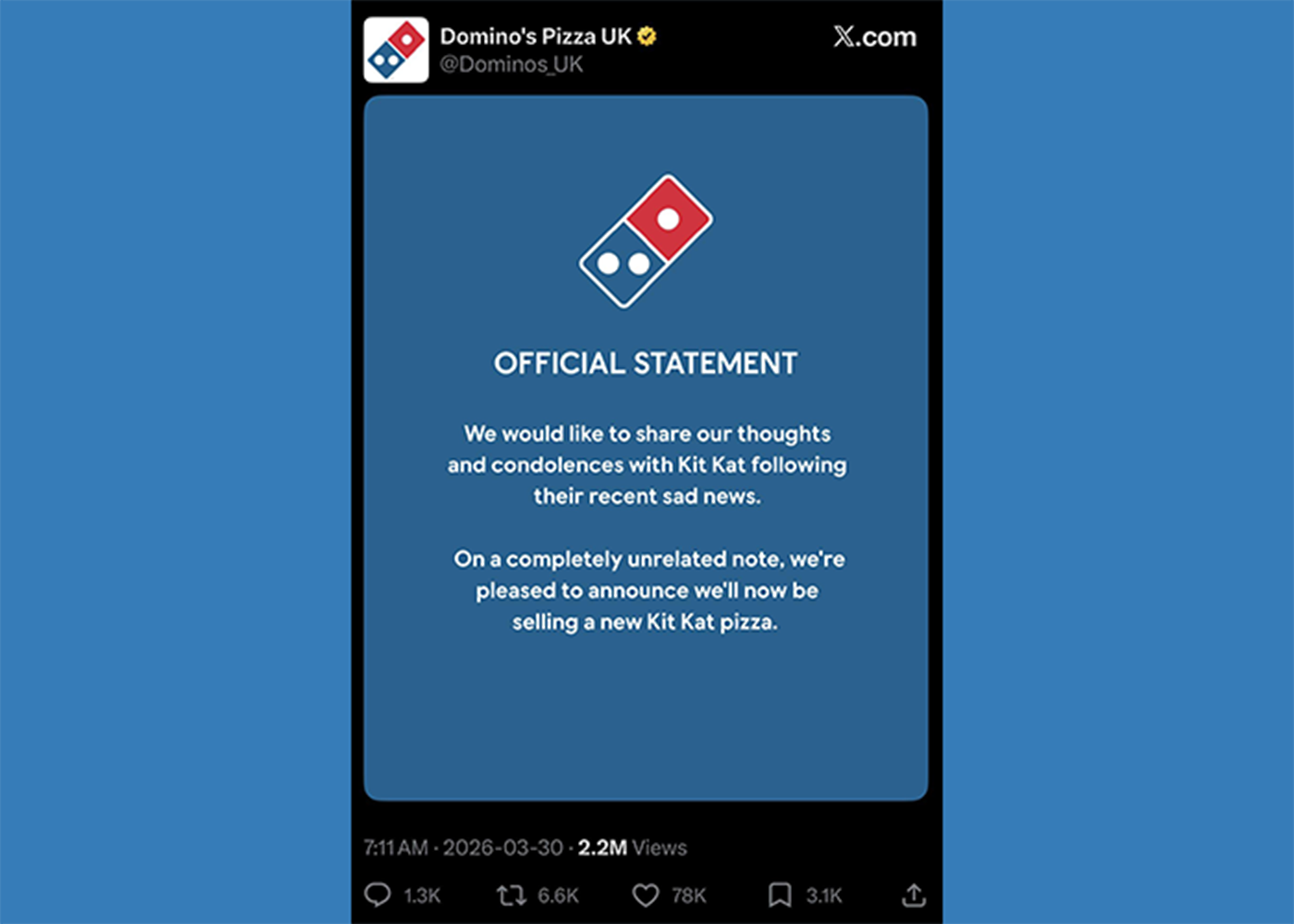
This, in turn, opened the door to a broader wave of humorous reactions from other brands.
From a crisis communications perspective, the most important point here is not the number of stolen units, but what the incident reveals about how the communications environment itself has evolved.
We no longer live in a time when crises are managed first and discussed later. In many cases — particularly when a crisis is relatively “light” and not tied to victims or direct moral harm — the moment itself becomes usable communications material. In public relations and marketing, this is often referred to as newsjacking: attaching a brand to a trending story or current event in order to capture attention and extend visibility.
The idea itself is not new. But in the age of platforms and social media, it has evolved from a tactical add-on into something much bigger: in some cases, a mindset.
The KitKat incident did not invent this behaviour, but it brought it back into view very clearly. Earlier global examples help explain the pattern well.
The most famous dates back to 3 February 2013, during Super Bowl XLVII, when a power outage in the stadium stopped play for around 34 minutes. In that moment, Oreo posted its now-famous line: “You can still dunk in the dark.”
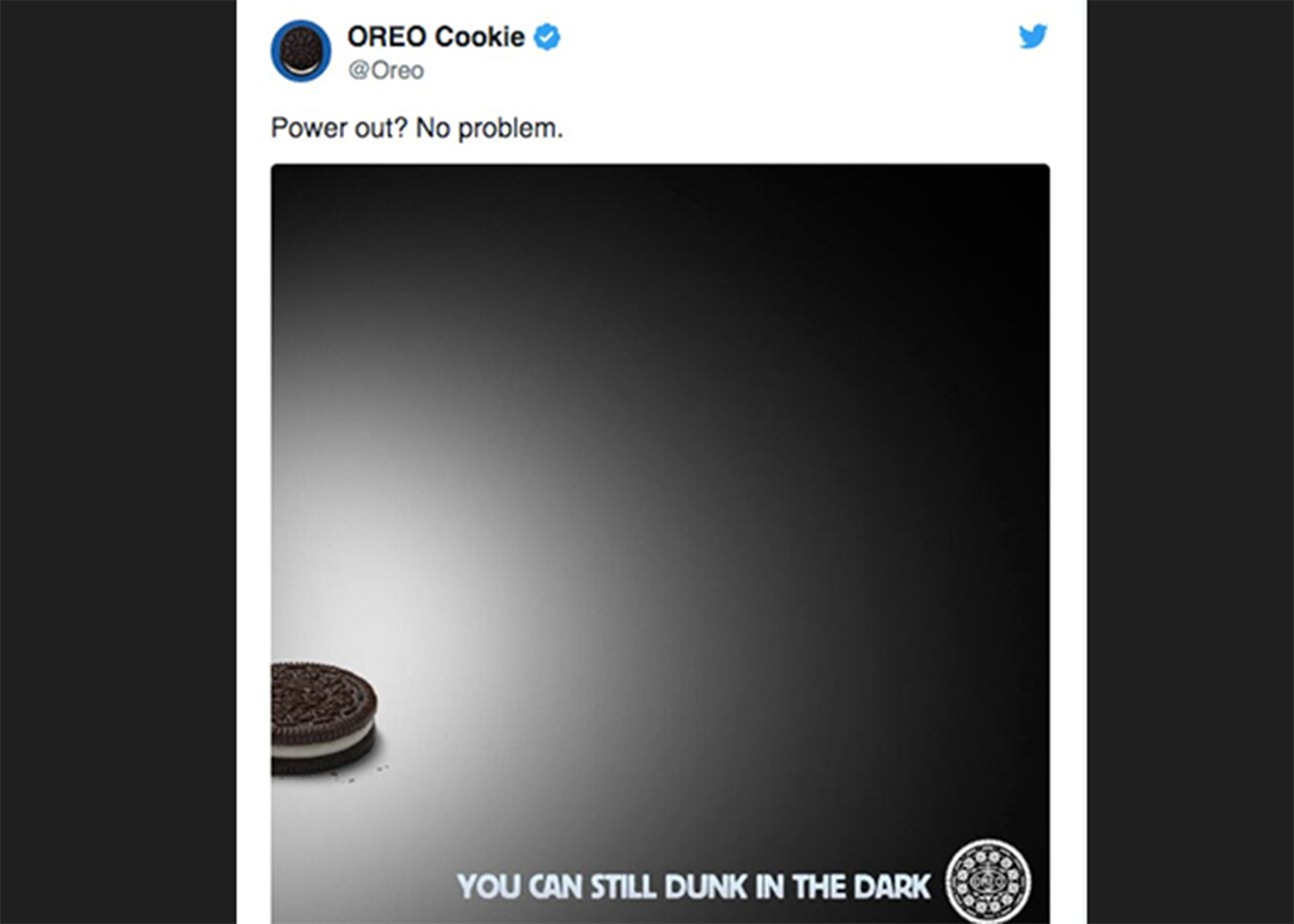
The brilliance of that response was not simply its speed. It was the fact that the message felt completely natural to the product itself. Within a short time, it generated more than 10,000 retweets and became one of the defining lessons of real-time marketing in the digital era.
A second example, closer to the logic of traditional crisis management, came in February 2018, when KFC in the UK faced a chicken shortage after changing distribution partners, forcing hundreds of branches to close. What made the case memorable was not just the disruption, but the response: the now-famous FCK ad.
The brand acknowledged the problem clearly, then used humour in a measured way.
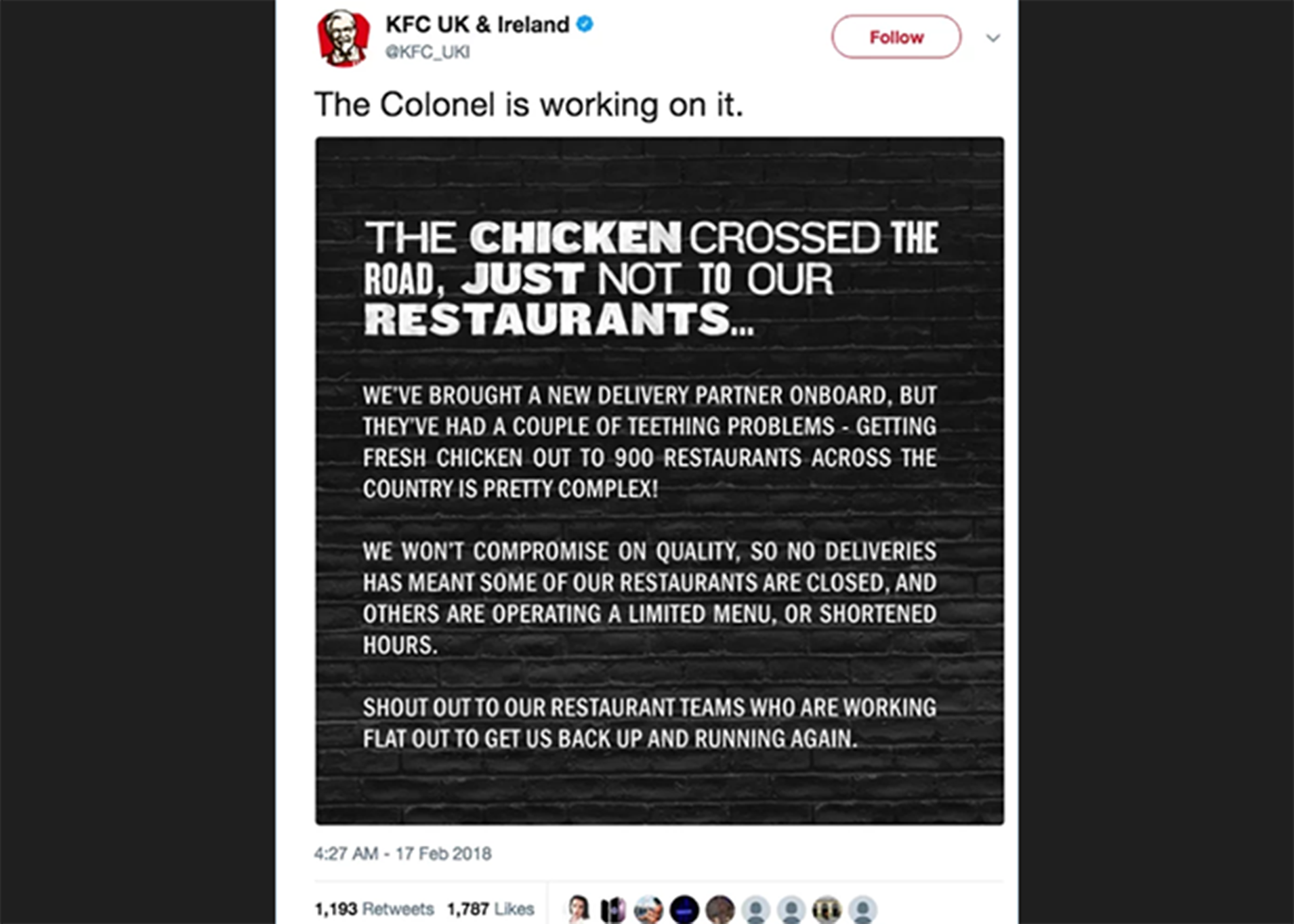
This was not a case of jumping on someone else’s news cycle. It was a brand reframing its own crisis in language that was less defensive and more self-assured. For that reason, many viewed it as a lesson in smart apology rather than an attempt to dodge responsibility.
Somewhere between Oreo in 2013 and KFC in 2018 is where the KitKat story sits today. The difference is that the KitKat incident clearly belongs to the first category: an external, light, highly shareable crisis with low ethical sensitivity.
That is why recent coverage described it as “crisis PR gold”, noting how the original brand’s tone effectively invited other brands into the conversation to capitalise on the momentum.
This is not necessarily evidence of extraordinary creative genius. It is evidence that some crises, when they arrive in the right context, can move almost instantly from threat to storytelling opportunity.
This is where the reading of Middle East marketers becomes especially important.

What stood out to me in the local response was not that the Saudi market was the loudest, but that it appeared more selective and more restrained than some Western markets. The general impression from the local reactions was that brands did not mostly lean into pure mockery. Many of them, quite simply, played it smart.
We saw a tendency towards three routes that were more closely tied to commercial logic: linking the moment to an existing product, turning it into a limited activation or experience, or capitalising on the spike in consumer curiosity and search interest around the product.
That difference matters.
In Western markets, the door was open to jokes, memes and playful absurdity. In Saudi Arabia, there was clearly an attempt to move quickly, but from within a more reputationally safe space.
This does not mean the Saudi market is slower or less bold. It means something more precise: reputation sensitivity remains a strong part of the decision-making mechanism.
Today, the Saudi market is far faster than it was in the past when it comes to capturing the moment. But it is still, in most cases, more cautious in how it enters that moment. In my view, that is not over-caution. It is a sign of maturity.
Because the real question is not: Can I jump on this trend?
It is: Do I have the right to do so without appearing opportunistic?
That brings me to what I believe is the most important point for any company, communications leader or crisis adviser: not every trending moment is investable, no matter how tempting it looks.
There are three tests that should come before any decision of this kind.
- Is the event ethically light enough?
- Is there a natural connection between the event and the product, service or brand personality?
- Is the brand adding something genuinely relevant, or simply repeating everyone else’s joke?
If even one of those elements is missing, what looks like “cleverness” can quickly become short-term opportunism — the kind that may drive engagement in the moment, but leaves a negative residue in long-term perception.
Modern thinking in marketing ethics is clear on this point: these decisions are not only legal, they are ethical too, especially when they intersect with public events or active crises.
That is why I believe the KitKat incident matters. Not because it is a quirky story about a stolen shipment, but because it has revived an old question in a contemporary form: When does crisis usage become communications intelligence, and when does it become exploitation?
My short answer is this: the difference is not defined by creativity alone. It is defined by context.
The tactic becomes smart when the event is light, the link is organic, the tone is disciplined and the timing is fast. It becomes exploitative when the desire for reach gets ahead of professional and ethical judgement.
Ultimately, what happened with KitKat tells us something important about the current phase of communications. Some crises are no longer simply managed; they are instantly read as potential positioning arenas.
The Saudi market, as this case suggests, does not reject that logic. But it translates it in its own way: less noisy, more product-connected, and more conscious of reputational cost.
That, to me, is the real lesson.
Success does not lie in being the first to react. It lies in knowing when to enter, how to enter, and whether you should have entered at all.
By Mohammed Al Hasan, Managing Director, ORA