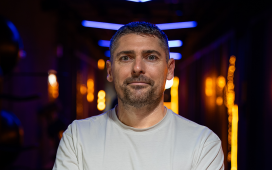
Michal Divon, Founder, Built. UAE
In nearly every strategy meeting I’ve sat through, the conversation eventually lands in the same place. How well are we performing? To answer that we turn to engagement rates, reach and cost per thousand ad impressions (CPMs) – tangible proof that what we’re doing is working.
When there is a breaking news story or international event, news outlets are the first to benefit. Engagement rates skyrocket, views and clicks are at an all-time high and the media enjoys momentary success. But these spikes are also where measurement most easily loses meaning.
In April 2024, a record-breaking storm hit the UAE, bringing the heaviest rainfall in approximately 75 years. This local story dominated global headlines for several days, and local news outlets were enjoying peak views as a result.
Tickets to Campaign Middle East’s Ramadan Breakfast Briefing & The Year Ahead event are selling out fast. Click here to claim your seat for Friday, 13 February to network with and listen to top clients and agency leaders.
We saw a different kind of surge earlier – when Emirates Airline announced a major hiring spree at a time when much of the aviation world was still recovering from the pandemic. The story travelled internationally and resonated locally, not because it was sensational, but because it signaled a new era of growth and confidence in the market. The metrics for both events were impressive, but what brand value would these stories have long-term?
The question today is no longer how much activity we generate, but what that activity reveals. While metrics promise objectivity and control, dashboards rarely capture context: why something resonated or how it shaped perception over time.
‘‘Agencies must resist overselling metrics that look impressive but explain little, and media must protect credibility.’’
Why leadership changes the measurement conversation
Leadership today is public by default. Chief executive officers (CEOs) and founders can no longer operate quietly behind the scenes; they are visible, often vocal and increasingly values-driven.
Every interview, statement and even silence contributes to a narrative. What resonates is rarely the loudest message, but the most thoughtful and authentic one.
While our measurement often prioritises exposure over perception, the real question is no longer how many people saw a message, but how much impact it had. How leaders are perceived, and how much they are trusted will define a company, society, an entire nation.
Everyone living in the UAE during Covid will remember the calming words of His Highness Sheikh Mohammed bin Zayed Al Nahyan: “Don’t worry” – (La Tsheloon Hamm). Simple words that made all the difference for residents and citizens alike.
The same is true in organisations where executives aren’t just bosses by title, but leaders during periods of uncertainty. “If you want to be successful, I would encourage you to grow a tolerance for failure,” Jensen Huang, CEO of NVIDIA, told his employees to remove fear from the workplace.
Elon Musk echoes a similar sentiment with SpaceX and Tesla teams: “If something is important enough, even if the odds are against you, you should still do it.”
None of these moments were designed to go viral, yet they shaped trust and behavior. Leadership counts. This reframes measurement entirely. It shifts the focus from performance tracking to reputation architecture; the long-term construction of credibility and influence. These ‘assets’ are slower to build, harder to quantify and unquestionably more impactful.
The UAE context: a region built on vision
In the UAE, this gap is especially visible. This is a market built on long-term vision, relationships and trust.
Leadership here shapes how the region is understood globally, yet success is still judged through short-term performance metrics imported from entirely different cultural contexts. Short-term measurement fails in long-term cultures.
What ‘measurement that matters’ looks like in practice
Measurement that matters isn’t about rejecting metrics, but rather using them to uncover nuance. It looks at who is paying attention, and whether engagement reflects consistent interest.
Too often we reward what is easiest to defend numerically rather than what we want to build over time. I’ve seen thoughtful leadership work sidelined because its impact wasn’t immediately quantifiable, all while louder, short-term initiatives were rewarded for being visible.
Over time, this teaches leaders and brands to optimise for numbers rather than principle, choosing quantity over quality, and quietly eroding the trust they are trying to build long term.
The industry’s responsibility in 2026
As we move into 2026, the most important question for leaders and brands is not only how well something performed, but how much it mattered.
Measurement is never neutral. It signals what we reward collectively and how we plan for the future. Agencies must resist overselling metrics that look impressive but explain little, and media must protect credibility in an attention economy that rewards noise over depth.
At its core, this is about ethical measurement, aligning what we measure with what we claim to value. In the UAE, where leadership, vision and legacy sit at the centre of how institutions are built and judged, this question matters deeply. What we choose to measure will ultimately shape what we build and how the region is understood, long after the metrics are forgotten.
By Michal Divon, Founder, Built. UAE