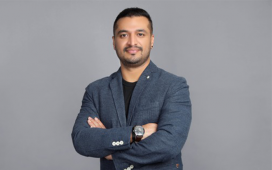
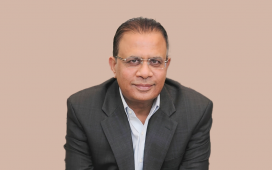
 Chad Latz, Global Chief Innovation Officer, Burson
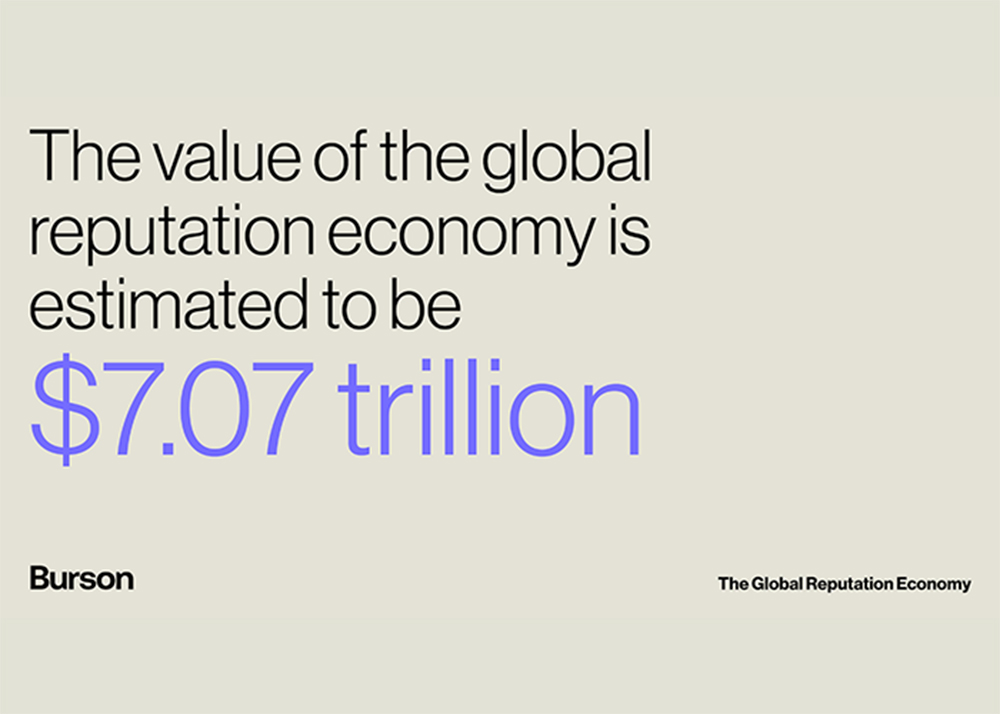
Burson recently released findings of its latest research titled ‘The Global Reputation Economy: A New Asset Class for a New Era‘, which quantifies the value of reputation, reveals a $7 trillion ‘reputation economy’, and highlights how companies with strong reputations can realise as much as 4.78 per cent in additional unexpected annual shareholder returns.
The analysis, which shifts the understanding of reputation from a soft concept to a hard asset, found that this “reputation return” could add between $2m and $202bn in unexpected shareholder returns, above what would be expected strictly from standard financial performance metrics.
Following the official launch of the Burson report, Campaign Middle East had a conversation with Chad Latz, Global Chief Innovation Officer at Burson, about how the perception of reputation is evolving in a world fraught with geopolitical volatility and rapid technological change.
Latz explains that reputation should no longer be viewed as a mere communications output. Instead, it’s a substantial, measurable asset with considerable financial ramifications, holding the potential to either augment shareholder returns or incur significant losses. As businesses navigate new challenges, it’s crucial to prioritise it as an integral part of organisational strategy, especially to ensure momentum and maintain market confidence.
In the Middle East, reputation has historically played a pivotal role in influencing markets and securing partnerships with governments and investors. Organisations need to cultivate a consistent alignment between their actions and communications to leverage reputation as a quantifiable asset. This proactive approach not only aids in crisis resilience but also contributes significantly to enterprise value, particularly in fast-growing and culturally nuanced markets.
Here’s how the conversation progressed:
What common misconceptions such as reputation as a “communications output” or “soft concept” need to be addressed on priority in 2026 — especially given the current volatile and high-risk environment — in order for us to start considering resilient reputation as mission critical?
Latz: The biggest misconception we have to retire in 2026 is that reputation is a communications output — something soft or downstream.
Our research shows reputation is a hard asset with measurable financial opportunity or consequences and not in an abstract way. In a world defined by geopolitical volatility, AI disruption, and regulatory pressure, reputation determines whether a company gets the benefit of the doubt or faces heightened scrutiny that slows momentum. It’s no longer something you manage after a crisis. It’s something you engineer into the operating system of the business.
In the Middle East in particular, reputation doesn’t just influence markets — it influences access. For organisations operating alongside governments, sovereign investors and national development agendas, reputation increasingly determines regulatory latitude, partnership confidence and long-term license to operate.
The companies that outperform are the ones that focus on building reputation every single day with clear consistency between what you do and what you say, which ultimately helps make it a quantifiable and predictable asset.
Has the time come to move from firefighting and crisis communications to being proactive about reputation?
Latz: This really should have always been the case. Leaders who have built strong reputations for their organizations broadly understood that managing reputation proactively is a far better posture only focusing on it mid-crisis. Proactive reputation management creates resilience in times of crisis and against a volatile macroenvironment. It shortens recovery time and protects enterprise value when shocks occur.
We’re moving from crisis management approach to a reputation framework that surfaces and quantifies both exposure and opportunity.
In fast-scaling markets like the Middle East, where narratives often form before systems fully mature, this shift is even more critical. Reputation risk emerges earlier, travels faster, and is harder to unwind once momentum is lost.
In the ROI-obsessed Middle East brand and marketing landscape, how can we make the case for “reputation return”, highlighting the unexpected shareholder returns and the financial value derived from reputation as a ‘hard asset’?
Latz: The case becomes clear when you show that reputation produces measurable financial returns above what traditional models predict. We’re not talking about sentiment. We’re talking about unexpected shareholder returns — performance that exists beyond standard financial drivers.
Reputation and brand scores are meaningless if not connected directly to business outcomes at the pace of media and markets, which we have achieved with our Reputation Capital platform. Your concept of brand value is incomplete at best if it comes from twice annual surveys that don’t take into account the fast-moving and dynamic nature of the media ecosystem in a way that can drive action.
When leaders see that reputation influences cost of capital, regulatory latitude, talent retention, pricing power, and recovery speed during downturns, it stops being a communications line item and becomes a capital allocation decision.
In fast-growing Middle Eastern markets, this type of reporting helps boards treat reputation as a performance metric, not an abstract brand concept — aligning communications with capital strategy. When looking at the vision and ambitions of many of the major markets across the Middle East region, growth strategy is built around investor confidence, large-scale partnership, and diversification of the economy into new sectors. When markets are scaling this quickly, even small shifts in reputation can influence billions in enterprise value.
How should we enhance reporting and measurement to quantify the impact of reputation on business results?
Measurement must move from isolated dashboards to enterprise and boardroom integration. Reputation reporting should sit alongside financial KPIs, not separate from them. When leaders can see how stakeholder perception, media narratives, and financial performance connect in real time, they know exactly which parts of their reputation are creating value — and which are destroying it.
After over-investing in the war for time and attention, has the time come for brands — and the agencies supporting them — to pivot to a greater focus on trust, truth and empathy? What ‘reputation dividends’ is this shift likely to reap in the Middle East?
The war for attention has reached saturation. Credibility is now the scarce resource. In a content-saturated environment, stakeholders reward a company’s credibility and consistency over volume of communications.
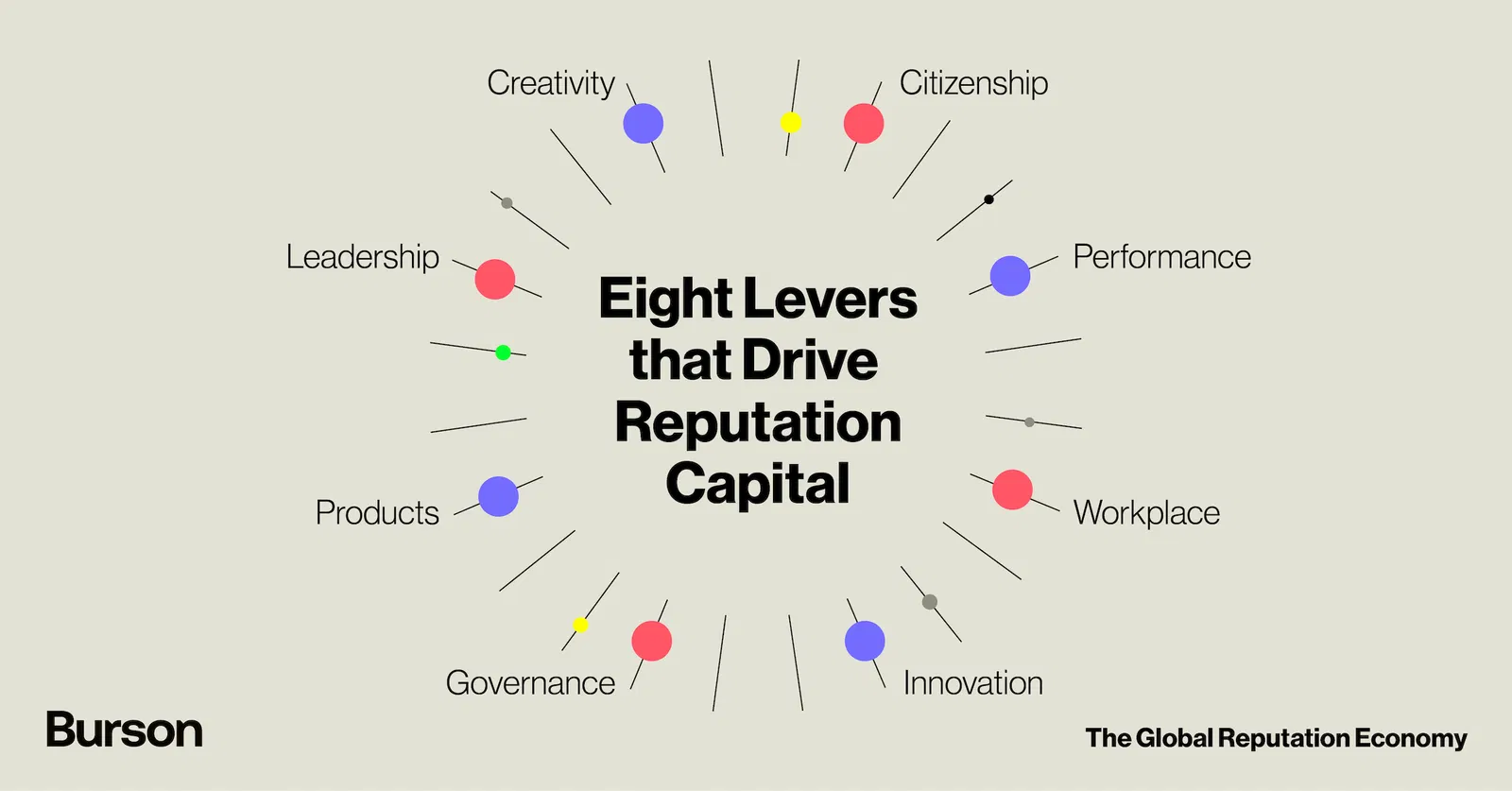
Understanding shareholder value connected to reputations levers such as Product, Governance, or Innovation allows leaders and communicators to make strategic decisions about what organisational initiatives will yield outsized reputation returns, as well as tactical decisions about how communications campaigns can elevate the most valuable reputational assets.
In the Middle East, long-term partnerships, continuity and follow-through matter deeply. Credibility is built over time, not campaigns. Consistent leadership behaviour and delivery against commitments carry more weight than episodic storytelling.
As the region strengthens its position in sectors like technology, AI, aviation, and energy transition, credibility across global markets has a cumulative effect. Corporate reputation in this context often extends beyond the organisation itself, reinforcing broader national positioning in the eyes of investors, partners, and global talent.
What’s your take on credibility being a key lever in the ’trust nothing and nobody’ era?
Latz: Credibility becomes a premium asset when skepticism rises. Credibility is no longer built through messaging alone — it’s built through governance, workplace behavior and leadership decisions.
Our research shows top performers don’t win on one lever. They outperform across the system. Credibility is systemic, not cosmetic.
And credibility is built by closing the gap between what an organisation says and what it does. Actions give organisations the license to communicate, not the other way around.
How will organisations increasingly leaning on AI merely to spur speed to market, cost-cutting and headcount reduction pay a ‘reputation tax’ downstream? How are upskilling, reskilling, co-creation, and employee ambassadorship going to contribute to the aforementioned ‘reputation dividends’?
Latz: Companies that treat AI purely as a cost-reduction tool risk paying a reputation tax that offsets efficiency gains. Workplace is now one of the most volatile reputation battlegrounds. Our research shows an 11.8 per cent performance gap between the top performing company and the worst performing company on the workplace lever relative to it. That gap represents exposure to talent and cultural erosion, productivity loss and stakeholder backlash.
An AI people strategy changes the equation. We believe that organisations that invest in upskilling, reskilling and co-creation will experience reputation dividends as we navigate the impact to labor in the intelligence age, as employees then become ambassadors of transformation rather than symbols of displacement. In the AI era, the defensible moat isn’t technology alone, it’s the workforce that knows how to wield it.
Middle Eastern economies are accelerating in AI, technology, and knowledge industries. Reputation in this space directly affects a region’s ability to attract and retain the skills needed for future growth. How companies treat their workforce becomes a visible signal to global talent markets. When considering AI as a growth sector in and of itself, as Gulf countries race to lead in AI, the reputation winners won’t just be the fastest innovators — they’ll be the most trusted stewards of technology.
What’s your parting message to leaders thinking about setting aside a bigger budget for reputation in 2026?
Latz: Reputation is no longer a defensive expense. It’s a growth asset. With a quantitative view on the value of reputation, leaders should adjust their investment in reputation management and precise communications strategies and campaigns to reflect the value, opportunity and risk to the business. Leaders allocating budget in 2026 should think of it the way they think about infrastructure or cybersecurity: underinvestment increases exposure, not savings. At nearly 5 per cent of market cap that exposure is significant.
The companies that win will treat it as something designed deliberately, measured rigorously and reinforced daily, and now we have advanced models, powered by AI, that allow leaders to turn these insights into material business and shareholder impact.
When we examine the research through a Middle East lens, the sector insights from our Reputation Economy report map directly onto the industries driving Middle East growth. The region’s expansion is anchored in energy transition, financial services modernisation, aviation and logistics, and AI-driven digital ecosystems — all sectors where it functions as a license to operate. Our data shows that innovation alone no longer guarantees reputational advantage; governance credibility, leadership, and workforce culture also carry equal financial weight.
That’s especially relevant in markets positioning themselves as global hubs for capital and talent. Energy companies rebuilding social license, financial centers competing on credibility, and AI ecosystems managing workforce transformation are all operating inside the same equation: reputation determines resilience, investor confidence and long-term competitiveness. In that sense, the Middle East isn’t just participating in the Reputation Economy — it is actively shaping how it becomes economic infrastructure.
All in all, Latz calls for leaders in the Middle East to treat reputation like a strategic asset akin to infrastructure or cybersecurity — essential for long-term success and resilience.
As the Middle East advances in sectors such as energy transition, AI, and logistics, reputation will continue to function as a critical determinant of investor trust and market competitiveness.
It’s not just about innovating rapidly, but about building credibility and trust as the region positions itself as a global hub.