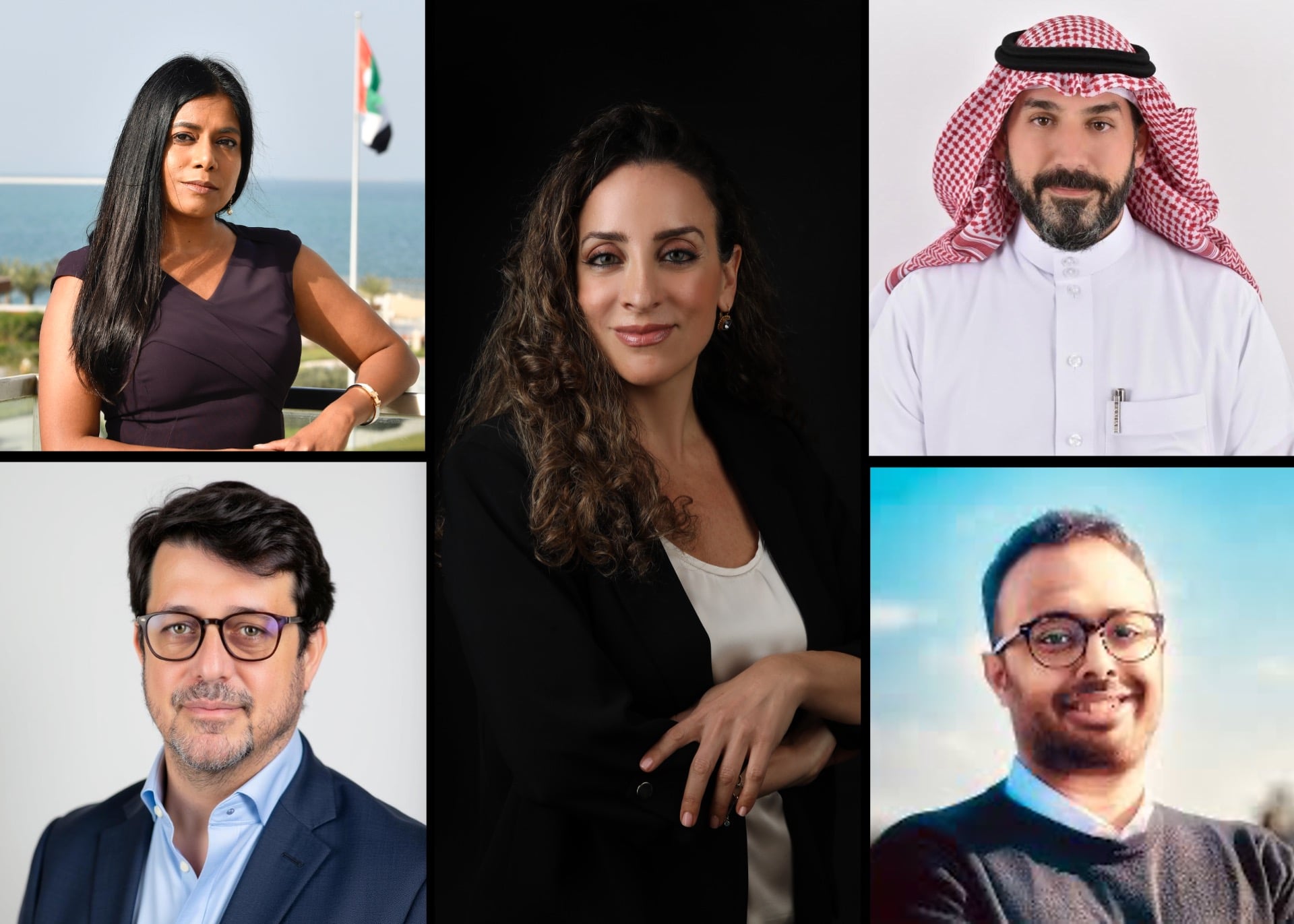
 From top left, clockwise, Alka Winter, Vice President, Destination Marketing & Communications, Ras Al Khaimah Tourism Development Authority (RAKTDA); Serene Haddad, VP- Head of Innovation & AI, Nestlé MENA; Sami Amin, Executive Director of Communications, Diriyah Company; Ishan Chatterjee, VP – Growth EMEA, mediasense; George Yaryura, SVP, Head of CIBG Marketing, Mashreq.
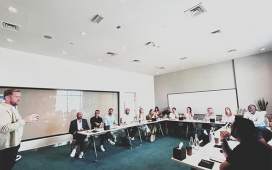
As an old year ends, we as humans tend to turn to thoughts of what the new year might bring. When The Marketing Society and independent marketing advisory mediasense, in partnership with Campaign Middle East, invited senior MENA marketers to discuss 2026, one thought dominated: focus.
Top marketers from the region participated in the discussion, including,
- Sami Amin, Executive Director of Communications, Diriyah Company,
- Alka Winter, Vice President, Destination Marketing & Communications, Ras Al Khaimah Tourism Development Authority (RAKTDA),
- George Yaryura, SVP, Head of CIBG Marketing, Mashreq,
- Serene Haddad, VP- Head of Innovation & AI, Nestlé MENA.
All the major drivers – the price of raw materials, the direction of technological advancement, the expectations of consumers – are pushing marketers in the same direction, they said. As a result, marketers need to build stronger, more authentic brands; build more meaningful brand relationships with customers, and do that in a world that is more fragmented than ever.
The only way to achieve all this, they agreed, is through relentless focus on what you’re doing, who your audience is, and what your results are. The discussion hosted by Ishan Chatterjee, VP – Growth EMEA, mediasense, revolved around three questions:
- What are the biggest opportunities for MENA business in 2026?
- What do you foresee as the biggest challenges in 2026 and how are you going to adapt?
- Where will you make your investments across channels, technology and partners?
What are the biggest opportunities for MENA business in 2026?
Brand-building, personalisation, integrated marketing, AI. At first glance, the list of opportunities that came out of the discussion resembles what might have emerged last year, or the year before. But look in more depth, and a different picture emerges.
Take brand-building, for example. Building stronger brands will always create opportunities, especially when most businesses are still focused on optimisation at the bottom of the funnel. There are two reasons in particular why this will be more relevant in 2026:

The first is the renewed importance of relevance – and the challenge of sustaining it, Serene Haddad, Head of Innovation and AI, Nestlé MENA, explained.
Over the past two years, many categories have taken significant price increases due to rising input costs and inflation, while brand investment was reduced or left unchanged. When pricing outpaces perceived value, the consumer value equation weakens, leading to weaker brand love, affinity and brand authenticity.
This is why impactful brand building is back at the centre of growth agendas. Consumers increasingly choose brands that reflect who they aspire to become. Relevance now demands continuous evolution in positioning, storytelling, and performance. The brands that will win in 2026 are those that create ideas that feel like culture, not campaigns – while reinforcing value in a more deliberate, value-conscious consumer landscape.
Consumers expect hyper-personalisation
The second driver is coming from the other end of the marketing chain; the customer. As marketers’ capabilities around personalisation increase, so do customers’ expectations.
“Customers are saying ‘You have all my data, you scan everything, you know the searches I carry out, so why do you still target me with big, generic messages’,” Haddad continued. “The consumer is expecting hyper-personalisation, and on every front.”
George Yaryura of Mashreq linked hyper-personalisation to the adoption of AI in marketing.

“The way I look at AI is how we integrate it throughout the whole marketing cycle,” he said. “We do a lot of work on integrating AI into our data analytics to get insights. But those insights only become valuable once they’re integrated into a full marketing cycle. What value can I bring? What products can I put forward? How do I make my messages even more personalised and relevant to my customer? That insight, with that level of personalisation, will be incredibly important.”
Sami Amin, Executive Director of Communications, Diriyah Company, agreed. He highlighted integrated marketing’s potential to tell brand stories across different channels, to different stakeholders.
“In 2026, we’ll be trying to tap into integrated communications and marketing opportunities that exist,” he said. “We’re trying to optimise our teams internally across marketing, so we can capture as much value from the integrated campaigns we’re looking to do.”
Balancing technology with heritage
For Amin, this also ties into the need to maintain your authenticity as a brand. This is particularly pertinent for the Diriyah Company. The organisation is charged with protecting the 15th-century birthplace of the first Saudi state (a UNESCO World Heritage Site) and turning it into a major cultural destination.
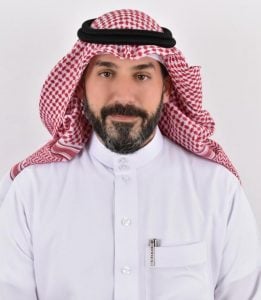
“Diriyah Company is the developer and operator for this massive development, which is being built with the future in mind. Smart city technology and tools to manage all the assets and the development as a whole are being integrated at the ground floor,” said Sami Amin, Executive Director of Communications, Diriyah Company.
He added, “But it’s a double-edged sword for us. We need to think about the development for the future, while maintaining that authenticity, that cultural element. How do we build for the future while not losing our heritage?”
Social connection IRL
And Nestlé’s Haddad brought the argument full circle, back to the customer. She talked about how the younger generation of consumers is going back to manual cameras. How they’re swapping nightlife for daytime coffee parties, because they allow for greater social connection.
“We went through a peak of accelerated excitement around tech and social media, but people still seek human connection. So one huge opportunity for 2026, across the board, is how do we go back to being personalised service industries? In our case, how do we communicate through our media and content creators in ways that fuel human connection?”
Alka Winter of the Ras Al Khaimah Tourism Development Authority agreed.
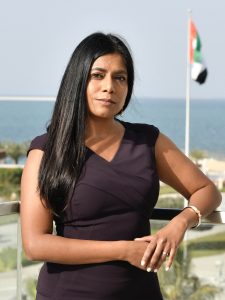
“The biggest opportunity for us is building our brand. That’s the holy grail,” she said. “How do we show up in an authentic way? And our big question – how do we evolve our brand? How does it stretch as our destination changes?”
And Winter pointed out the next level of targeting complexity that’s currently emerging; AI agents. She highlighted the changing way people are booking online travel.
“Everyone knows online travel agents like Booking.com and Expedia,” she said. “We use them to compare, to browse, and to coordinate our trips. But now we’re seeing that they’re being challenged. Travelers are shifting from browsing themselves. They’re delegating to an AI agent. So as marketing professionals, we’re trying to see whether our media strategy for 2026 and the following years is as relevant. Is it going in the right space for this new dynamic?”
What do you foresee as the biggest challenges in 2026 and how are you going to adapt?
For Mashreq’s Yaryura, the challenge for marketers next year will be nothing less than reinventing their world. In his view, the days of the marketing specialist are over. The future will belong to those who understand all elements of marketing, and how they work together.
“For the last 20 years, we were all going through specialisation,” he said. “You were a product marketing person, or a performance marketer, you were brand, you were PR and comms. Everything was fragmented.
“Now the challenge is to be all that, in one person. And you have to be all that with the technology around you, to generate the margins that you need. If you’re not doing that, you’re always going to have pressure on your costs and on your budgets.”
Marketers must evolve. Continuously
Haddad took this idea further. She argued that being a marketer now not only means being able to do more, it means constantly learning new skills on top.
“It’s not a one-time, ‘I’ve learned marketing,’ that’s it, she said. “You need to be open to constant evolution.”
This in turn, requires businesses to rethink recruiting the next generation of marketers. It’s essential that those people too are agile thinkers, always ready to learn. This, as Haddad explained, is a change that Nestlé is already making.
But what makes this change so urgent, in her view, is that AI will not level the playing field for marketers. Rather, it will widen the gap between those who use it well, and those who don’t.
“If you have brilliant marketers with critical thinking and analytical skills, AI will make them stronger,” she said. “Having a human in the loop becomes critical to pinpoint where things are right or wrong. And people can pivot across AI output in marketing, whether it’s concept generation, content creation, whatever.
“But if you have weak fundamentals in your marketing and you’re only using AI to accelerate it, you can make a lot of mistakes that you won’t detect. That way, you end up with AI slop. It could be output slop, content slop, and even innovation slop, but it places a massive burden on the organisation.”
So much content, so little time
Both Amin and Haddad followed up on this issue of AI slop, and the resulting oversaturation of content.
“I’m finding more and more today that I’m not across what’s happening in the market,” Amin said. “That’s not because I’m reading less, or scrolling less. It’s because there’s too much to read. That oversaturation of content worries me. At the same time as I’m pushing my team to be creative and to hit our target audiences with the right messaging and positioning, so is everyone else.
“So one of the biggest challenges we have is ensuring that what we’re doing is not only seen but felt by our audiences.”
For Haddad, this is not only the flip-side of consumers’ desire for hyper-personalisation. It’s also a reflection of the complexity of the MENA region.
“If you want to succeed in brand building, your content creators need to focus on personalising for your specific target audience,” she said. “At the same time, the dynamics in the Middle East region are changing. We cover 19 countries, and no two are the same. The UAE is a fundamentally differently country versus Saudi. It’s the same when you go to Qatar. So it’s not just hyper-personalisation, it’s also localisation. How do you bring in big brands, but in a localised, insightful way?”
For her, the starting point is always the same. What is the issue I want to tackle? What is my objective?
“If that’s clear, then the people you bring on board to help you, the campaigns you deliver, should be able to tackle that objective. If it’s unclear, people become reactive, they do a plethora of things. And when you do too much, you do nothing.”
Sadly, the final challenge discussed by the group was a familiar one. Winter raised the need to protect and future-proof the role of CMO in the face of lack of understanding among the C-suite. She quoted an Association of National Advertisers report that said only 50% of CEOs see marketing and branding as one of a business’ top three growth levers.
“As we rise in our professions, are we seen as a thought partner in driving the business?” she asked. “A big area for marketers is working with relevant stakeholders, including our CFOs and our CEOs. We need to find those four or five golden metrics that we can really stand behind. They need to show how we drive growth. And they need to be easy to explain and understand, especially as we present to the board.”
Where will you make your investments across channels, technology and partners in 2026?
Closing the session, host Ishan Chatterjee asked the participants about their big bets for 2026.
Haddad picked innovation, finding new ways to reach consumers.
“How do we do things differently, across the entire spectrum of what we do? How do we innovate to reach consumers differently? How do we innovate to stay leaders in our categories, winning the hearts of our consumers? That’s what gives you a competitive edge.”
Yaryura built on this idea, and on marketers’ view of themselves as the best people to understand the human psyche.
“We’ve felt that we’re very close to understanding customer behaviours and creating value around them. But this is now where we’re being challenged, because those behaviours are changing so fast.”
He referred back to an earlier point made by Alka Winter, that behaviours are being delegated to a bot or an agent. And he asked what that means for the connections brands can build with their customers.
“We have to make sure we have experience-led marketing. We have to create the right story for our customers, driving those connections deeper. That means using the insights and technology available, while maintaining our relevance and authenticity in a fragmenting world.”
Winter’s big bet will be on a media platform that she believes has just seen a ‘watershed moment’; YouTube.
“YouTube has recently surpassed Netflix, HBO and Disney combined. YouTube creators are scaling up, and it’s going to be a big focus and a big opportunity for us,” she said. “It’s also the second largest search engine. So that’s where I’m placing my bets.”
Finally, Sami Amin brought the discussion back to its start. Once again he emphasised the importance of integrated marketing.
“We can tell an enormous number of stories across a broad spectrum of interests to every single stakeholder that we have. So we’re doubling down both sides of the equation; the creativity and the analytics. And we’re ensuring that we’re measuring what we’re putting out, so that we can tweak what we do in the future.
“It needs to be a feedback loop at the end of the day. So our big bet is focusing the team’s efforts on that, making sure we’re working towards achieving something that’s sustainable going into 2026 and 2027.”