At GITEX Global 2025, e& unveiled a conceptual campaign that challenged convention and sparked critical conversations about people’s relationships with technology. Addictech, a collection of conceptual health devices, served as both a showcase and a mirror — highlighting the very real problem of screen addiction while asking a profound question: what if technology could evolve beyond screens altogether?
Every year, GITEX brings together the brightest minds and boldest innovations shaping the future. But among this year’s lineup of AI breakthroughs and autonomous machines, one showcase at the e& pavilion challenged visitors to stop and think — not about what’s next, but about what’s necessary.
Imagined devices. Real reflection. Unseeing the screen.
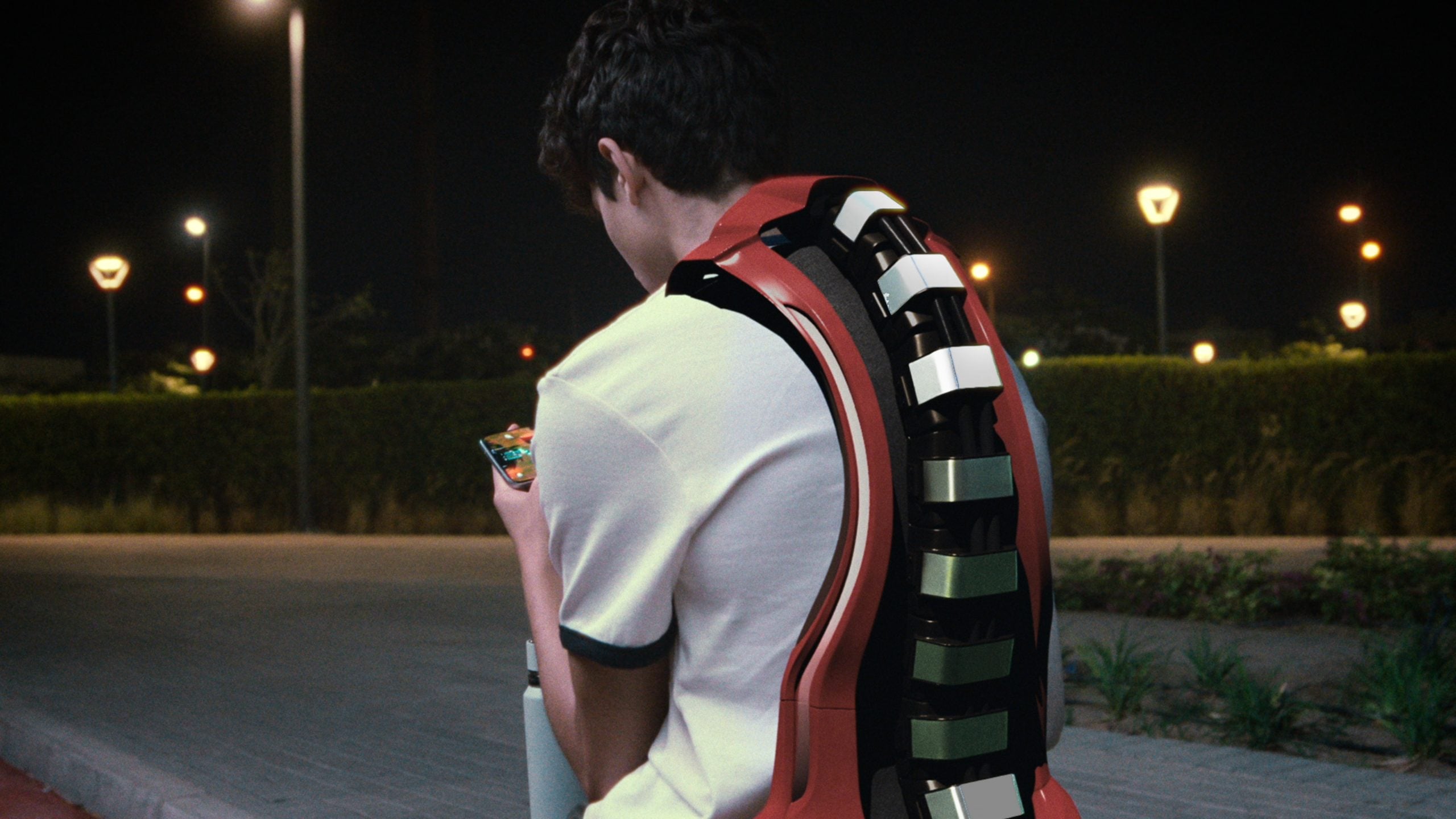
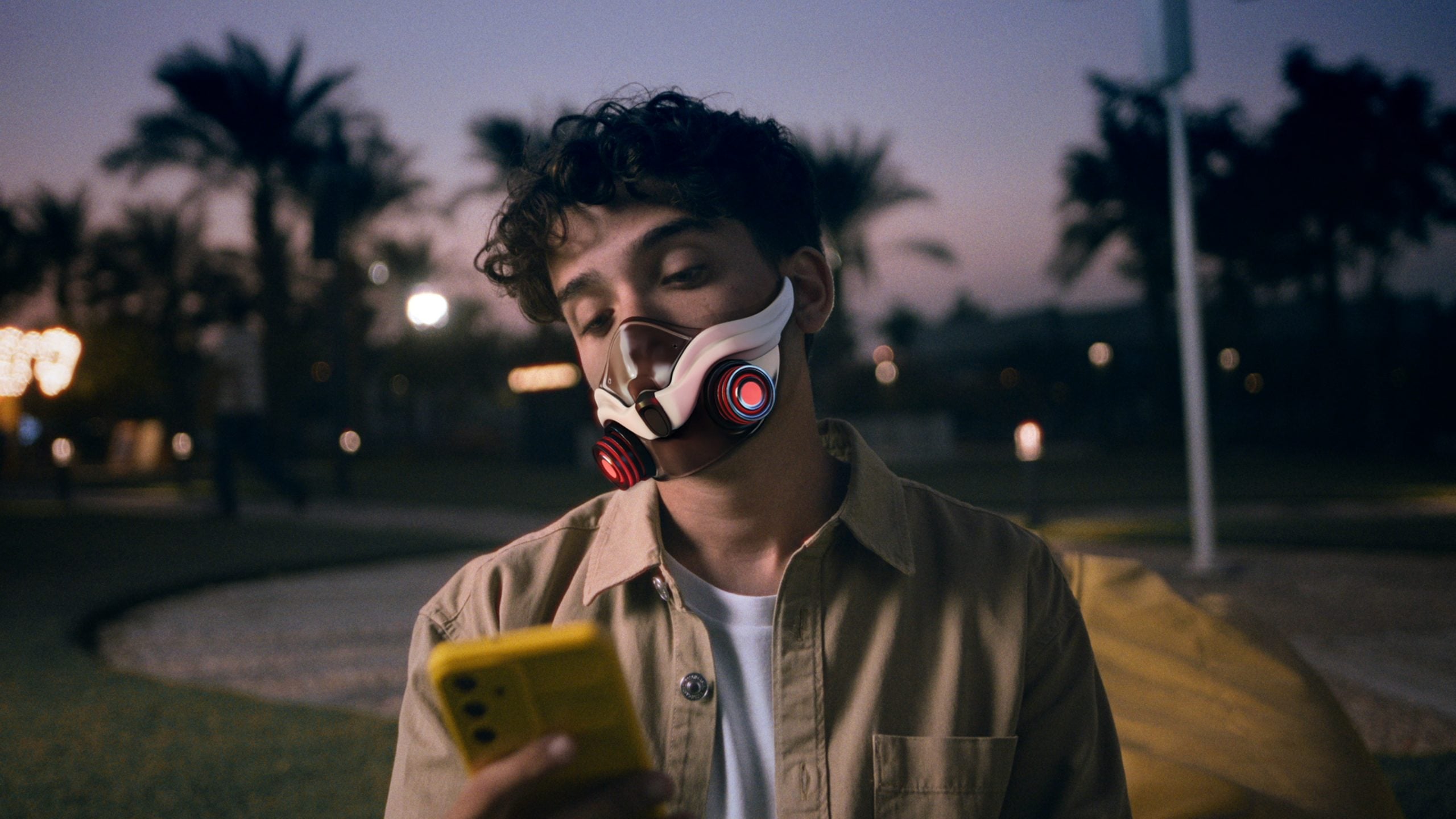
Addictech was conceived not as a product line, but as a mirror. Each device — sleek, packaged and branded — addresses the physical effects of overexposure to screens.
From SpineAlign (for posture damage) to NeuroGrip (for hand fatigue) and Dopamine Regulator (for lost concentration), every prototype felt tangible, believable — until visitors realised they don’t exist.
But the problem they warn about does. The idea was to take innovation and turn it inward. As such, Addictech was not about what’s next to buy. It was about what’s next to change.
View this post on Instagram
The films: When product launches become screen addiction warnings
To bring the concept to life, e& worked with Saatchi & Saatchi ME to release three cinematic short films online, each styled like a typical high-end product launch.
A calm voiceover. A sleek object rotating in a dark void. A promise to “enhance human performance.”
But halfway through, the message flips. The devices aren’t solutions; they’re symptoms. And the call to action isn’t “Buy now”. It’s “Think now”.
“We’re used to seeing innovation as salvation,” said Fady Youssef, Creative Director behind Addictech. “But what if real innovation meant inventing our way out of screen dependency, not deeper into it?”
Reactions at GITEX: Shock, admiration and reflection
At GITEX, thousands stopped at the Addictech booth, expecting another tech marvel. Instead, they were confronted with something disarmingly human.
“At first, I was convinced these were real medical devices,” said Rana, a university student from Abu Dhabi. “Then I realised it was a metaphor. It’s not tech saving us, it’s awareness.”
“It’s ironic,” said Leo Zhang, a GITEX exhibitor from Singapore. “We’re building smarter screens every year, but maybe the smartest move is to imagine life without them.”
Visitors were encouraged to touch, explore and question. And that was the point. Addictech wasn’t built to sell. It was built to provoke.
The bigger idea: Beyond screens
Addictech is a thought experiment in tech designed not to exist but to usher in change. It’s a call for technological evolution, one that liberates humanity from the screen altogether.
That could mean haptic environments, voice-driven ecosystems, augmented senses or ambient intelligence that blends technology into life so seamlessly that the screen — our current window to the world — simply disappears.
Addictech doesn’t reject technology. It challenges it to do better. To become human again.
A wake-up call disguised as a launch
What made Addictech stand out at GITEX wasn’t the devices themselves, but the discomfort they created. In an era obsessed with innovation, e& dared to ask: Is progress still progress if it costs our wellbeing?
“The goal was never to preach,” said Youssef. “It was to make people feel something. To start a conversation about balance, responsibility and the next era of innovation.”
As visitors left the Addictech zone at GITEX Global 2025, they carried no new gadget, but a powerful realisation: Technology’s greatest leap forward might not be in higher resolutions, but in a world where we no longer need screens to feel connected.
CREDITS:
Client: e&
Mohamad Hafiz
Mahmoud Farwiz
Ahmed Goweiny
Saadiya Qayyum
Agency: Saatchi & Saatchi ME
Management:
Ramzi Sleiman, Agency Lead
Samer ElKhansa, Business Lead
Larissa Farahat, Senior Executive
Dina Chalabi, Senior Executive
Naveen Mahurakariyan, Senior Manager – Creative Services
Abigael Francisco, Operations Executive
Strategy:
Mariam Samy, Senior Strategy Manager
Ghida Sater, Strategy Manager
Creative:
Ali Zein, Executive Creative Director
Akram Dohjoka, Senior Creative Director
Fady Rofael, Creative Director
Ahmad Aboshady, Senior Copywriter
Andre Grant, Art Director
Theodare Zreibi, Art Director
Yara Boraie, Arabic Copywriter
Production:
Production House: Rhino and The Ox picker
Mohamed Abdelrhim, Executive Producer
Amal Gharbo, Senior Producer
Mariam Nour, Producer
Salma Akrab, Head of Post Production
Director: Mohamed Kalaawi
Social Team:
Asmaa Daaboul
Kevin Sharouk
Gayelle