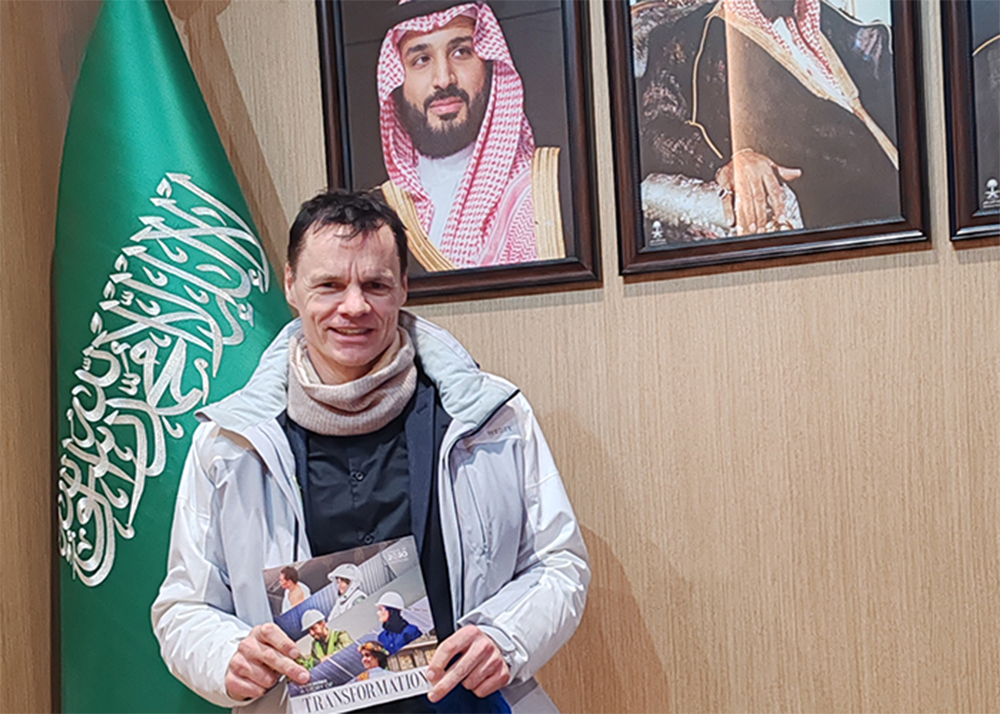
 Phil Smith, Media Solutions Director, The Vantage
As Davos 2026 unfolds under the banner “A Spirit of Dialogue”, the atmosphere is cautiously optimistic. The tone has been shaped as much by headline geopolitical moments, including President Donald Trump’s attendance and pointed remarks on strategic issues such as Greenland, as by longer-term debates on growth, technology, and trust.
Together, they underline the ‘sustained unpredictability’ facing global leaders and markets. Government heads and CEOs are balancing near-term volatility with longer-term shifts, from AI and technological change to cross-border capital flows and evolving workforce dynamics.
Amid these uncertainties, many of the most consequential discussions focus on trust: who is steady, who is credible, and who can be relied on as markets and partnerships are reimagined and reshaped.
For Middle East brands, this context underscores why they matter at Davos. In a world where capital, talent, and innovation are moving simultaneously, organisations that clearly demonstrate vision, expertise, and credibility gain visibility and shape how investment, collaboration, and economic narratives unfold.
Visibility where influence converges at Davos
Davos is one of the few places where public and private sector priorities intersect visibly. At the same time, much of the conversation happens off stage, in smaller meetings and side discussions where trust, credibility, and potential partnerships are assessed.
For entities such as Invest Qatar, Qatar Finance, First Abu Dhabi Bank, and tech innovators like G42, being present here signals seriousness. It shows the region engaging directly in conversations that matter to investors, decision-makers, and global markets.
In these rooms, brands compete not for attention, but for confidence.
Thought leadership that resonates
This year’s discussions on economic resilience, AI adoption, geopolitical fragmentation, and innovation ecosystems are focused and actionable.
Middle Eastern organisations with global ambitions can translate local strengths into an international narrative, showing how the region contributes to discussions that shape capital allocation, regulation, and innovation agendas.
G42’s work in AI offers a useful example. Initiatives such as Digital Embassies and GreenShield, introduced during the Forum, position AI sovereignty as a practical and portable concept. More importantly, they frame innovation alongside governance, economic growth, and responsible adoption at a moment when trust increasingly determines influence.
Public and private sector alignment at Davos
Across the Middle East, close public-private coordination continues to drive economic transformation. This year, that alignment has been particularly visible, signaling the region’s active role in shaping capital, regulatory, and innovation conversations.
Investment promotion bodies like Invest Qatar benefit from the credibility private sector partners provide. Financial institutions such as First Abu Dhabi Bank do more than represent capital, they signal market depth, regulatory confidence, and long-term stability.
Together, they tell a coherent story, one that few regions can deliver as consistently.
Narrative, capital and competitiveness
At Davos, narrative is a proxy for confidence. Against a backdrop of geopolitical tension and uneven economic signals, the Forum’s emphasis on dialogue resonates not only with policymakers, but also with marketers whose brands speak directly to investors, business leaders, and the high-net-worth audiences that populate Davos each year. Investors and partners are listening not only for returns, but for clarity and alignment.
Cities, nations, and organisations increasingly compete on their ability to articulate credible economic futures and demonstrate reliable partnerships.
Marketing and communications presence at Davos may be modest in spend relative to traditional campaigns, but its impact on perception, partnerships, and capital allocation is disproportionate. In a region increasingly competing for global influence, this kind of presence is strategic, not optional.
Why presence still matters
Despite constant digital connectivity, proximity accelerates trust. Conversations move faster. Signals are clearer. Assumptions are tested in real time.
For Middle East brands, principally across finance, technology, investment, and innovation, Davos is about being present where power, capital, and narrative converge. Being here is not a luxury or a publicity exercise. It is a long-term investment in alignment and influence, essential to shaping markets and partnerships over the next decade.
The consistent engagement of multinational players such as LinkedIn, PwC, Nasdaq, Rolex and Standard Chartered Bank underscores Davos’ value as a stage where credibility, influence, and strategic opportunity intersect.
Middle Eastern entities that join these conversations demonstrate they are serious players on the global stage, actively shaping economic narratives, partnerships, and investment flows, rather than observing from the sidelines.
By Phil Smith, Media Solutions Director, The Vantage