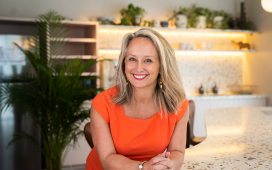
 Nathalie M. El Hajj, Co-founder of Maison Pyramide.
Resilience has long been the word most often used to describe this region. It’s an easy one, broad enough to cover its complexity, yet vague enough to avoid really unpacking it. But it has never quite sat right with me.
Maybe that comes from my background. Growing up Lebanese, resilience was never something we spoke about. It wasn’t labelled, and it certainly wasn’t celebrated. It was just there. A way of getting through things, of adjusting quickly, of continuing without overthinking it. You didn’t stop to define it, you just lived it … and continue to do so.
Over time, you realise it’s less about strength in the way it’s often described, and more about rhythm. How you carry yourself through uncertainty. How you respond without making it the headline.
What became clear to me is that this way of thinking shapes how you lead. Not in moments of growth, but in the more uncertain phases – when direction isn’t always obvious and decisions carry more weight. It’s not about having the right answers, but how you respond. Staying grounded, listening, and adapting without losing direction.
Building Maison Pyramide from the Middle East over the past decade has meant growing through very different cycles: economic shifts, moments of uncertainty, and periods where the path forward wasn’t always clear. Early on we realised that challenge and opportunity rarely exist separately. They tend to arrive together. And how you choose to navigate those moments often shapes what comes next.
It also changes how you think about growth. Not as a straight line, but as a process shaped by flexibility and perspective As we expanded across markets, from the region into Europe, we saw first-hand how what works in one context doesn’t always translate seamlessly into another. Diversification across geographies and across offerings became an important part of how we build.
For others, it may take a different form, but the principle remains the same: not relying too heavily on a single path, and allowing room to shift and respond.
At the same time, what grounds you matters just as much as how you expand. Stability doesn’t come from scale alone, but from building something people trust. A community that feels connected to what you stand for, not just what you deliver. That connection isn’t built overnight. It comes from showing up consistently, communicating clearly, and staying close to your values even as you evolve. It’s an approach we apply not only to how we build our own business, but also in how we support the brands and organizations we work with.
Today, the region feels different. Not only because of its evolution, but because it has become more certain of itself. The Middle East has found its voice – and with that, a clearer sense of direction.
That voice, however, is shaped by its audiences. As they become more aware, more selective, and more engaged, they actively influence the conversations around them. They don’t just consume; they question, respond, and participate. Which means communication can no longer rely on visibility alone. It has to carry meaning.
For brands and leaders, this shift is significant. It calls for a more deliberate approach, one that is rooted in clarity rather than volume. Saying more is no longer the answer. Saying the right thing, in the right way, and at the right time is.
It also reinforces the importance of consistency. In a market where audiences are paying closer attention, inconsistency is quickly noticed. Trust is built over time, through repetition, through alignment, and through a clear sense of identity that doesn’t shift with every trend.
And perhaps most importantly, it brings the focus back to community. Not as a metric, but as a foundation. People want to feel part of something that reflects them, understands them, and speaks to them in a way that feels real. That kind of connection cannot be manufactured; it has to be earned, patiently and intentionally.
A region with a voice brings clarity to where it is going. For those building within the Middle East, the opportunity is not just to keep up with that movement, but to contribute to it with purpose. Because in the end, direction is not something you wait for.
It’s something you help shape, through how you lead, how you communicate, and how clearly you choose to show up. And perhaps that is what resilience looks like when it is no longer something you describe, but a mindset you carry with you.
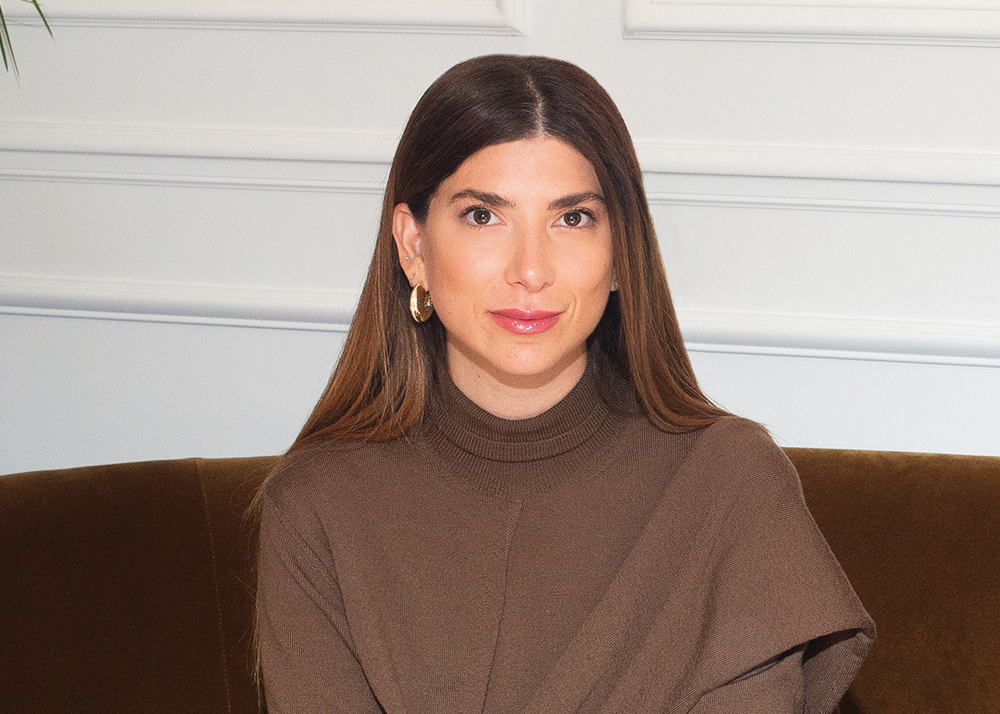
By Nathalie Mroue, Co-founder of Maison Pyramide.