For the better part of the last decade, digital transformation has been the language of progress. Then Covid made it urgent. Companies had to move fast. Customer journeys shifted online. Operations were reworked and business models had to adapt under pressure. In that moment, transforming digitally was not simply an ambition; it was how businesses kept going.
That period changed things permanently. But it also left behind an assumption that now deserves to be challenged: transformation is mainly a technology agenda. It is not.
The next phase of change in Saudi Arabia will not be defined by digital transformation alone; it will be defined by resilient transformation.
That may sound like a minor distinction, but it is not. It changes the conversation entirely. The pressures businesses face today are different from the ones they faced in 2020.
Back then, the question was how to digitise quickly enough to maintain continuity. Today, the harder question is how to stay effective, relevant and trusted when volatility has become part of the operating environment.
That volatility is not abstract. Saudi businesses are working in a market shaped by geopolitical tension, supply chain disruption, economic pressure and customer expectations that keep shifting. In this kind of environment, efficiency alone is no longer enough. Speed on its own is not enough either. Even innovation, if it sits in isolation, is insufficient.
What matters now is whether an organisation can absorb shocks, adapt quickly and deliver a great customer experience (CX) when conditions around it change without warning. That is what resilience means in practical terms.
This is not caution, not corporate language disguised as strategy and not just another way of talking about risk management. Real resilience is operational. It is the ability to make sound decisions under pressure, respond in real time and protect customer trust when trust is most exposed.
This matters in Saudi Arabia because the Kingdom is entering a different stage of transformation. The conversation is no longer only about building digital foundations. Through Vision 2030, public-sector modernisation, major investment and growing momentum around AI and data, Saudi Arabia has built serious forward momentum. But momentum is not the same as resilience.
A modern platform does not automatically make a company adaptive. A large technology budget does not guarantee responsiveness. A handful of artificial intelligence (AI) pilots does not mean an organisation is ready for uncertainty. That is the gap many businesses are now beginning to confront. For years, transformation agendas have focused on platforms, channels and automation. Those investments were necessary. In many cases, they were overdue. But they were only the first step. The next phase is more demanding. It is about building operating models that can sense change early, make better decisions faster and respond while the situation is still unfolding. It is about connecting data, customer insight, frontline execution and leadership judgement so they work together, not in parallel.
That is where AI starts to matter in a deeper way. There is still a tendency to talk about AI mainly in terms of productivity: automating tasks, reducing manual effort, speeding up workflows and improving reporting. All of that matters. But it is only part of the story.
The real value of AI, especially in markets such as Saudi Arabia, is anticipation. Used properly, AI can help businesses spot changes in customer behaviour earlier, identify shifts in demand sooner, improve service consistency and make better decisions across the value chain. In sectors such as automotive, mobility, retail, financial services and customer operations, this advantage is beginning to show – not in the novelty of the technology itself, but in the ability to stay steady when pressure rises.
Sometimes, that means detecting service issues before they become complaints. Sometimes, it means adjusting inventory before disruption turns into a customer problem. Sometimes, it means giving frontline teams better context in the moment, rather than insight after the fact. The strongest AI use cases in the years ahead may not be the most visible. They will be the ones that make a business more responsive, more consistent and more dependable. That is the real shift.
Real transformation begins when AI, data, customer experience and operations stop living in separate conversations. It happens when leadership moves beyond experimentation and starts embedding capability into the business itself.
That matters even more in Saudi Arabia because this market does not reward generic transformation. Saudi consumers are digitally confident, highly aware and increasingly selective. They want convenience, but they also want relevance. They expect businesses to understand language, culture, timing and context. They do not want experiences imported from elsewhere and lightly adapted for the local market.
Brands that will stand out in Saudi Arabia will not necessarily be the ones making the most noise about innovation; they will be the ones that know how to combine intelligence with empathy, scale with localisation, and speed with trust.
Saudi Arabia has a real opportunity here. It has ambition, investment, institutional backing and a clear sense of direction. But the next stage of leadership will not come from deploying more technology for its own sake. It will come from using technology to build organisations that are sharper, more adaptive and more grounded in what customers actually need when conditions become less predictable.
The businesses that lead the next decade in Saudi Arabia will not simply be the most digital. They will be the ones that adapt fastest without losing coherence. The ones that use AI not just to automate work, but to improve judgment. Not just to cut cost, but to stay relevant. Not just to move faster, but to hold on to trust when it matters most.
In Saudi Arabia, resilient transformation is not the next trend; it is the next standard.
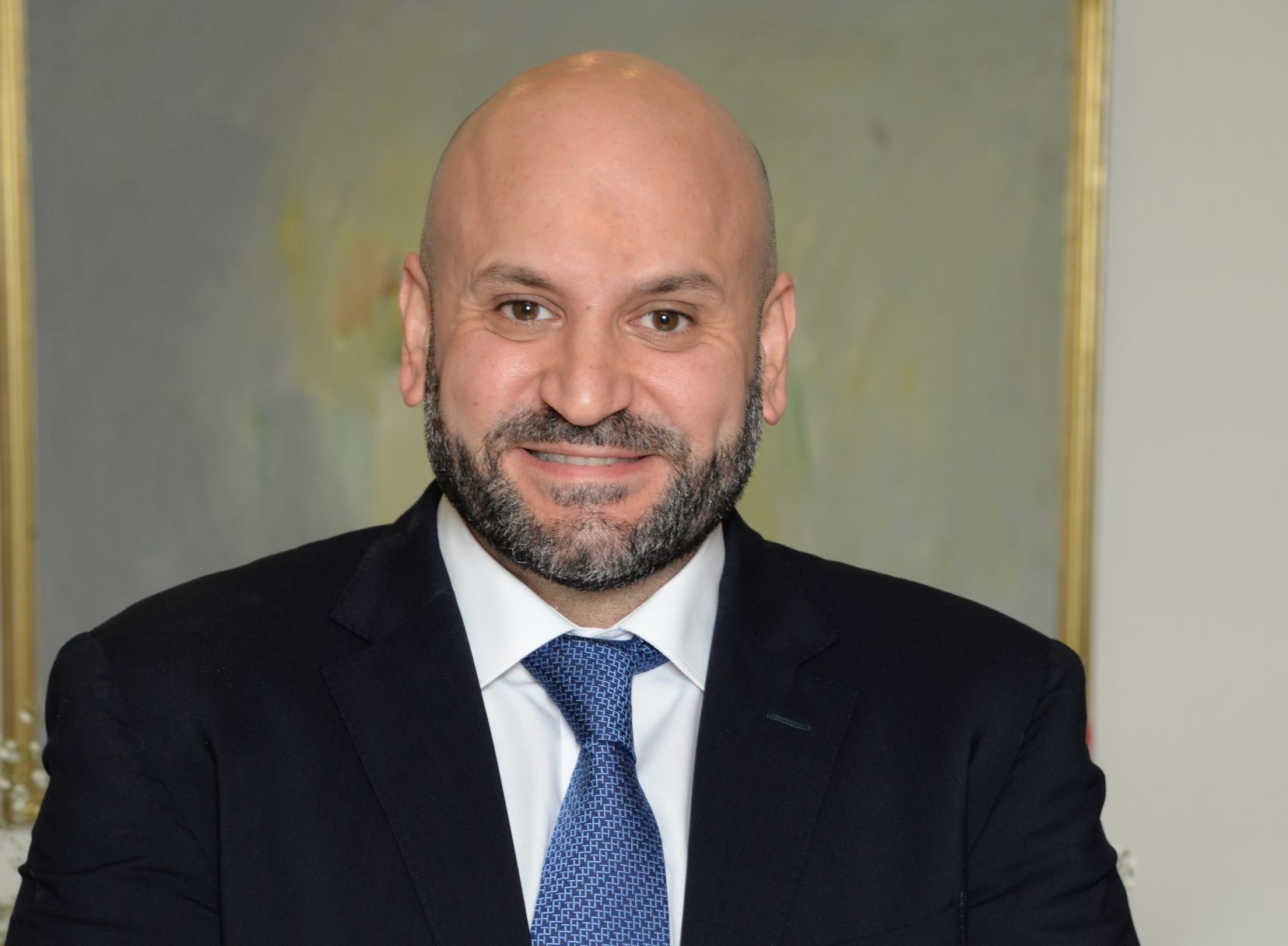
By Hussein M. Dajani, Group Chief Marketing and Customer Centricity Officer, Petromin