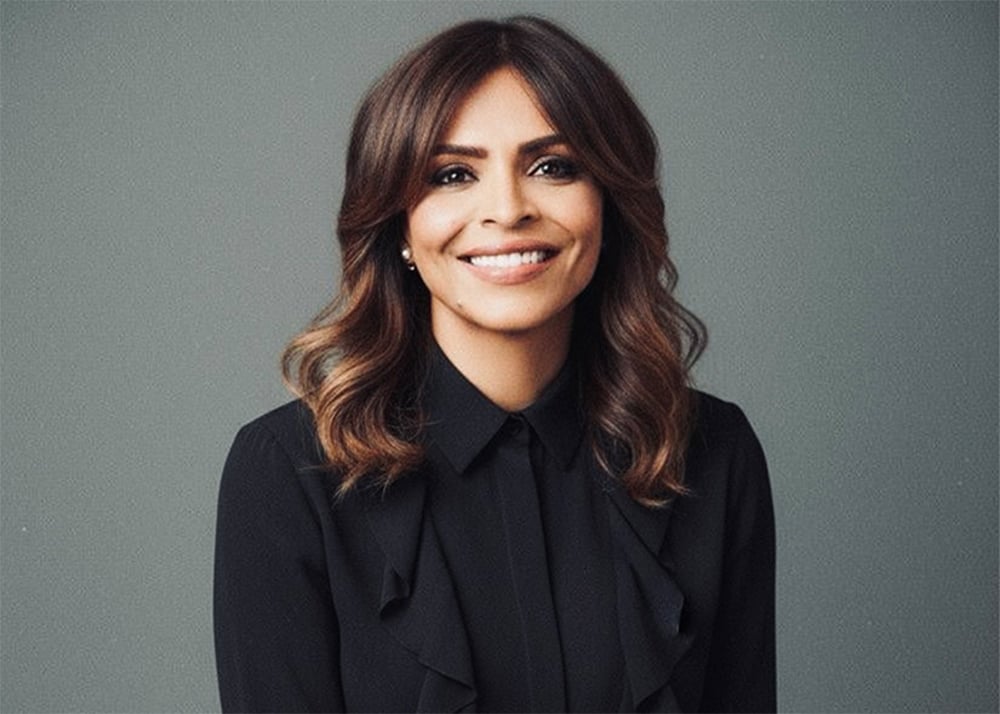
 Manisha Bhatia, Head of Strategy and Planning (KSA), Impact BBDO
When I walked onto the stage at the Athar Festival of Creativity 2025, I carried no script to impress, only a humble intent. A lot like this write up. And my session followed – albeit on the different stage – one of the most intelligently provocative keynotes ever heard by the renowned Mo Gawdat. No pressure.
I was stepping on stage as a shameless optimist for a collective exchange; to remind us that, for all our data and algorithms, our real power as an industry in a doomscroll economy lies in something quieter. Something deeply human.
The keynote was titled “Empathy: The Only Algorithm That Truly Scales.” I wrote it with one belief; that if it made even one person think outside the norm, it had done its job.
What I didn’t expect was how that belief would keep echoing.
Because after the festival wrapped, the word empathy lingered. It stayed. In the way people spoke, questioned, and connected. In a way that disrupted the obsession around AI.
The keynote was never meant to be a manifesto – even though I love writing them.
It was a mirror, a question to us: in our race for relevance, have we stopped feeling what people feel?
I wanted to remind us that data should help us ask why, not just what. And not just on the surface. Digging deeper. Immersing. Understanding. Feeling. I also wanted to break the tiring conversation of who Saudi youth are, what they’re saying, how can we influence them.
Instead, maybe, just maybe they are the ones meant to change the rest of us? And what we need to do is listen, curiously, compassionately, not as segments, or psychographics but a true sense of wonder. Because when we understand people deeply, creativity scales. Hacking an algorithm is great. But imagine breaking it because we honoured the human behind it.
Empathy scaled. In real time.
I prepared for this keynote with proof points through data, insights, and observations. A strategist’s power play. What unfolded across the festival felt like the keynote breathing through other voices. This was stronger and more powerful than any preparation. It’s when I realised that it wasn’t the presentation. It was the receiving energy of a topic that needs to be discussed and escalated.
You could sense the shift from aspiration to authenticity.
People less concerned with being brilliant, more intent on being real.
There was humility in the air, the kind that doesn’t need permission to speak.
And that’s when I realised something: empathy doesn’t just scale through speeches or slides.
It scales through people.
Jo Malone CBE spoke about endurance, intuition, and authenticity. About building legacies that listen. Mo Gawdat flipped the room by speaking our biggest fear`; the jobs disappearing first? Cognitive and creative ones, ours.
These were two of the most inspiring talks, and ironically contradictory and complementary at the same time. Because both came from a place of making people feel. Really feel. And so, in my opinion, as creatives and communication experts, we will not lose our jobs to AI. We will lose our jobs to the lack of creativity as a result of feeling less.
But Athar felt.
And I’ll be honest. Last year, Athar felt safe.
This year, it became a safe space.
Even in the quietest corners of the festival, it became a safe space between creatives and clients, in the openness of panels, in the shared laughter between strangers who suddenly didn’t feel like strangers anymore.
Empathy had scaled. In presence.
Which indicates the grandiosity this topic carries, not as a trend, a mood, or a movement.
As our innate responsibility to understand, to connect, to show up.
It’s what we owe each other, and the work we put into the world.
The way we brief, the way we lead, the way we measure.
And yes, it’s hard right now.
It’s hard to understand and be understood.
It’s hard for those trying to survive jobs, and for those without one.
It’s hard watching our industry shake and brands close.
It’s hard witnessing a people being judged, destroyed. Harder for those living it.
Heck, it’s hard to be real!
But empathy isn’t hard.
And it shouldn’t be. It’s within us. Naturally. No?
When Ali Rez was asked, “In one word, what would define success for the future of advertising?” he said, “Humanity.”
That word anchored. Because empathy is humanity in action, turning data into meaning and creativity into connection. Because, humans, at their core, carry meaning and crave connections. Think sports, think music. Now, think of the best work that came out of our space.
Let’s stop letting the algorithm decide what’s worthy of attention.
Let’s decide what’s worth feeling.
Because, it may just be the last unfair advantage we have as communicators, as creators, as humans. Sounds vague. But it is so simple. Once we start feeling, again.
Thank you, Athar Festival of Creativity for enabling this conversation.
By Manisha Bhatia, Head of Strategy and Planning (KSA), Impact BBDO