There is a moment, usually just days after a crisis subsides, when something almost inexplicable happens in Lebanon. The streets are still dusty. The headlines are still grim. And yet, somewhere, a brief is being written, a campaign is being conceived, a brand is quietly asking: “how do we speak to people right now?”
I have watched this happen too many times to dismiss it as coincidence. It is a pattern (arguably the most defining pattern of our industry) and understanding it says something profound not just about advertising, but about the Lebanese themselves.
Lebanon has not had the luxury of uninterrupted economic growth, political stability, or predictable media cycles. Since the civil war, we have navigated assassinations, financial collapse, a port explosion that shattered an entire capital, and cycles of conflict that would have permanently shuttered industries elsewhere. And yet, the advertising and marketing sector here has consistently done something counterintuitive: it has not just survived these crises. It has, in almost every case, emerged from them more creative, more agile, and more emotionally intelligent.
This is not resilience in the passive sense (the stoic endurance of hardship). This is something more active, and more psychologically interesting.
As someone who works at the intersection of brand strategy and human psychology, I find this pattern not just professionally fascinating but deeply familiar. There is a concept in positive psychology called post-traumatic growth, the phenomenon where individuals who have experienced significant adversity don’t simply return to their previous baseline, but actually develop new capabilities and perspectives they wouldn’t have discovered otherwise. Lebanon, as a society, seems to have institutionalised this at a cultural level. Repeated exposure to instability has not broken the Lebanese psyche; it has sharpened it. It has produced a population that is extraordinarily attuned to the present moment, deeply skeptical of long-term certainty, and remarkably quick to adapt.
These are, incidentally, exactly the qualities that make great marketers.
When you cannot plan five years ahead, you become extraordinarily good at reading the room today. When resources are constrained, creativity becomes the only real currency. When your audience has lived through trauma, you learn very quickly that shallow messaging doesn’t land, that people in survival mode have a finely-tuned radar for authenticity. Lebanese consumers have been through enough to know the difference between a brand that means what it says and one that doesn’t.
This is why I would argue that Lebanese advertising has consistently punched above its weight regionally and globally. Our best work has rarely come from periods of comfort. It has come from moments of pressure when teams had half the budget, impossible timelines, and an audience that needed something real.
I think about the campaigns that emerged in the months following the 2020 explosion. The marketing community here could have gone silent, and no one would have blamed them. Instead, what appeared was a wave of work that was raw, community-centered, and deeply human. Brands that leaned into genuine utility and honest emotion saw their equity grow. Brands that didn’t read the room correctly paid for it, and the Lebanese public made sure of that.
The lesson, as I see it, is not simply that Lebanon bounces back. It is that Lebanon has developed a form of market intelligence that most stable economies never have to build because they never need to. We have learned to find signal in chaos, to communicate under pressure, and to understand what people actually need when everything around them is uncertain.
As the marketing landscape across the region continues to fragment and accelerate, I suspect those skills will matter more, not less.
Lebanon does not market despite its history. It markets through it. And that, I believe, is worth studying.
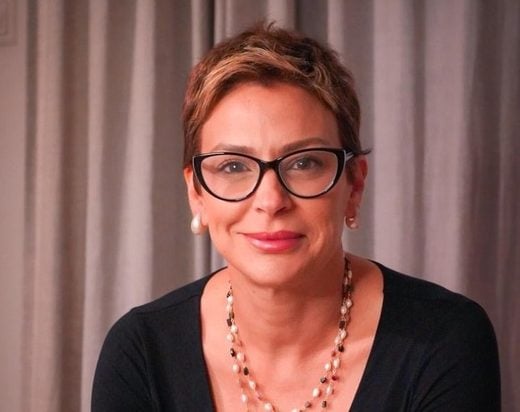
By Nadine Kalache, General Manager, The Network Communication Group/Lebanon