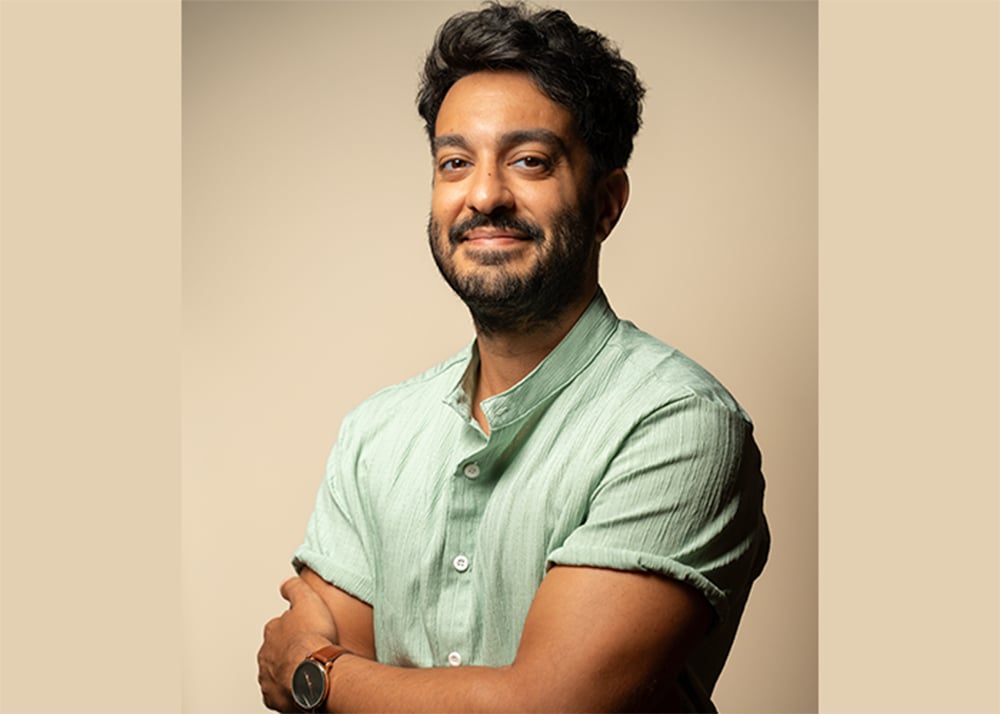
 Casper Shirazi, Head of Features at Liwa Content.Driven.
It was a Teams meeting with the regional marketing head for a global brand. Topic: would they dare be a first-mover in long-form, factual entertainment – a revenue-generating story – a media asset that pays for itself?
Her reply: “I’m salaried; why should I care about monetisation?” Fair question… but isn’t that exactly when you hand cultural equity to braver rivals?
Meanwhile, L’Oréal, WhatsApp, Johnson & Johnson, meditation app Headspace, have closed seven-figure licensing deals with streamers. They’re turning marketing budgets into revenue-generating IP while others keep ‘approving’ 90-second spots for Women’s Engineering Day (+ 15″ cut-downs that vanish in a week).
Early bird tickets to the Campaign Saudi Briefing: Media and Marketing are now on sale. Get yours now for access to conversations with key stakeholders across governmental entities, brands and agencies in Saudi Arabia.
Producer-turned-brand-advisor Michael Sugar told McKinsey this year that Hollywood’s next growth engine is “the merger of brand fluency and Hollywood fluency” – corporates acting as studios, taking low-cost early equity in projects, and enjoying “outsized returns over several years.”
Translation: stop talking reach, start talking back-end!
“A piece must be story-first, focused on the viewer – entertainment, education, or as a utility – not promoting the brand.”
Attention recession
Ad-resistant audiences isn’t just nice to say – they seem to be the region’s reality. Smartphone penetration tops 90 per cent in both the UAE and KSA – and 74 per cent of those connected-video viewers say they skip or scroll past ads whenever possible.
The smartest brands have cracked the code: instead of interrupting what people love, they’ve become what people love.
New net profit centres – a long-form story
“The Final Copy of Ilon Specht” – L’Oréal Paris. First film ever licensed by TED; five Cannes Lions; now on Prime Video; “Because I’m Worth It”; search volume up 44 per cent.
“Takumi: A 60 000-Hour Story” – Lexus. Amazon Prime Video cut; Cannes Corporate Gold.
“Exposure” – Samsung Galaxy S21 Ultra 5G. 8x Hulu reality series; no explicit logos, yet every frame shot on the phone. Post-launch share-of-voice up 42 per cent. And a Daytime-Emmy nomination.
“The Seat” – WhatsApp x Mercedes-AMG F1. A 45-min Netflix using F1 drama to frame end-to-end encryption. It used high-stakes storytelling to make the abstract concept of encryption feel visceral, then monetised fandom through Netflix licensing and a hype-driven merch drop. Everyone shared upside: licensing fee, residuals and unexpected merch revenue
Lexus’s agency put it bluntly: “We had to create a film that wasn’t a Lexus story, but a cultural story where Lexus could play a relevant role.”
And that’s the starting point: a piece must be story-first, focused on the viewer – entertainment, education or as a utility – not promoting the brand.
And for any CFO keeping score, brand entertainment also delivers concurrent revenue loops, including licensing fees (yes, streamers, airlines, hotels, do actually cut cheques) – whilst also creating an ecosystem with the content as centerpiece.
“Give this audience a story instead of a spot, and the profit loops that power NRMA and LEGO can spin even faster in our market.”
Policies and plastic – same playbook
In 2021 Australia’s NRMA Insurance dropped “A Fire Inside”, a feature-length documentary that follows volunteer firefighters in the wake of the Black Summer bushfires.
It premiered in theatres, hit the local streamer ‘Stan’, and then – crucially – kept multiplying: a 240-page coffee-table book, free lesson plans for Years 7-10, photo exhibitions touring Westfield malls, even a five-part radio series.
Every spin-off pointed back to a single CTA: pre-register to volunteer before the next disaster.
The payoff was two-fold:
First, brand gravity: NRMA morphed to a company that literally embodies ‘help’. Post-campaign tracking put it at #1 in Australia for “supports the local community”.
Second, hard economics: licensing fees, book sales, and sponsored exhibitions covered production, so the purpose work didn’t eat the marketing budget – it paid it back.
Now LEGO. Four theatrical releases, a swarm of TV, videogames, and a fan-content platform have become a $7.8B entertainment ecosystem.
The films juice toy demand, the games stretch the IP, and user generated builds go straight into product R&D.
And the same flywheel is wide-open here in the region: Saudis clock almost an hour a day on YouTube – the highest per-capita watch-time on the planet – yet adblock use and skip-button reflexes run just as high.
Give this audience a story instead of a spot, and the profit loops that power NRMA and LEGO can spin even faster in our market.
So you see – be it policies or plastic, global or local – it’s the same playbook. A sustainable content ecosystem that generates compound returns on their creative investment.
“Give your brilliant marketers permission to take longer-term bets. Entertainment may not deliver in Q4, but it will crush Q8.”
So, why not choose a long-form story?
The region has money (I’ve seen approved three-letter consultant’s quotes!) and a youth-bulge audience that streams everything. Yet, no GCC brand has planted a marquee longform title on a global streamer.
Is the unspoken reason the career risk? If you’re paid to defend quarterly marketing KPIs, why gamble on a film that pays off in Q6? Is that why?
But here’s where that logic collapses. Longform isn’t a gamble; it’s a hedge. Every dirham shifted from interruptive media to asset-based storytelling can earn residuals, merch, evergreen PR – plus brand lift. With streamers hunting for local originals, upside is outsized.
The Gulf funds the world’s tallest towers, Cristiano Ronaldo, and data centres – yet when Netflix, Prime, Shahid or OSN+ light up the screen, local brand logos are missing.
Michael Sugar’s blunt advice to brand CEOs: “Give your brilliant marketers permission to take longer-term bets. Entertainment may not deliver in Q4, but it will crush Q8.”
So, dear visionaries – from salaried marketers to inspiring GCC CEOs – will you be the first to swap your short, skippable ads for a long-form revenue-generating story audiences will want to watch?
By Casper Shirazi, Head of Features at Liwa Content.Driven